The High Court of Madhya Pradesh at Indore set aside the first appellate court’s judgment and restored the trial court’s decree of permanent injunction, holding that a gram panchayat cannot dispossess a person in settled possession without adhering to the due process mandated by Section 56 of the Madhya Pradesh Panchayat Raj Adhiniyam, 1993. The Court emphasized that the gram panchayat’s attempt to remove the plaintiff’s structure via a resolution and direct action violated statutory procedure, rendering the first appellate court’s reversal unsustainable.
Background & Facts
The Dispute
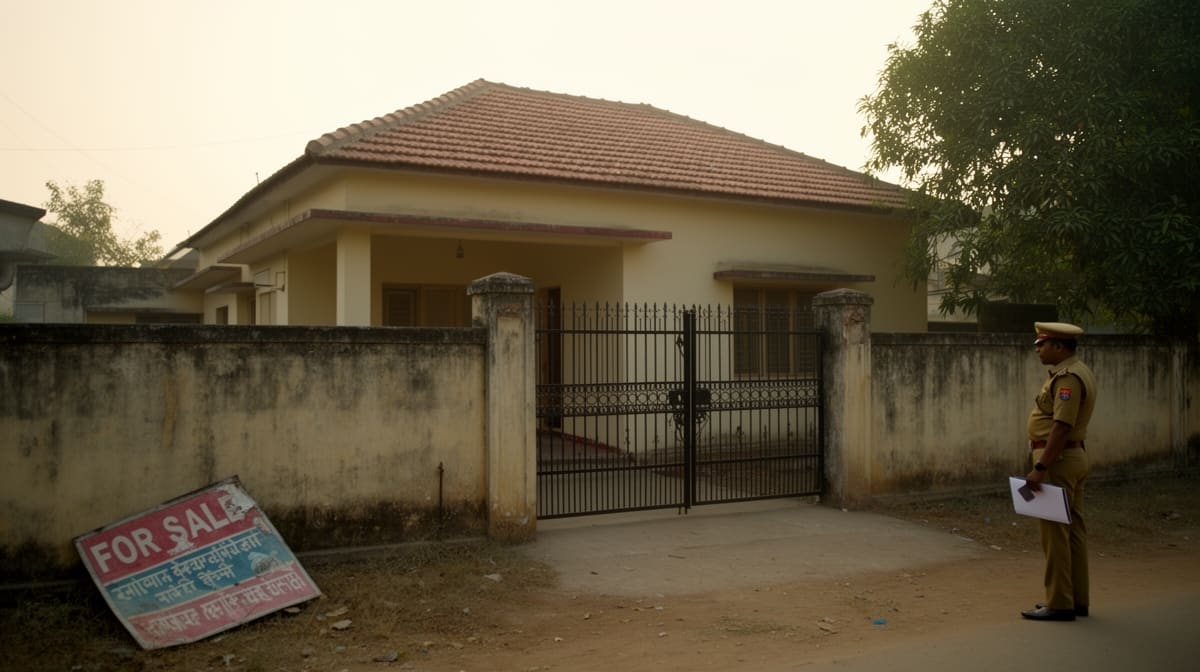
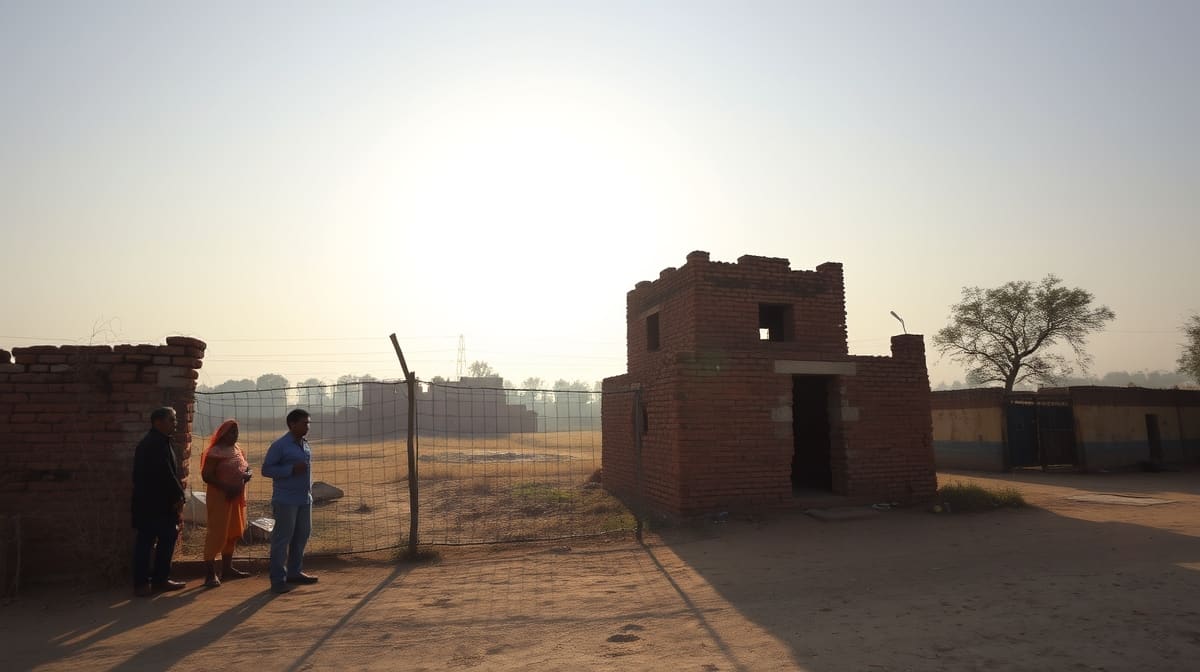
The plaintiff, Vishnu, instituted a suit for declaration and perpetual injunction against the Sarpanch of Gram Panchayat Kharsodkala, the Secretary of the Gram Panchayat, and the State (as respondent No. 3), seeking to restrain the defendants from dispossessing him from a 20 × 30 feet parcel of land in village Gram Kharsodkala, Tehsil Badnagar, District Ujjain, on which he had constructed an RCC shop and house and was conducting a welding and lathe machine business.
Key Facts
- The plaintiff was initially permitted to use the land for installing a temporary gumti under a resolution passed by the gram panchayat on 24.10.1986, with a condition to vacate within three days upon intimation by the panchayat and a monthly rent of 15 paisa per square foot.
- From 1985-86 to 1991-92 the lease rent paid amounted to Rs. 1,385 per annum.
- On 25.12.1993 the gram panchayat, acting through its Administrator, granted the plaintiff a perpetual lease over the same land.
- A certificate of perpetual lease was issued by the Administrator on 05.01.1994 (Ex.P/2).
- The plaintiff constructed a permanent RCC shop and house on the land measuring 20 × 30 feet, relying on the perpetual lease certificate and building permission granted by the Administrator (Ex.P/4).
- On 28.02.1997 the Sarpanch and Secretary, accompanied by labourers, visited the site and informed the plaintiff that the Collector had issued a direction for demolition on the ground of alleged encroachment.
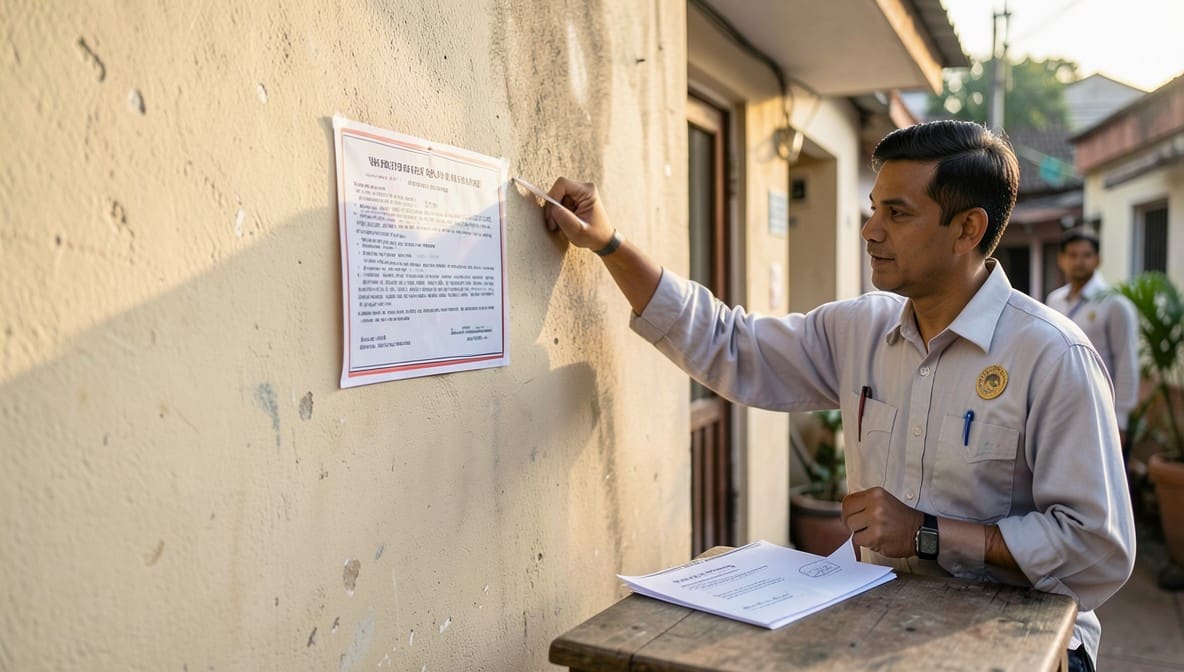
- A notice dated 26.04.1997 was served on the plaintiff directing removal of the structure and handover of possession; the plaintiff did not comply.
- The gram panchayat passed a resolution on 28.10.1997 cancelling the plaintiff’s lease and resolving to remove his structure, concurrently cancelling the Administrator’s certificate dated 05.01.1994.
- The trial court, after hearing the parties, passed judgment and decree on 07.05.2003 granting a permanent injunction in favour of the plaintiff and restraining the defendants from interfering with his possession.
- The first appellate court (V Addl. District Judge, Ujjain) reversed the trial court’s findings by judgment and decree dated 07.10.2003, holding that the plaintiff had failed to prove a perpetual lease and that the gram panchayat was entitled to remove the structure.
- The present second appeal was filed challenging the first appellate court’s order.
Procedural History
- 24.10.1986: Gram panchayat resolution granting temporary lease for gumti.
- 1985-86 to 1991-92: Period of lease rent payment (Rs. 1,385/- per annum).
- 25.12.1993: Grant of perpetual lease by Administrator.
- 05.01.1994: Issuance of perpetual lease certificate (Ex.P/2).
- 28.02.1997: Visit by Sarpanch, Secretary and labourers; intimation of Collector’s demolition direction.
- 26.04.1997: Notice issued to plaintiff for removal of structure.
- 28.10.1997: Gram panchayat resolution cancelling lease and directing removal of structure.
- 07.05.2003: Trial court judgment and decree (Civil Suit No. 114/1997) granting permanent injunction.
- 07.10.2003: First appellate court judgment and decree (Civil First Appeal No. 26A/2003) setting aside trial court’s order.
- 20.08.2026: Reserved for judgment.
- 22.09.2026: Judgment pronounced.
Relief Sought
The plaintiff sought upholding of the trial court’s decree of permanent injunction, restoration of possession, and continuation of his business on the suit land, with no specific monetary claim.
The Legal Issue
The substantial questions of law were: (1) Whether, in the absence of any provision under the Madhya Pradesh Panchayat Raj Adhiniyam, 1993 authorising dispossession without due process, the plaintiff could be removed from the disputed premises without filing a civil suit for possession; and (2) Whether the construction of a shop and house in 1994 on the basis of a purported perpetual lease and sanctioned map created an equitable right in the plaintiff’s favour, rendering the construction legal or authorised.
Arguments Presented
For the Appellant/Petitioner
The appellant, Vishnu, contended that he had been put into possession by the gram panchayat under a valid temporary lease, subsequently granted a perpetual lease and building permission by the Administrator, and had constructed the shop and house in reliance thereon. He argued that he had paid lease rent, possessed the land continuously since 1986, and was in settled possession, thereby entitling him to defend his possession against any dispossession attempt absent due process. He further submitted that the first appellate court had erred by reversing the trial court’s findings without considering the plaintiff’s settled possession, the lack of authority of the gram panchayat to cancel the Administrator’s permission, and the mandatory procedure under Section 56 of the Adhiniyam, 1993, which requires a resolution and reference to the Tehsildar before any removal action.
For the Respondent/State
The Government Advocate, representing the State, supported the first appellate court’s stance, asserting that the trial court’s findings regarding the Administrator’s lack of authority to grant a perpetual lease had attained finality as they were not challenged by cross appeal or objection. It was argued that the plaintiff had exceeded the limited area (10 × 15 sq. ft) allotted for a temporary gumti by constructing a 20 × 30 ft RCC structure, thereby committing an encroachment. The State maintained that Section 56 of the Adhiniyam, 1993 authorised the gram panchayat to remove such encroachments, and that the impugned action was within jurisdiction and in consonance with the statutory powers.
The Court's Analysis
The Court commenced by noting that the gram panchayat’s attempt to remove the plaintiff’s structure was undertaken immediately after passing the resolution of 28.10.1997, without any reference to the Tehsildar. It examined Section 56 of the Madhya Pradesh Panchayat Raj Adhiniyam, 1993, which stipulates that for removal of unauthorised hindrances, obstructions or encroachments upon public streets or open sites, the gram panchayat must first pass a resolution and then refer the matter to the Tehsildar, who shall proceed under the Madhya Pradesh Land Revenue Code, 1959. The Court observed that the plain language of Section 56 prohibits straight-away action; the gram panchayat must follow the prescribed two-step process.
Relying on the Supreme Court’s decision in Rame Gowda Vs. M. Varadappa Naidu (2004) 1 SCC 769, the Court reiterated the principle that a person in settled possession cannot be dispossessed without due process of law, and that even a true owner lacks the right to use force against such a possessor. The Court found that the plaintiff had been put into possession by the gram panchayat itself, had continuously possessed the land since 1986, had constructed permanent structures with the Administrator’s permission, and was in settled possession, thereby entitling him to protect his possession against any dispossession attempt absent legal procedure.
The Court further noted that the first appellate court had reversed the trial court’s findings without engaging with the plaintiff’s evidence on settled possession, the validity of the perpetual lease certificate, and the lack of authority of the gram panchayat to cancel the Administrator’s permission. Such reversal, undertaken without meeting the reasonings recorded by the trial court, was deemed unsustainable. Consequently, the Court held that the substantial questions of law must be answered in favour of the plaintiff: the gram panchayat could not dispossess him without following due process under Section 56, and the construction undertaken in 1994 on the basis of the perpetual lease and sanctioned map was not illegal or unauthorised.
The Verdict
The appeal succeeded. The judgment and decree of the First Appeal dated 07.10.2003 (Civil First Appeal No. 26A/2003) were set aside, and the judgment and decree of the Trial Court dated 07.05.2003 (Civil Suit No. 114/1997) granting a permanent injunction in favour of the plaintiff were restored. No costs were awarded. The plaintiff remains entitled to retain possession of the 20 × 30 feet land, continue his welding and lathe machine business, and is protected from dispossession without adherence to the due process mandated by Section 56 of the Madhya Pradesh Panchayat Raj Adhiniyam, 1993.
What This Means For Similar Cases
Due Process Is Mandatory for Dispossession
- A gram panchayat must pass a resolution and refer the matter to the Tehsildar before removing any alleged encroachment under Section 56 of the MP Panchayat Raj Adhiniyam, 1993.
- Direct action by labourers or panchayat officials without such reference is illegal and liable to be set aside.
Settled Possession Trumps Alleged Encroachment
- A person in continuous, undisputed possession for a substantial period (here, since 1986) is entitled to defend possession even against the gram panchayat.
- The burden lies on the authority to prove lack of permission or authority, not on the possessor to repeatedly validate his title.
Procedural Compliance Under Section 56 Is Non-Negotiable
- Authorities must strictly comply with the two-step mechanism: resolution → referral to Tehsildar → action under MPLR Code, 1959.
- Any deviation renders the removal action void ab initio, irrespective of the merits of the encroachment claim.