The Madhya Pradesh High Court has granted bail to an accused convicted under the NDPS Act after finding that the prosecution failed to comply with the mandatory procedural safeguards under Section 50, rendering the recovery of contraband suspect and the conviction legally untenable. The judgment underscores that procedural lapses in drug cases are not mere technicalities but fundamental violations that vitiate the entire trial.
Background & Facts
The Dispute
The appellant, Anuj @ Golu Gond, was convicted by the Special Judge, NDPS Act, Jabalpur, on 19.03.2025 under Section 8(c)/20(b)(ii)(c) of the Narcotic Drugs and Psychotropic Substances Act, 1985, and sentenced to ten years of rigorous imprisonment and a fine of Rs. 1,00,000. The conviction was based on the recovery of charas from his person during a search conducted by police personnel. The appellant challenges both the conviction and the sentence, arguing that the prosecution failed to comply with mandatory provisions of the NDPS Act, particularly Section 50, and that material contradictions in the evidence render the case unreliable.
Key Facts
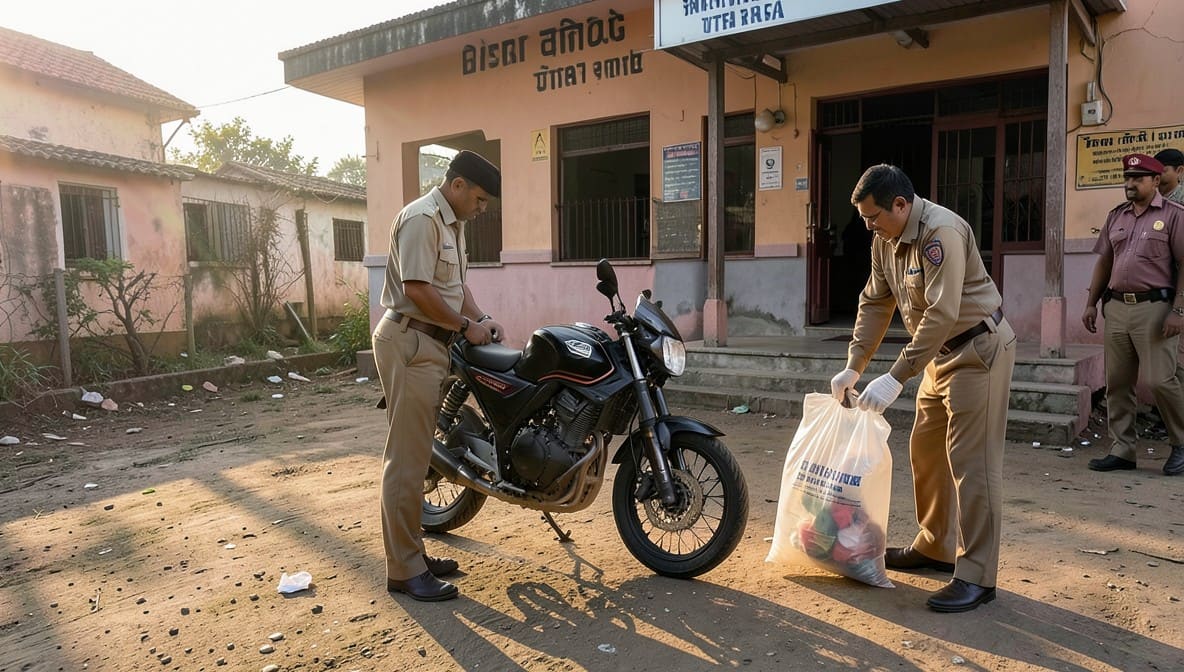
- The appellant was apprehended on 13.03.2024 near the Jabalpur Police Station while allegedly carrying a bag containing charas.
- The Investigating Officer, Vijay Dhurve (PW-5), claimed to have received information at 12:57-12:58 hours on 13.03.2024 and proceeded to conduct a search.
- The Roznamcha Sanha exhibited by the defence shows that all police personnel, including PW-5, departed from the Police Station at 12:55 hours, creating a contradiction in the timeline.
- The appellant’s person was searched after the bag was opened and charas recovered.
- The prosecution claimed an electronic weighing scale was used to weigh the contraband, but PW-8, a witness from the shop where the weighing occurred, testified that only a traditional weighing scale was available.
- The prosecution did not produce the videographic evidence allegedly recorded during the seizure, despite PW-7 (Praveen Kumar Kumre) testifying that videography was conducted.
- The Investigating Officer (PW-5) admitted in cross-examination that the independent witnesses, Anshul Sondhiya (PW-1) and Shanker Jaat (PW-2), were "pocket witnesses" and did not support the prosecution case.
- The prosecution failed to produce certified copies of the Roznamcha Sanha, while the defence successfully exhibited the original document.
Procedural History
- 13.03.2024: Alleged seizure of charas and arrest of the appellant.
- 19.03.2025: Conviction and sentencing by the Special Judge, NDPS Act, Jabalpur, in SC NDPS No. 34 of 2024.
- 22.03.2025: Filing of Criminal Appeal No. 3894 of 2025 before the High Court of Madhya Pradesh at Jabalpur.
- 22.03.2025: Filing of I.A. No. 22951 of 2025 seeking suspension of sentence and bail.
- 31.03.2026: Hearing before the High Court; bail application admitted and allowed.
The Parties' Positions
For the Appellant
The appellant’s counsel contended that:
- The search of the appellant’s person triggered the mandatory application of Section 50 of the NDPS Act.
- The appellant was never properly informed of his right to be searched before a Gazetted Officer or a Magistrate.
- The Investigating Officer offered only two options - search by himself or by a Gazetted Officer - omitting the third legally mandated option: search before a Magistrate.
- The testimony of PW-5 and PW-3 contained material contradictions regarding the seizure and weighing process.
- The non-production of videographic evidence and certified Roznamcha Sanha further undermined the prosecution’s case.
- Reliance was placed on State of Himachal Pradesh v. Surat Singh and Suresh v. State of Madhya Pradesh to argue that failure to comply with Section 50 renders the conviction unsustainable.
For the Respondent/State
The Public Prosecutor opposed the bail application, arguing that the conviction was based on credible evidence and that the procedural lapses, if any, were minor and did not affect the outcome. No specific legal arguments were advanced to counter the appellant’s reliance on Surat Singh or the contradictions in evidence.
Relief Sought
The appellant sought:
- Suspension of his sentence pending appeal.
- Grant of bail on personal bond and surety.
- Direction to the trial court to expedite final disposal of the appeal.
The Legal Issue
Whether the failure to inform the accused of his right under Section 50 of the NDPS Act to be searched before a Gazetted Officer or a Magistrate - and the subsequent search of his person after seizure from his bag - renders the recovery suspect and the conviction unsustainable in law.
Arguments Presented
For the Appellant
The appellant’s counsel relied on the Supreme Court’s judgment in State of Himachal Pradesh v. Surat Singh (Criminal Appeal No. 96 of 2018), which held that Section 50 mandates strict compliance. The Court emphasized that merely asking the accused whether he consents to search by the police officer or a Gazetted Officer - without informing him of the right to be searched before a Magistrate - is a fatal defect. The appellant’s counsel further cited Suresh v. State of Madhya Pradesh (2013) 1 SCC 550 and Vijaysinh Chandubha Jadeja v. State of Gujarat (2021) 1 SCC 1, where the Constitution Bench held that Section 50 is mandatory and non-compliance vitiates the conviction if the case rests solely on recovery from the person. The counsel argued that the prosecution’s failure to produce the Roznamcha Sanha and videography, coupled with the testimony of PW-8 contradicting the use of an electronic scale, further weakened the case.
For the Respondent/State
The State did not contest the legal principles laid down in Surat Singh or the mandatory nature of Section 50. It offered no counter-authority or factual rebuttal to the appellant’s claims regarding the procedural lapses. The Public Prosecutor merely opposed bail on general grounds without addressing the substantive legal defects raised.
The Court's Analysis
The Court undertook a detailed review of the Supreme Court’s jurisprudence on Section 50 of the NDPS Act. It noted that in State of Rajasthan v. Parmanand (2014) 5 SCC 345, the Supreme Court held that when both the bag and the person of the accused are searched, Section 50 is attracted. The Court emphasized that the mere act of searching the person, irrespective of whether contraband was first found in the bag, triggers the mandatory procedural safeguards.
"The accused was also given option whether he wanted to be searched by the I.O. in the presence of witnesses mentioned in Ext. PW-1/A. According to Section 50 of the ND & PS Act, the accused has to be apprised of his legal right to be searched either before the Magistrate or the Gazetted Officer. There is no third option to be searched before the Police Officer. Thus, the consent obtained from the accused was not in conformity with Section 50 of the Act. It has vitiated the entire trial."
The Court observed that the Investigating Officer’s testimony revealed a clear deviation from the statutory mandate. The accused was offered only two options - search by the police officer or a Gazetted Officer - omitting the legally required third option: search before a Magistrate. This omission, as held in Surat Singh, is not a mere irregularity but a fundamental breach that renders the recovery suspect.
The Court further noted that the prosecution’s case was further undermined by:
- Contradictory timelines in the Roznamcha Sanha;
- Non-production of videographic evidence despite witness testimony confirming its existence;
- Testimony of PW-8 that an electronic scale was not available, contradicting the prosecution’s claim;
- Admission by PW-5 that the independent witnesses were "pocket witnesses."
The Court held that while it was not expressing any opinion on the merits of the conviction, the cumulative effect of these lapses created a strong prima facie case for the appellant’s appeal. The Court concluded that the appellant had a substantial ground for challenging the conviction and that the interests of justice warranted his release on bail pending final disposal.
The Verdict
The appellant succeeded on the bail application. The Court suspended the remaining jail sentence and directed his release on bail subject to:
- Deposit of the entire fine amount of Rs. 1,00,000 if not already paid;
- Furnishing a personal bond of Rs. 50,000 with a solvent surety of like amount, to be approved by the trial court;
- Marking his appearance before the trial court on 03.08.2026 and on all subsequent dates fixed by the court;
- The case to be listed for final hearing in due course.
What This Means For Similar Cases
Section 50 Compliance Is Non-Negotiable
- Practitioners must now argue that any search of the accused’s person - even after contraband is found in a bag - triggers Section 50.
- Merely asking for consent to search by a police officer or Gazetted Officer, without mentioning the Magistrate as an option, is a fatal defect.
- The burden is on the prosecution to prove strict compliance; failure to do so renders the recovery inadmissible.
Non-Production of Evidence Is Fatal
- If the prosecution claims videography or electronic weighing occurred but fails to produce the evidence, the court may infer adverse inference.
- Defence counsel should always seek certified copies of Roznamcha Sanha and demand production of digital evidence.
- Contradictions between witness testimony and documentary evidence must be highlighted as material irregularities.
Bail in NDPS Cases Is Not Automatic, But Possible on Procedural Grounds
- Even in serious drug cases, bail may be granted if procedural violations create reasonable doubt about the legality of the recovery.
- Courts are increasingly willing to suspend sentences pending appeal where the conviction rests on tainted evidence.
- Appellants should always file I.A. under Section 430 CrPC (now BNS) seeking suspension of sentence alongside the appeal.