The Punjab and Haryana High Court has granted regular bail to an accused in a case involving 251 grams of Tramadol, holding that marginal excess over the commercial quantity threshold, coupled with prolonged pre-trial incarceration and procedural irregularities, warrants release pending trial. This decision reinforces the Supreme Court’s directive that stringent bail conditions under the NDPS Act must not result in punitive detention where trial progress is stagnant.
Background & Facts
The Dispute
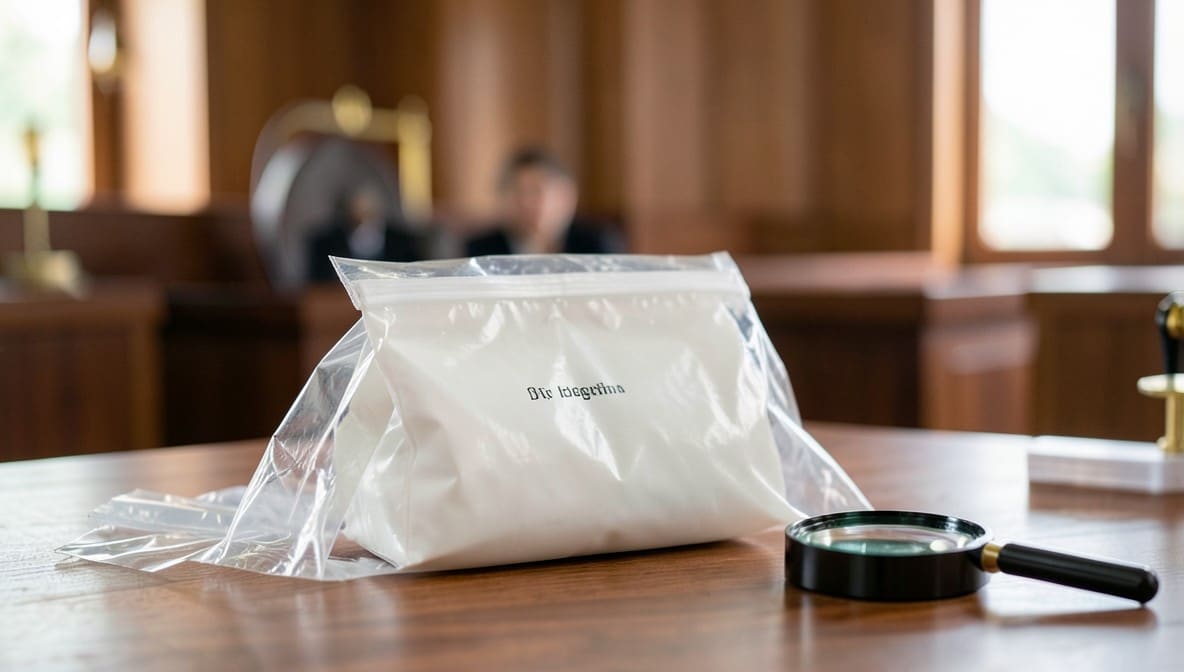
The petitioner, Parwana, was arrested on 06.03.2025 at Police Station Kotwali, Patiala, following the recovery of 251 grams of an intoxicating powder from a black wax envelope he allegedly discarded upon seeing police on patrol. The substance was later identified as Tramadol. No licence was produced for possession. FIR No. 45/2025 was registered under Sections 22, 29, 61, and 85 of the Narcotic Drugs and Psychotropic Substances (NDPS) Act, 1985. The petitioner was taken into custody on the same day.
Key Facts
- The alleged recovery occurred in a public place during routine patrolling.
- The recovered quantity was 251 grams of Tramadol, which is marginally above the commercial quantity threshold of 250 grams under Schedule III of the NDPS Act.
- The envelope containing the substance was recovered from the ground after being discarded by the petitioner.
- No independent witness was present during the recovery or search.
- The petitioner has been in custody since 06.03.2025.
- As of 01.04.2026, he had undergone 1 year and 25 days of incarceration.
- He is named as an accused in four other NDPS cases, but is currently on bail in three of them.
- The prosecution has examined only one of its 17 witnesses as of the date of the bail hearing.
- The petitioner challenged the legality of the search under Section 50 of the NDPS Act, alleging non-compliance with mandatory procedural safeguards.
Procedural History
- 06.03.2025: Arrest of petitioner following recovery of 251 grams of Tramadol.
- 06.03.2025: FIR No. 45/2025 registered under Sections 22/29/61/85 of NDPS Act.
- 23.05.2025: Special Court, Patiala, dismissed petitioner’s application for regular bail.
- 01.04.2026: Custody certificate submitted showing 1 year and 25 days of incarceration.
- 02.04.2026: Present petition filed before the Punjab and Haryana High Court seeking regular bail.
Relief Sought
The petitioner sought regular bail on grounds of: (i) marginal excess over commercial quantity; (ii) violation of Section 50 of the NDPS Act; (iii) prolonged pre-trial detention without meaningful progress in trial; and (iv) his status as a repeat accused with bail in three other cases.
The Legal Issue
Can a court grant regular bail under the NDPS Act when the quantity of contraband is marginally above the commercial threshold, there is a plausible violation of Section 50, and the trial has progressed minimally over more than a year?
Arguments Presented
For the Petitioner
Learned Legal Aid Counsel argued that the recovery of 251 grams of Tramadol is barely above the 250-gram commercial quantity limit, and the envelope’s weight may have inflated the total. She contended that the search was conducted without compliance with Section 50 of the NDPS Act, which mandates that a suspect be informed of their right to be searched before a gazetted officer or magistrate. No independent witness was present, rendering the recovery suspect. She highlighted that the petitioner had been in custody for over a year with only one prosecution witness examined out of 17, indicating severe trial delay. She further noted that the petitioner was already on bail in three other cases, suggesting he is not a flight risk.
For the Respondent
The State, represented by the Deputy Advocate General, contended that the recovery was a chance discovery and the quantity of 251 grams clearly falls within commercial quantity under the NDPS Act, triggering the stringent conditions of Section 37. He submitted that the custody certificate confirmed the petitioner’s detention and that the prosecution had a substantial number of witnesses to examine. He did not dispute the delay but argued that the seriousness of the offence and the quantity involved justified continued custody.
The Court's Analysis
The Court acknowledged that the recovered quantity of 251 grams of Tramadol is technically above the commercial threshold of 250 grams, but emphasized that the margin is minimal and the inclusion of the envelope’s weight raises a legitimate doubt as to whether the contraband alone exceeds the limit. The Court noted the absence of any independent witness during the recovery, a critical flaw under Section 50, which is mandatory and not merely procedural.
The Court then turned to the prolonged period of incarceration. As of 01.04.2026, the petitioner had spent 1 year and 25 days in custody with only one of 17 prosecution witnesses examined. The Court observed that the trial was unlikely to conclude in the near future.
The Court relied on the Supreme Court’s judgment in Mohd Muslim @ Hussain v. State (NCT of Delhi), 2023 LiveLaw(SC)260, quoting:
"A plain and literal interpretation of the conditions under Section 37... would effectively exclude grant of bail altogether, resulting in punitive detention and unsanctioned preventive detention as well."
"...if trials are not concluded in time, the injustice wrecked on the individual is immeasurable."
"The courts therefore, have to be sensitive to these aspects... and ensure that trials - especially in cases, where special laws enact stringent provisions, are taken up and concluded speedily."
The Court held that while the seriousness of the offence cannot be ignored, the constitutional right to liberty and the principle of presumption of innocence must prevail where trial progress is negligible. The Court found that the petitioner had made out a case for bail under the ratio laid down in Mohd Muslim, particularly given the marginal nature of the quantity, procedural irregularities, and the unreasonably delayed trial.
The Verdict
The petition was allowed. The petitioner is ordered to be released on regular bail upon furnishing bail/surety bonds to the satisfaction of the concerned trial court or duty magistrate. The Court directed that if the petitioner fails to furnish such bonds within one week from the date of judgment, his custody shall not be counted in this case after the expiry of that period. The Court clarified that nothing in the order constitutes an expression of opinion on the merits of the case.
What This Means For Similar Cases
Marginal Excess Does Not Automatically Deny Bail
- Practitioners must argue that quantities barely exceeding commercial thresholds (e.g., 251g vs. 250g) warrant judicial scrutiny of whether the excess is attributable to packaging or measurement error.
- Courts must assess whether the excess is de minimis and whether the prosecution has established the purity or net weight of the contraband.
Delay in Trial Overrides Section 37 Rigidity
- Section 37 of the NDPS Act cannot be used to justify indefinite pre-trial detention where trial progress is negligible.
- If fewer than two witnesses have been examined after one year, courts should treat this as a strong indicator of systemic delay justifying bail.
- The Mohd Muslim precedent now binds lower courts to balance public interest with individual liberty when trials stall.
Section 50 Violations Are Not Merely Technical
- Failure to comply with Section 50 (right to be searched before a gazetted officer or magistrate) is not a procedural lapse but a substantive violation affecting the legality of recovery.
- In the absence of independent witnesses, recovery from public places without proper documentation invites reasonable doubt.
- Such defects, when combined with delay, strengthen the bail application even in commercial quantity cases.