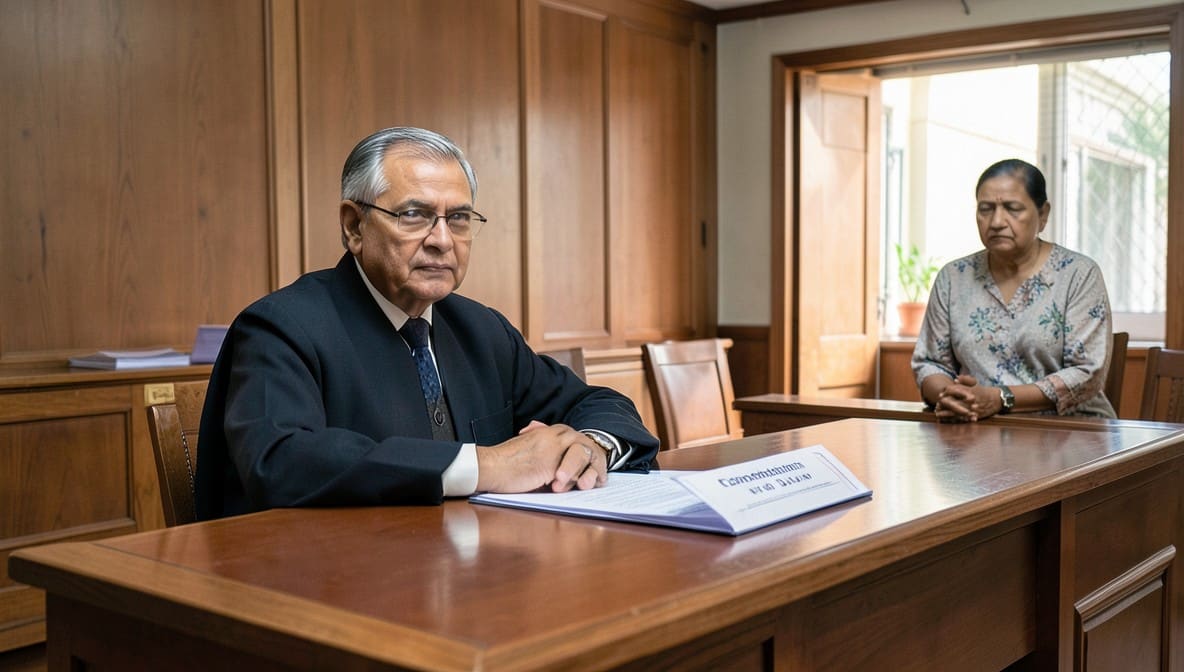
The Chhattisgarh High Court has delivered a stern reminder that government departments cannot invoke bureaucratic delays as a shield against the rigour of limitation periods. In dismissing a writ appeal filed 183 days late, the Court reaffirmed that the law binds the State as strictly as it binds private litigants, and that procedural inertia cannot be mistaken for sufficient cause.
Background & Facts
The Dispute
The State of Chhattisgarh sought to challenge a Single Judge’s order dated 02.05.2025, which had ruled against it in a writ petition concerning forest land use. The State initiated internal procedures to file a writ appeal before the Division Bench but failed to do so within the 90-day limitation period under Section 5 of the Limitation Act, 1908.
Procedural History
- 02.05.2025: Single Judge’s order passed against the State
- 11.07.2025: Office of the Advocate General provided legal opinion
- 25.09.2025: Law & Legislative Affairs Department granted permission to file appeal
- 10.10.2025: Officer-in-Charge appointed to handle filing
- 26.11.2025: Documents submitted to Advocate General’s office
- 01.11.2025: Writ appeal finally filed - 183 days after limitation expired
Relief Sought
The State sought condonation of delay under Section 5 of the Limitation Act, 1908, arguing that internal government procedures, including obtaining legal opinions and administrative approvals, caused the delay. It relied on State of Nagaland v. LipokAo to justify its position.
The Legal Issue
The central question was whether Section 5 of the Limitation Act, 1908 permits condonation of delay for government departments based solely on internal bureaucratic processes, and whether such delays constitute "sufficient cause" under the law.
Arguments Presented
For the Appellant/State
The State contended that the delay was not deliberate but arose from mandatory departmental formalities: obtaining legal opinion from the Advocate General, securing administrative sanction, and appointing an Officer-in-Charge. It argued that the State, as a multi-functional entity, requires time to coordinate across departments, and that State of Nagaland v. LipokAo supports liberal condonation in such cases. It emphasized that the delay was bona fide and not mala fide.
For the Respondent/Petitioner
The respondent argued that the State’s explanation was generic and lacked specificity. No evidence was provided to show that the delay occurred due to circumstances beyond its control within the limitation period. The State’s reliance on outdated precedents ignored recent Supreme Court rulings that have tightened the standard for condonation, particularly against government entities.
The Court's Analysis
The Court undertook a rigorous examination of the legal principles governing condonation of delay, distinguishing between mere procedural delays and legally acceptable "sufficient cause." It emphasized that Section 5 of the Limitation Act, 1908 does not create a blanket exception for government departments.
"The law shelters everyone under the same light and should not be swirled for the benefit of a few."
The Court cited Postmaster General v. Living Media India Ltd. to underscore that government agencies, equipped with legal expertise, cannot plead ignorance or systemic inefficiency as justification for delay. It further relied on State of Madhya Pradesh v. Ramkumar Choudhary to hold that "sufficient cause" must be an adequate reason preventing action within the limitation period - not after.
The Court rejected the State’s argument that the delay was caused by the time taken to obtain legal opinions and administrative approvals. It held that such processes must be completed within the statutory period, not after its expiry. Events occurring after the limitation period ends cannot be invoked to excuse failure to act before it.
"No event or circumstance arising after the expiry of limitation can constitute such sufficient cause."
The Court also noted that the State’s explanation was vague, lacking dates, names, or specific bottlenecks. Merely listing procedural steps without demonstrating how they impeded timely filing was insufficient. The Court concluded that the State had not discharged its burden of proving bona fides or diligence.
The Verdict
The writ appeal was dismissed on the ground of delay and laches. The Court held that the State failed to establish sufficient cause for condoning the 183-day delay. The law does not permit government departments to treat limitation periods as flexible, and bureaucratic inertia cannot override statutory timelines.
What This Means For Similar Cases
Delay Must Be Explained Within the Limitation Period
- Practitioners must demonstrate that the cause of delay occurred before the limitation expired - not after
- Internal government processes (e.g., seeking legal opinions, approvals) must be initiated and completed within the statutory period
- Vague explanations like "file was pending" or "procedures took time" are no longer acceptable
Government Entities Face Stricter Scrutiny
- Courts will not condone delay merely because the party is the State
- The burden of proving diligence is higher for government departments
- Recent judgments (Ramkumar Choudhary, Shivamma) establish that courts must not become surrogates for state lethargy
Accountability for Official Lapses Is Now Mandatory
-
The Court directed the State to fix responsibility on officials responsible for delays
-
Financial penalties proportional to loss caused to the exchequer must be imposed
-
All State departments must streamline legal filing procedures with clear timelines and accountability mechanisms
-
Practitioners representing the State must now proactively track limitation dates and initiate internal processes well in advance
-
Private litigants can now confidently oppose condonation applications by the State on grounds of generic bureaucratic excuses
-
Legal departments of State governments must implement internal compliance systems to avoid future dismissals on technical grounds