The Punjab & Haryana High Court has reaffirmed that procedural delays in filing appeals may be condoned when grounded in genuine, verifiable personal hardship, particularly when the merits of the case involve substantive property rights under the Punjab Village Common Land Act, 1961. The judgment underscores that limitation is a rule of practice, not a bar to justice, and courts must balance procedural rigor with equitable considerations.
Background & Facts
The Dispute
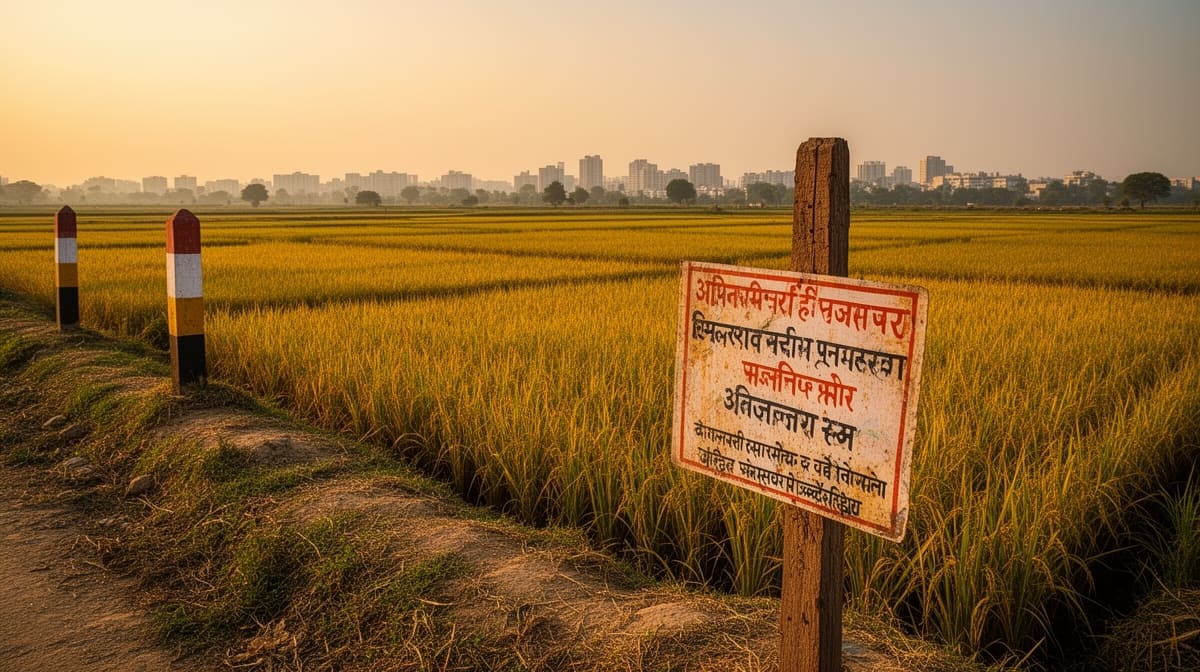
The petitioners, landowners from Uggar Aulakh, Tehsil Ajnala, District Amritsar, filed a suit under Section 11 of the Punjab Village Common Land Act, 1961 seeking declaration of ownership over land measuring 23 Kanal 7 Marla, bearing Khasra Nos. 44/4/2 (4-0), 44/7 (8-0), 8/2 min (2-6), 13 min (3-6), and Khata Khatauni Nos. 295/594, 612, 613 as per Jamabandi for the year 1995-96. The suit was dismissed by the Collector vide order dated 22.05.2024.
Key Facts
- The disputed land is agricultural land governed by the Punjab Village Common Land Act, 1961, which grants proprietary rights to village communities and individuals with historical possession.
- The petitioners claimed continuous possession and cultivation of the land since before 1995-96.
- The Collector’s order dated 22.05.2024 rejected the suit on grounds of lack of title and failure to establish exclusive possession.
- The petitioners engaged counsel to file an appeal against the Collector’s order.
- The appeal was prepared by counsel in August 2024.
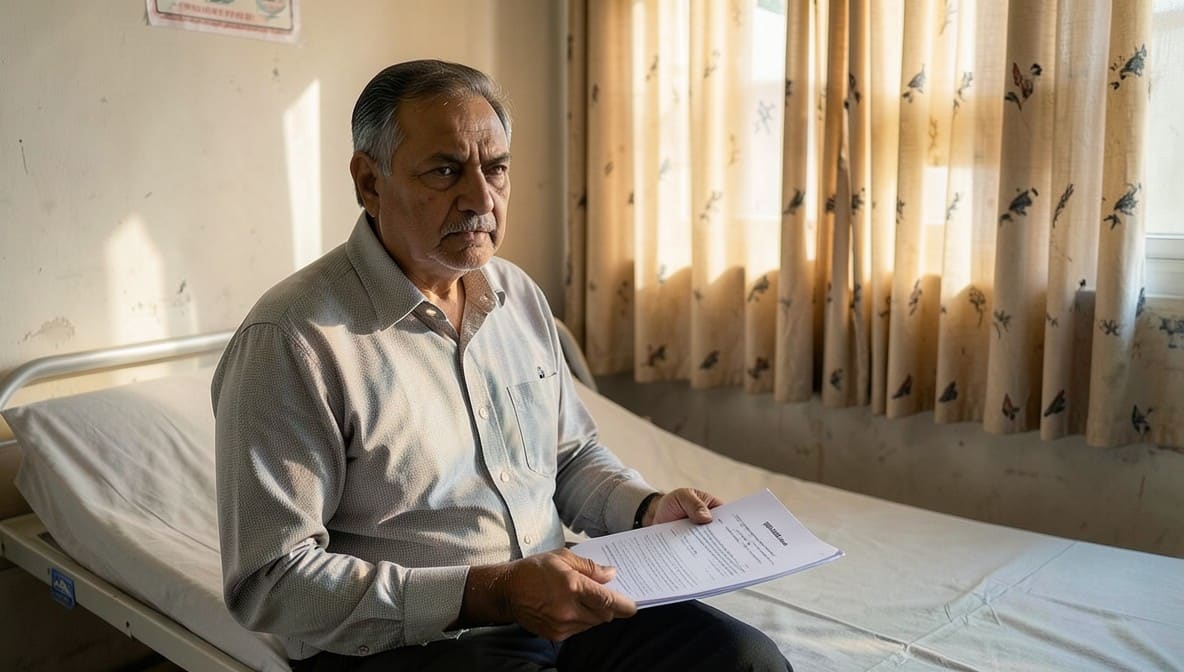
- The filing was delayed due to the hospitalization of the counsel’s wife at Post Graduate Institute of Medical Education and Research (PGI), Chandigarh.
- A medical certificate from PGI, Chandigarh, confirming the wife’s admission and treatment, was submitted with the application for condonation of delay.
- The counsel also filed a sworn affidavit detailing the circumstances preventing timely filing.
Procedural History
- 22.05.2024: Collector dismissed the suit under Section 11 of the Punjab Village Common Land Act, 1961.
- August 2024: Appeal was prepared by counsel but not filed due to medical emergency of counsel’s spouse.
- 18.03.2025: Appeal bearing No. 87 of 2025 was filed along with an application for condonation of delay of 238 days.
- 18.03.2025: Commissioner dismissed the appeal solely on the ground of delay, without examining the merits or the reasons for delay.
- 28.03.2025: Writ Petition (CWP-15312-2025) filed before the Punjab & Haryana High Court challenging the Commissioner’s order.
- 08.04.2026: Judgment delivered by the Division Bench.
Relief Sought
The petitioners sought: (1) setting aside of the Commissioner’s order dated 18.03.2025; (2) condonation of the 238-day delay in filing the appeal; and (3) remand of the appeal for adjudication on merits.
The Legal Issue
The central question was whether a delay of 238 days in filing an appeal under the Punjab Village Common Land Act, 1961, can be condoned when the cause is a verifiable medical emergency affecting the counsel’s immediate family, and when the underlying dispute involves proprietary rights over ancestral land.
Arguments Presented
For the Petitioner
Learned counsel argued that the delay was not due to negligence or laches but arose from an unforeseen and unavoidable personal crisis - the hospitalization of the counsel’s wife at PGI, Chandigarh. The application for condonation was supported by a medical certificate and a sworn affidavit, satisfying the requirement of sufficient cause under Section 5 of the Limitation Act, 1963. Reliance was placed on Inder Singh v. State of Madhya Pradesh and Ramchandra Shankar Deodhar v. State of Maharashtra to emphasize that limitation is a rule of practice, not a rigid bar, and that courts must examine the merits when substantial rights are at stake.
For the Respondent
The State contended that the delay of 238 days was unexplained and excessive, and that the mere submission of a medical certificate without proof of actual impediment to filing (e.g., absence of substitute counsel or office staff) was insufficient. It was argued that legal practitioners are expected to make arrangements for continuity of representation, and that the Commissioner was justified in dismissing the appeal on limitation grounds alone.
The Court's Analysis
The Court observed that the Commissioner’s order dismissed the appeal solely on the ground of delay without considering the reasons advanced or the nature of the rights involved. This approach was found to be legally untenable.
"There is no doubt that all parties, whether or not State under Article 123 of the Constitution, are required to act with due diligence and promptitude. But... the Court may not scuttle the merits merely on the basis of limitation."
The Court cited Inder Singh v. State of Madhya Pradesh to affirm that while delay must be explained, the explanation must be judged in context. The medical emergency of a counsel’s spouse, corroborated by official documentation, constitutes a valid and sufficient cause under Section 5 of the Limitation Act, 1963. The Court further relied on Ramchandra Shankar Deodhar v. State of Maharashtra, noting that the rule against stale claims is discretionary, not mandatory, and that the nature of the right - here, proprietary rights over village land - demands a more liberal approach.
The Court rejected the notion that legal practitioners must always have contingency arrangements, recognizing that personal crises are unpredictable and that the judiciary must not impose unrealistic burdens on litigants. The Commissioner’s mechanical application of limitation without considering the explanation or the substantive rights at stake was held to be a failure of judicial discretion.
The Verdict
The petitioners succeeded. The Court set aside the Commissioner’s order dated 18.03.2025, allowed the application for condonation of delay, and remanded the appeal for fresh adjudication on merits. The Commissioner is directed to hear the appeal on 22.04.2026 at 10:00 am and decide the matter within six months. All pending applications stand disposed of.
What This Means For Similar Cases
Medical Emergencies Can Condone Delay
- Practitioners may now rely on verified medical emergencies affecting immediate family members as sufficient cause for condonation under Section 5 of the Limitation Act.
- Submission of hospital records and sworn affidavits is sufficient; no additional proof of office disruption is required.
- Courts must not dismiss appeals on limitation grounds without examining the nature of the rights involved.
Merits Cannot Be Sacrificed to Procedural Rigidity
- In cases involving land rights under the Punjab Village Common Land Act, 1961, courts must adopt a liberal approach to delay.
- Dismissal of appeals solely on limitation, without considering the substance of the claim, violates the principle of substantive justice.
- The doctrine of actio nata applies: if the cause of action involves ancestral or community land rights, courts must be more forgiving of delays.
Procedural Compliance Must Be Reasonable
- Legal practitioners are not expected to maintain 24/7 operational readiness; personal crises are legitimate impediments.
- Courts must distinguish between avoidable delay (negligence) and unavoidable delay (genuine hardship).
- The burden of proving sufficient cause lies on the applicant, but once met with credible evidence, the burden shifts to the opponent to show prejudice.