The Bombay High Court has reaffirmed that procedural rigidity must yield to substantive justice when a senior citizen seeks to invoke appellate remedies under the Consumer Protection Act, despite delay caused by genuine personal hardship. The judgment underscores that courts must not deny access to justice on technical grounds where the explanation for delay is plausible and no prejudice is shown to the opposite party.
Background & Facts
The Dispute
The dispute originated from Consumer Complaint No. 201 of 2014, filed by the Union of India (respondent no.1) before the District Consumer Disputes Redressal Commission. The complaint pertained to alleged deficiencies in services rendered by the petitioner, Sayali Deepak Upasani, in his capacity as a private individual involved in a consumer transaction. The District Commission delivered its judgment on 17th June 2022, partly allowing the complaint.
Key Facts
- The petitioner received the free certified copy of the District Commission’s judgment on 13th September 2022.
- The statutory limitation period for filing an appeal before the State Commission was 30 days from the date of receipt of the certified copy, i.e., until 13th October 2022.
- The petitioner filed Appeal No. A/23/86 of 2023 before the State Commission in January 2023, along with an application for condonation of delay of 97 days.
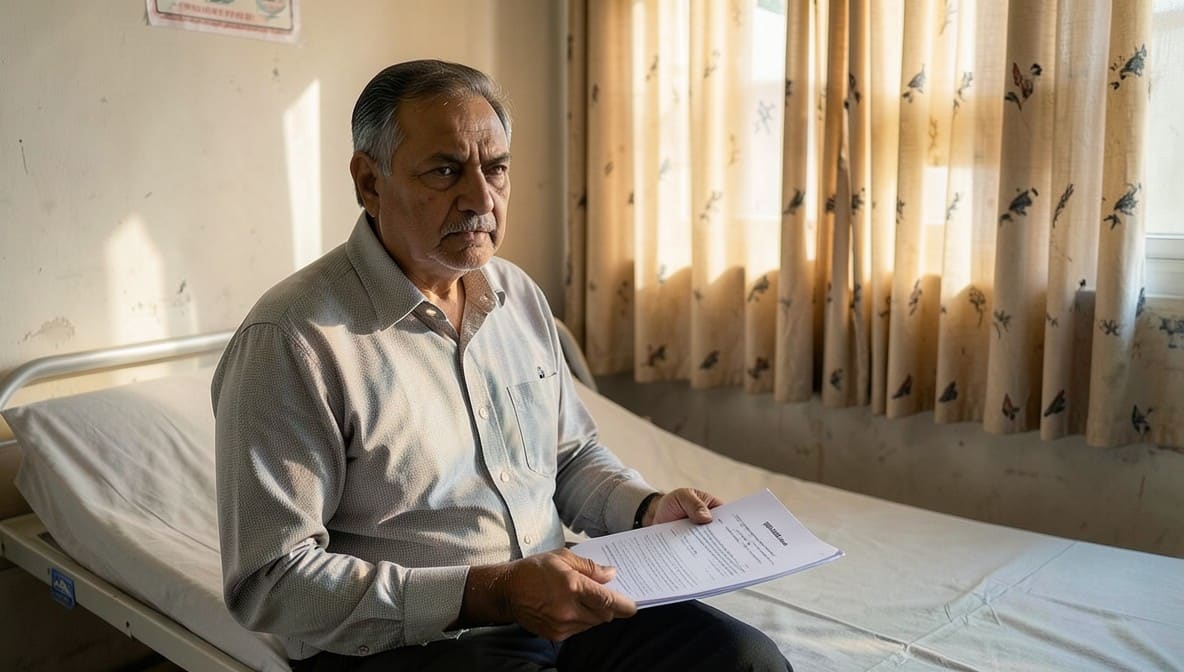
- The petitioner is a senior citizen aged approximately 60 years.
- The petitioner’s mother passed away in 2015 and his elder brother in 2017, both during the pendency of the original complaint.
- The petitioner has been under medical treatment for chronic ailments including high blood pressure, cholesterol, and migraine since 5th August 2019.
- The petitioner claimed he expected his brother to initiate appellate proceedings, but due to lack of communication, he was compelled to act independently.
- The petitioner applied for a certified copy of the State Commission’s order dated 19th December 2024 on 6th January 2025, and sent a reminder on 11th April 2025, receiving no response.
- He then filed Revision Petition No. NC/RP/917/2025 before the National Consumer Disputes Redressal Commission, which was dismissed on 30th June 2025.
Procedural History
- 17.06.2022: District Consumer Disputes Redressal Commission delivers judgment partly allowing Consumer Complaint No. 201 of 2014.
- 13.09.2022: Petitioner receives free certified copy of the judgment.
- January 2023: Petitioner files Appeal No. A/23/86 of 2023 before State Commission with application for condonation of 97-day delay.
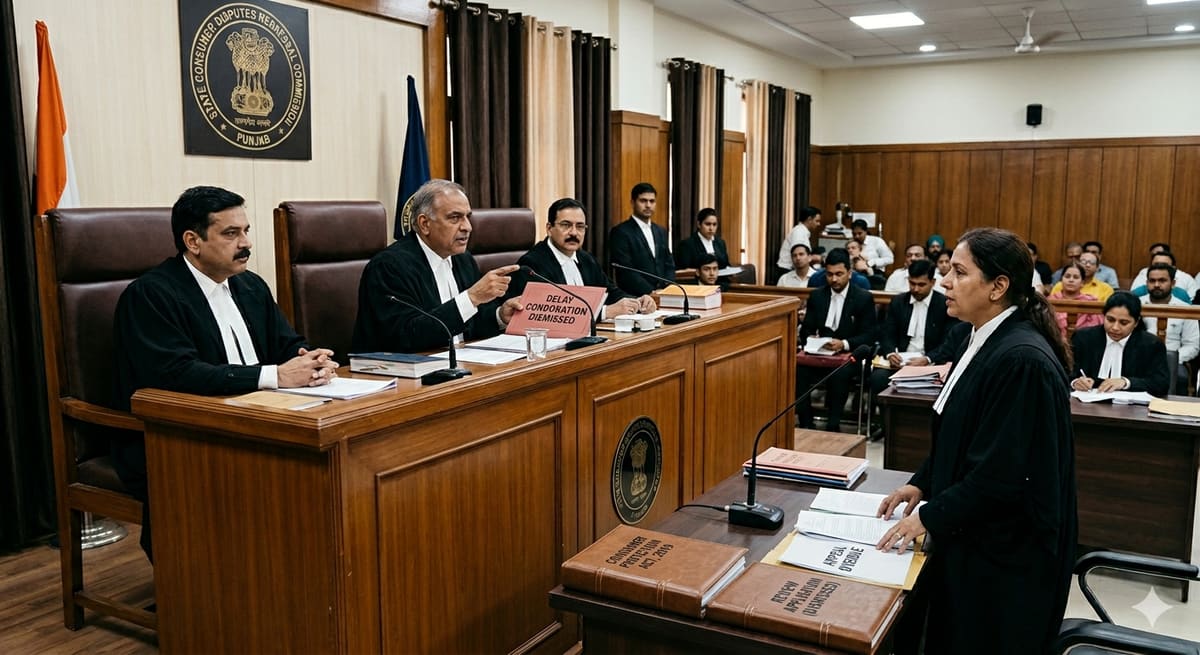
- 19.12.2024: State Commission dismisses condonation application (MA/23/29 of 2023).
- 06.01.2025: Petitioner applies for certified copy of the State Commission’s order.
- 11.04.2025: Petitioner sends reminder for certified copy.
- 30.06.2025: National Consumer Disputes Redressal Commission dismisses Revision Petition No. NC/RP/917/2025.
- 2025: Writ Petition (ST.) No. 30089 of 2025 filed before Bombay High Court.
- 21.04.2026: Judgment delivered by Justice Amit Borkar.
The Parties' Positions
For the Petitioner
The petitioner, a senior citizen, argued that his delay in filing the appeal was due to a combination of emotional trauma from the deaths of close family members, chronic medical conditions, and reliance on his brother to act on his behalf. He claimed he was not in a position to make timely legal decisions due to health deterioration and family distress.
For the Respondent
The Union of India and respondent no.2 contended that the deaths occurred years before the judgment (2015 and 2017), and thus could not explain delay after September 2022. They argued that pre-existing medical conditions, without specific incapacity during the limitation period, are insufficient. They further alleged that the petitioner’s explanation was fabricated and intended to mislead the forums.
Relief Sought
The petitioner sought quashing of the orders dated 19th December 2024 and 30th June 2025, condonation of delay in filing the appeal, restoration of the appeal to the State Commission for hearing on merits, and waiver of costs or imposition of minimal costs.
The Legal Issue
The central question was whether the petitioner’s explanation for a 97-day delay in filing an appeal under the Consumer Protection Act - grounded in senior citizenship, chronic illness, and familial loss - constitutes sufficient cause for condonation of delay under Section 34(2) of the Consumer Protection Act, 2019, when no malafide or deliberate neglect is established.
Arguments Presented
For the Petitioner
Learned counsel submitted that the petitioner’s delay was neither wilful nor negligent. He relied on the petitioner’s age, medical history since 2019, and the emotional impact of losing two close family members during the pendency of the original complaint. He argued that the petitioner’s reliance on his brother to act, coupled with lack of communication, was a reasonable human failing, not legal negligence. He cited Bhagwati Prasad v. State of U.P. and Rajesh Kumar v. State of Haryana to emphasize that courts must adopt a liberal approach to condonation in consumer matters, especially for vulnerable litigants.
For the Respondent
The State contended that the explanation was legally untenable. The deaths occurred years before the judgment, and chronic medical conditions, without documentary proof of incapacity during the limitation period, cannot justify delay. Counsel relied on Arunkumar H. Shah v. Avon Arcade Premises Co-operative Society Ltd. and Anshul Aggarwal v. New Okhla Industrial Development Authority to argue that consumer litigation must be expeditious and that delays must be rigorously scrutinized. They asserted that the petitioner’s conduct showed indifference and that the forums below were justified in rejecting the condonation application.
The Court's Analysis
The Court examined the nature of the delay, the petitioner’s conduct, and the legal principles governing condonation under Section 34(2) of the Consumer Protection Act, 2019. It emphasized that the purpose of condonation is not to reward negligence but to ensure that justice is not defeated by technicalities.
"The law on condonation of delay is settled. The approach should be to advance justice where there is no clear fraud or intentional neglect. A matter should ordinarily be decided on merits rather than being dismissed only on limitation, particularly when the delay is explainable and no irreparable prejudice is shown to the other side."
The Court noted that the petitioner did not remain inactive for years. He filed the appeal within three months of receiving the certified copy, which is not an inordinate delay in the context of a senior citizen managing personal and health crises. The Court rejected the respondent’s argument that the deaths of family members were too remote, observing that their passing occurred during the prolonged pendency of the original complaint, which spanned nearly eight years. The cumulative emotional and psychological burden on the petitioner was not merely incidental but materially impacted his capacity to act promptly.
The Court distinguished Arunkumar H. Shah and Anshul Aggarwal, noting that those cases involved deliberate inaction, lack of any effort to pursue remedies, or clear mala fides. Here, the petitioner actively pursued remedies - first by filing the appeal, then by seeking certified copies, and finally by approaching the National Commission. His conduct demonstrated persistence, not apathy.
The Court further held that the State Commission and National Commission adopted an unduly rigid approach, treating the petitioner’s explanation with suspicion without evaluating its plausibility in light of his circumstances. The absence of proof of specific medical incapacity during the limitation period was not fatal, given the totality of circumstances.
The Verdict
The petitioner succeeded. The Bombay High Court quashed the orders dated 19th December 2024 and 30th June 2025. The application for condonation of delay in Appeal No. A/23/86 of 2023 was allowed, subject to payment of costs of Rs. 10,000 by the petitioner to respondent no.2 within eight weeks. Upon proof of payment, the appeal shall be restored to the file of the State Consumer Disputes Redressal Commission and heard on its merits, without being influenced by prior observations. The parties shall appear before the State Commission on a date to be fixed by it. There shall be no order as to costs in the writ petition.
What This Means For Similar Cases
Senior Citizens Are Entitled to Liberal Condonation
- Practitioners must argue that age, chronic illness, and emotional trauma from family loss during prolonged litigation constitute sufficient cause under Section 34(2), even without medical certificates for every day of delay.
- Courts must consider the cumulative impact of personal hardship, not isolate events by date.
- A single affidavit detailing health conditions and family circumstances, supported by treatment records, is sufficient to trigger judicial indulgence.
Delay Is Not Automatically Fatal in Consumer Appeals
- The mere fact that an appeal is filed after 30 days does not warrant dismissal if the litigant demonstrates consistent effort to pursue remedy.
- Courts must distinguish between abandonment and delay caused by human vulnerability.
- The burden shifts to the opposite party to prove prejudice; mere assertion of prejudice is insufficient.
- This precedent strengthens the position of elderly, ill, or disadvantaged litigants in consumer forums nationwide.
Procedural Rigidity Must Yield to Substantive Justice
- Consumer protection law is remedial in nature; technicalities must not override access to justice.
- The doctrine of actio personalis moritur cum persona does not apply to delay condonation - personal hardship remains relevant even if the cause of distress occurred before the judgment.
- Advocates should routinely include affidavits on health and family circumstances in condonation applications, even if not strictly required.