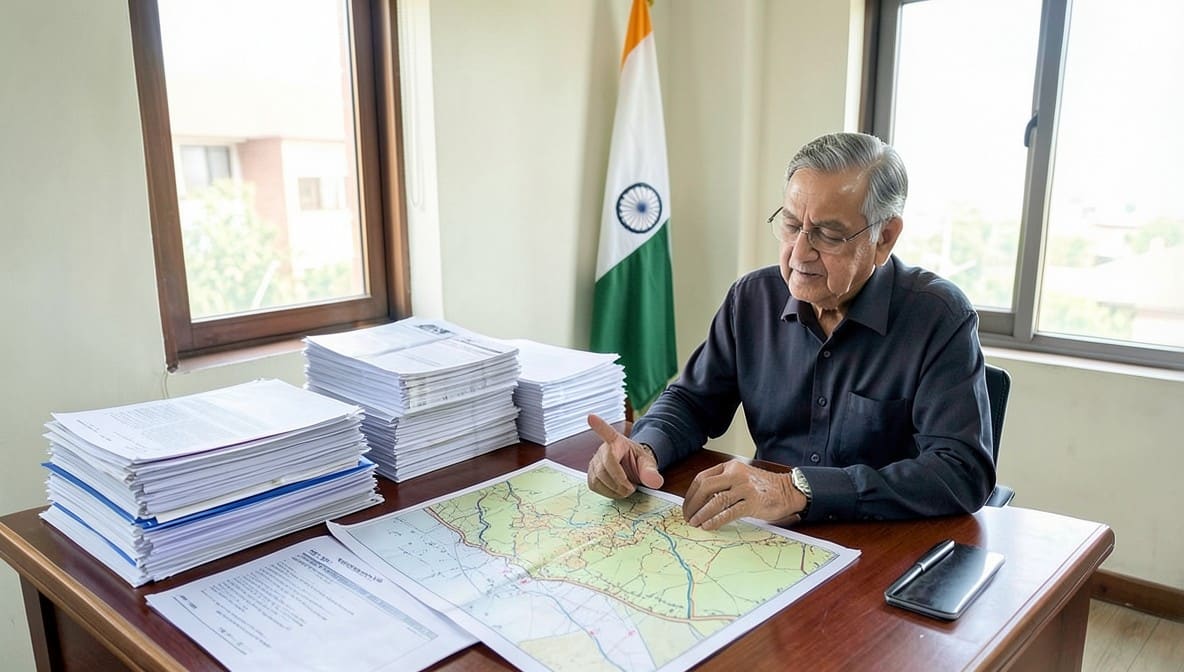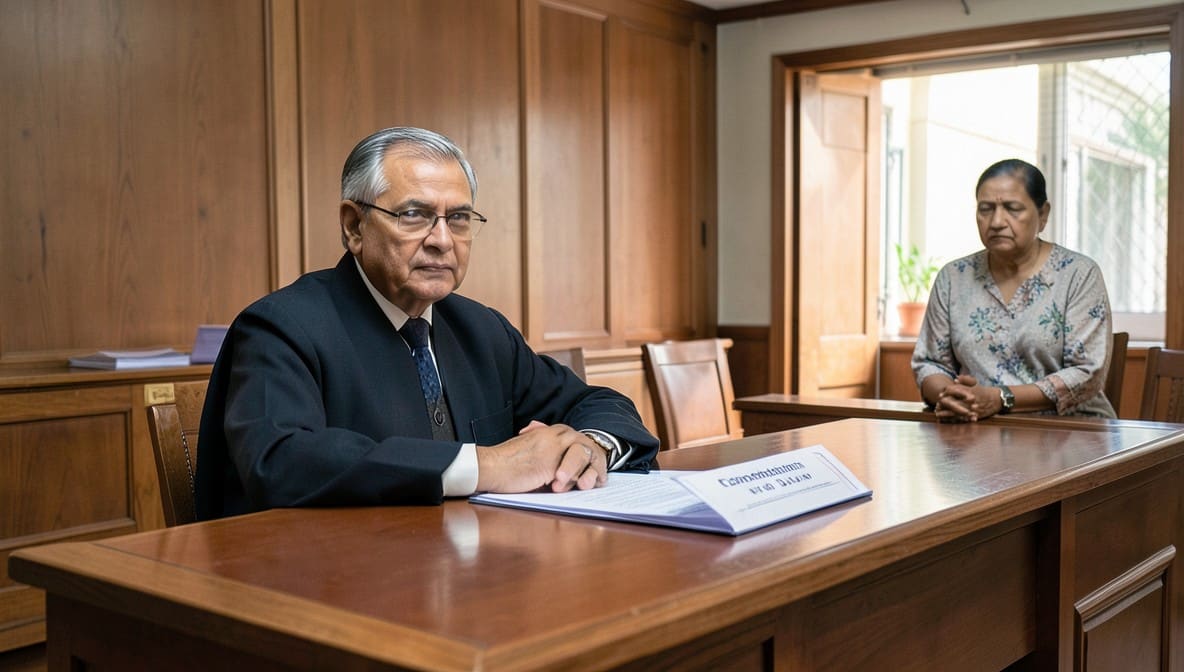
The Gauhati High Court's recent judgment in Sh. H. Biakhnuna v. Sh. L. Rallianzuala & Ors. underscores the critical importance of diligence in legal proceedings. The Court refused to condone a delay of 1,163 days in filing an appeal, holding that negligence and inaction disentitle a party from relief under Section 5 of the Limitation Act, 1963, even where substantial rights over immovable property are involved.
Background & Facts
The Dispute
The applicant, Sh. H. Biakhnuna, was defendant No. 4 in Title Suit No. 01/2016 before the Senior Civil Judge, Serchhip. The suit pertained to a dispute over immovable property. The applicant had filed his written statement on 21.06.2016 but subsequently remained absent from the proceedings for a prolonged period.
Key Facts
- The applicant entered appearance and filed his written statement on 21.06.2016.
- Despite being present on 10.08.2016 (framing of issues) and 01.09.2016 (framing of preliminary issues), the applicant failed to appear on multiple subsequent dates:
- 22.05.2019, 20.06.2019, 18.07.2019, 16.08.2019, 13.09.2019, 01.11.2019
- 13.03.2020, 24.04.2020, 03.07.2020 (last opportunity to cross-examine PW granted)
- 25.02.2021 (opportunity to cross-examine PW closed)
- 12.03.2021, 26.03.2021, 23.04.2021, 25.05.2021, 02.09.2021, 24.09.2021, 20.10.2021, 12.11.2021, 03.12.2021
- On 07.12.2021, the trial court concluded the hearing in the applicant's absence and reserved judgment for 24.01.2022.
- The judgment was ultimately pronounced on 25.03.2022 in the presence of the plaintiff and other defendants, but in the applicant's absence.
Procedural History
- 21.06.2016: Applicant files written statement.
- 07.12.2021: Trial court concludes hearing; fixes 24.01.2022 for judgment.
- 24.01.2022: Court adjourned (judge on leave); next date fixed for 18.02.2022.
- 18.02.2022: Court adjourned (judge on official duty); next date fixed for 25.03.2022.
- 25.03.2022: Impugned judgment pronounced in applicant's absence.
- 26.11.2024: Applicant receives Letter Memo No. C.18018/1/2024-LRS(S) from Revenue Department, informing him of the judgment and directing his presence for re-demarcation of land on 03.12.2024.
- 03.12.2024: Applicant visits suit land; learns of judgment.
- 10.12.2024: Applicant consults lawyer in Aizawl.
- 13.12.2024: Applicant returns home; winter vacation commences.
- Third week of January 2025: Courts reopen; applicant requests lawyer to obtain certified copy of judgment.
- 10.03.2025: Application for certified copy filed.
- 05.06.2025: Certified copy furnished.
- 11.06.2025: Applicant informed to consult lawyer.
- Middle of July 2025: Applicant consults lawyer due to wife's illness.
- First week of August 2025: Applicant engages present counsel.
- 22 days later: Present counsel prepares appeal and condonation application.
- I.A.(Civil)/159/2025: Application for condonation of delay filed before Gauhati High Court.
Relief Sought
The applicant sought condonation of a delay of 1,163 days in filing the appeal against the impugned judgment dated 25.03.2022, contending that the effective delay was only 178 days (reckoned from 03.12.2024, the date he acquired knowledge of the judgment).
The Legal Issue
The central question was whether the applicant had shown sufficient cause under Section 5 of the Limitation Act, 1963 to condone the delay of 1,163 days in filing the appeal, particularly in light of:
- His negligent conduct during the trial proceedings.
- The absence of notice under Order XX Rule 1 of the Code of Civil Procedure, 1908 regarding the date of judgment pronouncement.
- The substantial rights involved over immovable property.
Arguments Presented
For the Applicant
- The applicant contended that he was unaware of the judgment dated 25.03.2022 as no notice was served upon him regarding the date fixed for pronouncement, violating Order XX Rule 1 CPC.
- He argued that the limitation period should commence from 03.12.2024, the date he acquired knowledge of the judgment, making the effective delay 178 days.
- Reliance was placed on:
- Raheem Shah & Anr. v. Govind Singh & Ors. [(2023) 18 SCC 764]: The expression sufficient cause is elastic and should be construed liberally to subserve the ends of justice.
- Mata Prasad v. Dewakar Bharti & Ors. [1963 SCC OnLine All 215]: Limitation commences from the date of knowledge of the order.
- National Thermal Power Corporation v. Raghunath Pd. & Ors. [1981 SCC OnLine All 268]: Limitation runs from the date of knowledge where no notice is given.
For the Respondent
- The respondent argued that the applicant's negligence disentitled him to relief, as he had full knowledge of the proceedings but voluntarily remained absent.
- Order XX Rule 1 CPC was inapplicable since the applicant had entered appearance and participated in the proceedings.
- The respondent relied on:
- Rajneesh Kumar & Anr. v. Ved Prakash [SLP (C) Nos. 935 - 936 of 2021]: Blaming advocates for delay is not a valid ground for condonation.
- Thirunagalingam v. Lingeswaran & Anr. [2025 LiveLaw (SC) 560]: Courts must examine the bona fides of the explanation, not merely the merits of the main matter.
- K.B. Lal v. Gyanendra Pratap & Ors. [(2024) 4 SCR 616]: Sufficient cause requires absence of negligence or inaction.
- Kanchhu v. Prakash Chand & Ors. [Civil Appeal No. 5319 of 2025]: Courts must scrutinize explanations for absence from proceedings.
The Court's Analysis
The Court conducted a multi-pronged analysis of the applicant's conduct, the legal principles governing condonation of delay, and the applicability of precedents:
Negligence in Trial Proceedings
"It is evident from the various orders on record that his absence was neither explained nor supported by any application seeking exemption from appearance. This clearly demonstrates that despite having knowledge of the pendency of the suit and despite the fact that his rights in the immovable property were involved, the applicant voluntarily chose to remain absent from the proceedings. Such conduct can be termed nothing but sheer negligence on his part."
The Court emphasized that the applicant's prolonged absence from the trial, despite multiple opportunities to participate, constituted negligence. The trial court had granted last opportunities to cross-examine witnesses and adduce evidence, but the applicant failed to avail himself of these.
Notice Under Order XX Rule 1 CPC
The applicant argued that Order XX Rule 1 CPC was violated as no notice of the judgment pronouncement date was served. The Court rejected this contention:
"The order sheets themselves indicate that 25.03.2022 had been fixed for pronouncement of the Judgment and Order. The entries dated 24.01.2022 and 18.02.2022 appear to be administrative in nature, whereby fresh dates were fixed on account of the absence of the learned Trial Judge. Therefore, the contention advanced by the learned counsel for the applicant that the aforesaid orders were not signed cannot constitute a legally sustainable ground."
The Court held that the order sheets clearly reflected the dates fixed for judgment pronouncement, and the applicant's failure to monitor the proceedings disentitled him from claiming ignorance.
Distinguishing Precedents
The Court distinguished the precedents relied upon by the applicant:
-
Raheem Shah (supra): Involved a delay of 52 days and a liberal approach was adopted due to substantial rights over immovable property. The Court held that the delay of 1,163 days in the present case, coupled with the applicant's negligence, rendered this precedent inapplicable.
-
Mata Prasad (supra): The applicant therein was assured of notice and actively attended court until the final stages. The Court held that the present case involved no such assurance, and the applicant had voluntarily absented himself.
-
National Thermal Power Corporation (supra): NTPC was not a party to the proceedings and had no knowledge of the judgment. The Court held that the applicant, having participated in the trial, could not claim similar ignorance.
Principles of Condonation of Delay
The Court reiterated the object of the Limitation Act as enunciated in Bharat Barrel & Drum Mfg. Co. Ltd. v. the Employees State Insurance Corporation [(1971) 2 SCC 860]:
"The necessity for enacting periods of limitation is to ensure that actions are commenced within a particular period, firstly, to assure the availability of evidence, documentary as well as oral to enable the defendant to contest the claim against him; secondly, to give effect to the principle that law does not assist a person who is inactive and sleeps over his rights by allowing them, when challenged or disputed, to remain dormant without asserting them in a court of law."
The Court also relied on Shivamma (Dead) by LRS v. Karnataka Housing Board & Ors. [Civil Appeal No. 11794 of 2025], which emphasized that administrative lethargy or negligence cannot justify condonation of delay. The scale of balance of justice must weigh the conduct of both parties, and frivolous or fanciful explanations cannot be entertained.
Bona Fides and Liberal Approach
The Court referred to Esha Bhattacharjee v. Managing Committee of Raghunathpur Nafar Academy & Ors. [(2013) 12 SCC 649], which held that lack of bona fides disentitles a party from condonation of delay. A liberal approach must encapsulate reasonableness and cannot be applied where negligence is apparent.
The Verdict
The Court dismissed the application for condonation of delay, holding that:
- The applicant failed to establish sufficient cause for the delay of 1,163 days.
- The applicant's negligent conduct during the trial proceedings disentitled him from relief.
- The limitation period commenced from 25.03.2022, not from 03.12.2024, as the applicant had full knowledge of the proceedings.
- No costs were awarded.
What This Means For Similar Cases
Negligence Disentitles Relief Under Section 5
- Diligence is non-negotiable: Parties cannot voluntarily absent themselves from proceedings and later claim ignorance. Courts will scrutinize conduct during trial to determine bona fides.
- Order XX Rule 1 CPC is not a shield for negligence: While notice of judgment pronouncement is mandatory, parties cannot rely on procedural lapses if they were aware of the proceedings.
The Burden of Proof Lies on the Applicant
- Sufficient cause must be established: Mere inadvertence or administrative delays (e.g., winter vacation, lawyer's inaction) are insufficient. Applicants must demonstrate active steps to monitor proceedings.
- Blame-shifting is impermissible: Litigants cannot shift blame onto advocates for delays. The duty to remain vigilant rests with the party.
Substantial Rights Do Not Guarantee Condonation
- Immovable property disputes do not automatically warrant a liberal approach. Courts will balance the scale of justice, considering the conduct of both parties.
- Inordinate delays (e.g., 1,163 days) are unlikely to be condoned without compelling justification, even where substantial rights are involved.
Practical Takeaways for Practitioners
- Monitor proceedings actively: Parties must regularly check order sheets and court records, especially where dates for judgment pronouncement are fixed.
- Document diligence: If absent from proceedings, file applications for exemption and seek adjournments to demonstrate bona fides.
- Avoid blame-shifting: Advocate-related delays should be minimized and justified with evidence (e.g., illness, unavoidable circumstances).
- Act promptly upon knowledge: Even if knowledge of a judgment is delayed, immediate steps must be taken to obtain certified copies and file appeals.
This judgment reinforces that Section 5 of the Limitation Act is not a tool for negligent litigants but a remedy for those who act with bona fide diligence.