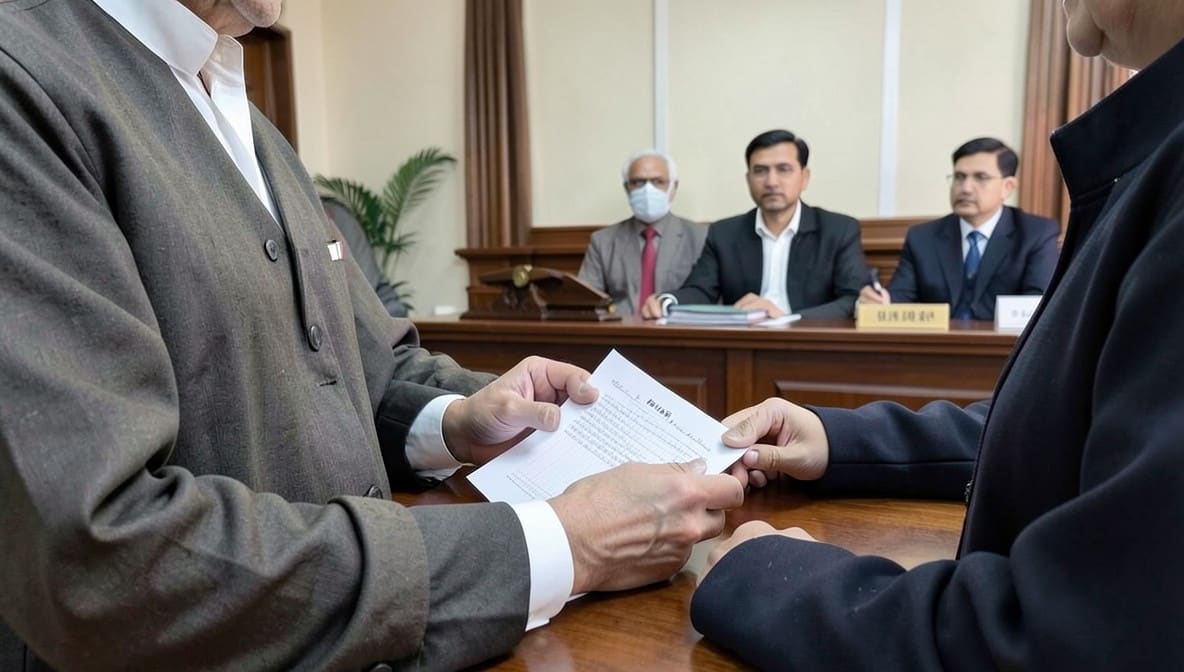
The Orissa High Court set aside the detention of former MLA Bikram Panda, holding that the police failed to comply with the mandatory requirement of informing the arrestee of the grounds of arrest under Article 22(1) of the Constitution and Sections 47, 48 and 62 of the Bharatiya Nagarik Suraksha Sanhita, 2023. The decision underscores that non-compliance vitiates the arrest and compels the court to grant bail, irrespective of the seriousness of the alleged offences.
Background & Facts
The Dispute
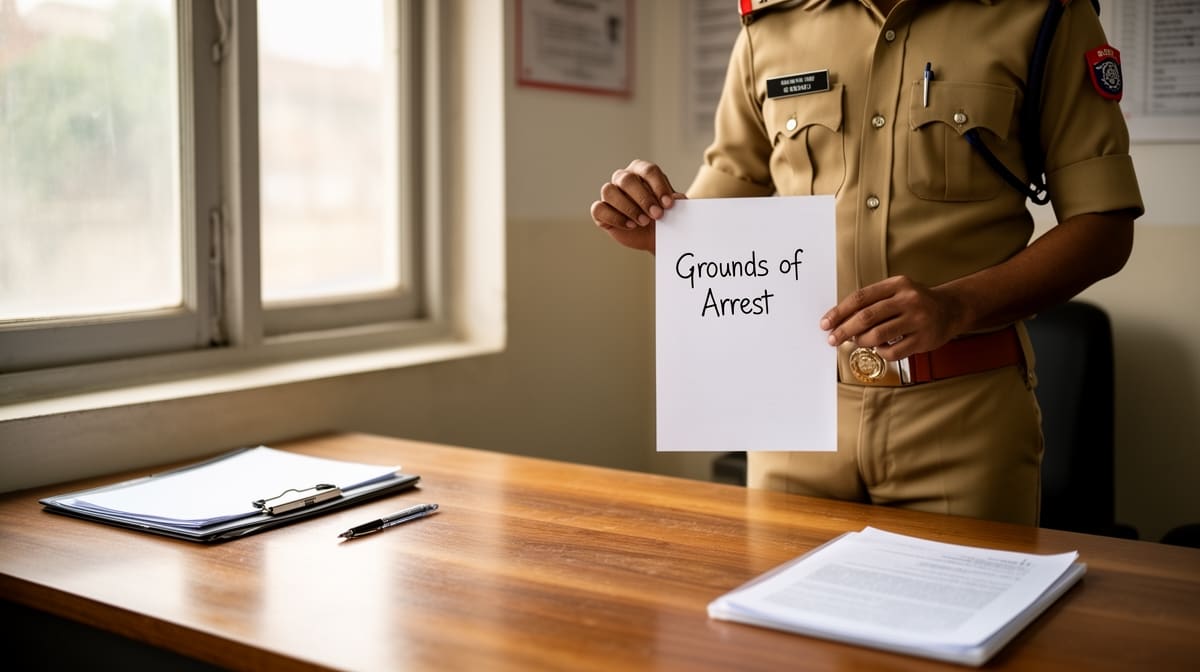
The petitioner, Bikram Panda @ Bikram Kumar Panda, a former member of the Odisha Legislative Assembly, was implicated in a murder case (Baidyanathpur P.S. Case No. 518 of 2025) involving the killing of a local bar association member on 06.10.2025. He sought regular bail under Section 483 of the BNSS, 2023, contending that his arrest on 22.10.2025 was illegal because the police did not provide written grounds of arrest as mandated by law.
Key Facts
- 06.10.2025, 10.00 PM: Two assailants on a motorcycle shot the deceased at Baidyanathpur, Ganjam.
- 07.10.2025: FIR (Baidyanathpur P.S. Case No. 518) registered under Sections 103(1) and 3(5) of BNSS, 2023, read with Sections 25(1-B) and 27 of the Arms Act, 1959.
- 22.10.2025, 12.00 midnight: Petitioner arrested from his residence; formal arrest at 3.30 AM.
- 22.10.2025: Police prepared a Memo of Arrest containing only the vague entry “In the strength of above noted case”.
- 14.11.2025: Petitioner's application for release rejected by the Sub-Divisional Judicial Magistrate (SDJM).
- 16.12.2025: Bail application (B.A. No. 1309 of 2025) rejected by the 3rd Additional Sessions Judge, Berhampur.
- 03.01.2026: Charge sheet filed (Baidyanathpur P.S. Charge Sheet No. 1).
- 24.06.2026: Supplementary charge sheet (193 pages) filed.
- 06.07.2026: Memorandum filed supporting the charge sheet.
- 28 February 2025: Home Department notification framing “Odisha Information of Arrested Persons Rules, 2025”.
- 30.06.2024: Rules, 2025 issued under Section 48(3) BNSS.
- 31.07.2026: Hearing of the bail application before the High Court.
- 31.08.2026: Judgment delivered.
Procedural History
- 06.10.2025 - Murder committed.
- 07.10.2025 - FIR registered (Case No. 518).
- 22.10.2025 - Arrest of petitioner; Memo of Arrest prepared.
- 14.11.2025 - Application for release rejected (SDJM).
- 16.12.2025 - Bail application rejected (3rd Additional Sessions Judge).
- 03.01.2026 - Charge sheet filed.
- 24.06.2026 - Supplementary charge sheet filed.
- 31.07.2026 - Bail application heard before the High Court.
- 31.08.2026 - High Court judgment delivered.
Parties' Positions
- Petitioner: Argues that the arrest memo did not disclose specific grounds of arrest, violating Articles 21 and 22(1) of the Constitution and Sections 47, 48 and 62 of the BNSS, 2023. Claims that the vague entry “In the strength of above noted case” is constitutionally inadequate.
- Respondent (State): Maintains that written grounds were prepared on the date of arrest and communicated orally in Odia; the petitioner’s refusal to sign the memo cannot invalidate a lawful arrest. Asserts that all co-accused received proper memos and that the prosecution’s evidence (CDR, CCTV, confessional statements) justifies denial of bail.
- Informant: Supports the State, emphasizing the seriousness of the conspiracy and the risk of witness tampering.
Relief Sought
The petitioner sought (i) declaration that his arrest was illegal, (ii) release on regular bail, and (iii) direction that the impugned order rejecting bail be set aside. The State sought dismissal of the bail application.
The Legal Issue
Whether the failure to provide the arrestee with specific, written grounds of arrest, as required by Article 22(1) of the Constitution of India and Sections 47, 48 and 62 of the Bharatiya Nagarik Suraksha Sanhita, 2023, renders the arrest illegal and obliges the court to grant bail notwithstanding statutory restrictions.
Arguments Presented
For the Petitioner
- The arrest memo contained only a vague statement and no specific grounds, violating Section 47 of the BNSS and Article 22(1) of the Constitution.
- Citing Mrs. N. Ratnakumari v. State of Odisha (2014) and Vihaan Kumar v. State of Haryana (2025), the petitioner argued that a mere oral explanation or a diary entry is insufficient.
- Relied on Supreme Court pronouncements in Vihaan Kumar and Mihir Rajesh Shah that the burden of proving compliance rests on the police.
For the Respondent/State
- Asserted that written grounds were prepared on 22.10.2025 and communicated orally; the petitioner’s refusal to sign does not invalidate the arrest.
- Emphasised that all co-accused received proper memos and that the prosecution’s circumstantial evidence, CDRs, and confessional statements justify denial of bail.
- Relied on State of Karnataka v. Sri Darshan (2025) to argue that non-signing cannot be a shield against a lawful arrest.
The Court's Analysis
The Court first examined the constitutional mandate of Article 22(1), which requires that an arrested person be informed “as soon as may be” of the grounds of arrest. It noted that the B.N.S.S., 2023 incorporated this constitutional protection in Section 47, making the requirement mandatory, not merely directory.
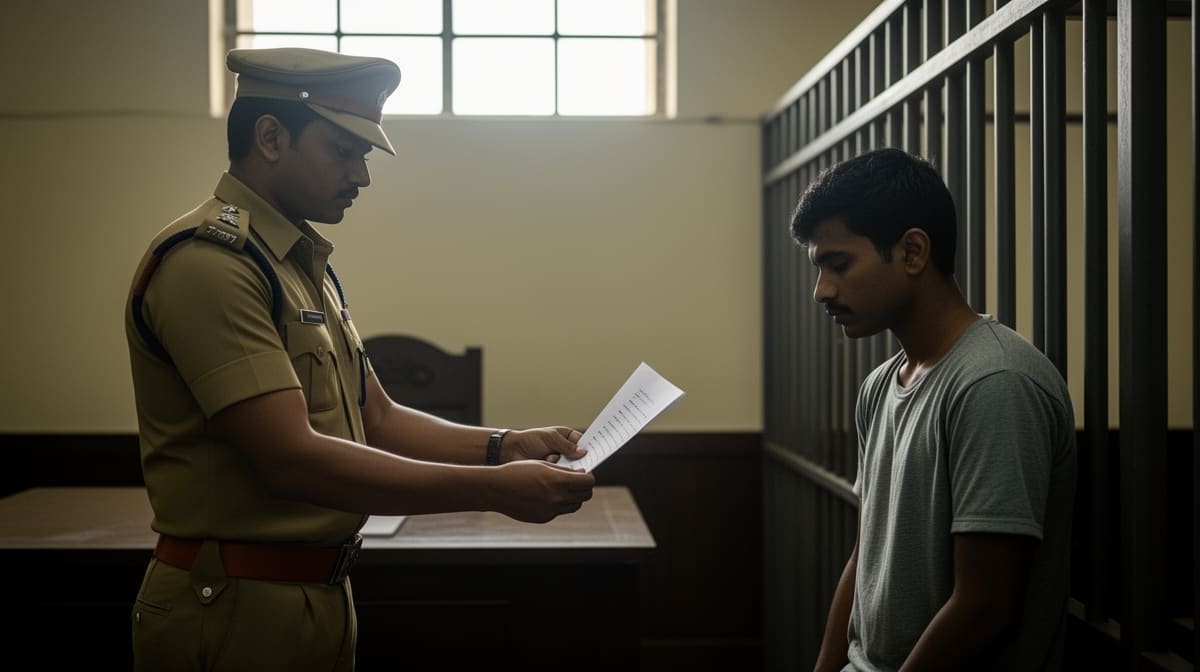
"The requirement of informing a person arrested of grounds of arrest is a mandatory requirement of Article 22(1); the information of the grounds of arrest must be provided to the arrested person in such a manner that sufficient knowledge of the basic facts constituting the grounds is imparted and communicated to the arrested person effectively in the language which he understands." (para 26, judgment)
The Court then compared the present facts with the Supreme Court’s ratio in Vihaan Kumar and Mihir Rajesh Shah. In those cases, the Court held that: (i) the burden of proving compliance lies on the investigating agency; (ii) a vague diary entry or oral communication does not satisfy the statutory requirement; (iii) non-compliance vitiates the arrest and any subsequent remand order.
Applying these principles, the Court observed that the arrest memo for the petitioner contained only the entry “In the strength of above noted case” and no specific allegation. No contemporaneous written document disclosed the precise grounds. The prosecution’s reliance on oral communication to the petitioner and his father, and on a diary entry made later, was deemed an after-thought and insufficient.
The Court also rejected the State’s contention that the petitioner’s refusal to sign the memo could validate the arrest. It reiterated that the right to refuse to sign does not extinguish the State’s duty to furnish the grounds in writing. Moreover, the Court found that the prosecution’s evidentiary material (CDR, confessional statements) could not be considered at the bail stage, citing P. Krishna Mohan Reddy v. State of Andhra Pradesh (2025) which bars reliance on co-accused confessions pre-trial.
Consequently, the Court concluded that the arrest was illegal, the violation of Article 22(1) and Section 47 of the BNSS rendered the detention untenable, and that this illegality alone sufficed to grant bail, irrespective of the seriousness of the charges. The Court emphasized that the finding does not affect the merits of the charge sheet or the pending trial.
The Verdict
The petitioner's bail application was allowed. The Court held that the arrest was vitiated due to non-communication of specific written grounds, ordered the petitioner to be released forthwith, directed him to furnish a bail bond under Section 91 of the BNSS, 2023, and imposed conditions prohibiting any harassment of the victim’s family, the informant, or witnesses. The finding is limited to the petitioner and does not affect the pending charge sheet.
What This Means For Similar Cases
Mandatory Written Grounds of Arrest
- Police must prepare a written memo specifying the exact legal basis for arrest, not a generic statement.
- The memo must be communicated to the arrestee and a relative or friend in a language they understand.
Burden of Proof Lies With the State
- Once an arrestee alleges non-compliance, the onus shifts to the investigating officer to produce contemporaneous written proof.
- Diary entries or post-arrest oral explanations are insufficient.
Impact on Bail Determinations
- Non-compliance with Article 22(1) is a ground to grant bail even where statutory provisions impose a presumption against bail.
- Courts will scrutinise the arrest memo before considering evidential matters such as CDRs or confessional statements.
Practical takeaways for practitioners:
- Ensure that the arrest memo complies with Section 47 BNSS and the 2025 Rules; retain a copy for the record.
- Advise clients to demand the written memo immediately; if absent, file a petition under Section 483 BNSS.
- In bail applications, highlight any procedural lapses as a decisive factor for release.