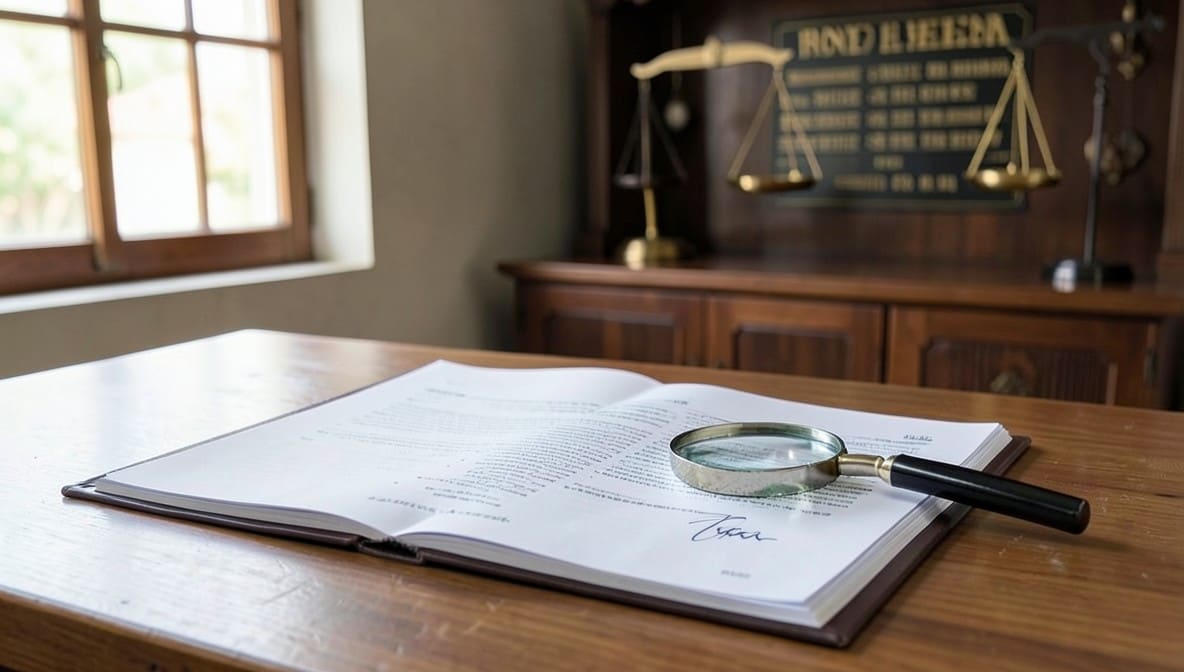
The Madhya Pradesh High Court has reaffirmed that when the authenticity of a signature is central to the resolution of a civil dispute, the denial of a request for handwriting expert examination constitutes a denial of fair procedure. This ruling clarifies the threshold for permitting scientific evidence under the Indian Evidence Act and reinforces the duty of trial courts to facilitate justice through reliable means.
Background & Facts
The Dispute
The petitioner, M/s H.G. Merchantile Pvt. Ltd., filed a civil suit for specific performance of an oral and written agreement for the sale of land bearing Survey Nos. 297/min-1, 297/min-2, 299/1, 299/2/1 and 299/2/2 at Village Sirol, District Gwalior, admeasuring 2.330 hectares (11 Bigha 3 Biswa). The petitioner alleged that in June 2017, the respondents entered into an oral agreement to sell the property for Rs. 6,92,00,000, followed by a written agreement dated 01.07.2017, pursuant to which Rs. 40,00,000 was paid to respondents 1 to 4 with the consent of respondent No. 6.
Key Facts
- Respondent No. 6 executed a sale deed dated 21.12.2004 in favor of respondents 2 to 4.
- A Bhatwara Panji (land record mutation) dated 02.12.2005 was prepared reflecting this transfer.
- The Bhatwara Panji was initially set aside by an order dated 22.11.2021.
- The same was restored in review proceedings by an order dated 21.01.2022.
- Respondent No. 6 executed a second sale deed dated 31.03.2007.
- A compromise decree was passed in a connected civil suit on 12.03.2022.
- Respondent No. 6 admitted to signing the 21.12.2004 and 31.03.2007 sale deeds but denied signing the Bhatwara Panji dated 02.12.2005.
- The chain of title and validity of the 2005 Bhatwara Panji are critical to determining ownership and enforceability of the 2017 agreement.
Procedural History
- 01.07.2017: Written sale agreement executed.
- 21.12.2004: Sale deed executed by respondent No. 6 in favor of respondents 2 - 4.
- 02.12.2005: Bhatwara Panji recorded reflecting transfer.
- 22.11.2021: Bhatwara Panji set aside by Trial Court.
- 21.01.2022: Bhatwara Panji restored in review proceedings.
- 12.03.2022: Compromise decree passed in connected suit.
- 2022: Regular Civil Suit No. 491-A/2022 filed for specific performance.
- During cross-examination of respondent No. 6: Petitioner filed application under Section 45 of the Indian Evidence Act seeking handwriting expert examination of the 02.12.2005 Bhatwara Panji.
- 21.04.2026: Trial Court rejected the application.
- 12.05.2026: Present writ petition filed under Article 227 before the High Court.
Relief Sought
The petitioner sought quashing of the order dated 21.04.2026, restoration of the application for handwriting expert examination, and direction to the Trial Court to permit such examination to determine the authenticity of respondent No. 6’s signature on the Bhatwara Panji.
The Legal Issue
The central question was whether a trial court may refuse an application under Section 45 of the Indian Evidence Act (now Section 39 of the Bharatiya Sakshya Adhiniyam) for handwriting expert examination when the genuineness of a signature is materially disputed and forms the foundation of title and contractual enforceability.
Arguments Presented
For the Petitioner
The petitioner’s counsel contended that the denial of expert examination was legally untenable. He emphasized that respondent No. 6 admitted signing two other sale deeds but denied signing the Bhatwara Panji, creating a clear inconsistency. He relied on Rajeshbhai Muljibhai Patel v. State of Gujarat (2020) 3 SCC 794, where the Supreme Court held that expert opinion on handwriting is a relevant and admissible form of evidence that aids the court in reaching a just conclusion. He also cited L.S. Trading Company v. Manish Mishra (2010) 4 MPLJ 228, where this Court held that when signature authenticity is disputed and material to the case, expert examination must be permitted in the interest of justice. He further argued that the Trial Court erred in ignoring that the Bhatwara Panji had been restored in review, making its authenticity even more critical.
For the Respondent
Respondent No. 6’s counsel opposed the petition, arguing that the application was belated, filed only after completion of evidence, and was an attempt to delay proceedings. He contended that sufficient documentary evidence was already on record and that the Trial Court had rightly exercised its discretion. He asserted that no jurisdictional error or perversity was demonstrated to warrant interference under Article 227.
The Court's Analysis
The Court observed that respondent No. 6 admitted execution of two sale deeds but denied his signature on the Bhatwara Panji dated 02.12.2005. This document, though initially set aside, was restored in review proceedings on 21.01.2022, thereby regaining legal relevance. The authenticity of the signature on this document directly impacts the chain of title and the validity of the 2017 agreement, which is the subject matter of the suit.
"Expert opinion regarding handwriting/signature constitutes relevant evidence under Section 45 of the Indian Evidence Act... and scientific examination can be permitted whenever such examination is necessary for arriving at a just and proper conclusion."
The Court noted that the Trial Court’s rejection of the application was based on an erroneous factual premise - that the Bhatwara Panji was ineffective - despite its restoration in review. This rendered the reasoning legally infirm. The Court emphasized that the Supreme Court in Rajeshbhai Muljibhai Patel and this Court in Manish Mishra have consistently held that when signature authenticity is in serious dispute and affects the adjudication of rights, the court must permit expert examination. Denial of such an opportunity amounts to a denial of fair procedure and impedes the court’s ability to appreciate evidence properly.
The Court further rejected the argument of delay as insufficient to override the fundamental right to a fair trial, particularly where the disputed document is pivotal to the case. The discretion of the Trial Court, while real, is not unfettered and must yield to the demands of justice.
The Verdict
The petitioner succeeded. The High Court set aside the order dated 21.04.2026 of the XIXth District Judge, Gwalior, rejecting the application for handwriting expert examination. The application under Section 45 of the Indian Evidence Act (now Section 39 of the Bharatiya Sakshya Adhiniyam) was allowed. The Trial Court was directed to take appropriate steps to examine the disputed signatures on the Bhatwara Panji dated 02.12.2005 through a qualified handwriting expert and proceed expeditiously with the trial. No costs were awarded.
What This Means For Similar Cases
Expert Examination Is Not Discretionary When Signature Authenticity Is Material
- Practitioners must file applications for handwriting expert examination at the earliest opportunity, but delay alone cannot justify outright rejection if the signature is central to title or contractual validity.
- Courts must assess whether the disputed signature affects the core issue in dispute - not merely whether the application is late.
- Restoration of a document in review proceedings reactivates its evidentiary value and necessitates scrutiny of all associated signatures.
Scientific Evidence Is Not a Luxury but a Necessity in Title Disputes
- In land and property litigation, where documentary evidence is often contested, expert opinion under Section 45 IEA is not optional - it is integral to due process.
- Courts cannot rely on subjective assessment of handwriting; scientific comparison is the only reliable method to resolve genuine disputes.
- The Rajeshbhai and Manish Mishra precedents now form a binding standard: if the signature’s authenticity is disputed and material, the court must permit examination.
Trial Courts Must Avoid Prejudging Document Validity
- A document’s prior rejection or restoration must be treated as procedural history, not as a substitute for evidentiary scrutiny.
- Trial courts must not assume the validity of a document merely because it was restored in review; the authenticity of each signature must be independently verified.
- Failure to permit expert examination on this basis renders the trial process procedurally defective and vulnerable to appellate interference under Article 227.