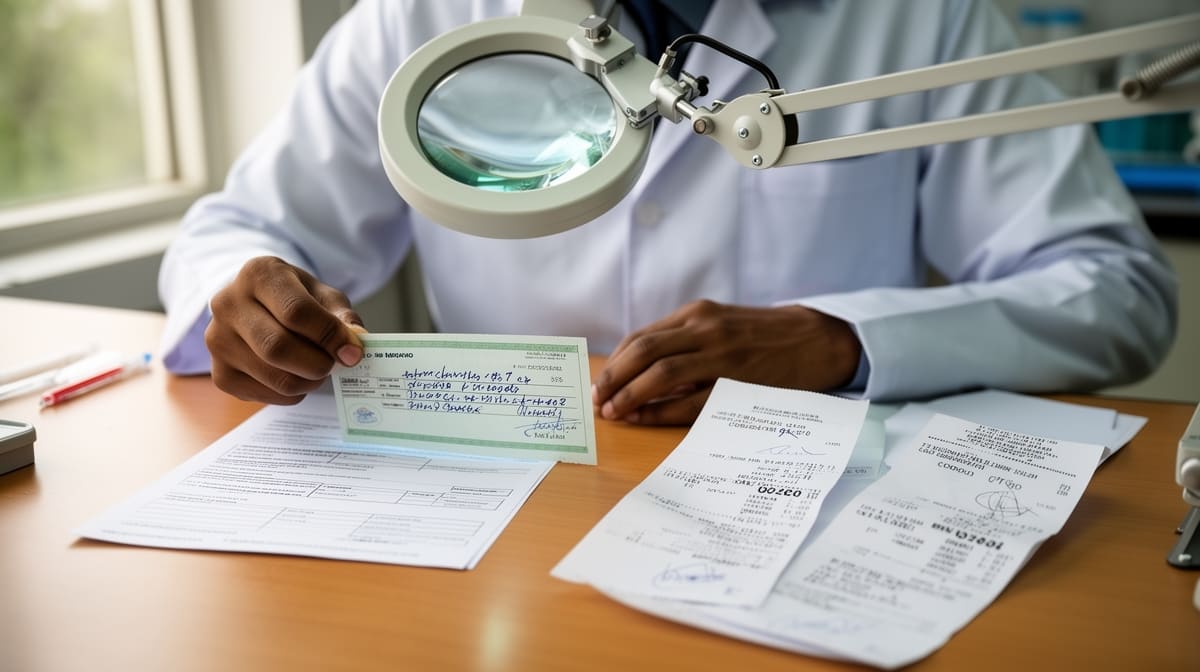
The Kerala High Court has affirmed that an accused facing prosecution under Section 138 of the Negotiable Instruments Act has a fundamental right to seek forensic handwriting analysis to challenge the authenticity of entries made on a cheque after signature. This ruling reinforces the principle that due execution of a cheque requires the drawer’s consent to all material particulars, not merely the presence of a signature.
Background & Facts
The Dispute
The petitioner, Jayan, was prosecuted under Section 138 of the Negotiable Instruments Act for issuing a cheque allegedly in discharge of a legally enforceable debt. He contended that he had signed a blank cheque as security, but the complainant later filled in the amount, date, and payee’s name without his knowledge or consent. The complainant, PW1, testified that the petitioner himself had filled in all details in his presence.
Procedural History
- 2016: Complaint filed before Judicial First Class Magistrate Court-IV, Thrissur
- 2017: Petitioner filed C.M.P. No.284/2017 seeking forensic analysis of handwriting on the cheque
- 2020: Magistrate rejected the request, relying on Bir Singh v. Mukesh Kumar
- 2020: Petitioner filed Crl.M.C. No.5947/2020 under Section 482 Cr.P.C. challenging the rejection
Relief Sought
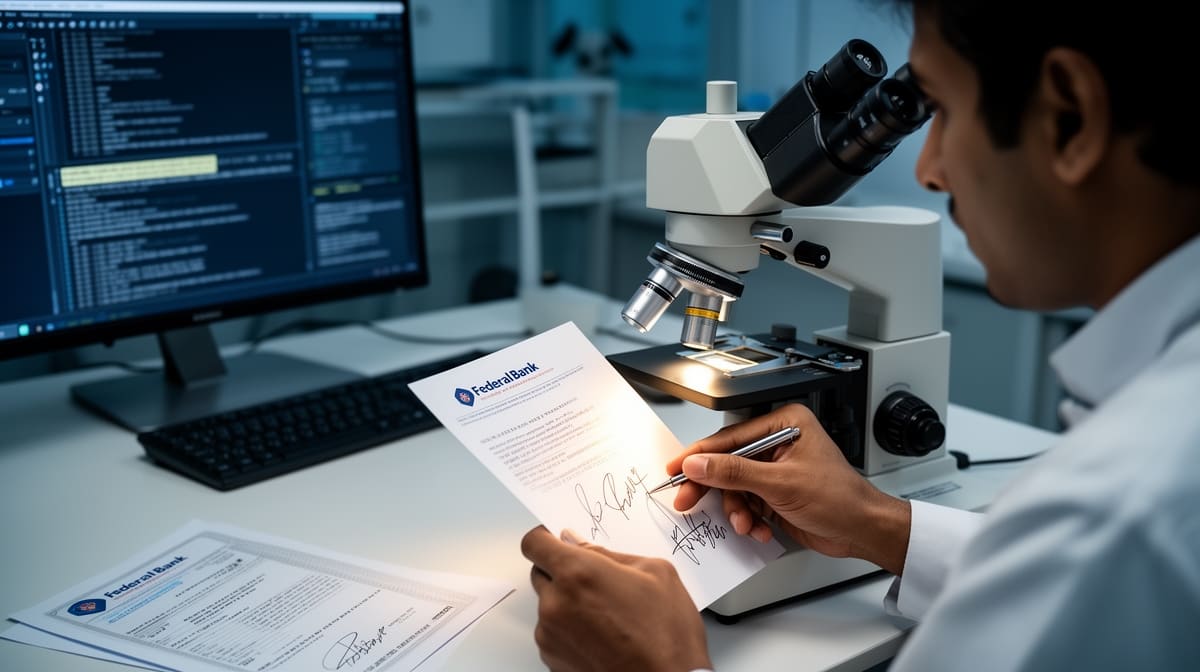
The petitioner sought to have the impugned cheque sent to the State Forensic Science Laboratory for expert comparison of the handwriting with his admitted contemporaneous writings, to prove that he did not make the non-signature entries.
The Legal Issue
The central question was whether an accused under Section 138 of the Negotiable Instruments Act can be denied the opportunity to obtain forensic handwriting analysis to dispute whether material entries on a cheque were made by him, when he claims the cheque was signed blank and later fraudulently completed.
Arguments Presented
For the Petitioner
The petitioner’s counsel argued that due execution of a cheque under Section 138 requires proof that all entries were made with the drawer’s consent. Relying on Bir Singh v. Mukesh Kumar, he acknowledged that third-party filling does not per se invalidate a cheque, but emphasized that the Supreme Court did not foreclose the right to prove lack of consent. He contended that denying handwriting analysis would violate Article 21 and the right to a fair trial under Section 313 Cr.P.C. and Section 137 of the Indian Evidence Act.
For the Respondent
The State and complainant argued that Bir Singh established that a cheque remains valid even if entries are made by someone other than the drawer. They contended that the petitioner’s defence was a general denial without corroboration, and that permitting forensic analysis would open floodgates to frivolous delays. They urged the Court to uphold the Magistrate’s discretion to reject the request as unnecessary.
The Court's Analysis
The Court rejected the notion that Section 138 prosecution hinges solely on the presence of a signature. It held that due execution requires the drawer’s intention to be bound by all material entries - amount, date, payee - not just the signature. The Court distinguished Bir Singh by clarifying that while third-party filling does not automatically invalidate a cheque, it does not preclude the accused from proving lack of consent.
"The proof of due execution of a cheque by the drawer requires the inevitable evidence that the entries in that cheque including the amount and date were made in accordance with the will of the drawer."
The Court emphasized that the right to adduce evidence is not a mere formality but a constitutional safeguard. Denying handwriting analysis would effectively nullify the accused’s ability to rebut the complainant’s testimony, especially where the latter’s version is contested. The Court further clarified that the accused must furnish contemporaneous documents bearing his undisputed handwriting to ensure accurate comparison, as current handwriting may have changed over time.
The Verdict
The petitioner won. The Kerala High Court held that an accused under Section 138 NI Act has the right to seek forensic handwriting analysis to prove that material entries on a cheque were not made by him, provided he produces contemporaneous samples. The Magistrate’s order was set aside, and the case was remanded for expert examination.
What This Means For Similar Cases
Handwriting Analysis Is a Legitimate Defence Tool
- Practitioners must now routinely consider requesting forensic handwriting analysis in Section 138 cases where the accused claims the cheque was signed blank
- Courts cannot reject such requests on grounds of "general denial" - the defence must be given a fair opportunity to substantiate its claim
- The burden remains on the accused to produce contemporaneous handwriting samples; failure to do so may result in adverse inference
Contemporaneous Samples Are Non-Negotiable
- Only handwriting samples from the same period as the cheque’s issuance are admissible for comparison
- Practitioners should immediately secure bank records, signed contracts, or official documents dated near the cheque’s issuance date
- Delay in producing samples may be fatal to the defence - timely evidence collection is critical
Consent, Not Signature, Is the Core of Section 138 Liability
- A signature alone does not establish liability under Section 138 if the drawer proves lack of consent to the filled-in details
- This judgment shifts focus from formal compliance to substantive intent - aligning with the doctrine of mens rea in cheque dishonour cases
- Prosecutors must now anticipate and rebut claims of fraudulent completion, not rely solely on the cheque’s face value