The Karnataka High Court has clarified that in proceedings under Section 138 of the Negotiable Instruments Act, when an accused denies authorship of the signature on a cheque, the burden shifts to them to substantiate that claim through proper evidentiary means, including expert examination of specimen signatures. This ruling reinforces procedural fairness in cheque dishonour cases and mandates trial courts to facilitate expert analysis when such a defence is raised.
Background & Facts
The Dispute
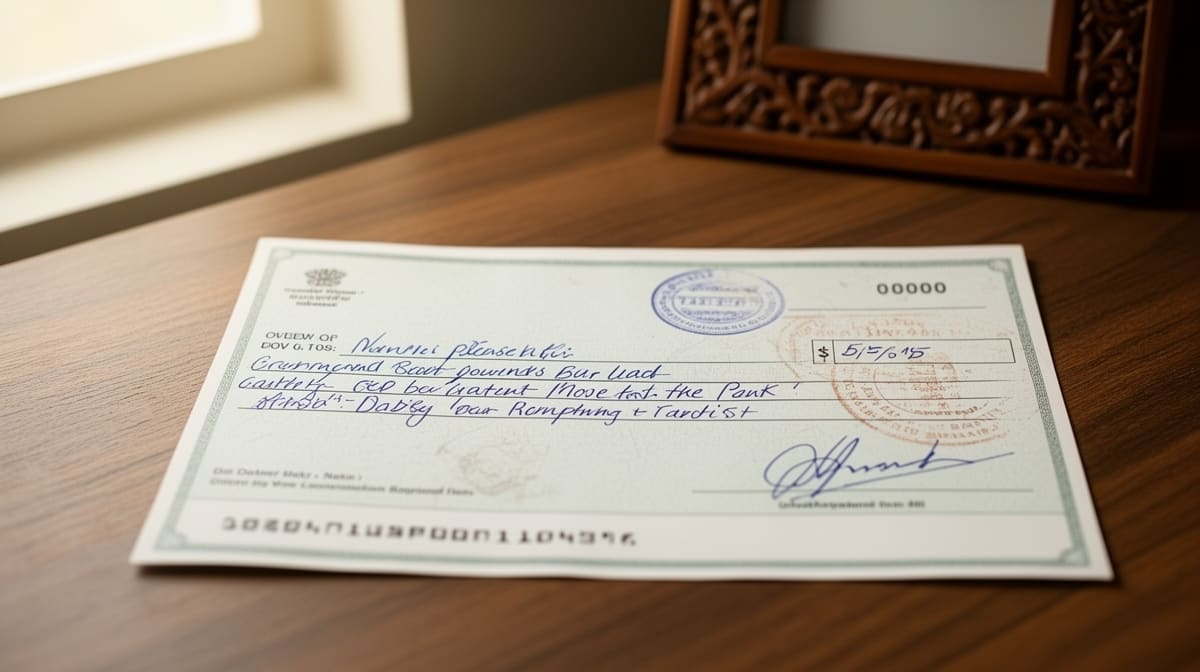
The respondent-complainant, Mohan Kumar, filed a complaint under Section 138 of the Negotiable Instruments Act against the petitioner, Uttam Kumar, alleging that a cheque dated 15.08.2023 for Rs. 2,50,000 drawn on his account was dishonoured due to "insufficient funds". The complainant claimed the cheque was issued in discharge of a lawful debt. The petitioner denied ever borrowing any amount from the complainant and asserted that the signature on the cheque (Ex.P1(a)) was forged.
Key Facts
- The cheque (Ex.P1) was presented for encashment on 20.10.2023 and returned unpaid on 22.10.2023
- A legal notice dated 05.11.2023 was sent to the petitioner, demanding payment within 15 days
- The petitioner did not respond to the notice
- Criminal Case No. 354/2024 was registered on 24.11.2025 before the III Additional Civil Judge and JMFC, Kalaburagi
- The petitioner appeared before the trial court and was granted bail
- The prosecution examined PW-1 (the complainant) and recorded his evidence
- The petitioner’s statement under Section 313 CrPC was recorded, wherein he denied the debt and challenged the authenticity of the signature
- The case was posted for defence evidence, but the petitioner did not adduce any testimony
Procedural History
- 15.08.2023: Cheque issued by petitioner
- 20.10.2023: Cheque presented for payment
- 22.10.2023: Cheque dishonoured by bank
- 05.11.2023: Legal notice sent under Section 138 NI Act
- 24.11.2025: Criminal Case No. 354/2024 registered
- 27.11.2025: Petitioner filed application under Section 45 of the Indian Evidence Act seeking expert opinion on signature authenticity
- 27.11.2025: Trial Court rejected the application without permitting expert examination
- 28.11.2025: Petitioner filed Criminal Petition No. 200125/2026 under Section 528 BNSS (formerly Section 482 CrPC)
Relief Sought
The petitioner sought setting aside of the trial court’s order dated 27.11.2025 rejecting his application for expert opinion, and directed the trial court to obtain the petitioner’s specimen signature from the bank and submit both the disputed signature and specimen to a handwriting expert.
The Legal Issue
The central question was whether, in a case under Section 138 of the Negotiable Instruments Act, where the accused denies the authenticity of the signature on the cheque, the trial court is obligated to permit an application under Section 45 of the Indian Evidence Act for expert examination of the signature, and whether the burden to prove non-authenticity lies on the accused.
Arguments Presented
For the Petitioner
The petitioner’s counsel argued that the accused had raised a specific defence that the signature on the cheque was not his, and that the burden under Section 139 of the NI Act only creates a presumption of liability upon proof of issuance and dishonour - it does not negate the accused’s right to rebut that presumption through scientific evidence. He relied on Section 45 of the Indian Evidence Act, which permits expert opinion on fingerprint or handwriting comparison, and contended that the trial court’s refusal to allow such an application was a denial of natural justice and a violation of the accused’s right to a fair trial.
For the Respondent
The respondent did not appear before the High Court, and no arguments were presented on their behalf. The court treated the respondent’s position as nil.
The Court's Analysis
The Court observed that while Section 139 of the NI Act creates a rebuttable presumption that the cheque was issued for a lawful debt, it does not eliminate the accused’s right to challenge the authenticity of the signature. The Court emphasized that the accused’s denial of signature is not a mere technical defence but a substantive challenge to the foundation of the prosecution’s case.
"When the accused specifically denies the signature on the cheque, the trial court must provide a reasonable opportunity to the accused to prove that the signature is not his, especially when the cheque is the sole piece of evidence linking him to the transaction."
The Court noted that the trial court’s rejection of the application under Section 45 of the Indian Evidence Act was arbitrary and contrary to established principles of evidence. It held that the accused is entitled to compare the disputed signature with a specimen signature obtained from the bank at the time of account opening - a document that is both contemporaneous and authoritative.
The Court further clarified that the burden to establish non-authenticity rests on the accused, but the trial court must facilitate the means to discharge that burden. Denying access to expert examination effectively nullifies the accused’s right to rebut the presumption under Section 139.
The Verdict
The petition was allowed. The order dated 27.11.2025 of the III Additional Civil Judge and JMFC, Kalaburagi, rejecting the application under Section 45 of the Indian Evidence Act, was set aside. The trial court is directed to obtain the specimen signature of the petitioner from the bank records, forward both the disputed signature (Ex.P1(a)) and the specimen signature to a qualified handwriting expert, retain certified copies of both documents, and ensure the expert’s report is filed in the record. The petitioner shall bear the expenses of the expert examination. The trial court shall complete this process within four weeks from the date of receipt of this order.
What This Means For Similar Cases
Expert Opinion Is Not Discretionary - It Is Procedurally Mandatory
- Practitioners must file applications under Section 45 of the Indian Evidence Act whenever signature authenticity is contested in Section 138 cases
- Trial courts cannot reject such applications on grounds of delay or lack of urgency - the right to rebut presumption is fundamental
- Specimen signatures from bank records are admissible and must be secured as part of the evidentiary process
Burden of Proof Is Rebuttable, Not Shifted Entirely
- The presumption under Section 139 NI Act is not conclusive - it is a procedural tool, not a substantive conviction mechanism
- The accused’s denial triggers the need for corroboration or refutation through scientific means
- Failure to permit expert examination renders the trial procedurally defective and liable to be set aside on appeal
Documentation from Financial Institutions Is Critical
- Banks must preserve specimen signatures for the statutory retention period (minimum 5 years under RBI guidelines)
- Defence counsel must immediately request certified copies of account opening documents upon learning of a Section 138 complaint
- Absence of specimen signature from bank records may weaken the accused’s defence - early preservation is essential