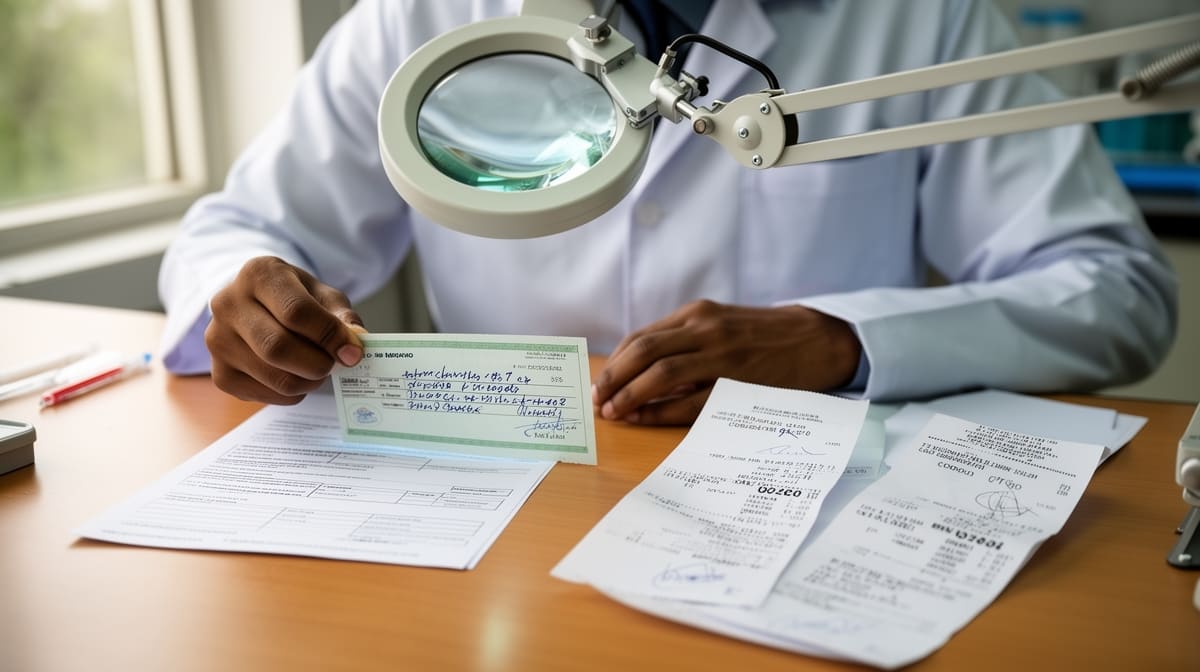
The Kerala High Court has clarified that in Section 138 Negotiable Instruments Act cases, where the complainant specifically alleges that the accused personally wrote the entries in the dishonoured cheque, the accused must be given an opportunity to prove otherwise through handwriting expert analysis. This judgment underscores the importance of procedural fairness in cases where the credibility of the complainant's testimony hinges on the authenticity of the cheque's handwriting.
Background & Facts
The Dispute
These two original petitions under Article 227 of the Constitution of India challenge orders passed by the Judicial First Class Magistrate Court, Taliparamba, rejecting applications filed by the accused to send impugned cheques for handwriting expert analysis. Both cases involve allegations of cheque dishonour under Section 138 of the Negotiable Instruments Act, 1881.
Key Facts
OP(Crl.) No. 716 of 2025 (S.T.C. No. 1969 of 2019)
- The complainant, Prasad P., alleged that the petitioners, representing PTB Chits Pvt Ltd, issued a cheque for Rs. 4,00,000 towards disbursement of chitty amount
- The cheque was dishonoured due to stop payment instructions issued by the petitioners
- Despite statutory notice, the petitioners failed to make payment, leading to the complaint
- During cross-examination (Ext P3 in OP(Crl.) No. 716/2025), the complainant categorically stated that the entries in the cheque were made in the handwriting of the accused and offered to prove this
OP(Crl.) No. 717 of 2025 (S.T.C. No. 4005 of 2023)
- The complainant, Sureshkumar N.R., alleged that he gave Rs. 4,00,000 to the petitioners with the assurance of being accommodated as a Director in PTB Chits Pvt Ltd
- The petitioners failed to honour this assurance and issued a cheque that was dishonoured due to stop payment instructions
- In his proof affidavit (Ext P3 in OP(Crl.) No. 717/2025), the complainant unequivocally stated that the second accused made the entries in the impugned cheque in front of him at his establishment
Procedural History
-
OP(Crl.) No. 716/2025:
- 11.12.2019: Complaint filed (S.T.C. No. 1969/2019)
- 24.12.2024 & 22.03.2025: Complainant's chief affidavit and cross-examination recorded
- 11.08.2025: Lower court dismissed application (CMP No. 4344/2025) for handwriting expert analysis
-
OP(Crl.) No. 717/2025:
- 01.06.2020: Complaint filed (S.T.C. No. 4005/2023)
- 22.01.2025 & 12.02.2025: Complainant's chief affidavit and cross-examination recorded
- 07.08.2025: Lower court dismissed application (CMP No. 4346/2025) for handwriting expert analysis
-
23.06.2026: Both petitions heard together by Kerala High Court
-
29.06.2026: Judgment delivered
Relief Sought
The petitioners sought:
- Setting aside of the impugned orders dated 11.08.2025 and 07.08.2025
- Direction to the lower court to send the impugned cheques for handwriting expert analysis
- Opportunity to prove that the handwritings in the cheques were not theirs, thereby challenging the credibility of the complainant's testimony
The Legal Issue
The central question was whether an accused in a Section 138 NI Act case is entitled to request handwriting expert analysis of the impugned cheque when the complainant specifically alleges that the accused personally wrote the entries in the cheque, and if such analysis could impact the statutory presumption under Section 139 NI Act.
Arguments Presented
For the Petitioners/Accused
- The complainant explicitly alleged during cross-examination and in affidavits that the accused wrote the entries in the cheques in their presence
- If the accused could prove that the handwritings were not theirs, it would discredit the complainant's testimony and raise doubts about the bonafides of the complaint
- Denying the opportunity for expert analysis would violate principles of natural justice and fair trial
- The statutory presumption under Section 139 NI Act is rebuttable, and the accused should be allowed to lead evidence to rebut it
For the Respondent/Complainant
- The lower court correctly observed that Section 139 NI Act raises a statutory presumption that the cheque was issued for discharge of debt or liability once execution is established
- The handwriting of entries in the cheque is irrelevant once it is proved that the cheque was executed and issued by the accused
- The accused's contention that the entries were not in their handwriting does not affect the presumption under Section 139 NI Act
- Allowing such analysis would unnecessarily prolong proceedings and defeat the purpose of the summary trial under Section 138 NI Act
The Court's Analysis
The Court examined the interplay between Section 138 and Section 139 of the NI Act, particularly focusing on the rebuttable nature of the statutory presumption and the right of the accused to lead evidence to disprove the complainant's allegations.
"It is true that in normal cases the contention of the accused that the entries in the impugned cheques were not in the handwriting of the accused, is of no consequence once the execution of the cheque by the accused is established. However, in a case where the complainant comes forward with the definite contention that the accused wrote the entries in the impugned cheque in his handwriting and signed it in front of the complainant, the accused cannot be denied an opportunity to show that the aforesaid contention of the complainant is wrong."
The Court observed that in both cases, the complainants had specifically alleged that the accused personally wrote the entries in the cheques in their presence. This allegation, if disproved, would directly impact the credibility of the complainant's testimony regarding the execution and issuance of the cheques.
"In such cases, if the accused succeeds in proving that the handwritings in the impugned cheques are not that of the accused, then the aforesaid aspect would strike on the acceptability and credibility of the case of the complainant."
The Court distinguished this scenario from normal cases where the accused merely denies writing the entries without the complainant making a specific positive allegation. Here, the complainants had staked their case on the fact that the accused wrote the entries, making the authenticity of the handwriting a material issue.
The Court also noted that the statutory presumption under Section 139 NI Act is not absolute and can be rebutted by evidence. Allowing the accused to prove that the handwritings were not theirs would be a legitimate way to challenge the presumption, especially when the complainant's credibility is at stake.
The Verdict
The Kerala High Court allowed both original petitions and set aside the impugned orders dated 11.08.2025 and 07.08.2025. The Court directed the Judicial First Class Magistrate, Taliparamba, to:
- Send the impugned cheques for handwriting expert analysis to ascertain whether the entries were in the handwriting of the accused
- Ensure that the petitioners/accused provide specimen handwritings of the accused from the contemporary period for comparison
- Require the petitioners/accused to bear the expenses of the expert analysis
- Proceed with the disposal of the cases on the basis of available evidence if the petitioners fail to provide specimen handwritings within a reasonable period
What This Means For Similar Cases
Handwriting Expert Analysis Permissible When Complainant Alleges Personal Writing
This judgment establishes that in Section 138 NI Act cases, where the complainant specifically alleges that the accused personally wrote the entries in the cheque, the accused must be given an opportunity to disprove this through handwriting expert analysis. This is particularly relevant when:
- The complainant's testimony hinges on the authenticity of the handwriting
- The complainant explicitly states during cross-examination or in affidavits that the accused wrote the entries in their presence
- The credibility of the complainant is a material issue in the case
Statutory Presumption Under Section 139 NI Act Is Rebuttable
- The presumption under Section 139 NI Act is not conclusive and can be rebutted by evidence
- Accused can lead evidence to disprove the complainant's allegations, especially when those allegations form the basis of the complaint
- Courts should not adopt a rigid approach and must consider the specific facts and contentions of each case
Procedural Fairness Must Be Ensured
- Natural justice requires that the accused be given a fair opportunity to defend themselves
- Summary trials under Section 138 NI Act should not deprive the accused of legitimate defences
- Lower courts should not dismiss applications for expert analysis without considering the specific allegations made by the complainant
Practitioners should note that this judgment does not dilute the statutory presumption under Section 139 NI Act but carves out an exception where the complainant's credibility is directly linked to the authenticity of the handwriting in the cheque.