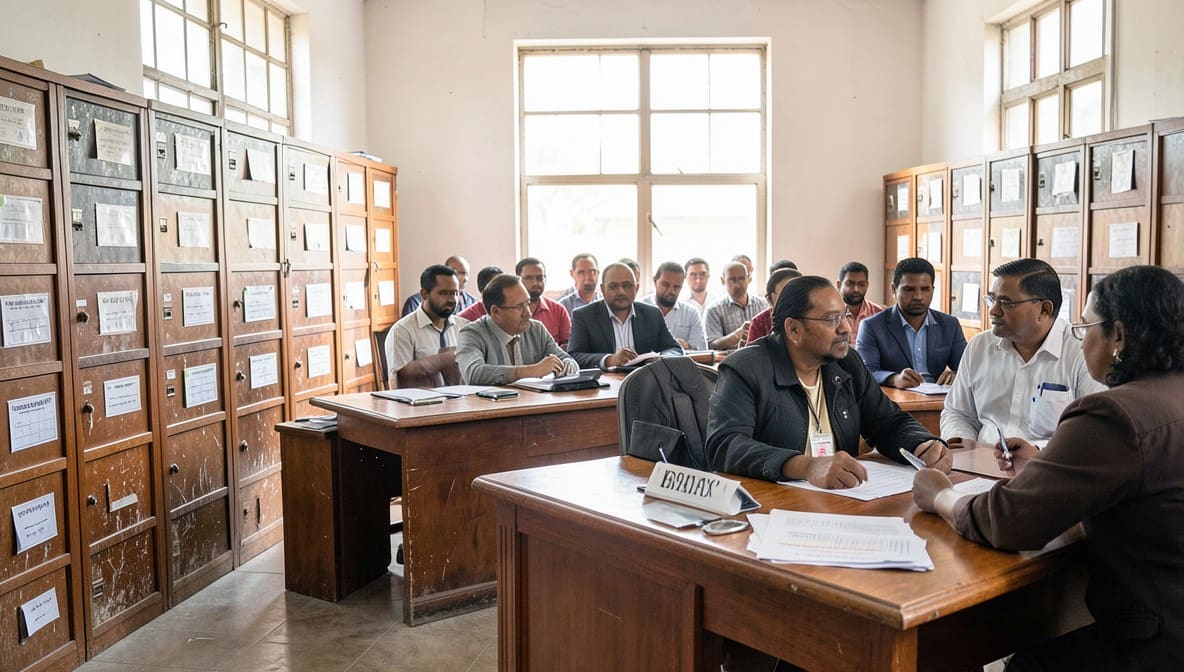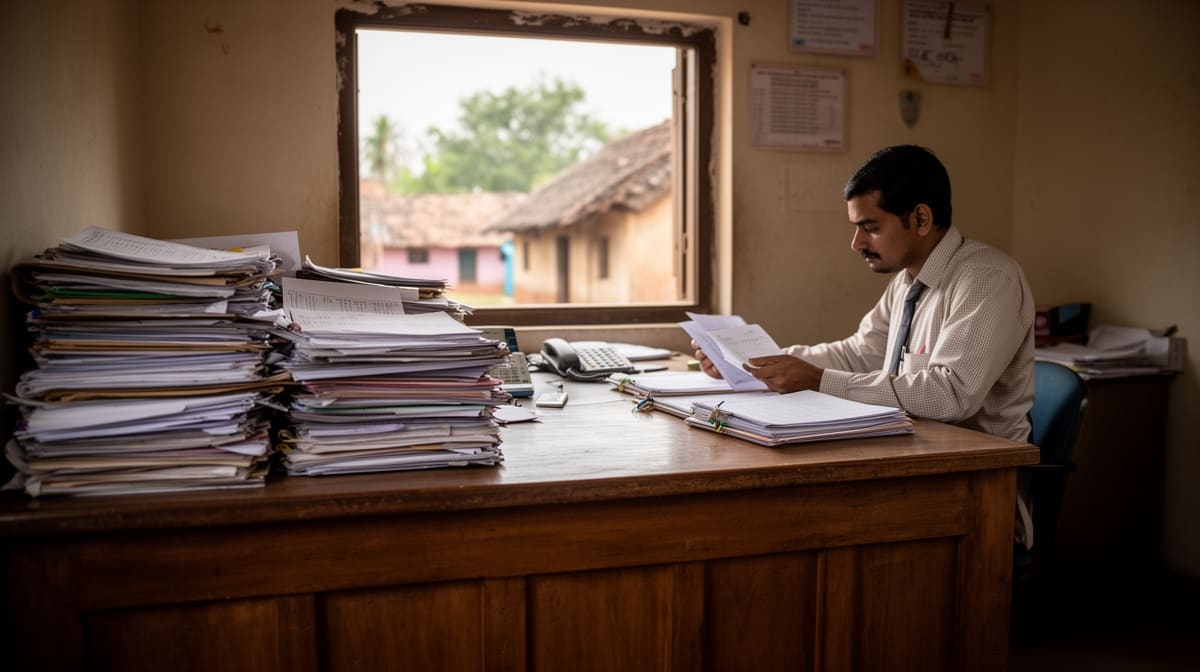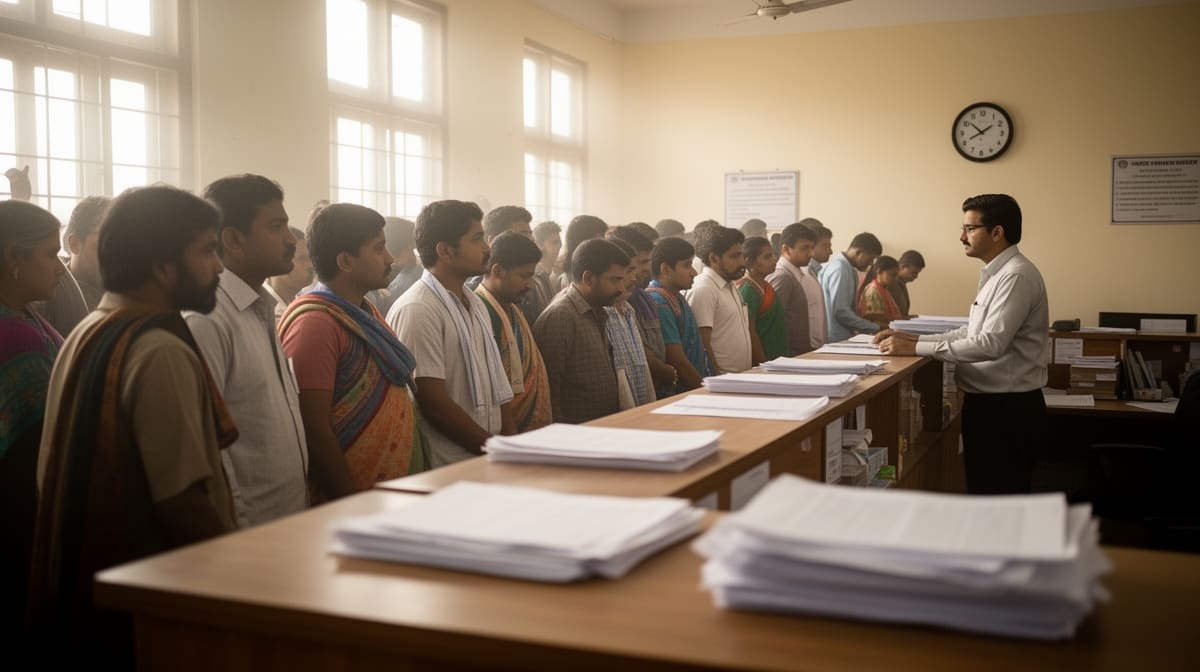
The Madras High Court has reaffirmed that prolonged inaction by revenue authorities on pending revisions constitutes a violation of the fundamental right to effective remedy under Article 21. In a decisive order, the Court mandated the disposal of a stalled revenue revision within sixteen weeks, reinforcing that procedural delay is not a permissible substitute for adjudication.
Background & Facts
The Dispute
The petitioner, S. Nagasundaram, is the absolute owner and peaceful possessor of 1.05 acres of land in Survey No. 361/1, Notchivadi Village, Ramanathapuram District. A civil suit for partition and separate possession was filed by Malathi, wife of the third respondent, against the petitioner’s vendor, Ramanathan. The trial court decreed the suit in favor of Malathi. However, the first appellate court reversed this decree, allowing Ramanathan’s appeal. A second appeal challenging this reversal is currently pending before the Madras High Court, with no interim stay granted.
Procedural History
Despite the pendency of litigation in civil courts, the second respondent, the Revenue Divisional Officer, issued an order on 09.02.2022 mutating the patta in favor of the third respondent. The petitioner challenged this mutation by filing a revision before the first respondent, the District Revenue Officer, under Na.Ka.No.B10/15805/2022. The revision has remained pending for over four years without any hearing or order.
Relief Sought
The petitioner sought a writ of mandamus directing the District Revenue Officer to decide the pending revision within a stipulated time, arguing that the delay rendered his legal rights ineffective and violated his right to timely justice.
The Legal Issue
The central question was whether prolonged inaction by a revenue authority on a pending revision, despite clear legal rights and ongoing litigation, amounts to a violation of Article 21 of the Constitution, thereby justifying the issuance of a writ of mandamus.
Arguments Presented
For the Petitioner
The petitioner’s counsel argued that the four-year delay in deciding the revision was arbitrary and violated the principle of reasonable time under Article 21. He cited State of Punjab v. Baldev Singh to emphasize that administrative delay defeats the very purpose of statutory remedies. He further contended that the mutation of patta during pendency of a civil suit, without awaiting final adjudication, was procedurally flawed and prejudicial.
For the Respondent
The Government Advocate conceded that the revision had remained pending due to administrative backlog but assured the Court that the matter would be decided on merits in accordance with law. No substantive legal defense was offered against the allegation of undue delay.
The Court's Analysis
The Court examined the nature of the petitioner’s right to a timely decision on his revision. It held that while courts cannot interfere in the merits of administrative decisions, they can intervene when delay becomes so excessive that it amounts to a denial of justice. The Court observed that the revision was filed in 2022 and remained undecided for over four years, despite no complex legal or factual issues being raised.
"The right to justice is not merely the right to a hearing, but the right to a hearing within a reasonable time. A revision pending for years without adjudication is a legal fiction that denies the petitioner the fruits of his remedy."
The Court distinguished this from cases where delay arises from complex evidence or multiple parties, noting that this was a straightforward revision challenging an illegal mutation. It emphasized that Article 21 encompasses the right to an effective remedy, and administrative inertia cannot be permitted to nullify statutory rights. The Court rejected the notion that delay is an inevitable feature of public administration, holding instead that timeliness is a component of procedural fairness.
The Verdict
The petitioner succeeded. The Court held that undue delay in deciding a revenue revision violates Article 21 and issued a mandamus directing the District Revenue Officer to decide the revision within sixteen weeks, after affording a reasonable opportunity of hearing to all affected parties. No costs were imposed.
What This Means For Similar Cases
Timeliness Is a Legal Obligation, Not a Discretion
- Practitioners must now treat unreasonably delayed revenue revisions as actionable violations of Article 21, not mere administrative lapses
- Writ petitions under Article 226 are maintainable even without challenging the merits of the order, if delay alone renders the remedy ineffective
- A revision pending beyond 12 months without any progress may prima facie justify judicial intervention
Mutation During Pendency of Civil Suit Is Prima Facie Illegal
- Revenue authorities must refrain from altering patta entries while civil litigation over title is pending
- Any mutation during pendency of a civil suit, especially where no interim order exists, invites judicial scrutiny under principles of natural justice
- Practitioners should immediately file revisions or writ petitions when such mutations occur
Mandamus Can Be Issued at Admission Stage
- Courts may dispose of writ petitions at admission stage if the facts are undisputed and delay is manifest
- No need to wait for prolonged proceedings when the remedy is clearly stalled
- This sets a precedent for expediting similar petitions across revenue jurisdictions in Tamil Nadu