The Karnataka High Court has clarified that the mere absence of a driving licence cannot be equated with rash or negligent driving under the Indian Penal Code. In a significant ruling, the Court quashed criminal proceedings against a deceased motorcyclist whose conduct was wrongly attributed as causative in a fatal collision, reinforcing the principle that liability must be grounded in actual conduct, not procedural lapses.
Background & Facts
The Dispute
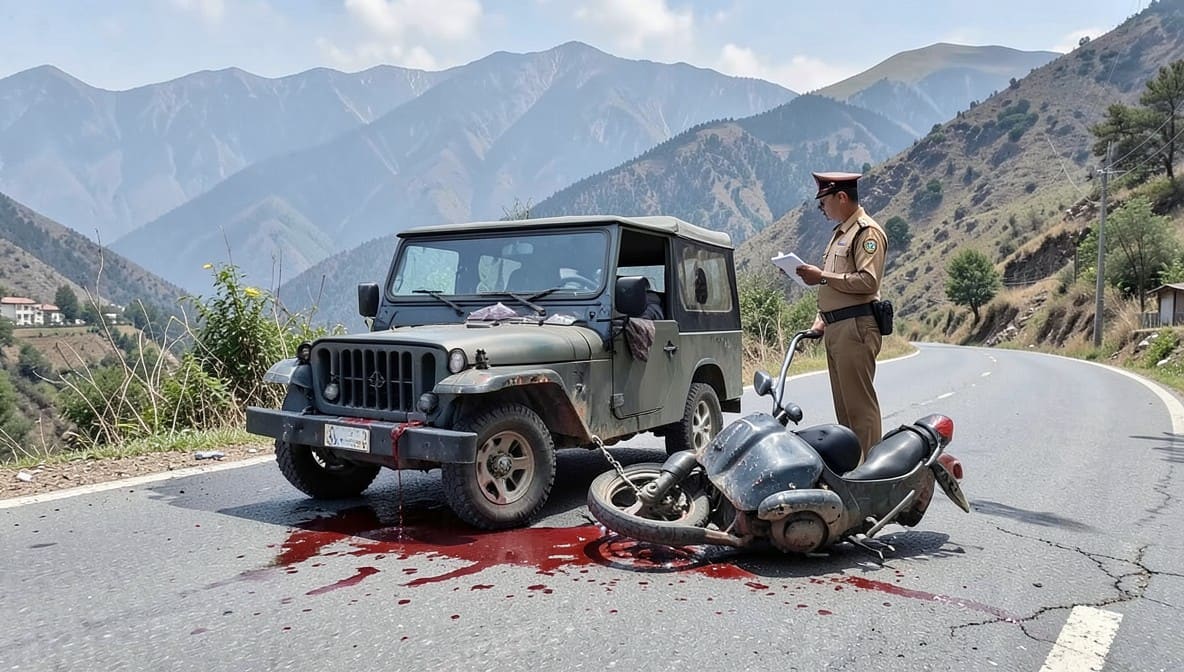
The dispute arose from a fatal road accident on the main road near K.L.E. Hospital in Belagavi, Karnataka, involving a car and a motorcycle. The car, bearing registration No. KA-22/MB-3446, was being driven by Mohan Hugar from Belagavi District Stadium towards K.L.E. Main Road. Simultaneously, the deceased, Sairaj Kadolkar, was riding his motorcycle, bearing registration No. KA-22/EY-8677, from Ramdev Circle towards K.L.E. Hospital Main Road. The two vehicles collided, resulting in fatal injuries to Sairaj Kadolkar, who succumbed to his injuries at the scene.
Key Facts
- The accident occurred on or about 15.01.2021
- The investigating officer filed Crime No. 14/2021 at Belagavi Traffic North Police Station
- The charge sheet (C.C. No. 470/2021) was filed against the deceased Sairaj Kadolkar as Accused No. 1 under Sections 279, 338, and 304(A) of the IPC
- The charge sheet was filed despite the deceased being the victim of the collision
- The deceased did not possess a valid driving licence at the time of the accident
- The sketch attached to the charge sheet indicated that the car was emerging from a narrow road onto the main road
- No evidence was presented to show that the deceased was speeding, swerving, or violating traffic rules
Procedural History
- 15.01.2021: Fatal accident occurred between car and motorcycle
- 16.01.2021: FIR registered at Belagavi Traffic North Police Station under Crime No. 14/2021
- 10.07.2021: Charge sheet filed against deceased Sairaj Kadolkar as Accused No. 1
- 12.08.2021: Proceedings commenced before JMFC-II, Belagavi
- 28.02.2025: Death of Sairaj Kadolkar was formally recorded in court records
- 15.01.2025: Criminal Petition No. 105196/2025 filed under Section 482 CrPC / Section 528 BNSS by petitioner, father of deceased, seeking quashing of abated charge sheet
- 17.03.2026: Hearing before the Hon’ble Justice Hanchate Sanjeevkumar, High Court of Karnataka, Dharwad Bench
The Parties' Positions
Petitioner (Sambaji S/o Siddrai Kadolkar): Argued that the deceased was a lawful user of the road, traveling on the main road, and bore no responsibility for the collision. The car driver, who failed to yield while emerging from a narrow road, was solely at fault. The charge sheet against the deceased was legally unsustainable and an abuse of process.
Respondent (State of Karnataka): Did not contest the factual narrative but defended the filing of the charge sheet on the ground that the deceased lacked a driving licence, which, according to the prosecution, rendered his driving unlawful and therefore negligent.
Relief Sought
The petitioner sought quashing of the charge sheet filed against the deceased Sairaj Kadolkar under Sections 279, 338, and 304(A) of the IPC, on the grounds that no offence was made out against him and that the proceedings were a manifest miscarriage of justice.
The Legal Issue
The central question was whether the absence of a driving licence alone can constitute rash and negligent driving under Sections 279, 338, and 304(A) of the IPC, or whether the prosecution must establish actual dangerous conduct contributing to the accident.
Arguments Presented
For the Petitioner
The petitioner’s counsel contended that the charge sheet was legally untenable because the deceased was not the cause of the accident. The sketch and witness statements confirmed that the car driver was emerging from a narrow road onto the main road without due caution, violating the fundamental rule of road priority. The deceased was traveling on the main road at a normal speed. The absence of a driving licence, while a statutory violation under the Motor Vehicles Act, does not equate to criminal negligence under the IPC. The Court was urged to apply the principle in State of Haryana v. Bhagwan Das that mere illegality of conduct does not automatically translate into criminal liability for rash driving.
For the Respondent
The State, through the Public Prosecutor, argued that since the deceased was driving without a licence, his act of driving was inherently unlawful and therefore constituted negligence per se. The prosecution relied on the general presumption that unlicensed driving increases risk, and thus, the deceased’s conduct could be viewed as contributing to the accident, even if not the proximate cause.
The Court's Analysis
The Court undertook a meticulous review of the charge sheet, the accident sketch, and the factual matrix. It emphasized that Sections 279, 338, and 304(A) IPC require proof of rash or negligent act that directly causes harm. The Court observed that the deceased was on the main road, a lawful position, while the car driver was entering from a narrower road - a scenario where the driver of the car is legally obligated to yield.
"The duty to stop, watch and proceed cautiously rested squarely on the driver of the car, who was emerging from a narrow road onto the main thoroughfare. The deceased, traveling on the main road, had no obligation to anticipate or avoid the car’s unlawful entry."
The Court further distinguished between civil or administrative illegality and criminal negligence. It held that while driving without a licence is a violation under the Motor Vehicles Act, it does not, by itself, satisfy the mens rea or actus reus required for offences under the IPC. The Court cited Rajesh v. State of Haryana to affirm that criminal liability for rash driving must be based on the manner of driving, not the absence of documentation.
The Court rejected the prosecution’s attempt to criminalize a procedural lapse. It noted that the charge sheet was filed against a deceased person, rendering the proceedings abated, yet the State persisted in maintaining the charges against a non-existent accused - an act the Court termed as a “grave abuse of process.”
The Verdict
The petition was allowed. The Court set aside the charge sheet filed against the deceased Sairaj Kadolkar as Accused No. 1 in Crime No. 14/2021, pending before JMFC-II, Belagavi, under Sections 279, 338, and 304(A) of the IPC. The Court directed that all records relating to the deceased as an accused be expunged from the court file. No costs were awarded.
What This Means For Similar Cases
Absence of Licence Is Not Criminal Negligence
- Practitioners must challenge charge sheets that conflate statutory violations (e.g., no licence, no insurance) with criminal negligence under IPC Sections 279, 338, or 304(A)
- The burden remains on the prosecution to prove actual dangerous driving - speeding, swerving, ignoring signals, or failing to maintain control
- Mere absence of documents cannot substitute for evidence of reckless conduct
Prosecution Cannot Target Deceased as Accused
- Once a person dies, proceedings against them abate under Section 394 CrPC (now Section 528 BNSS)
- Filing or maintaining a charge sheet against a deceased person is a procedural nullity and an abuse of process
- Courts must proactively quash such proceedings at the earliest stage
Road Accident Prosecutions Require Contextual Analysis
- Accident reconstruction sketches and traffic rules must be analyzed to determine right-of-way
- The court must assess whether the accused’s conduct was a proximate cause of the accident, not merely a contributing factor
- In multi-vehicle accidents, liability must be apportioned based on actual fault, not convenience or default assumptions