The Chhattisgarh High Court has reaffirmed that electoral mandates cannot be overturned on the basis of minor procedural irregularities or unsubstantiated allegations. In a significant ruling, the Court emphasized that only gross illegality that compromises the purity of the election justifies judicial interference, reinforcing the sanctity of the voter’s will.
Background & Facts
The Dispute
The dispute arose from the election for the post of President of the Nagar Palika Parishad, Baikunthpur, District Koriya, Chhattisgarh, held on 01.01.2022. The applicant, Smt. Sadhana Jaiswal, and Respondent No. 1, Smt. Navita Shivhare, were both contesting ward members who subsequently vied for the presidency. The applicant claimed to have secured 10 valid votes, while Respondent No. 1 was initially reported to have secured 8 valid votes and 2 invalid votes. However, the official declaration stated that Respondent No. 1 received 9 valid votes and 1 invalid vote, leading to a tie. In accordance with Rule 12 of the Chhattisgarh Municipalities (Election of President & Vice President) Rules, 1998, a lottery was conducted to resolve the tie, and Respondent No. 1 was declared elected.
Key Facts
- The election was conducted under the Chhattisgarh Municipalities (Election of President & Vice President) Rules, 1998 (Rules 1998)
- The Returning Officer, Shri Gyanendra Singh Thakur (PW-2), presided over the counting process
- An inspection of the ballot box was conducted on 09.05.2024 by the trial court, which found that only 8 of the 10 votes attributed to Respondent No. 1 complied with Rule 10(4) of the Rules 1998, which mandates clear marking of the ballot
- Two ballots were deemed invalid due to non-compliance with mandatory marking requirements
- The applicant did not raise any objection during the counting process or at the time of the lottery
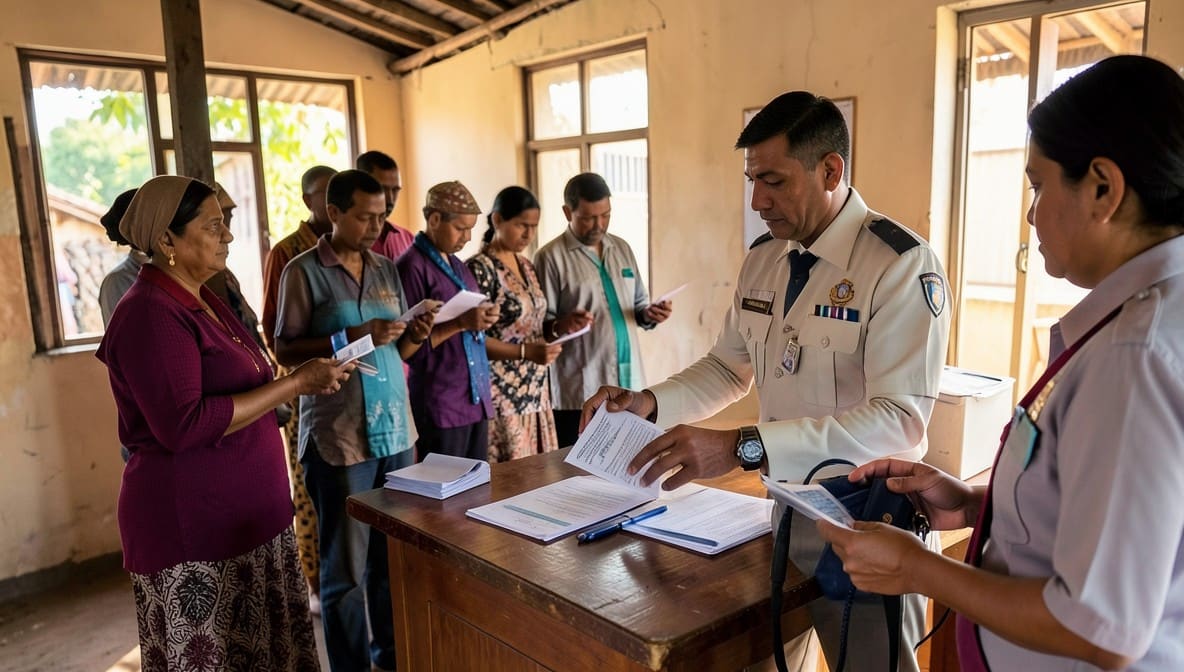
- The entire voting process was videographed, and no councillor raised objections regarding ballot validity during voting
- The applicant filed an election petition on 01.01.2022, challenging the result on grounds of illegal vote counting and conspiracy
- The applicant examined herself and PW-2; Respondent No. 1 examined herself and DW-2
Procedural History
- 01.01.2022: Election held for President of Nagar Palika Parishad, Baikunthpur
- 01.01.2022: Lottery conducted after tie in votes; Respondent No. 1 declared elected
- 09.05.2024: Trial court conducted judicial inspection of ballot box
- 12.06.2022: Election Petition (Misc. Civil Suit No. 1/2022) filed before the Principal District Judge, Baikunthpur
- 07.05.2025: Trial Court dismissed the petition, upholding the election result
- 07.05.2025: Order passed dismissing the petition on grounds of lack of evidence and participation in the lottery without objection
- 23.02.2026: Revision petition heard and reserved
- 10.04.2026: Judgment pronounced by the Chhattisgarh High Court
The Parties' Positions
For the Applicant
- Alleged that two invalid votes were illegally counted in favor of Respondent No. 1
- Claimed the trial court ignored the inspection note dated 09.05.2024
- Argued that the trial court erroneously applied the Chhattisgarh Nagar Palika Nirvachan Niyam, 1994, which governs ward member elections, not the President’s election
- Contended that the Rules 1998 do not require objections to be raised during counting
- Asserted that the lottery was conducted under a conspiracy and without legal basis
For the Respondent
- Maintained that the counting was conducted in strict compliance with the Rules 1998
- Stated that the applicant participated in the lottery without protest and is now estopped from challenging it
- Highlighted that the Returning Officer’s testimony confirmed ballot secrecy was maintained and no voter identity was disclosed
- Emphasized that no councillor raised objections during voting or counting
- Argued that the election petition lacked material facts and was based on suspicion, not proof
Relief Sought
The applicant sought quashing of the trial court’s order dated 07.05.2025, declaration of her election as President, and a direction to conduct a recount or fresh election.
The Legal Issue
The central question was whether a minor discrepancy in vote counting, without proof of gross illegality or material impact on the result, is sufficient to invalidate an election under Section 23 of the Chhattisgarh Municipalities Act, 1961, particularly when the secrecy of the ballot is preserved and the petitioner participated in the subsequent tie-breaking process without objection.
Arguments Presented
For the Appellant/Petitioner
The applicant’s counsel relied on Arikala Narasa Reddy v. Venkata Ram Reddy Reddygari (2014) 5 SCC 312, Dharmin Bai Kashyap v. Babli Sahu (2023) 10 SCC 461, and Era Sezhiyan v. T.R. Balu (1990 Supp) SCC 322 to argue that statutory compliance is mandatory in election proceedings. He contended that the trial court erred in applying the Niyam, 1994, which governs ward elections, not the President’s election governed by Rules 1998. He further argued that the Rules 1998 do not require objections to be raised during counting, and that the trial court’s reliance on the absence of such objections was legally untenable. He emphasized that the inspection note clearly showed two invalid votes were counted, and the trial court’s disregard of this evidence rendered the order perverse.
For the Respondent/State
Respondent No. 1’s counsel argued that the applicant’s participation in the lottery without protest estopped her from challenging the process. He cited the Returning Officer’s testimony that ballot secrecy was maintained and no voter identity was discernible. He contended that the election petition lacked specific allegations of fraud or corruption and that the alleged irregularities were technical and inconsequential. He relied on Vijay Bahadur v. Sunil Kumar (2025) 4 SCC 180 and Madhukar G.E. Pankakar v. Jaswant Chobbildas Rajani (1977) 1 SCC 70 to assert that elections cannot be overturned on suspicion or minor errors, and that the court must respect the people’s mandate unless gross illegality is proven.
The Court's Analysis
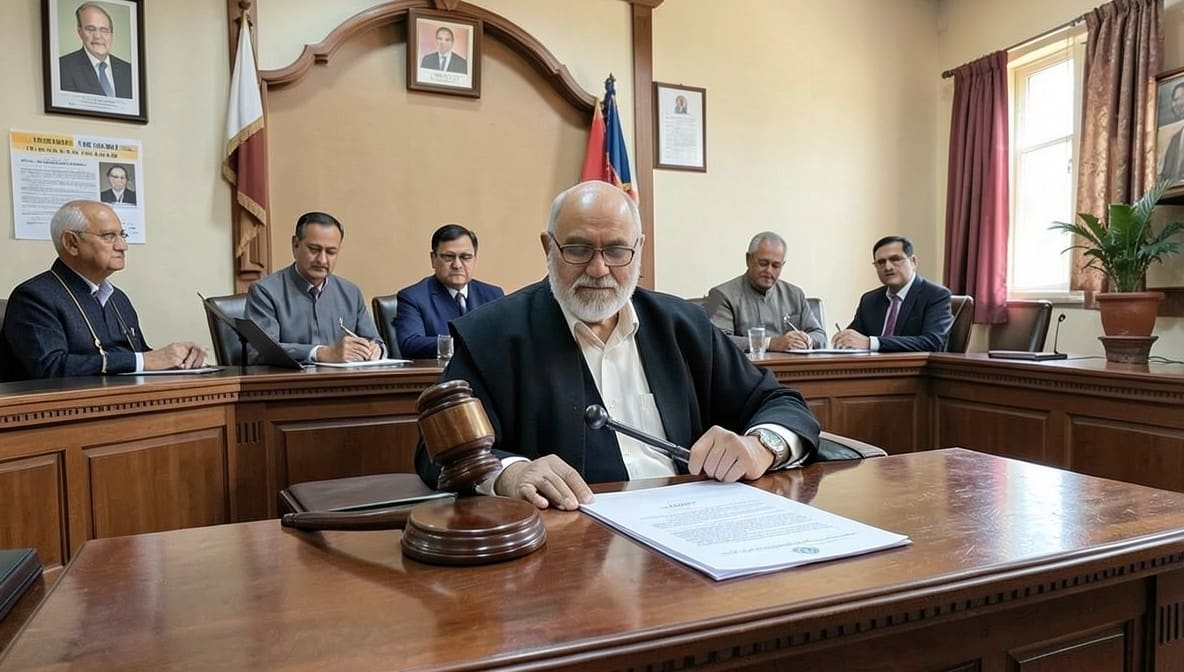
The Court undertook a comprehensive review of the statutory framework under the Chhattisgarh Municipalities Act, 1961, and the Rules 1998. It noted that Section 23 mandates a summary procedure for election petitions, requiring courts to focus on substance over technicalities. The Court observed that the trial court’s reliance on the Niyam, 1994, was indeed misplaced, as the election of the President is governed exclusively by the Rules 1998. However, the Court held that this error did not vitiate the outcome, as the trial court’s ultimate finding was based on the applicant’s failure to prove any material irregularity.
The Court placed decisive weight on the principle of ballot secrecy, which is sacrosanct under democratic norms. It cited Vijay Bahadur v. Sunil Kumar (2025) 4 SCC 180, where the Supreme Court held that re-counting is permissible only where three conditions are met: (1) adequate pleading of material facts, (2) prima facie evidence of irregularity, and (3) necessity to do complete justice. The Court found that the applicant failed to satisfy any of these conditions.
"Secrecy of ballot has always been considered sacrosanct in a democratic process of election and it cannot be disturbed lightly by bare allegations of illegality or irregularity in counting."
The Court further relied on Ajmera Shyam v. Smt. Kova Laxmi (2026) 3 SCC 373, emphasizing that the will of the people expressed through the ballot box must be respected unless the election is vitiated by fraud or gross illegality. The Court noted that the applicant had not only failed to prove any conspiracy but had also participated in the lottery without objection, thereby acquiescing in the process.
The Court also rejected the argument that the inspection note was ignored, holding that the trial court’s reliance on the Returning Officer’s unchallenged testimony - which confirmed the absence of voter identification and compliance with procedural norms - was legally sound. The Court concluded that the two disputed ballots, even if improperly counted, did not alter the outcome, as the tie was resolved by lottery, a legally recognized method under Rule 12 of the Rules 1998.
The Verdict
The revision petition was dismissed. The Chhattisgarh High Court upheld the trial court’s order dated 07.05.2025, confirming the election of Smt. Navita Shivhare as President of the Nagar Palika Parishad, Baikunthpur. The Court held that the applicant failed to establish gross illegality or material impact on the result, and therefore, the election result stands. No recount, fresh election, or other relief was granted.
What This Means For Similar Cases
Election Results Cannot Be Overturned on Technical Grounds
- Practitioners must now demonstrate gross illegality - not mere procedural lapses - to challenge municipal election results
- Minor discrepancies in vote counting, absent proof of intent to manipulate or material effect on outcome, are insufficient
- Courts will not entertain petitions based on suspicion, conjecture, or technical non-compliance without substantive evidence
Participation in Post-Election Procedures Creates Estoppel
- Candidates who participate in tie-breaking mechanisms like lotteries without objection cannot later challenge their validity
- This principle applies even if the procedure is later found to be procedurally flawed, unless fraud or corruption is proven
- Legal strategy must include immediate, documented objections during the counting or tie-breaking phase
Ballot Secrecy Trumps Post-Hoc Scrutiny
- Judicial inspection of ballot boxes is permissible only where there is credible evidence of tampering
- The absence of voter identification on ballots is not a defect but a statutory safeguard
- Courts will not permit fishing expeditions into ballot secrecy under the guise of electoral review