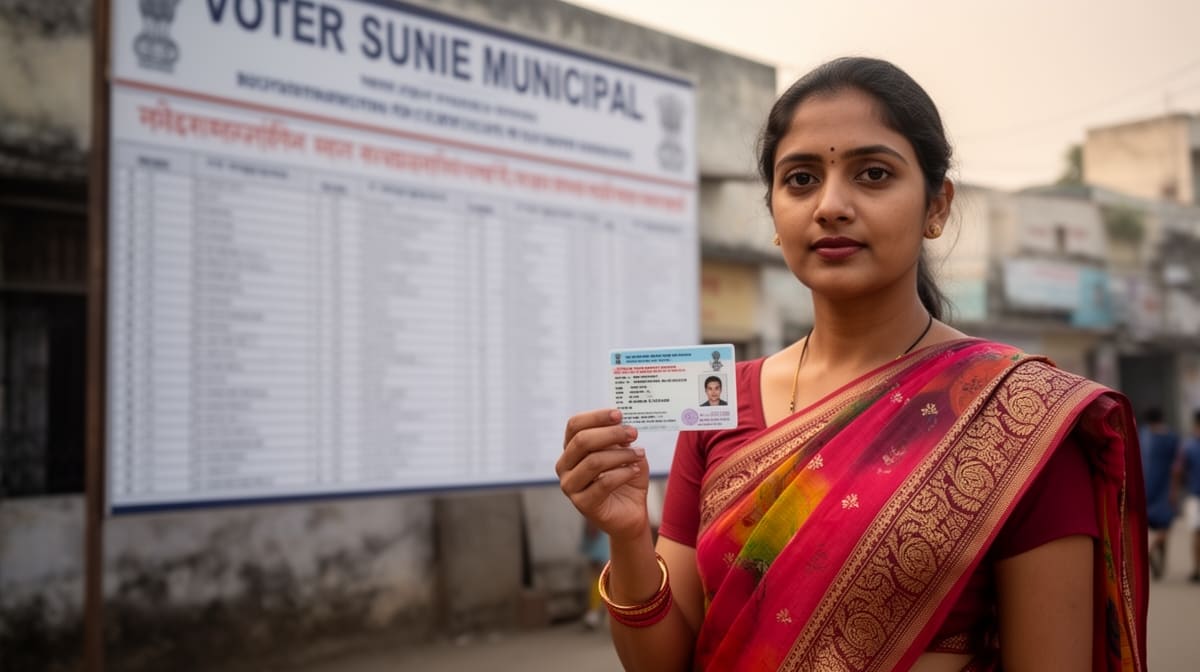
The Gujarat High Court has clarified that a voter’s inclusion in the Legislative Assembly electoral roll automatically entitles them to be listed in the corresponding Municipal Corporation electoral roll, even if the inclusion occurs after the preliminary list is published. This ruling reinforces the principle that municipal electoral rolls are derivative, not independent, and must mirror the Assembly rolls without discretionary delay.
Background & Facts
The Dispute
The petitioner, Varsha Mukeshbhai Katara, sought inclusion of her name in the electoral roll for Ward No. 4, Sabarmati, Ahmedabad Municipal Corporation, to enable her participation in the forthcoming municipal elections. Her name was absent from the electoral rolls of the Legislative Assembly constituency, which under the applicable rules, served as the sole basis for preparing the municipal electoral roll.
Key Facts
- The petitioner resided in Ward No. 4, Sabarmati, and was otherwise eligible to vote under the Representation of the People Act, 1950
- The preliminary electoral roll for the Ahmedabad Municipal Corporation was prepared based on the Legislative Assembly electoral roll as it stood on 17.02.2026, per the Bombay Provincial Municipal Corporations (Registration of Voters) Rules, 1994
- The preliminary list for the Municipal Corporation was published on 23.03.2026
- The petitioner filed an application for inclusion in the Legislative Assembly electoral roll on 23.03.2026
- Her application for inclusion in the Assembly roll was granted on 01.04.2026
- The last date for filing nominations in the municipal elections had not yet expired as of 01.04.2026
- The petitioner’s application was filed within the 10-day window prescribed under Rule 10 of the 1994 Rules
Procedural History
- 17.02.2026: Legislative Assembly electoral roll finalized as the basis for municipal roll preparation
- 23.03.2026: Preliminary municipal electoral roll published; petitioner’s name omitted
- 23.03.2026: Petitioner filed application for inclusion in Legislative Assembly electoral roll
- 01.04.2026: Application for inclusion in Assembly roll allowed by the Electoral Registration Officer
- 05.04.2026: Writ petition filed before the Gujarat High Court seeking inclusion in municipal roll
- 10.04.2026: Judgment delivered
Relief Sought
The petitioner sought a direction to the State Election Commission to include her name in the electoral roll of Ward No. 4, Sabarmati, Ahmedabad Municipal Corporation, and to permit her to participate in the forthcoming municipal elections.
The Legal Issue
The central question was whether inclusion of a voter’s name in the Legislative Assembly electoral roll, even after the publication of the preliminary municipal roll, entitles that voter to be included in the corresponding Municipal Corporation electoral roll under the Bombay Provincial Municipal Corporations (Registration of Voters) Rules, 1994.
Arguments Presented
For the Petitioner
The petitioner contended that the municipal electoral roll is not an independent document but a direct replication of the Assembly roll. Since her name was duly included in the Assembly roll before the nomination deadline, the State Election Commission had no discretion to exclude her from the municipal roll. She relied on the principle of substantive electoral rights and the non-discretionary duty of the State Election Commission to replicate the Assembly roll.
For the Respondent
The State Election Commission argued that since the petitioner’s name was not in the Assembly roll as of 17.02.2026, the date on which the preliminary municipal list was prepared, her inclusion after that date could not be recognized for the current election cycle. They claimed procedural finality of the preliminary list and asserted that inclusion after publication would disrupt the electoral process.
The Court's Analysis
The Court rejected the State Election Commission’s argument that the publication of the preliminary list created a rigid cutoff. It emphasized that the Rules explicitly tie the municipal electoral roll to the Assembly roll, and the Commission has no independent authority to add or delete names. The Court observed:
"The State Election Commission does not exercise any independent right in the matter of inclusion or deletion from its electoral rolls, and it only is empowered to replicate the electoral roll of the Assembly constituency."
The Court further noted that the petitioner’s application was filed within the statutory 10-day window under Rule 10 of the 1994 Rules, and her inclusion in the Assembly roll was granted before the last date for filing nominations. The Court held that denying her municipal voting rights on technical grounds would violate the fundamental right to vote under Article 326 of the Constitution. The Court distinguished between procedural timelines for preparation and substantive rights that accrue upon lawful inclusion.
The Verdict
The writ petition was allowed. The Court directed the State Election Commission to include the name of the petitioner, Varsha Mukeshbhai Katara, in the electoral roll for Ward No. 4, Sabarmati, Ahmedabad Municipal Corporation, and to permit her to participate in the forthcoming municipal elections. Direct service of the order was permitted on the date of judgment, 10.04.2026.
What This Means For Similar Cases
Electoral Inclusion Is Retroactive to Eligibility Date
- Practitioners must argue that inclusion in the Assembly roll, even post-preliminary list, triggers automatic inclusion in municipal rolls if done before nomination deadlines
- Delay by the electoral officer in processing applications cannot be used to deny rights if the application was filed within the statutory period
- The date of inclusion, not the date of processing, is the operative date for eligibility
State Election Commission Has No Discretionary Power
- The Commission’s role is purely replicative; it cannot independently assess eligibility or impose additional conditions
- Any refusal to include a name after Assembly roll inclusion is ultra vires and subject to writ jurisdiction
- Legal challenges to exclusion must focus on the failure to replicate, not on the timing of the application
Procedural Deadlines Are Not Absolute Barriers
- The 10-day window under Rule 10 is a procedural safeguard, not a substantive cutoff
- If an application is filed within the window and granted before nomination deadlines, the voter’s rights are preserved
- Courts will prioritize substantive electoral rights over rigid adherence to publication timelines