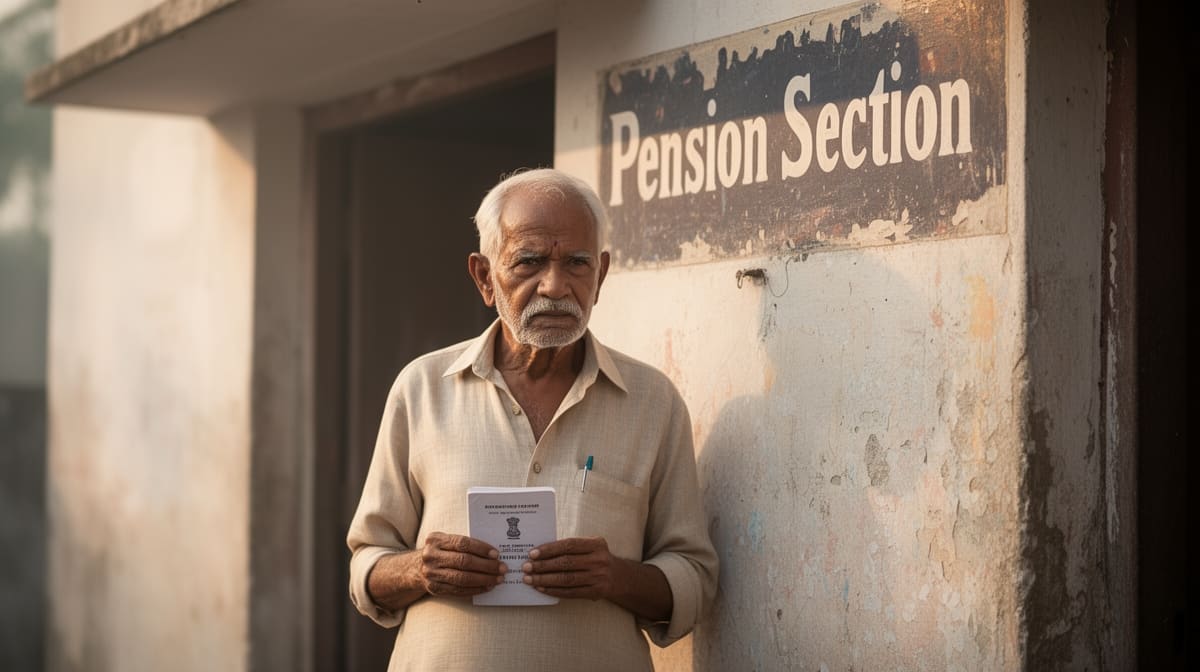
The Allahabad High Court has reaffirmed that service rendered as a daily wager must be included for gratuity calculation under the Payment of Gratuity Act, 1972 upon regularization, relying on the Supreme Court's decision in Netram Sahu v. State of Chhattisgarh. The judgment underscores the binding nature of coordinate bench decisions, even when a larger bench reference is pending, and reinforces the statutory right to gratuity for long-serving employees.
Background & Facts
The Dispute
The petitioner, U.P. Forest Corporation, challenged an order dated 30.07.2025 passed by the Controlling Authority under the Payment of Gratuity Act, 1972 (hereinafter, the Act). The order held that the opposite party (respondent no. 2) was entitled to gratuity by including his entire service period, starting from his initial appointment as a daily wager on 14.02.1986 until his regularization on 20.09.2003. The petitioner appealed this order before the Appellate Authority under the Act, which dismissed the appeal on 30.03.2026, prompting the present writ petition.
Key Facts
- The opposite party was initially engaged as a daily wager on 14.02.1986
- He was regularized on 20.09.2003
- The Controlling Authority directed payment of gratuity by including his entire service period, including the period as a daily wager
- The petitioner challenged this order, arguing that daily wager service should not be counted for gratuity
- The petitioner relied on an unreported Supreme Court order in Bharat Sanchar Nigam Ltd. v. Teja Singh, which conflicts with Netram Sahu, and is pending before a larger bench
Procedural History
- 30.07.2025: Controlling Authority passed order in P.G. Case No. 174 of 2022, directing gratuity payment including daily wager service
- 30.03.2026: Appellate Authority dismissed P.G. Appeal No. 83 of 2025
- 2026: Present writ petition (Writ C No. 6067 of 2026) filed before Allahabad High Court
- 05.09.2024 and 19.03.2026: Coordinate benches of the High Court dismissed similar petitions (Writ C No. 7642 of 2024 and Writ C No. 2452 of 2026)
Relief Sought
The petitioner sought quashing of the orders dated 30.07.2025 and 30.03.2026, arguing that the opposite party’s service as a daily wager should not be counted for gratuity calculation.
The Legal Issue
The central question was whether the service rendered by a daily wager before regularization could be reckoned for the purpose of calculating gratuity under the Payment of Gratuity Act, 1972, particularly when a conflicting Supreme Court decision is pending before a larger bench.
Arguments Presented
For the Petitioner
The petitioner contended that the judgment in Netram Sahu v. State of Chhattisgarh conflicts with an unreported order dated 16.01.2025 in Bharat Sanchar Nigam Ltd. v. Teja Singh. The issue has been referred to a larger bench in Dhansai Sahu v. State of Chhattisgarh, and thus, the High Court should defer its decision until the larger bench pronounces its judgment.
For the Respondent
The respondent relied on Netram Sahu, where the Supreme Court held that once an employee’s service is regularized, the entire period of service, including the period as a daily wager, must be counted for gratuity calculation under Section 2A of the Act. The respondent argued that the Act is a welfare legislation, and the State has a duty to voluntarily pay gratuity rather than forcing the employee to litigate.
The Court's Analysis
The Court observed that the Supreme Court, in State (UT of Ladakh) v. J&K National Conference, has explicitly directed High Courts to decide cases based on the law as it stands, without awaiting the outcome of a reference or review petition. The Court emphasized that when faced with conflicting judgments by coordinate benches of the Supreme Court, the earlier judgment must be followed. In this case, Netram Sahu was the earlier judgment, and the Court was bound to follow it.
"In view of the aforesaid direction of the Hon'ble Supreme Court, this Court has to decide the Writ Petition following the law laid down in Netram Sahu and it cannot defer decision of the Writ Petition till decision of the larger Bench in Dhansai Sahu."
The Court further noted that the petitioner’s reliance on Bharat Sanchar Nigam Ltd. v. Teja Singh was misplaced, as the issue in that case is still pending before a larger bench. Judicial propriety demands that coordinate bench decisions be followed until a larger bench overrules them.
The Verdict
The writ petition was dismissed. The Court upheld the orders dated 30.07.2025 and 30.03.2026, directing the petitioner to pay gratuity to the opposite party by including his entire service period, from 14.02.1986 to the date of regularization and beyond. No specific monetary relief or compliance timeline was mentioned in the judgment.
What This Means For Similar Cases
Binding Nature of Coordinate Bench Decisions
- High Courts must follow the earlier judgment of a coordinate bench of the Supreme Court, even if a later bench has doubted its correctness or a reference to a larger bench is pending
- The judgment reinforces the principle that judicial propriety requires adherence to established precedent until it is explicitly overruled
Gratuity for Daily Wagers Upon Regularization
- Employees who were initially engaged as daily wagers and later regularized are entitled to have their entire service period counted for gratuity calculation under the Payment of Gratuity Act, 1972
- This includes the period before regularization, provided the employee has completed five years of continuous service as required under Section 2A of the Act
- Employers cannot deny gratuity on the ground that the employee was initially engaged as a daily wager, especially when the State has regularized the service
Welfare Legislation and Employer Obligations
- The Payment of Gratuity Act, 1972 is a welfare legislation, and employers have a statutory duty to voluntarily pay gratuity to eligible employees
- Courts are likely to interpret such legislation liberally in favor of employees, particularly when the employer has benefited from the employee’s long service