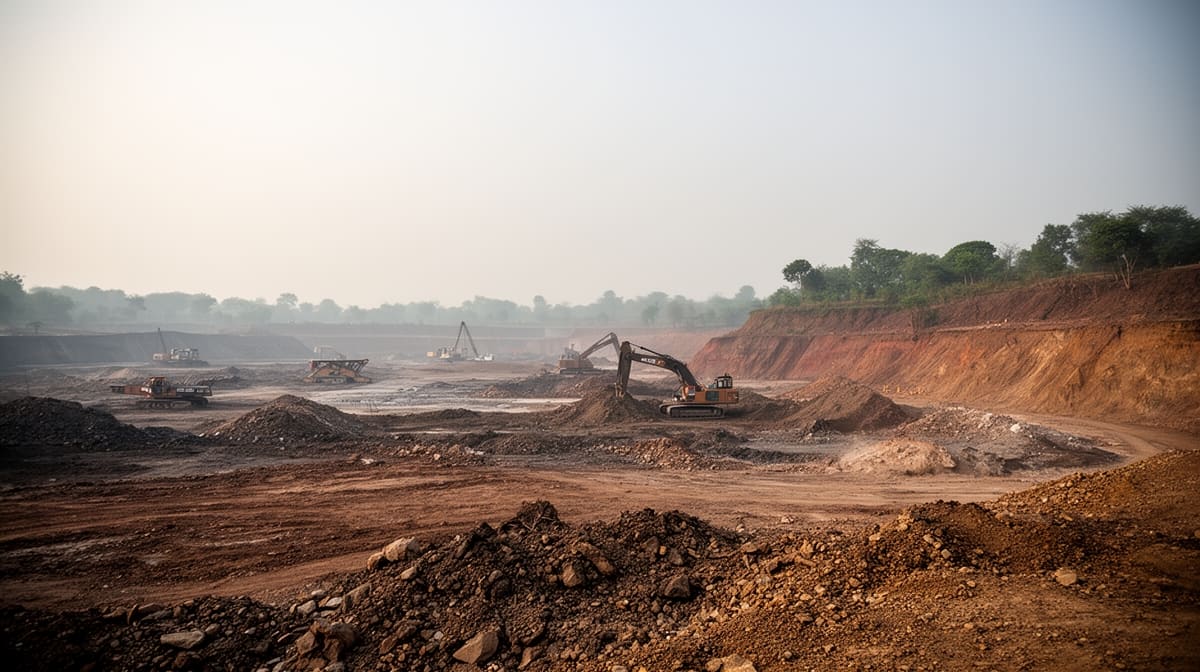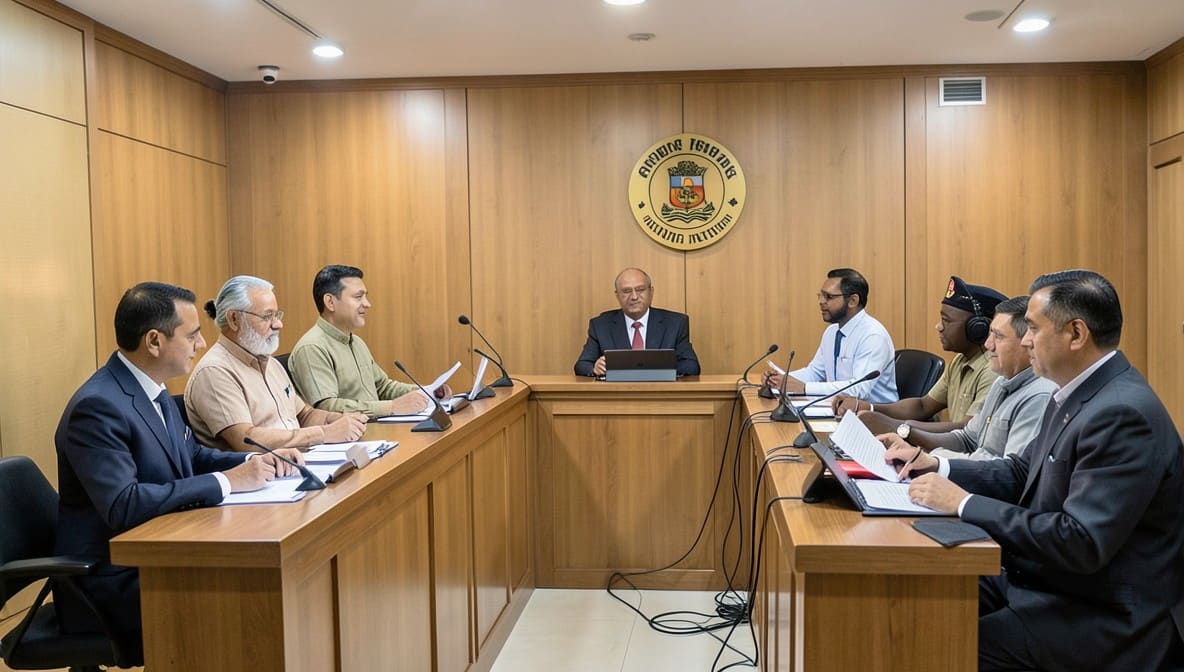
The Madhya Pradesh High Court has invalidated a state rule imposing a fine exceeding the statutory cap under the Mines and Minerals (Development and Regulation) Act, 1957, reinforcing the principle that subordinate legislation cannot override parent statutes. The judgment provides immediate relief to affected transporters while setting a clear doctrinal boundary for rule-making powers in mining regulation.
Background & Facts
The Dispute
The petitioner, Vikas Kumar Pradhan, challenged the validity of Rule 18 of the Madhya Pradesh Mineral (Prevention of Illegal Mining, Transportation and Storage) Rules, 2022, which permits the imposition of a fine exceeding Rs.5,00,000 for violations related to illegal transportation of minerals. The Competent Authority imposed a penalty of Rs.5,22,000 on the petitioner’s vehicle under this rule, following its seizure for alleged violation of Section 4 of the MMDR Act, 1957. The petitioner contends that Rule 18 is ultra vires Section 21(2) of the MMDR Act, which caps the maximum fine for such offences at Rs.5,00,000.
Key Facts
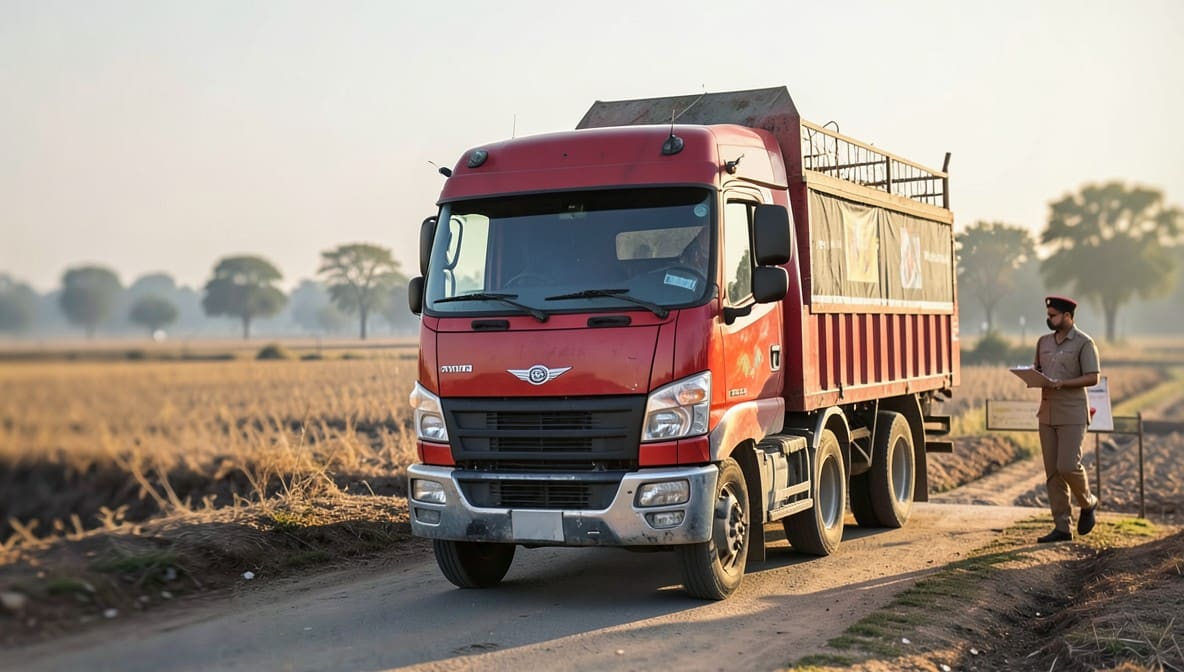
- The petitioner’s vehicle, valued at approximately Rs.20,00,000, was seized by the State authorities for alleged illegal transportation of minerals.
- On the basis of Rule 18 of the 2022 Rules, a penalty of Rs.5,22,000 was imposed, exceeding the statutory limit under Section 21(2) of the MMDR Act, 1957.
- The vehicle remains in custody of the State, preventing the petitioner from conducting commercial operations.
- The petitioner submitted that the seizure has caused significant financial loss due to halted contractual obligations.
- The petitioner relied on the order dated 19.12.2025 in W.P. No. 49298/2025, which had previously directed release of a similarly seized vehicle under comparable circumstances.
Procedural History
- Date of seizure: Not explicitly stated, but occurred prior to 22.06.2026.
- Date of penalty order: Not specified, but issued under Rule 18 of the 2022 Rules.
- 22.06.2026: Writ Petition No. 20323 of 2026 filed before the Madhya Pradesh High Court, Indore.
- 22.06.2026: Court heard arguments on admission and interim relief.
The Parties' Positions
For the Petitioner:
- Rule 18 of the 2022 Rules is ultra vires Section 21(2) of the MMDR Act, 1957, which prescribes a maximum fine of Rs.5,00,000.
- The penalty of Rs.5,22,000 is illegal and void ab initio.
- The remedy of appeal under Rule 27 is not efficacious because it challenges a rule that is itself invalid.
- The vehicle is essential for livelihood and its continued seizure causes irreparable commercial harm.
For the Respondent/State:
- An alternative and efficacious remedy of appeal exists under Rule 27 of the 2022 Rules.
- The State has the power to frame rules under the MMDR Act, and Rule 18 is within the scope of delegated legislation.
- The fine amount is justified as a deterrent against illegal mining activities.
Relief Sought
The petitioner sought:
- Declaration that Rule 18 of the 2022 Rules is ultra vires Section 21(2) of the MMDR Act, 1957.
- Immediate release of the seized vehicle.
- Direction to the Competent Authority to refrain from imposing fines exceeding Rs.5,00,000 under Rule 18.
The Legal Issue
Is Rule 18 of the Madhya Pradesh Mineral (Prevention of Illegal Mining, Transportation and Storage) Rules, 2022, which permits a fine exceeding Rs.5,00,000, ultra vires Section 21(2) of the Mines and Minerals (Development and Regulation) Act, 1957, which caps the maximum penalty at Rs.5,00,000?
Arguments Presented
For the Petitioner
The petitioner relied on the doctrine of subordinate legislation being bound by the parent statute. He cited State of U.P. v. Renusagar Power Co. to argue that any rule exceeding the ceiling prescribed by the parent Act is void. He emphasized that the MMDR Act, 1957, is a central statute with uniform penalties, and state rules cannot unilaterally enhance penalties beyond the statutory limit. He further argued that the remedy of appeal under Rule 27 is illusory when the rule itself is invalid, as an appeal cannot validate an ultra vires provision.
For the Respondent
The State contended that Rule 18 was framed under the enabling provisions of Section 21(1) of the MMDR Act, which allows states to make rules for preventing illegal mining. It argued that the fine amount under Rule 18 is a reasonable deterrent and falls within the ambit of rule-making power. The State also relied on Rajasthan v. Rameshwar Lal to assert that courts should not interfere with administrative penalties unless they are manifestly arbitrary or mala fide.
The Court's Analysis
The Court undertook a strict interpretation of the hierarchy between the parent Act and subordinate rules. It observed that Section 21(2) of the MMDR Act, 1957, explicitly states that the maximum fine for offences under Section 4 shall not exceed Rs.5,00,000. The Court held that this ceiling is not merely advisory but a statutory limit binding on all subordinate authorities, including state rule-making bodies.
"The legislature has fixed the maximum penalty under Section 21(2) of the MMDR Act, 1957. Any rule that prescribes a higher penalty, even if framed under the enabling provision of Section 21(1), is ultra vires and void. The rule-making power cannot be used to enlarge the penalty beyond what the parent statute permits."
The Court rejected the State’s argument that Rule 27 provides an efficacious remedy, noting that an appeal against an order based on an invalid rule cannot cure the constitutional defect in the rule itself. The Court further held that the petitioner had made a prima facie case of irreparable harm due to the prolonged detention of a commercially vital asset, and that the balance of convenience favoured interim relief.
The Court also noted the precedent set in W.P. No. 49298/2025, which had granted similar relief under identical circumstances, reinforcing consistency in judicial approach.
The Verdict
The petitioner succeeded on the interim relief. The Court directed the Competent Authority to release the seized vehicle within 15 days of filing a copy of this order, subject to the following conditions: (1) deposit of Rs.3,00,000 as penalty; (2) furnishing a solvent surety equivalent to the vehicle’s value; (3) undertaking not to alienate the vehicle; (4) undertaking to produce the vehicle before the Court upon demand; and (5) forfeiture of the vehicle if used again in illegal mining. The release is subject to the final outcome of the writ petition. The Court preserved the petitioner’s right to challenge the validity of Rule 18 in the main petition.
What This Means For Similar Cases
Subordinate Rules Cannot Exceed Parent Statute Limits
- Practitioners must immediately challenge any state rule imposing penalties exceeding statutory caps under central mining or environmental statutes.
- Courts will treat such rules as ultra vires without requiring proof of mala fide intent.
Interim Relief for Seized Commercial Assets Is Justified
- Where seizure of a vehicle or equipment causes demonstrable commercial loss, courts may grant interim release even if a statutory appeal exists, if the underlying rule is prima facie invalid.
- Deposit of a portion of the penalty and surety are acceptable conditions to balance State interest and individual rights.
Precedent Binding Across Similar Writs
- Orders granting relief in analogous cases (e.g., W.P. No. 49298/2025) may be cited to establish judicial consistency and strengthen interim relief applications.