The Chhattisgarh High Court has affirmed the conviction of two accused under the NDPS Act for possession of 9.6 kg of marijuana but significantly reduced their sentence to the period already undergone in custody, citing prolonged litigation and the intermediate nature of the contraband quantity. This ruling underscores the judiciary’s growing recognition of proportionality in sentencing under the NDPS Act, particularly where procedural compliance is established but undue delay has occurred.
Background & Facts
The Dispute
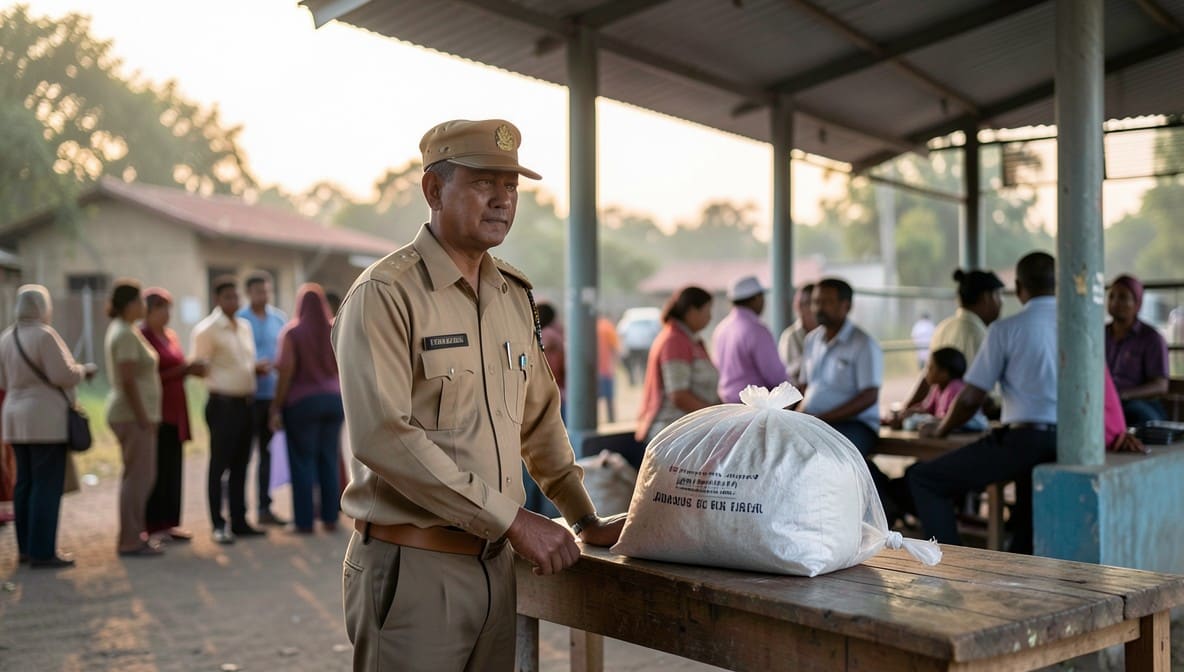
The appellants, Tarun Kumar Lasar and Bhojram Satnami, were charged with possession of a large quantity of marijuana under Section 20(ii)(B) of the Narcotic Drugs and Psychotropic Substances Act, 1985. The case arose from a recovery made at a public bus stand in Mainpur, District Gariyaband, on 18 October 2016, following a tip-off from an informant.
Key Facts
- On 18.10.2016, Inspector C.R. Thakur received information that a Royal Bus Service bus (CG-04E-3186) was carrying two individuals transporting marijuana.
- The informant described one accused as lame in the right hand and the other as dark-skinned with short hair.
- The investigating officer summoned independent witnesses and prepared a panchnama before conducting the search.
- The accused consented to a search by the police, waiving their right to be searched before a magistrate or gazetted officer.
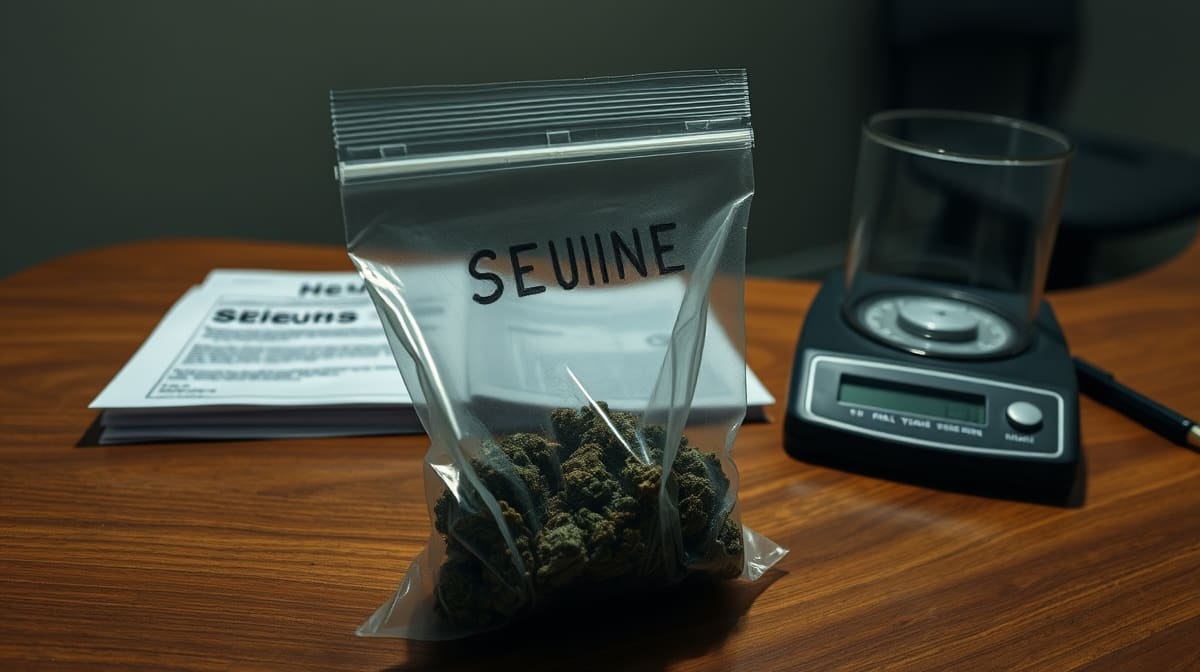
- A backpack carried by the accused was searched, revealing two packets of marijuana: 5 kg in Tarun’s packet and 4 kg 600 grams in Bhojram’s packet, totaling 9 kg 600 grams.
- The substance was weighed using a verified electronic scale by Mohammad Hanif Memon.
- Samples were drawn, sealed, and sent for chemical analysis.
- A Mycromax mobile phone and a bus ticket were seized from Tarun Kumar Lasar.
- The FSL report confirmed the seized substance as ganja (marijuana).
- No documents were produced by the accused to justify possession.
- The First Information Report was filed on 18.10.2016, and the final report was submitted on 16.12.2016.
Procedural History
- 18.10.2016: Arrest of appellants at Mainpur bus stand.
- 19.10.2016: Judicial custody commenced.
- 16.12.2016: Final report submitted to the Special Judge, Raipur.
- 17.11.2017: Trial Court convicted both appellants under Section 20(ii)(B) NDPS Act and sentenced them to 3 years rigorous imprisonment and a fine of Rs. 20,000 each.
- 18.10.2016 to 29.01.2018: Appellants remained in custody - total of 1 year, 3 months, and 10 days.
- 29.01.2018: Appellants granted bail by the High Court.
- 01.04.2026: Appeal heard and decided by the Chhattisgarh High Court.
The Parties' Positions
The appellants, through counsel Ms. Nirupama Bajpai, did not challenge the conviction but sought reduction of sentence on grounds of prolonged proceedings and time already served. The State, represented by Mr. Raj Kumar Sahu, defended the trial court’s sentence as appropriate given the quantity involved.
Relief Sought
The appellants sought reduction of the 3-year rigorous imprisonment sentence to the period already undergone (1 year, 3 months, 10 days), with maintenance of the fine of Rs. 20,000 each.
The Legal Issue
The central question was whether, in cases involving intermediate quantities of narcotics under Section 20(ii)(B) of the NDPS Act, where conviction is upheld and procedural compliance is established, the court may reduce the sentence to the period already undergone due to prolonged litigation and the accused’s extended incarceration.
Arguments Presented
For the Appellant
Counsel argued that the appellants had been in custody since 18.10.2016 and had already served over one year of the three-year sentence. With more than nine years having passed since the incident, continued enforcement of the full sentence would be disproportionate and unjust. She relied on the principle of proportionality in sentencing and the doctrine of delay defeating remedy, urging the court to consider the human cost of prolonged proceedings.
For the Respondent
The State contended that the quantity of marijuana (9.6 kg) fell squarely within the intermediate range under the NDPS Act, warranting a minimum sentence of 10 years under Section 20(ii)(B). However, it did not oppose the reduction of sentence to time served, acknowledging the delay in adjudication and the appellants’ prolonged incarceration.
The Court's Analysis
The Court undertook a comprehensive review of the procedural compliance under the NDPS Act. It held that Section 42, which mandates prior intimation to superior officers, was substantially complied with, as the informant’s tip was recorded and communicated to the Sub-Divisional Police Officer. Further, since the recovery occurred at a public bus stand, the Court observed that the rigours of Section 42 were diluted, and Section 43 applied as the search was conducted in a public place.
"The recovery having been effected at a public place i.e., bus stand, the rigours of Section 42 stand diluted and the case would be governed by Section 43 of the NDPS Act."
Regarding Section 50, the Court clarified that it applies only to personal search and not to the search of bags or articles carried by the accused. Since the contraband was recovered from a backpack and not from the appellants’ persons, and since they voluntarily consented to the search, no violation was established.
The Court further noted that the seizure was conducted in the presence of independent witnesses, the weighing was verified, samples were sealed and chemically tested, and the FSL report confirmed the substance as ganja. The chain of custody remained unbroken, and no evidence of tampering was presented.
"The link evidence regarding safe custody and transmission of samples also stands duly established. There is no material on record to suggest any tampering with the seized articles."
The Court affirmed the conviction, holding that the prosecution had established conscious possession beyond reasonable doubt. The statutory presumption under the NDPS Act remained unrebutted.
However, in considering sentence, the Court emphasized that the quantity of 9.6 kg constituted an intermediate quantity under the Act, not a commercial quantity. It noted that the appellants had already undergone over one year of incarceration and that the proceedings had dragged on for nearly a decade. The Court held that the ends of justice would be best served by reducing the sentence to the time already served.
The Verdict
The appellants’ conviction under Section 20(ii)(B) of the NDPS Act was affirmed. The sentence of rigorous imprisonment for three years was reduced to the period already undergone - 1 year, 3 months, and 10 days. The fine of Rs. 20,000 each was maintained. If already paid, no further action is required; otherwise, the fine must be deposited within four weeks. The appellants’ bail bonds shall remain operative for six months under Section 481 of the Bhartiya Nagrik Suraksha Sanhita, 2023. The trial court record and a copy of this judgment shall be sent back immediately for compliance.
What This Means For Similar Cases
Sentence Reduction Is Viable for Intermediate Quantities
- Practitioners may now argue for sentence reduction to time served in NDPS cases involving intermediate quantities where proceedings exceed five years.
- Courts are increasingly willing to balance statutory mandates with equitable considerations of delay and incarceration.
- The burden shifts to the prosecution to justify why a full sentence remains necessary after prolonged litigation.
Procedural Compliance Must Be Substantial, Not Perfect
- Minor deviations in compliance with Sections 42, 43, or 50 will not vitiate a case if the overall integrity of evidence is preserved.
- Recovery at public places reduces the strictness of Section 42 requirements.
- Consent to search by police, even without a magistrate, is valid if the accused is informed of their rights under Section 50.
Delay Is a Mitigating Factor in Sentencing
- The judgment establishes that delay in trial, especially beyond five years, can be a decisive mitigating factor in sentencing under the NDPS Act.
- Courts may now routinely consider time served as a proxy for substantive punishment in cases where the accused has been incarcerated for over a year.
- This precedent supports applications for sentence commutation in other pending NDPS cases with similar timelines.