The Chhattisgarh High Court has affirmed a conviction under the Narcotic Drugs and Psychotropic Substances Act while reducing the sentence to the period already undergone, emphasizing proportionality and undue delay in adjudication. The judgment underscores that while possession of substantial quantities of ganja warrants conviction, the punishment must reflect the principle of justice tempered with equity.
Background & Facts
The Dispute
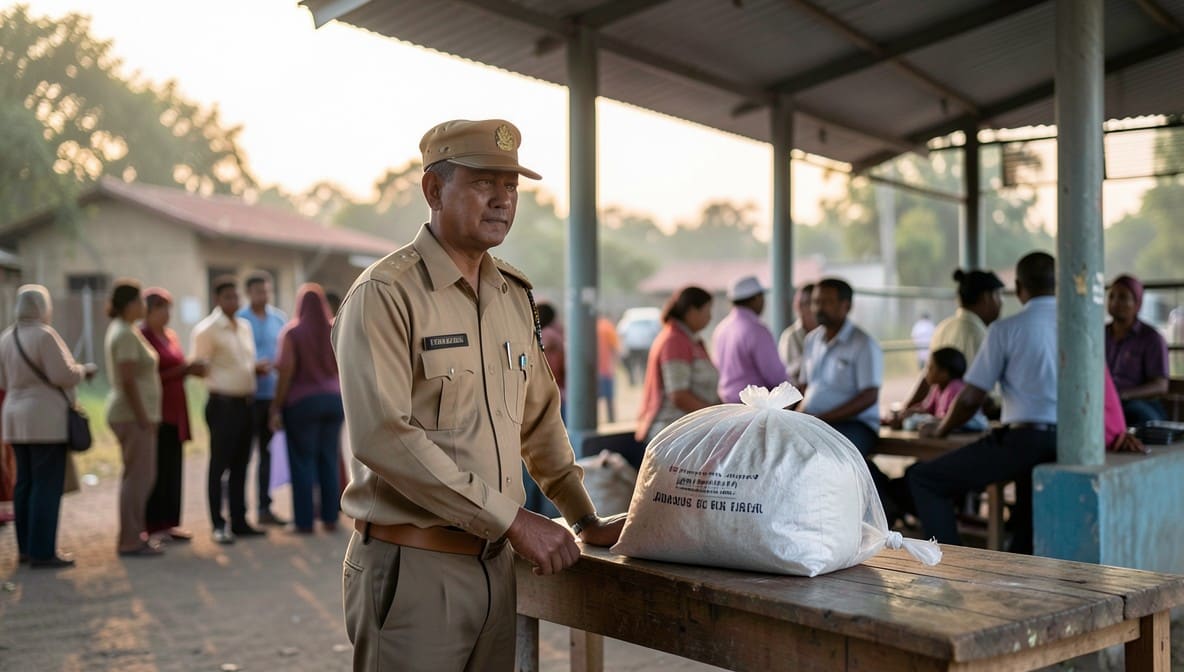
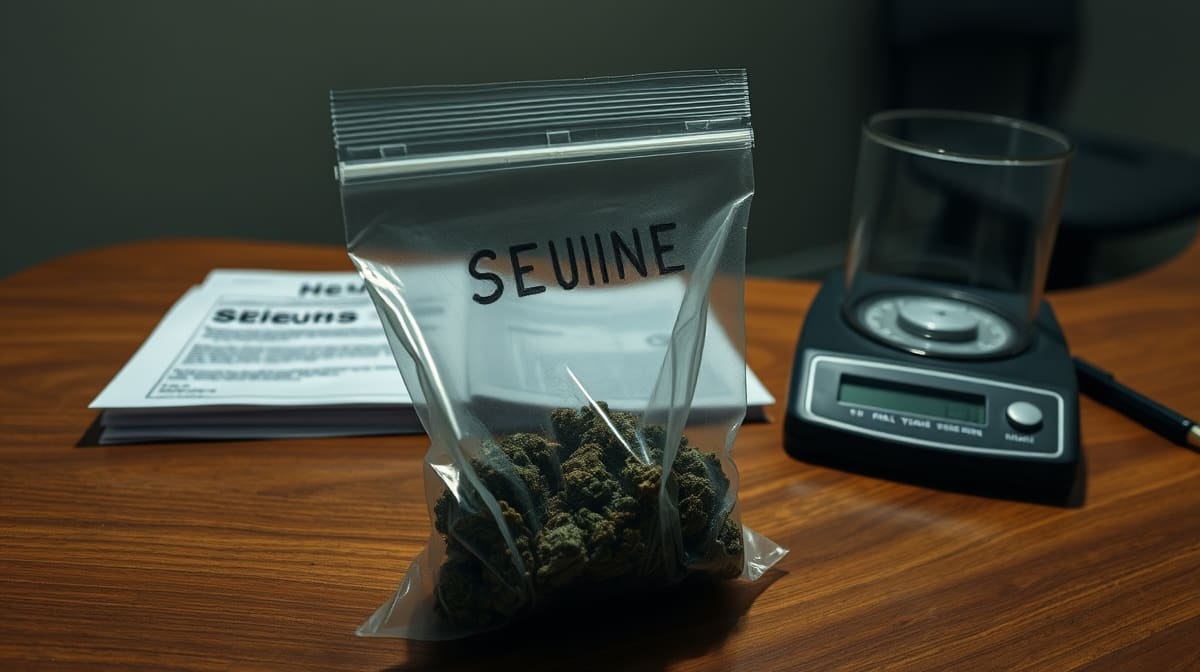
The appellants - Tikaram Yadav, Sarwan @ Ballu Yadav, and Vishnu Sahu - were charged with possession and intent to sell ganja under Section 20(b)(ii)(B) of the Narcotic Drugs and Psychotropic Substances Act, 1985. The case arose from a secret intelligence tip received on 19.02.2016, leading to a raid at Village Bhathapara near Hathkera, where 4 kg and 20 gm of ganja was seized from Tikaram’s possession. A red and silver motorcycle belonging to Sarwan was also seized. A panchnama was drawn, samples sent for forensic analysis, and a First Information Report (FIR) was registered as Crime No. 45/2016.
Key Facts
- The seized ganja weighed 4 kg and 20 gm.
- The appellants were arrested on the same day, 19.02.2016.
- The charge sheet was filed before the Special Judge (NDPS), Mungeli.
- The forensic report from the Regional Forensic Science Laboratory confirmed the substance as ganja.
- The appellants denied the charges under Section 313 CrPC, claiming false implication, and did not call any defense witnesses.
- The trial court convicted them on 26.03.2019 and sentenced them to 3 years rigorous imprisonment and a fine of Rs. 15,000, with 6 months additional imprisonment in default of fine.
- The appellants had undergone 5 months and 2 days of custody by the time of appeal.
- Appellant No. 3, Vishnu Sahu, died on 30.03.2024. No application under Section 394 CrPC was filed by his legal heirs within 30 days, resulting in abatement of the appeal against him.
Procedural History
- 19.02.2016: Seizure of ganja and arrest of appellants.
- 19.02.2016: FIR registered as Crime No. 45/2016.
- 26.03.2019: Conviction and sentencing by Special Judge (NDPS), Mungeli.
- 30.03.2024: Death of Appellant No. 3, Vishnu Sahu.
- 10.03.2026: Posthumous PUD issued by trial court.
- 23.03.2026: Appeal heard by Chhattisgarh High Court on behalf of Appellants No. 1 and 2 only.
Relief Sought
The appellants sought reduction of the 3-year sentence to the period already undergone (5 months and 2 days), arguing prolonged litigation since 2016 and no prejudice to the state. The fine was not contested.
The Legal Issue
The central question was whether the sentence of 3 years rigorous imprisonment under Section 20(b)(ii)(B) of the NDPS Act for possession of 4.02 kg of ganja should be reduced to the period already undergone, given the delay in adjudication and absence of aggravating circumstances.
Arguments Presented
For the Appellant
Learned counsel for the appellants conceded that the conviction was legally sound but urged reduction of sentence on humanitarian and equitable grounds. He emphasized that the appellants had spent over five months in custody since 2016, and the case had remained pending for nearly a decade. He argued that the sentence was disproportionate to the time served and that justice would be better served by reducing the term to time already undergone.
For the Respondent
The State opposed the reduction, contending that the quantity of ganja (4.02 kg) fell squarely within the ambit of Section 20(b)(ii)(B), which mandates a minimum sentence of 10 years for quantities exceeding 1 kg. However, the trial court had imposed only 3 years, which was already lenient. The State argued that the sentence was just and proper and that reducing it further would undermine deterrence.
The Court's Analysis
The Court first examined the procedural compliance under Section 42 of the NDPS Act, which governs warrantless entry, search, seizure, and arrest. It found that the Investigating Officer, being a superior officer empowered under the Act, had acted on credible information recorded in writing, conducted the search between sunrise and sunset, prepared a panchnama, and sent a copy of the information to his superior within 72 hours as mandated. The Court held that Section 42 was fully complied with, and the seizure was lawful.
The forensic report confirmed the seized substance as ganja, and the trial court’s conviction was upheld as free from legal infirmity.
"The quantity of ganja seized - 4 kg and 20 gm - is substantial and falls within the ambit of Section 20(b)(ii)(B). However, the appellants have been languishing in litigation since 2016, and have already undergone five months and two days of imprisonment. The ends of justice would be met if the sentence is reduced to the period already undergone."
The Court acknowledged that while the statutory minimum sentence under Section 20(b)(ii)(B) is 10 years, the trial court had imposed only 3 years, indicating leniency. The High Court further noted that no evidence suggested the appellants were part of a larger trafficking network or had prior convictions. The delay in trial - nearly 10 years - was deemed a relevant factor in sentencing.
The Court held that the principle of proportionality, read with Article 21 of the Constitution, requires that punishment not be excessive or unduly prolonged. The reduction of sentence to time served was not a commutation of punishment but a recognition of the time already endured under the same sentence.
The Verdict
The appeal was allowed in part. The conviction under Section 20(b)(ii)(B) of the NDPS Act was upheld. The sentence of 3 years rigorous imprisonment was reduced to the period already undergone - 5 months and 2 days. The fine of Rs. 15,000 was maintained. In default of payment of fine, the appellants shall undergo 6 months rigorous imprisonment as originally ordered. The trial court was directed to record compliance within 4 weeks.
What This Means For Similar Cases
Time Served Can Override Mandatory Minimums in Exceptional Circumstances
- Practitioners may now argue for sentence reduction to time served in NDPS cases where the accused has endured prolonged pre-trial or post-conviction delay, even if the statutory minimum is higher.
- Courts may consider the duration of litigation as a mitigating factor under Article 21, particularly where the accused has no prior record and the quantity, while substantial, is not indicative of large-scale trafficking.
Procedural Compliance Under Section 42 Is Non-Negotiable
- Any deviation from Section 42 - failure to record information in writing, delay in forwarding to superior, or search outside sunrise-sunset hours - can vitiate the entire prosecution.
- Defense counsel must scrutinize panchnamas and compliance reports for procedural lapses, as they remain a primary ground for acquittal.
Sentencing Must Reflect Proportionality, Not Just Statutory Mandates
- The judgment signals a shift toward individualized sentencing in drug cases, moving beyond rigid statutory brackets.
- Judges are now expected to weigh: quantity seized, duration of litigation, accused’s background, and absence of aggravating factors.
- This precedent may be invoked in cases involving ganja, charas, or heroin where quantities are above threshold but below commercial scale.