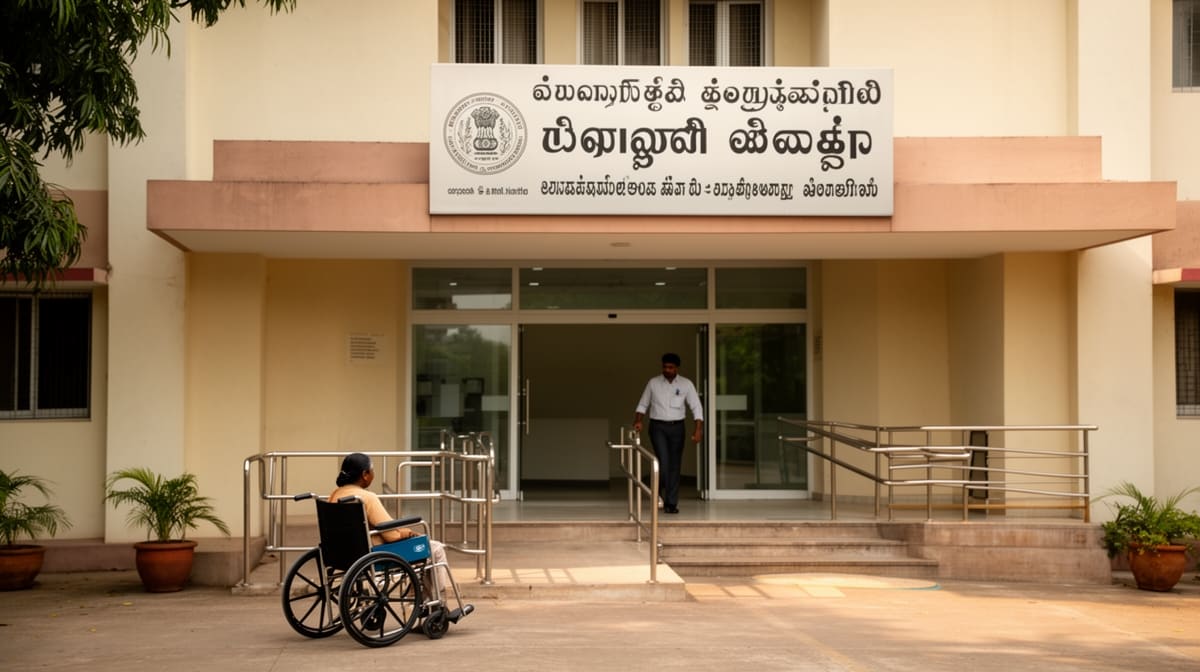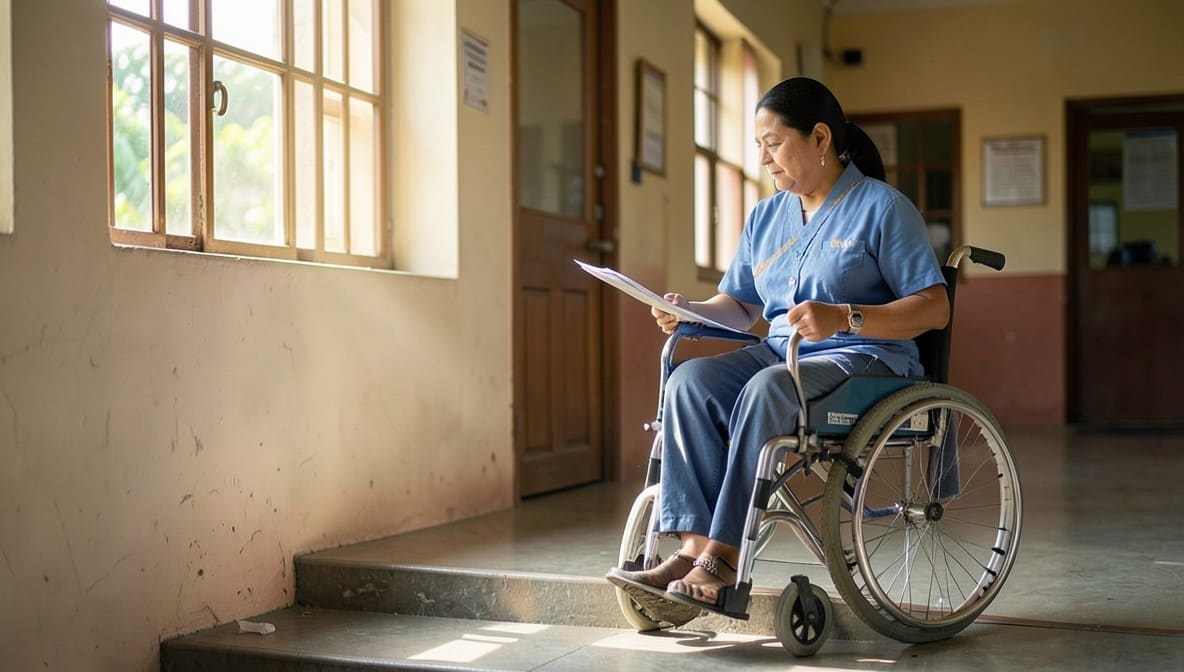
The Madras High Court has reiterated the statutory obligation of employers to assess the fitness of employees with disabilities and provide suitable alternative duties. In a recent order, the Court directed the Tamil Nadu State Transport Corporation to refer an employee to a Medical Board within one week and act on its report in accordance with Section 20(4) of the Rights of Persons with Disabilities Act, 2016, ensuring continuity of service and attendant benefits.
Background & Facts
The Dispute
The petitioner, K. Gajendran, is an employee of the Tamil Nadu State Transport Corporation (Kumbakonam) Ltd. He filed a writ petition seeking a direction to the respondents to refer him to a Government Hospital for ascertaining his physical fitness to work as a Driver. The petitioner further sought suitable alternative light duty, continuity of service, pay protection, and back wages from 18.01.2026 until the provision of light duty, in terms of Section 20(4) of the Rights of Persons with Disabilities Act, 2016.
Key Facts
- The petitioner is employed as a Driver with the first respondent Corporation.
- He sought referral to a Medical Board to assess his fitness for duty due to health concerns.
- The petitioner expressed apprehension about delays if referred to the Medical Board at Chennai.
- The relief sought included light duty, continuity of service, pay protection, and back wages.
Procedural History
- 18.03.2026: Writ Petition (W.P.(MD) No. 6649 of 2026) filed before the Madurai Bench of the Madras High Court.
- 12.03.2026: Matter adjourned to enable the respondents to obtain instructions.
- 18.03.2026: Matter heard, and respondents agreed to refer the petitioner to a Medical Board.
Relief Sought
The petitioner sought:
- A direction to the respondents to refer him to a Government Hospital for fitness assessment.
- Suitable alternative light duty based on the Medical Board report.
- Continuity of service, pay protection, and back wages from 18.01.2026.
- Compliance with Section 20(4) of the Rights of Persons with Disabilities Act, 2016.
The Legal Issue
The primary question before the Court was whether the employer could be compelled to refer the petitioner to a Medical Board for fitness assessment and, upon receipt of the report, provide suitable alternative light duty in accordance with Section 20(4) of the Rights of Persons with Disabilities Act, 2016.
Arguments Presented
For the Petitioner
The petitioner’s counsel argued that the respondents had failed to comply with their statutory obligation under Section 20(4) of the Rights of Persons with Disabilities Act, 2016, which mandates employers to provide suitable alternative duties to employees with disabilities. The counsel also highlighted the potential delay if the petitioner were referred to the Medical Board at Chennai and requested a direction to refer him to a local Medical Board.
For the Respondents
The learned Standing Counsel for the respondents fairly submitted that the respondents had no objection to referring the petitioner to the Medical Board. The counsel also agreed that an appropriate direction could be issued for referring the petitioner to a Medical Board closer to his place of work.
The Court's Analysis
The Court observed that the respondents had no objection to referring the petitioner to a Medical Board for fitness assessment. Recognizing the petitioner’s apprehension about delays at the Chennai Medical Board, the Court directed the respondents to refer the petitioner to the Medical Board at Government Rajaji Hospital, Madurai, within one week from the date of receipt of the order.
The Court emphasized that the respondents must act upon the Medical Board’s report as soon as it is received and pass appropriate orders in accordance with the law, specifically Section 20(4) of the Rights of Persons with Disabilities Act, 2016. The Court clarified that any grievance regarding non-payment of salary would remain open for the petitioner to agitate independently.
"This Writ Petition is disposed of, directing the respondents to refer the petitioner to the Medical Board at Government Rajaji Hospital, Madurai, within a period of one week from the date of receipt of a copy of this order and to act upon the report of the Medical Board as soon as the same is received and pass appropriate orders in accordance with law, duly taking into consideration the provisions of the Rights of Persons with Disabilities Act, 2016, in specific Section 20(4) of the Act."
The Verdict
The Court disposed of the writ petition with the following directions:
- The respondents were directed to refer the petitioner to the Medical Board at Government Rajaji Hospital, Madurai, within one week from the date of receipt of the order.
- The respondents must act upon the Medical Board’s report and pass appropriate orders in accordance with Section 20(4) of the Rights of Persons with Disabilities Act, 2016.
- Any grievance regarding non-payment of salary was left open for the petitioner to agitate independently.
- No costs were awarded.
What This Means For Similar Cases
Employers Must Comply with Statutory Obligations Under Disability Law
- Employers are legally bound to refer employees with disabilities to a Medical Board for fitness assessment and provide suitable alternative duties based on the report.
- Failure to comply with Section 20(4) of the Rights of Persons with Disabilities Act, 2016 can result in judicial intervention, as seen in this case.
Timely Action on Medical Board Reports Is Mandatory
- The Court’s direction to act on the Medical Board’s report "as soon as the same is received" underscores the importance of timely compliance.
- Employers must ensure that the process of fitness assessment and provision of alternative duties is expedited to avoid legal consequences.
Grievances Regarding Salary Non-Payment Remain Justiciable
- The Court’s observation that grievances regarding non-payment of salary are left open for independent agitation highlights that employees retain the right to seek remedies for financial losses even after the primary relief is granted.
- Practitioners should advise clients to pursue such claims separately if necessary.