The Punjab & Haryana High Court has delivered a pivotal clarification on the limits of strict liability in motor accident claims, holding that it cannot be invoked when the accident results from the combined fault of both parties. This judgment reasserts the foundational principle that compensation must reflect actual fault, not legal convenience.
Background & Facts
The Dispute
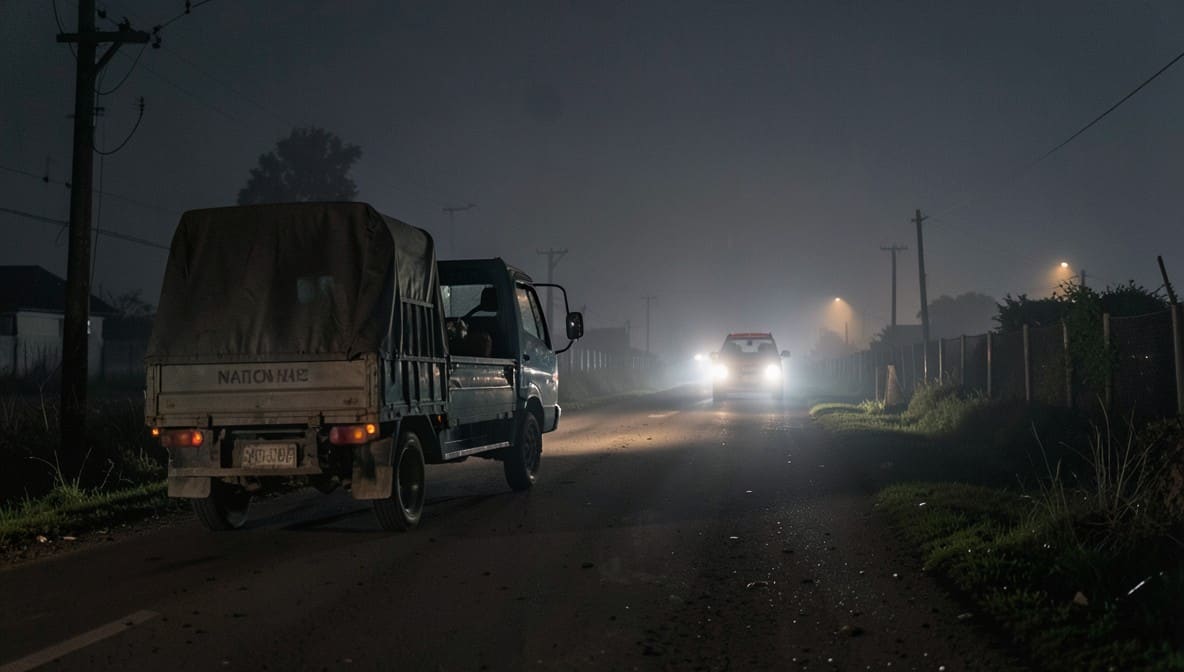
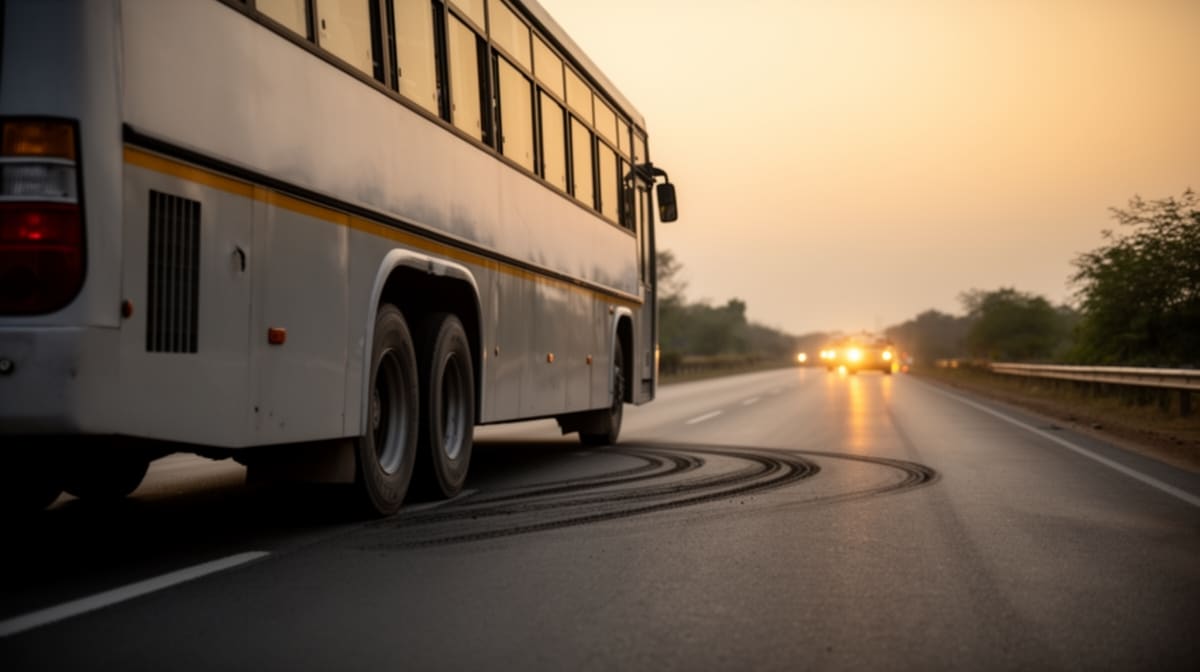
On 28 October 2000, a Maruti Zen car carrying Vijay Kumar Mehra, his wife Poonam Mehra, and other family members collided with a stationary bus on the GT Road near Pipli. The bus, bearing registration PB-12C-9151, had stopped due to a mechanical defect. The claimants alleged that oil had been spilled behind the bus and no warning signs were placed. The bus owner contended that the accident occurred because the car driver lost control after a stray cow suddenly appeared on the road. The claimants further alleged that the driver had falsified the Daily Diary Report (DDR) to conceal the true cause.
Procedural History
- 28 October 2000: Motor accident occurred on GT Road, Panipat.
- 2001: Separate claim petitions filed by Poonam Mehra and Vijay Kumar Mehra before the Motor Accident Claims Tribunal, Panipat.
- 20 November 2002: Tribunal awarded compensation to both claimants, rejecting negligence by the bus driver but invoking strict liability under Kaushnuma Begum v. New India Assurance Co. Ltd.
- 2003: Four appeals filed before the Punjab & Haryana High Court - two by claimants seeking enhancement, two by the bus owner challenging liability.
Relief Sought
The claimants sought enhanced compensation for grievous injuries, including amputation of Vijay Kumar Mehra’s left upper limb (80% permanent disability) and fractures sustained by Poonam Mehra. The bus owner sought to overturn liability entirely, arguing that strict liability was misapplied in the absence of proven negligence.
The Legal Issue
The central question was whether Section 166 of the Motor Vehicles Act permits the imposition of strict liability on the owner of a stationary vehicle when the accident arises from the contributory negligence of both the vehicle operator and the claimant’s driver, absent proof of rash or negligent driving by the former.
Arguments Presented
For the Petitioner
The claimants argued that the Tribunal’s award was inadequate given the severity of injuries and the hazardous condition of the road. They relied on Kaushnuma Begum to contend that vehicle owners bear absolute responsibility for accidents involving their vehicles, regardless of fault. They emphasized the absence of warning signals and the dangerous placement of a heavy vehicle on a national highway.
For the Respondent
The bus owner contended that the Tribunal erred in applying strict liability because the bus was stationary and not in motion. Citing Khenyei v. New India Assurance Co. Ltd., they argued that liability must be grounded in proven negligence, not legal presumption. They highlighted the claimant’s own DDR entry attributing the accident to a stray cow, which undermined the claim of road hazard.
The Court's Analysis
The Court meticulously examined the factual matrix and the scope of strict liability as interpreted in Kaushnuma Begum. It distinguished that case, where a moving vehicle capsized and struck a pedestrian, from the present scenario where a stationary bus was struck from behind. The Court held that strict liability cannot be a substitute for negligence where the vehicle is not in motion and the accident results from an independent, concurrent cause.
"The principle explained by the Hon’ble Supreme Court in Kaushnuma Begum’s case was applied in a situation where a vehicle in motion capsized due to bursting of a tyre and struck a pedestrian. The facts of the present case are materially different."
The Court noted that while the bus driver failed to take adequate precautions - such as placing warning signals or barricades - the car driver’s loss of control due to a sudden appearance of a stray cow constituted a clear contributory factor. The Court applied the doctrine of apportionment of liability as affirmed in Khenyei and Bimla Devi, emphasizing that motor accident claims must be decided on the preponderance of probabilities and a pragmatic assessment of fault.
The Court concluded that the accident was the result of contributory negligence, with 50% attributable to the car driver and 50% to the bus driver. It rejected the Tribunal’s reliance on strict liability as legally unsustainable, while affirming that the compensation awarded, though initially based on erroneous reasoning, was substantively fair.
The Verdict
The bus owner won on the legal principle: strict liability was set aside. The claimants retained their compensation. The Court held that liability must arise from contributory negligence, not strict liability, and that compensation should reflect apportioned fault. The Tribunal’s award was upheld, but only on the corrected legal basis of shared responsibility.
What This Means For Similar Cases
Strict Liability Cannot Replace Proven Negligence
- Practitioners must now demonstrate actual fault before invoking strict liability under Section 166 MV Act.
- A stationary vehicle, even if improperly parked, does not automatically trigger absolute liability.
- Courts will scrutinize whether the vehicle was in motion or posed an inherent, unavoidable danger.
Contributory Negligence Requires Quantifiable Apportionment
- In multi-party accidents, tribunals must explicitly apportion fault percentages based on evidence.
- The 50:50 split in this case sets a precedent for cases where both parties’ actions materially contributed to the accident.
- Failure to apportion may lead to reversal on appeal, even if compensation amounts are deemed adequate.
Documentary Evidence Can Override Oral Testimony
- The claimant’s own DDR entry attributing the accident to a stray cow was given decisive weight.
- Practitioners should prioritize securing and challenging contemporaneous records over later affidavits.
- Contradictions in claimant statements must be rigorously cross-examined to establish contributory fault.