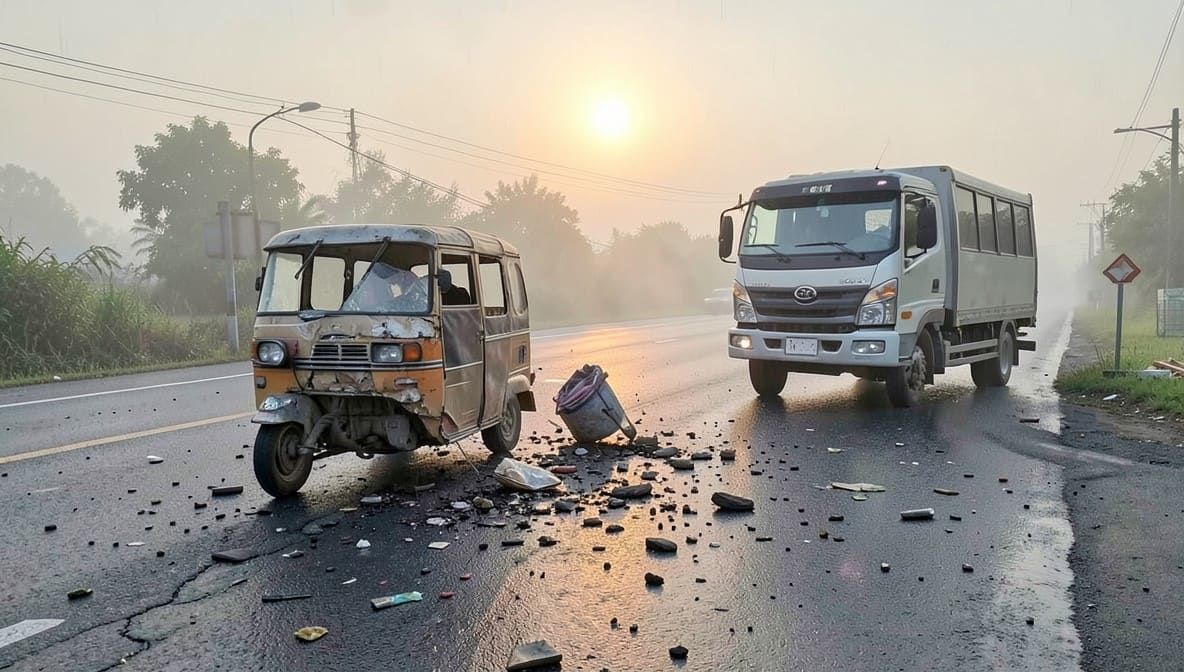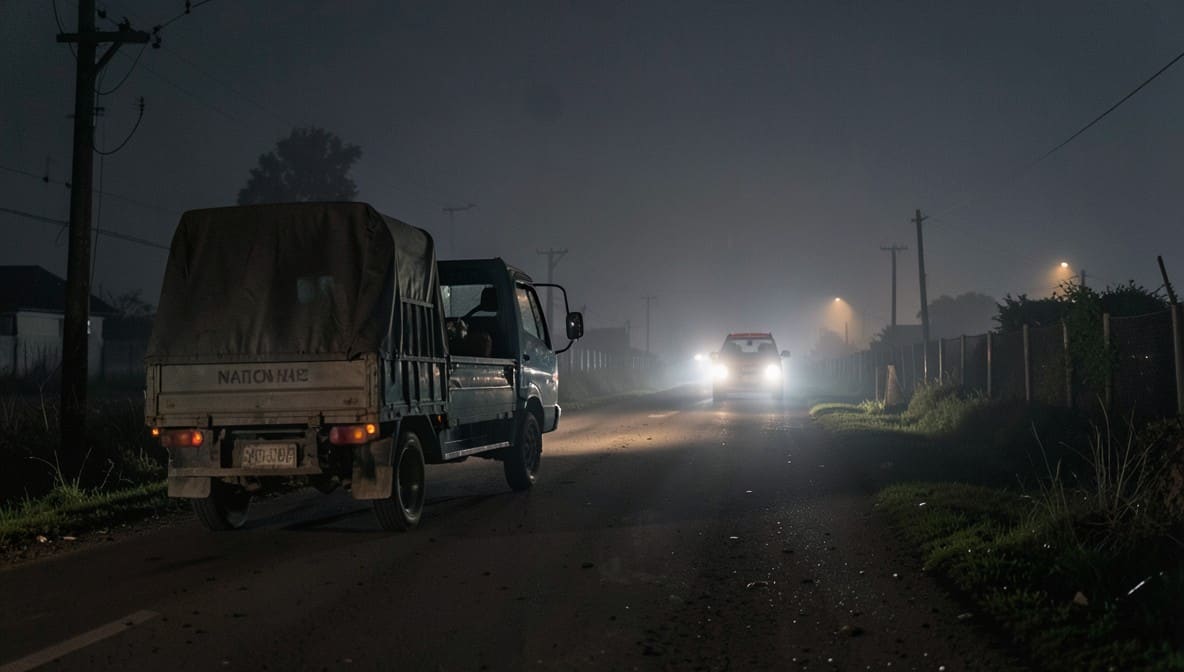
The Punjab and Haryana High Court has clarified that in motor accident cases where both drivers contribute to the mishap, equal apportionment of negligence is the just and equitable default, absent compelling evidence of gross disparity. This judgment redefines the standard for liability allocation and sets a precise methodology for calculating compensation in the absence of verified income records.
Background & Facts
The Dispute
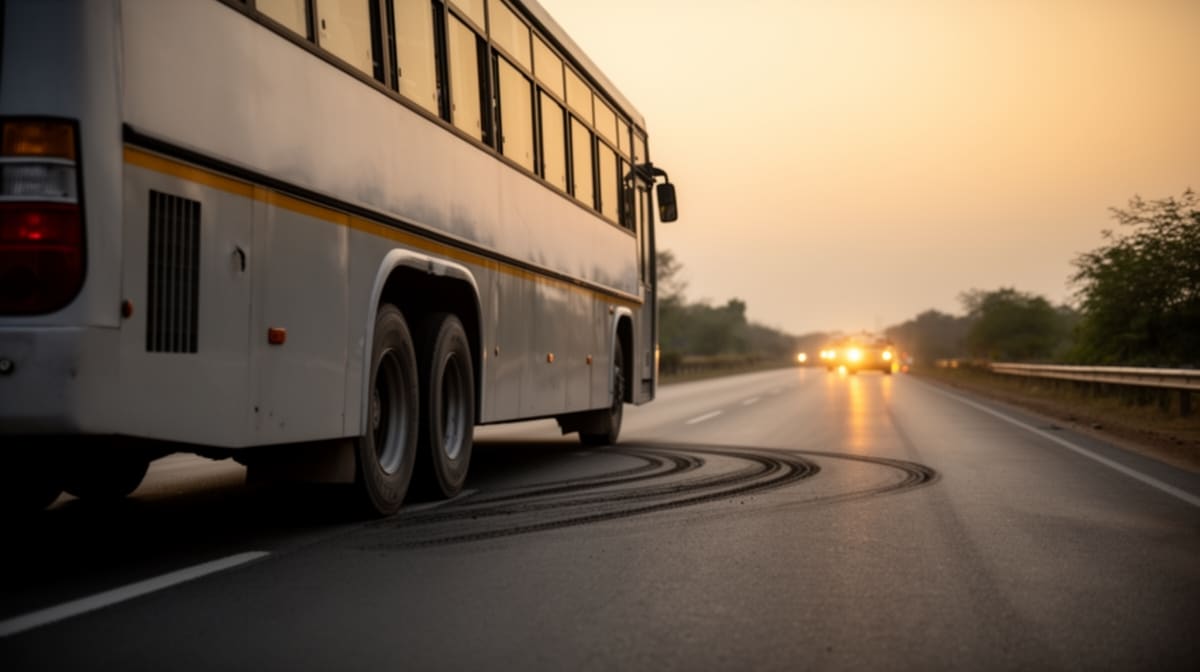
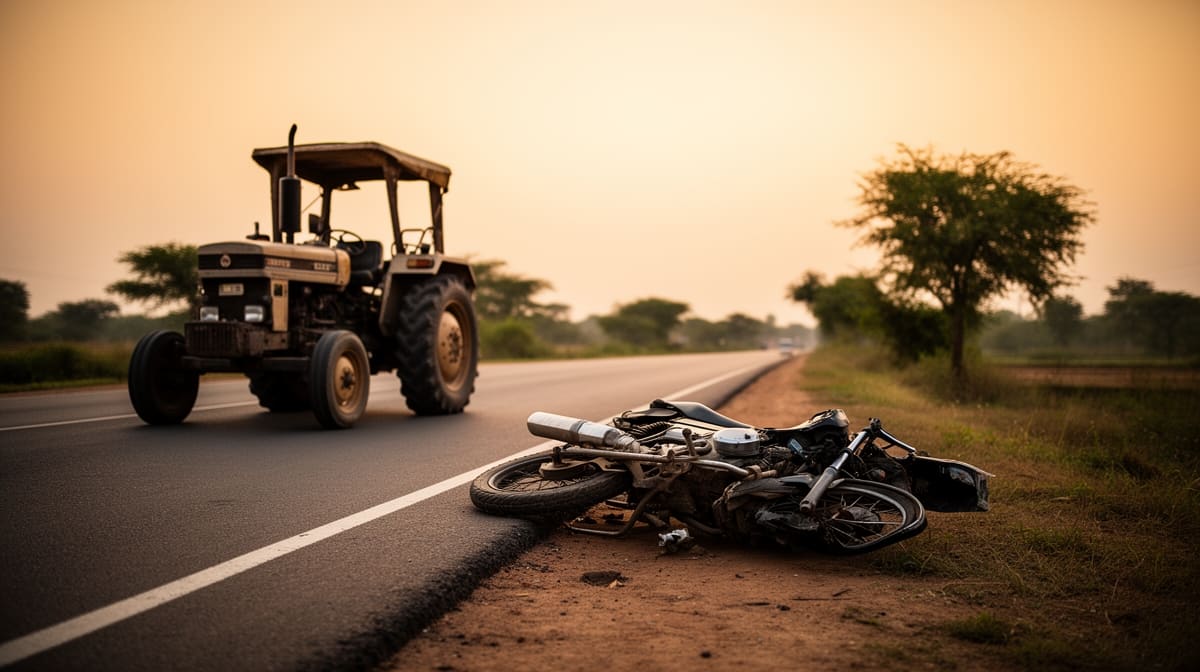
On the intervening night of 28/29.08.2000, Samundar Singh, aged approximately 40, and Baljeet Singh were sleeping on a cot placed on the unmetalled portion of National Highway No.10, in front of a parked truck bearing registration HR-58-0803. At approximately 3:30 a.m., Joginder Singh, driver and owner of a Tata 407 truck bearing HR-55-2450, approached from the Delhi side and collided with the parked truck from behind. The impact caused the parked truck to strike the cot, inflicting fatal injuries on Samundar Singh. He was rushed to the hospital but succumbed to his injuries. His dying declaration was recorded, leading to the registration of an FIR against Joginder Singh.
Key Facts
- The deceased, Samundar Singh, was a daily wage laborer with no formal employment records.
- The parked truck had no blinker or parking lights activated at the time of the accident.
- Baljeet Singh, the sole eyewitness, testified that the truck was parked off the metalled road and that no lights were on.
- The driver of the Tata 407 admitted to driving at night without due caution.
- The accident occurred in the year 2000, in a rural stretch of National Highway No.10.
- The claimants are the widow and three minor children of the deceased.
Procedural History
- 28/29.08.2000: Accident occurred.
- 05.09.2000: FIR registered against Joginder Singh.
- 15.12.2000: Claim petition filed under Section 166 of the Motor Vehicles Act, 1988 before the Motor Accident Claims Tribunal, Rohtak.
- 15.06.2001: Tribunal awarded ₹57,600/- to claimants, apportioning 75% negligence to the parked truck and 25% to the offending vehicle.
- 24.03.2026: Appeal heard by the Punjab and Haryana High Court.
- 27.03.2026: Judgment pronounced.
The Parties' Positions
For the Appellants (Claimants)
- Argued that the parked truck was lawfully positioned on the unmetalled shoulder of the highway.
- Contended that failure to activate lights was a minor lapse, not a primary cause of the accident.
- Asserted that the driver of the moving vehicle had a duty to avoid stationary objects, especially at night.
- Challenged the assessment of income and multiplier as unduly low.
For the Respondents (Insurance Company)
- Supported the Tribunal’s apportionment of negligence.
- Argued that the parked vehicle’s lack of lights created a hidden hazard.
- Maintained that the compensation quantum was correctly calculated under prevailing precedents.
Relief Sought
The appellants sought:
- Reversal of the 75:25 negligence apportionment.
- Recalculation of compensation with higher income assessment, inclusion of 40% future prospects, correct multiplier of 15, and addition of conventional heads.
- Interest on the enhanced amount from the date of filing the claim petition.
The Legal Issue
The central questions were: (1) Whether the apportionment of 75% negligence to the driver of the parked truck was justified under the doctrine of contributory negligence; and (2) How to determine the deceased’s annual income and apply the multiplier in the absence of verified earnings.
Arguments Presented
For the Appellant
Counsel relied on Smt. Sarla Verma v. Delhi Transport Corporation to argue that where income is unproven, notional income based on minimum wages must be adopted. He contended that the Tribunal’s 75:25 split was disproportionate, as the parked vehicle was not obstructing traffic and was on the unmetalled portion. He cited National Insurance Co. Ltd. v. Pranay Sethi to support inclusion of 40% future prospects and a multiplier of 15 for a 40-year-old. He emphasized that the burden of proving gross negligence lay with the respondents.
For the Respondent
The insurance company’s counsel argued that the absence of lights on a vehicle parked on a national highway constituted a serious safety violation. He relied on Magma General Insurance Co. Ltd. v. Nanu Ram to assert that the Tribunal’s apportionment was within judicial discretion and should not be disturbed absent perversity. He maintained that the compensation quantum was consistent with settled principles.
The Court's Analysis
The Court examined the evidence of PW3 (Baljeet Singh) and PW5 (ASI Bhagwant Singh), both of whom confirmed that the parked truck had no lights. However, the Court noted that the truck was parked on the unmetalled shoulder, not the travelled portion, and that the moving vehicle was under a duty to navigate safely at night. The Court held that while the parked truck’s failure to illuminate was a contributory factor, it could not be deemed the primary cause.
"The driver of the moving vehicle, especially at night, bears a heightened responsibility to avoid obstacles. The absence of lights on the parked truck is a lapse, but not one that justifies attributing three-fourths of the blame."
The Court distinguished this case from those where a vehicle is parked on the main carriageway or in a manner that obstructs visibility. Here, the hazard was passive, not active. The Court concluded that the 75:25 apportionment was excessive and contrary to the principle of proportionality.
On compensation, the Court held that since no income proof existed, the notional income must be based on minimum wages prevailing in 2000. The Court adopted ₹2,000 per month as reasonable, enhanced by 40% for future prospects as mandated in Pranay Sethi. After deducting one-fourth for personal expenses under Sarla Verma, the annual dependency loss was ₹25,200. With a multiplier of 15, dependency loss was ₹3,78,000. Conventional heads - loss of consortium and funeral expenses - were awarded as claimed.
The Verdict
The appeal was partly allowed. The High Court set aside the Tribunal’s apportionment and held both drivers equally negligent, in a 50:50 ratio. The total compensation was recalculated at ₹4,78,000, of which the claimants are entitled to 50%, i.e., ₹2,39,000. After deducting the ₹57,600 already awarded, the enhanced compensation is ₹1,81,400. This amount shall be paid jointly and severally by the respondents, with interest at 7.5% per annum from the date of filing the claim petition (15.12.2000) until realization. The amount shall be equally divided among the four claimants: the widow and three minor children.
What This Means For Similar Cases
Equal Negligence Is the Default in Ambiguous Cases
- Where both vehicles contribute to an accident but no clear evidence shows gross negligence by one party, courts must default to equal apportionment.
- Parking on the unmetalled shoulder without lights is a breach, but not a primary cause unless the vehicle obstructs the travelled portion.
- Practitioners must argue that the moving vehicle’s duty to avoid stationary objects is paramount, especially at night.
Income Assessment Must Be Grounded in Minimum Wage Norms
- In the absence of income proof, courts must use minimum wage data for the year of accident, not arbitrary figures.
- Future prospects of 40% are mandatory for deceased under 55 years, per Pranay Sethi.
- Multiplier of 15 applies to persons aged 40 - 45, and 1/4 deduction for personal expenses is standard under Sarla Verma.
Conventional Heads Are Non-Negotiable
- Loss of consortium (₹20,000 per dependent) and funeral/estate loss (₹10,000 each) must be awarded as a matter of course.
- Interest must run from the date of filing the claim petition, not the date of award.