The Punjab & Haryana High Court has clarified that in motor accident claims, liability must be apportioned based on contributory negligence - even when the claimant is a minor - rejecting automatic imposition of full liability on the vehicle owner. This ruling reinforces the principle that fault must be proportionally assessed, not presumed.
Background & Facts
The Dispute
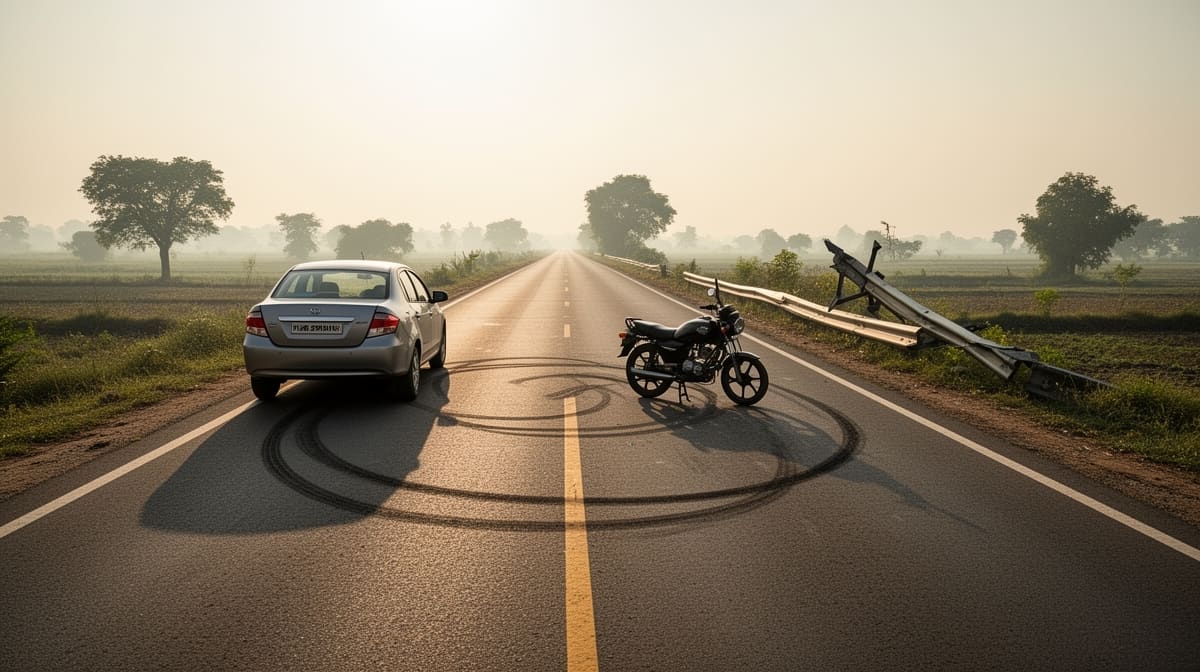
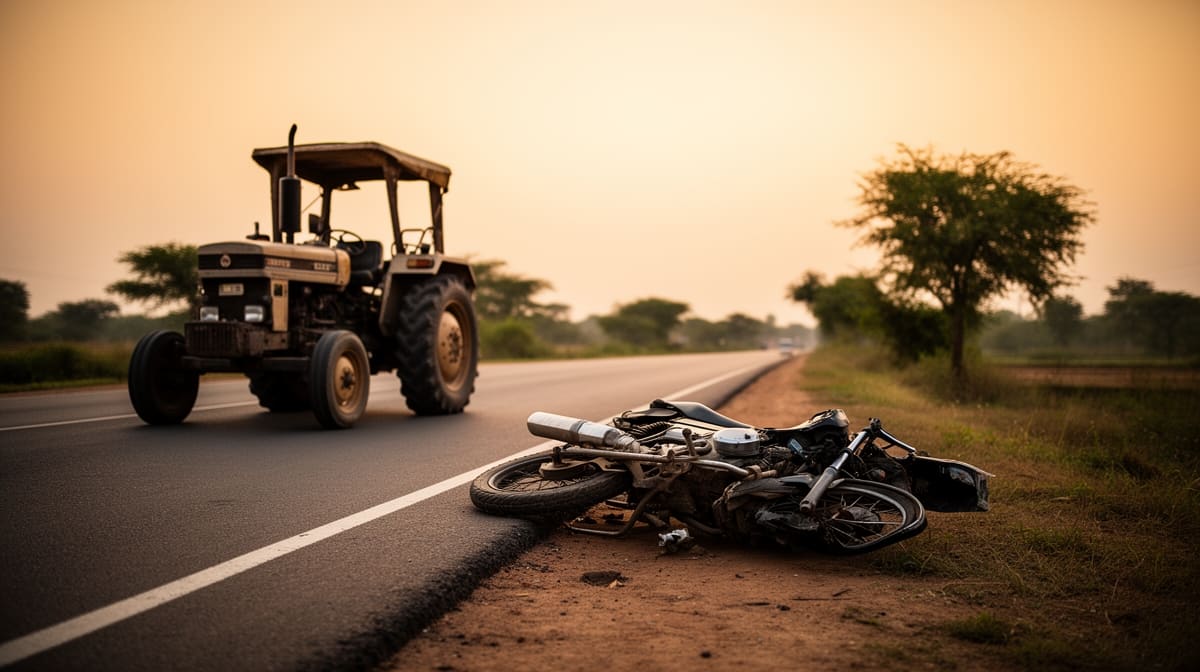
The dispute arose from a motor accident on the roadside near Moga, where Munish Grover, a minor, was injured while riding a motorcycle. He claimed that Nirmal Singh’s tractor, driven negligently, struck him from the front. Nirmal Singh contended that his tractor was lawfully parked and that Grover, riding without a license, collided with it from behind.
Procedural History
- 19 June 2010: Motor accident occurred near Vazir Singh’s field.
- 2013: Motor Accident Claims Tribunal, Moga, awarded Rs. 1,33,000/- plus 9% interest to Grover, holding Nirmal Singh fully liable.
- 2020: Nirmal Singh filed First Appeal before the Punjab & Haryana High Court.
- 10 March 2026: Judgment delivered by Justice Harkesh Manuja.
Relief Sought
The appellant sought to set aside the Tribunal’s award, arguing that the claimant’s own negligence - driving as a minor without a license - should reduce or eliminate his liability. He further challenged the reliance on hearsay testimony and sought apportionment of fault.
The Legal Issue
The central question was whether contributory negligence by a claimant, particularly a minor driving without a license, can reduce the liability of the vehicle owner, and if so, what standard governs the apportionment of fault in motor accident claims under the Motor Vehicles Act, 1988.
Arguments Presented
For the Appellant
Learned counsel argued that the Tribunal erred in ignoring the testimony of RW1 and RW2, who were eyewitnesses and stated the tractor was stationary. He emphasized that the claimant was a minor without a valid license, and the mechanical inspection report showed front-end damage to the motorcycle - consistent with a rear-end collision. He cited Karnal Transport Co. v. Harbhajan Singh to argue that courts must assess fault proportionally, not impose strict liability.
For the Respondent
The respondent did not appear, and no arguments were advanced on his behalf. The Court proceeded on the basis of the record and the Tribunal’s findings.
The Court's Analysis
The Court undertook a meticulous review of the evidence, distinguishing between hearsay and direct testimony. It held that the statements of CW1 (mother) and CW6 (maternal uncle) were inadmissible as they were not present at the scene. In contrast, the testimonies of RW1 and RW2 were consistent, credible, and unshaken on cross-examination.
"Their testimonies remain unshaken on material particulars."
The Court further noted that the mechanical inspection report corroborated the appellant’s version, showing front damage to the motorcycle - indicating impact from behind. It also acknowledged the claimant’s status as a minor without a license, which constituted a statutory violation and a material contributor to the accident.
However, the Court refused to absolve the appellant entirely. It held that parking a heavy vehicle on the roadside without adequate warning or precautions also constituted negligence. The Court applied the doctrine of comparative negligence, rejecting the notion that liability must be all-or-nothing.
The Court emphasized that while the Motor Vehicles Act imposes strict liability on owners of motor vehicles, it does not preclude reduction of compensation where the claimant’s own conduct materially contributed to the accident. The apportionment must reflect the degree of fault, not merely the status of the parties.
The Verdict
The appellant succeeded. The Court held that contributory negligence was established, with 30% fault attributable to the claimant and 70% to the appellant. The Tribunal’s award of Rs. 1,33,000/- plus 9% interest was upheld in full, as it was modest and fair under the circumstances, and no further adjustment was warranted.
What This Means For Similar Cases
Fault Must Be Quantified, Not Assumed
- Practitioners must now systematically plead and prove contributory negligence in every motor accident claim, even when the claimant is a minor.
- Courts will no longer presume full liability on vehicle owners; the burden shifts to claimants to disprove their own negligence.
- Evidence such as mechanical reports, license status, and eyewitness accounts must be formally integrated into compensation arguments.
Documentary Evidence Trumps Hearsay
- Statements by non-eye-witnesses (e.g., relatives) are inadmissible to prove the manner of accident.
- Courts will prioritize physical evidence (e.g., vehicle damage reports) and consistent eyewitness testimony over emotional or familial affidavits.
- Legal teams must ensure that key witnesses are properly identified and examined to avoid dismissal of critical testimony.
Apportionment Is the New Norm
- A 70-30 split, as in this case, sets a precedent for moderate apportionment where both parties are at fault.
- In cases where the claimant is clearly reckless (e.g., underage, unlicensed, speeding), courts may apply higher percentages of fault against them - up to 50% or more.
- Practitioners should draft compensation petitions with apportionment ratios in mind, and be prepared to argue for or against such splits based on evidence.