The Punjab & Haryana High Court has reaffirmed the foundational principle of no-fault liability under Section 163-A of the Motor Vehicles Act, 1988, holding that compensation cannot be reduced due to the involvement of an unimpleaded vehicle or alleged contributory negligence. This ruling clarifies that statutory compensation is not contingent on apportionment of fault, ensuring victims receive full relief without procedural entanglements.
Background & Facts
The Dispute
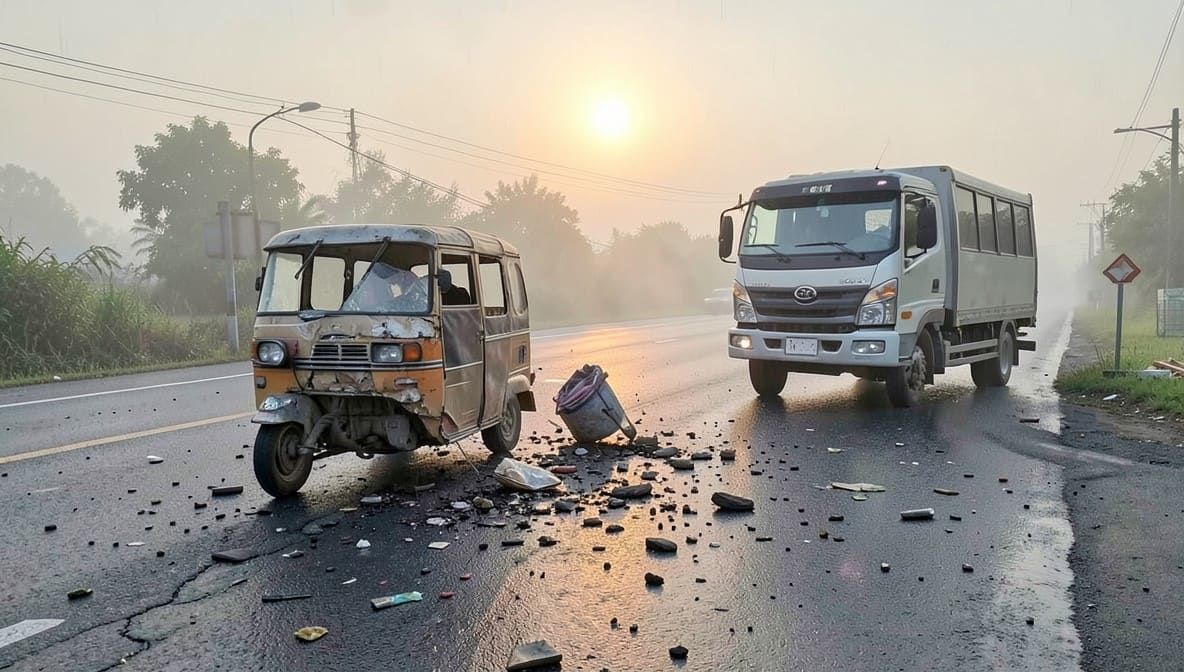
The appellants, family members of Rajesh, a 27-28 year old deceased, filed a claim petition under Section 163-A seeking compensation for his death in a motor accident on 20.09.2006. The accident involved a tractor (owned by respondents) and a motorcycle ridden by the deceased. The Motor Accident Claims Tribunal awarded Rs.2,42,350/- but reduced it by 50%, reasoning that the deceased’s own motorcycle contributed to the accident and its owner was not impleaded as a party.
Procedural History
- 20.09.2006: Motor accident resulting in death of Rajesh
- 2008: Claim petition filed before Tribunal, Jhajjar
- 17.07.2008: Tribunal awarded Rs.2,42,350/- but reduced by 50% due to alleged contributory negligence and non-impleadment of motorcycle owner
- 2008: Appeal filed before Punjab & Haryana High Court
Relief Sought
The appellants sought enhancement of compensation to the full statutory amount under Section 163-A, and alternatively, application of the amended Section 164 of the Motor Vehicles Act, 2019, which provides higher fixed compensation.
The Legal Issue
The central question was whether Section 163-A permits reduction of compensation on grounds of contributory negligence or non-impleadment of another vehicle involved in the accident, or whether liability is strictly no-fault and absolute once motor vehicle involvement is established.
Arguments Presented
For the Appellant
The appellants contended that Section 163-A is a social welfare provision designed to provide swift, no-fault compensation. They relied on Ram Murti v. Punjab State Electricity Board and Akaljit Kaur v. Parveen Kumar to argue that the Tribunal erred in apportioning liability. They further urged that the amended Section 164, which provides Rs.5 lakh for death, must apply retrospectively as it is beneficial legislation.
For the Respondent
The insurance company argued that the Tribunal’s apportionment was justified since the deceased was riding a motorcycle, and its owner was not made a party. It contended that allowing full compensation without considering all vehicles involved would lead to unjust enrichment and undermine principles of equitable liability.
The Court's Analysis
The Court held that Section 163-A operates on a strict no-fault basis. Once the involvement of the offending motor vehicle is established, the insurer cannot evade liability by invoking contributory negligence or pointing to another vehicle not before the Tribunal.
"The statute does not contemplate reduction of compensation on the basis of alleged involvement of another vehicle."
The Court emphasized that Section 163-A is a legislative mechanism to ensure immediate relief to victims, free from the delays and technicalities of tort litigation. Apportioning liability based on unimpleaded parties defeats the very object of the provision. The Tribunal’s approach was termed a "manifest error" and "legally unsustainable."
Further, the Court applied the principle of beneficial legislation, holding that Section 164 of the 2019 Amendment, which increases compensation to Rs.5 lakh for death, must be applied to pending claims. Citing Akaljit Kaur and Mamta v. Happy, the Court reiterated that courts must exercise judicial empathy and avoid technicalities in motor accident claims.
The Court also directed interest at 9% per annum from the date of filing, in line with Dara Singh and R. Valli, and mandated timely disbursement of costs to the claimant’s advocate.
The Verdict
The appellants won. The Court held that Section 163-A mandates full compensation without apportionment for unimpleaded vehicles, and that Section 164 applies retrospectively to pending claims. Compensation was enhanced to Rs.2,57,650/- plus 9% interest from the date of filing.
What This Means For Similar Cases
No Apportionment for Unimpleaded Vehicles
- Practitioners must now argue that any reduction in compensation due to non-impleadment of another vehicle is legally impermissible under Section 163-A
- Insurers cannot raise contributory negligence as a defense when the offending vehicle is clearly identified
- Tribunals must disregard allegations of shared fault unless the claim is filed under fault-based provisions like Section 166
Beneficial Legislation Applies Retrospectively
- All pending claims under Section 163-A filed before 01.04.2022 are entitled to enhanced compensation under Section 164
- Courts must apply the higher statutory amount even if the accident occurred pre-amendment
- This overrides the doctrine of non-retrospectivity where the law is beneficial and procedural
Judicial Empathy Overrides Technicalities
- Tribunals and High Courts must prioritize victim relief over procedural irregularities
- Failure to implead a party is not a jurisdictional defect in no-fault claims
- Judges are directed to exercise discretion with empathy, as emphasized in Akaljit Kaur