The Punjab & Haryana High Court has reaffirmed that a claimant’s contradictory testimony in a criminal trial can fatally undermine their civil claim for compensation under the Motor Vehicles Act. Where the sole eyewitness to an accident recants his earlier statement and denies the involvement of the accused driver, the Tribunal cannot rely on his testimony to establish liability, even if the claim is framed under a different legal standard.
Background & Facts
The Dispute
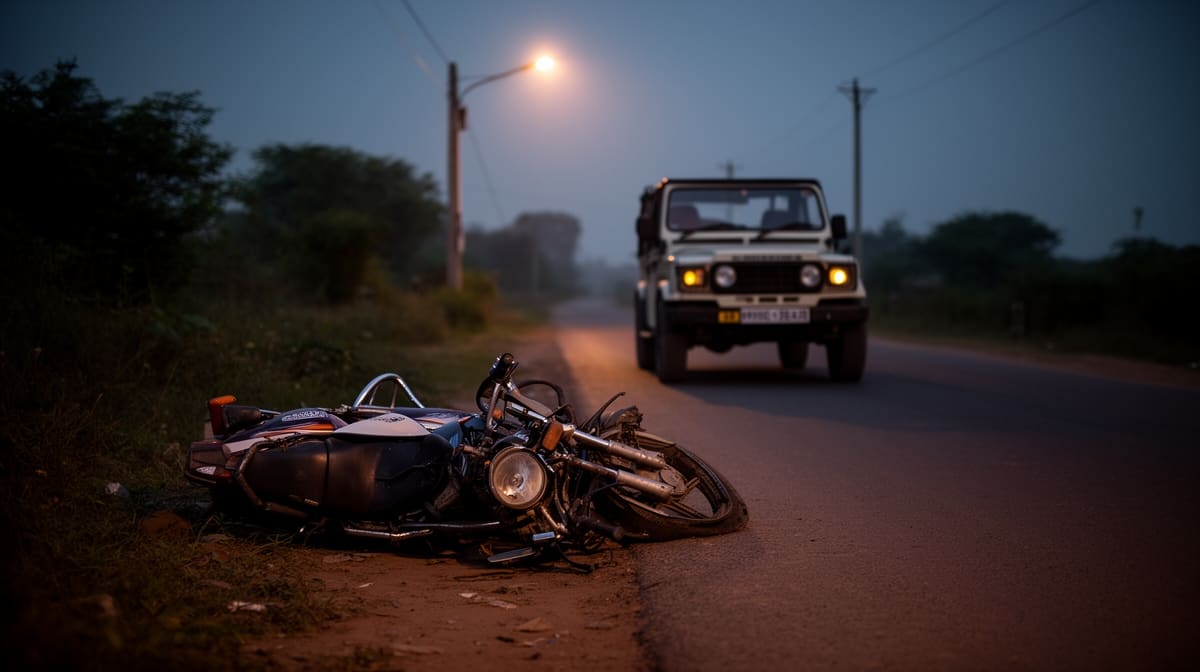
The appellants, the family of the deceased Sant Kaur, filed a claim petition before the Motor Accident Claims Tribunal, Ferozepur, seeking compensation for her death in a motor vehicle accident on 07.05.2020. They alleged that the accident was caused by the rash and negligent driving of a car bearing registration No. PB-02-CH(T)-3170, driven by respondent No.1, owned by respondent No.2, and insured by respondent No.3. The Tribunal awarded Rs.3,61,000/- on 12.07.2023, which the appellants sought to enhance before the High Court.
Key Facts
- Deceased Sant Kaur was 62 years old at the time of death, as established by the Post-Mortem Report (Ex.C2)
- Claimant No.1, Joga Singh, was the husband of the deceased and the sole eyewitness to the accident
- Joga Singh filed an FIR No.33 dated 07.05.2020 under Sections 304-A, 427, 279, 337, 338 and 427 IPC against respondent No.1
- In the criminal trial, Joga Singh, appearing as CW1, testified that he could not identify the accused driver and denied that the offending vehicle was involved
- The Judicial Magistrate, 1st Class, Zira, acquitted respondent No.1 on 06.02.2024, holding that the prosecution failed to prove the case due to the complainant’s failure to support it
- Before the Tribunal, Joga Singh reversed his position and testified that the offending vehicle had collided with the deceased’s motorcycle
- No documentary evidence was produced by the appellants to substantiate the deceased’s income beyond Rs.3,500/- per month
- The Tribunal accepted Rs.3,500/- as monthly income and applied a multiplier of 7, with 1/3rd deduction for personal expenses
- Compensation awarded: Rs.16,500/- for loss of estate, Rs.16,500/- for funeral expenses, Rs.44,000/- each to three claimants for loss of consortium
Procedural History
- 07.05.2020: Motor accident resulting in death of Sant Kaur
- 07.05.2020: FIR No.33 registered at Police Station Sadar Zira
- 07.07.2021: Claim petition filed before Motor Accident Claims Tribunal (MACP/24)
- 12.07.2023: Tribunal awarded Rs.3,61,000/- with 7% interest
- 19.03.2024: Application for condonation of delay filed in High Court (CM-6935-CII-2024)
- 06.02.2024: Acquittal of respondent No.1 by Judicial Magistrate, Zira
- 19.03.2026: High Court judgment dismissing appeal and condonation application
Relief Sought
The appellants sought enhancement of compensation on the following grounds:
- Increase in deceased’s income from Rs.3,500/- to Rs.6,000/- per month
- Addition of future prospects
- Enhancement of interest from 7% to 18% per annum
- Increase in conventional heads of compensation
The Legal Issue
The central question was whether a claimant’s testimony before a Motor Accident Claims Tribunal can be relied upon when the same witness has given a diametrically opposite and unexplained statement in a criminal trial that resulted in the acquittal of the accused driver.
Arguments Presented
For the Appellant
The appellants contended that the Tribunal erred in assessing the deceased’s income at Rs.3,500/- per month, arguing she earned Rs.6,000/- as an Anganwadi helper and additional income from domestic work. They submitted that the multiplier and conventional heads were correctly applied but insufficient, and that interest should be enhanced to 18% per annum. No argument was made to reconcile the contradiction in the eyewitness’s testimony.
For the Respondent
The respondents argued that the claimant’s testimony before the Tribunal was inherently unreliable due to his contradictory deposition in the criminal trial, where he failed to identify the accused and denied the involvement of the offending vehicle. They relied on United India Insurance Co. Ltd. v. Kamla Devi and Shri Ram General Insurance Co. Ltd. v. Jeeto Devi to contend that such contradictions render the witness’s testimony unworthy of acceptance and that the Tribunal cannot selectively adopt parts of a discredited testimony.
The Court's Analysis
The Court examined the testimony of Joga Singh, the sole eyewitness, and found a complete reversal of his position between the criminal trial and the civil claim. In the criminal case, he testified that he could not identify the accused or the vehicle involved, leading to acquittal. Before the Tribunal, he claimed the offending vehicle had struck the deceased’s motorcycle. The Court held that this contradiction was not explained or excused.
"It would therefore appear that the claimant had deposed falsely before the Tribunal only to get the compensation."
The Court emphasized that while a criminal court’s acquittal is not binding on a Motor Accident Claims Tribunal, the Tribunal is not absolved from evaluating the credibility of evidence. Where an eyewitness gives mutually exclusive versions under oath, and no explanation is offered for the contradiction, the entire testimony must be rejected.
"If there was contradiction between the version elicited before the Tribunal to the statement made before the criminal court then such a witness will be unworthy of acceptance. The Tribunal could have simply rejected the whole evidence."
The Court further noted that the Tribunal had correctly assessed the deceased’s age, income, and applied the multiplier and deductions in accordance with settled principles of the Supreme Court. No error was found in the quantum of compensation awarded. The Court held that the appellants’ attempt to enhance compensation was not only unsubstantiated but also tainted by the witness’s unexplained perjury.
The Verdict
The appeal was dismissed on both grounds of delay and merits. The application for condonation of delay of 115 days was rejected as the reasons given - poverty, lack of legal knowledge, and unavailability of counsel - did not constitute sufficient cause for such an inordinate delay. The Tribunal’s award of Rs.3,61,000/- was upheld. No enhancement of compensation, interest, or conventional heads was permitted. The Court held that the claimant’s contradictory testimony rendered his evidence wholly unreliable, and no compensation could be granted on the basis of a fabricated narrative.
What This Means For Similar Cases
Contradictory Witness Testimony Vitiates Claims
- Practitioners must now rigorously cross-examine claimants on prior inconsistent statements in criminal proceedings
- A witness’s reversal of testimony without explanation is fatal to the claim, regardless of the Tribunal’s independent jurisdiction
- Courts will not permit claimants to benefit from false or contradictory evidence, even if the technical burden of proof is lower in civil claims
Credibility Trumps Technical Compliance
- The Motor Vehicles Act does not permit selective reliance on parts of a discredited witness’s testimony
- Tribunals must reject the entire testimony of a witness who has committed perjury in a related criminal proceeding
- Failure to exhibit the criminal court transcript for contradiction constitutes a procedural flaw that can be fatal to the claim
No Relief for Unexplained Perjury
- Claimants who fabricate or alter facts to secure compensation risk dismissal of their entire claim
- Courts will not entertain claims based on testimonies that have been judicially found to be false in a parallel proceeding
- Legal representatives must advise clients against presenting inconsistent versions of events across forums