The Himachal Pradesh High Court has affirmed that compensation for fruit-bearing trees acquired for public purpose must account for inflation since the original 1966 Harbans Singh Formula was formulated, ensuring just and equitable valuation under the Land Acquisition Act. This ruling reinforces the principle that statutory compensation cannot be frozen at outdated rates and must reflect current economic realities.
Background & Facts
The Dispute
The dispute arose from the acquisition of land for the construction of the Dhali-Dhakal link road in Village Dhali, Tehsil Kotkhai, District Shimla, Himachal Pradesh. The land comprised in Khasra No. 100/1, measuring 0-01-68 hectares, was notified for acquisition under Section 4 of the Land Acquisition Act on 04.01.2010. The Land Acquisition Collector, HPPWD, issued an award on 03.07.2012 (Award No. 70/2012), which failed to adequately compensate the landowners for the fruit-bearing apple trees on the acquired land.
Key Facts
- The respondents, landowners, owned an apple orchard on the acquired land
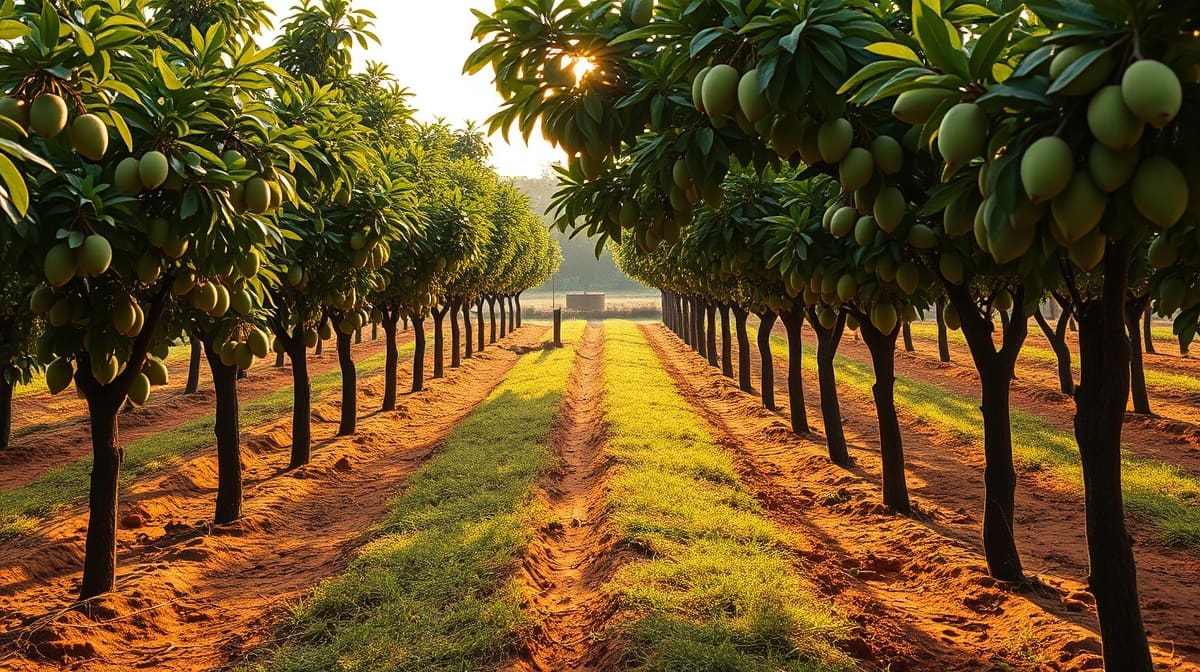
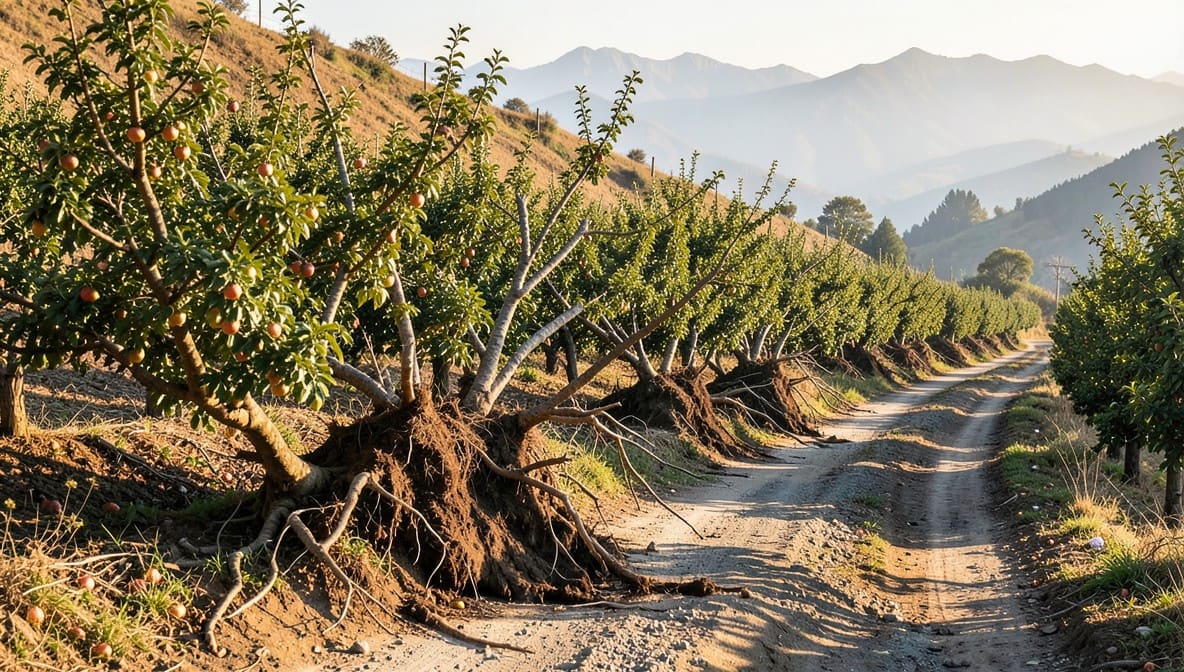
- Eleven (11) fruit-bearing apple trees were uprooted during road construction
- The State’s initial compensation assessment did not account for the market value of these trees
- The respondents submitted Ext. PW-1/G, a list of uprooted apple trees, signed by Sh. Raj Kumar, Assistant Engineer, HPPWD, Sub Division, Kotkhai
- The list was duly countersigned and acknowledged by the Department
- The respondents engaged Dr. S.P. Bhardwaj, Horticulture Development Officer, as expert witness PW-2
- Dr. Bhardwaj prepared Ext. PW-2/A, an assessment report valuing each apple tree at Rs. 12,328.72 based on the Harbans Singh Formula, adjusted for inflation
- Total compensation claimed for 11 trees: Rs. 1,35,616/-
- The State challenged the valuation, claiming no trees existed on the road alignment
Procedural History
- 04.01.2010: Notification issued under Section 4 of the Land Acquisition Act
- 03.07.2012: Award passed by Land Acquisition Collector, HPPWD (Award No. 70/2012)
- 2017: Petition filed under Section 18 of the Act before the Additional District Judge (CBI), Shimla (Land Reference RBT No. 10-S/4 of 2017/13)
- 02.06.2018: Reference Court awarded Rs. 1,35,616/- for 11 apple trees, along with other statutory benefits
- 18.02.2019: Appeal filed by the State under Section 54 of the Act before the High Court (RFA No. 181 of 2019)
- 24.04.2026: Appeal heard and reserved
- 13.05.2026: Judgment delivered
The Parties' Positions
For the Appellants (State of H.P.)
- Contended that the Reference Court erred in relying on Ext. PW-2/A and Ext. PW-1/G
- Argued that no trees existed on the road alignment, as per RW-1’s testimony and the Collector’s award
- Asserted that the expert’s valuation was not in accordance with the Harbans Singh Formula
- Sought setting aside of the award as arbitrary and unsupported
For the Respondents (Prem Singh @ Leela Singh, through LRs)
- Maintained that 11 apple trees were present and uprooted
- Relied on Ext. PW-1/G, duly authenticated by HPPWD officials
- Submitted that Dr. Bhardwaj’s report correctly applied the Harbans Singh Formula with inflationary adjustments
- Cited Lachhu Ram v. Land Acquisition Collector to support valuation methodology
- Argued that the State’s denial was contradicted by its own records
Relief Sought
The respondents sought enhancement of compensation for 11 fruit-bearing apple trees to Rs. 1,35,616/-, along with statutory benefits under the Land Acquisition Act. The State sought to set aside the Reference Court’s award and reinstate the original Collector’s award.
The Legal Issue
The central question was whether compensation for fruit-bearing trees under the Land Acquisition Act must be calculated using the Harbans Singh Formula with adjustments for inflation from 1966 to the date of notification, and whether the State’s denial of tree existence can override authenticated documentation prepared by its own officials.
Arguments Presented
For the Appellant
The learned Deputy Advocate General contended that the Reference Court erred in accepting Ext. PW-2/A, which allegedly did not follow the Harbans Singh Formula. He argued that RW-1’s testimony, supported by the Collector’s award, established that no trees were present on the road alignment. He further submitted that Ext. PW-1/G was unreliable and that the valuation was speculative, lacking proper documentation or departmental approval.
For the Respondent
The learned Senior Advocate contended that the Reference Court correctly applied the precedent in Lachhu Ram v. Land Acquisition Collector, which mandates the use of the Harbans Singh Formula with inflationary adjustments. He emphasized that Ext. PW-1/G, signed by the Assistant Engineer of HPPWD, was an official record of the trees uprooted. He argued that the State could not disown its own authenticated documents and that the expert’s testimony was unimpeached during cross-examination.
The Court's Analysis
The Court undertook a detailed review of the evidence and applicable law. It noted that the State’s own official, PW-4, Narender, Supervisor HPPWD, corroborated the authenticity of Ext. PW-1/G, confirming that the list was prepared by the Department and signed by its officer. The Court held that the State could not, in litigation, deny the veracity of documents generated by its own functionaries.
The Court further examined the precedent in Lachhu Ram v. Land Acquisition Collector (Nathpa Jhakri), which explicitly held that compensation for fruit-bearing trees must be determined using the Harbans Singh Formula, as supplemented by inflationary adjustments based on price index trends from 1966 to the date of notification. The Court observed:
"The known method for calculating the market value of the trees is on the basis of its yield. However, in the case of fruit bearing trees yield has not been given, but still the claimants are entitled to reasonable compensation for fruit bearing trees on the basis of Harbans Singh formula and after taking into consideration inflationary trends/rise in price index. In case the inflationary trends are taken into consideration from 1966 after applying the Harbans Singh formula till the date of notification, the claimants are entitled to 30% increase in the compensation towards the acquisition of fruit-bearing trees standing on their land."
The Court found that Dr. Bhardwaj’s report, Ext. PW-2/A, was consistent with this legal standard. The expert’s valuation of Rs. 12,328.72 per tree, totaling Rs. 1,35,616/- for 11 trees, was not challenged on technical grounds during cross-examination. The State failed to produce any counter-expert report or alternative valuation methodology.
The Court rejected the State’s argument that no trees existed, noting that the Collector’s award was not conclusive and that the Reference Court was entitled to rely on contemporaneous, authenticated records over oral testimony contradicted by documentary evidence.
The Verdict
The appeal was dismissed. The High Court upheld the Reference Court’s award of Rs. 1,35,616/- for 11 apple trees, calculated using the Harbans Singh Formula with inflationary adjustments. The Court confirmed that the respondents were entitled to this amount as compensation for the uprooted fruit-bearing trees, along with all other statutory benefits under the Land Acquisition Act. All pending applications stood disposed of.
What This Means For Similar Cases
Documentation Authenticated by State Officials Is Conclusive
- Practitioners must insist that authenticated departmental records (e.g., signed lists of uprooted trees) override oral denials by State witnesses
- Any challenge to such documents must be supported by independent, contemporaneous evidence - not mere assertion
- Failure to rebut authenticated records will result in automatic acceptance of claimant’s valuation
Harbans Singh Formula Must Include Inflation Adjustments
- Compensation for fruit-bearing trees cannot be based on 1966 rates without adjustment for inflation
- A 30% upward adjustment from 1966 to the date of notification is the established benchmark under HP HC precedent
- Experts must explicitly state the inflationary multiplier used and reference the price index
- Failure to adjust for inflation renders the valuation legally defective
Expert Testimony Must Be Technically Sound, Not Perfect
- An expert’s report need not be flawless - it must be methodologically sound and unchallenged on cross-examination
- If the opposing party fails to cross-examine effectively or produce a counter-expert, the report stands
- Courts will not reject valuation merely because it is not prepared by a government officer, provided the methodology is legally recognized