The Supreme Court has reaffirmed that membership in an armed unlawful assembly with a shared criminal objective is sufficient to establish liability for murder under Section 149 of the Indian Penal Code, even in the absence of direct evidence linking each accused to the fatal act. This ruling clarifies the threshold for collective criminal responsibility in group violence cases.
Background & Facts
The Dispute
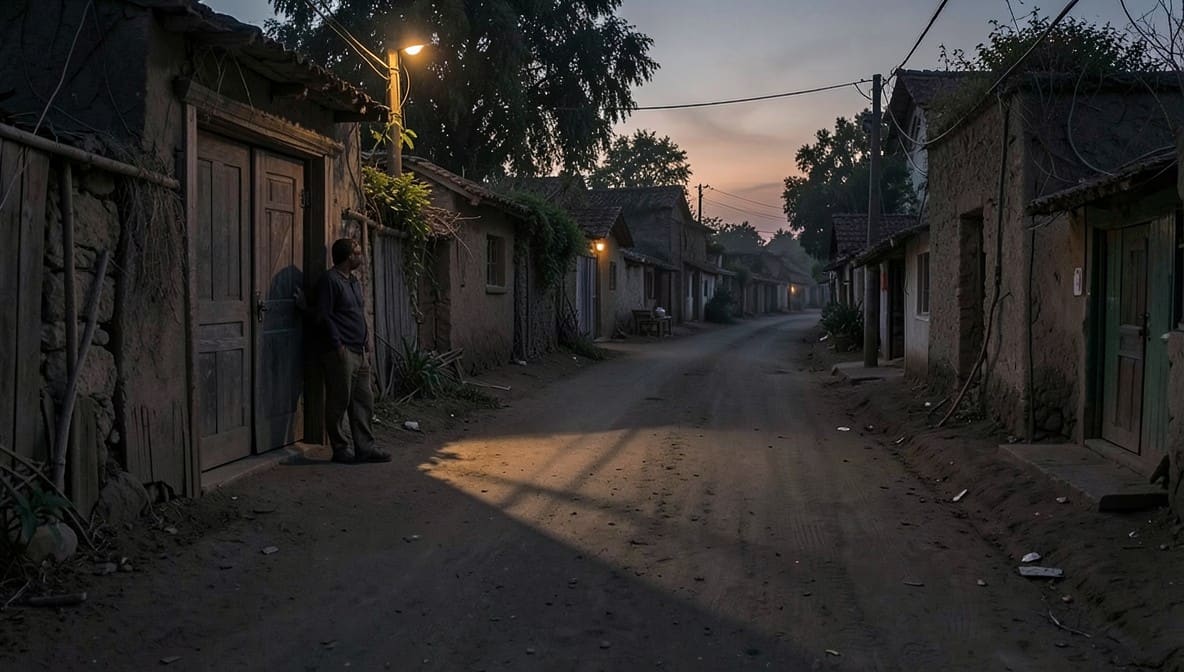
The case arose from the targeted killing of Balkishan, Chairman of a Watershed Committee, on 3 June 2000 at Tihuli bus stand in Madhya Pradesh. Six individuals, including the appellants Dablu, Kamlesh, Pratap, and Vinod @ Ajay, allegedly alighted from a bus armed with firearms - mouzers, double-barrel shotguns, and country-made pistols - and pursued Balkishan after the first shot was fired. He was chased into the courtyard of Rattan Lal’s house, where he was shot at point-blank range and died instantly.
Procedural History
- 2000: Incident occurred; FIR lodged by Balkishan’s brother, Budharam (PW-2)
- 2001 & 2002: Two separate chargesheets filed (Special Case No. 12 of 2001 and Special Case No. 1 of 2002)
- 2008: Trial Court convicted all five accused (one accused, Govind Singh, had died) under Section 148 and 302/149 IPC, sentencing them to life imprisonment and one year rigorous imprisonment respectively
- 2010: Madhya Pradesh High Court dismissed appeals and upheld convictions
- 2011 - 2012: Four convicts filed appeals before the Supreme Court
Relief Sought
The appellants sought acquittal or reduction of sentence, arguing lack of direct evidence of their participation in the fatal shooting, absence of weapon recovery, and unreliability of prosecution witnesses.
The Legal Issue
The central question was whether Section 149 IPC can be invoked to hold all members of an armed unlawful assembly vicariously liable for murder when no individual overt act is proven against each accused, and whether the presence of a common object can substitute for direct participation in the fatal act.
Arguments Presented
For the Appellant/Petitioner
Counsel argued that the prosecution failed to prove specific overt acts by each appellant in the fatal shooting inside Rattan Lal’s house. The only independent witness, PW-6, testified he heard shots but did not see any accused firing or fleeing. All prosecution witnesses were close relatives of the deceased, rendering them interested and unreliable. No weapons were recovered from the appellants, and forensic evidence could not conclusively link them to the fatal wounds. The absence of compliance with Sections 157 and 174 CrPC further tainted the investigation.
For the Respondent/State
The State contended that the collective conduct of the accused - alighting together from a bus armed with firearms - established an unlawful assembly with a common object to kill Balkishan. The pursuit of the victim after the initial shot, the multiple gunshot wounds, and the recovery of cartridges from the crime scene corroborated their joint participation. The Supreme Court’s precedent in State of U.P. v. Krishna Gopal was cited to affirm that Section 149 IPC does not require proof of individual acts, only shared intent and presence.
The Court's Analysis
The Court examined the foundational requirements of Section 149 IPC: the existence of an unlawful assembly and the presence of a common object. It held that the assembly was unlawful because the accused were armed with lethal weapons and had gathered with the intent to inflict harm, as evidenced by their coordinated arrival and pursuit of the victim.
"The very fact that all of them came together armed with firearms clearly proves that they were part of the unlawful assembly and had come with a common motive."
The Court emphasized that vicarious liability under Section 149 IPC does not demand proof of individual participation in the fatal act. The movement of the group, their armed state, and the continuous chase after the initial injury were sufficient to infer a common object of causing death. The Court distinguished this from cases where mere presence without intent is alleged, noting that the presence of firearms transformed passive association into active complicity.
The Court rejected the argument that the absence of eyewitnesses to the final shooting invalidated the prosecution case. It held that the testimony of PW-6, who heard multiple shots and saw the accused fleeing, was corroborated by the post-mortem report showing multiple entry and exit wounds, and the recovery of 12-bore cartridges from the courtyard. The Court noted that the failure to recover weapons from the appellants was not fatal, as the weapons were likely discarded.
Regarding procedural lapses under Sections 157 and 174 CrPC, the Court held that such irregularities, absent proof of prejudice or tampering, cannot override the overwhelming circumstantial and testimonial evidence establishing guilt.
The Verdict
The appeals were dismissed. The Supreme Court upheld the convictions and life sentences of all four appellants under Section 302/149 IPC. The Court held that vicarious liability under Section 149 IPC is established by participation in an armed unlawful assembly with a common object, irrespective of whether each member fired the fatal shot.
What This Means For Similar Cases
Vicarious Liability Does Not Require Direct Participation
- Practitioners must now argue that Section 149 IPC applies whenever a group acts in concert with weapons toward a shared criminal objective
- Defense strategies focusing solely on absence of individual firing cannot override collective conduct
- Prosecution need not prove which accused fired the fatal shot - only that the group acted as one with a common intent
Armed Presence Alone Can Establish Common Object
- Merely carrying firearms in a group setting, especially in a context of prior hostility, creates a rebuttable presumption of common object
- Courts will infer intent from the nature of weapons, timing, and coordinated movement
- Defense must now proactively disprove the existence of a common object, not just challenge eyewitness reliability
Procedural Irregularities Are Not Fatal Absent Prejudice
- Non-compliance with Sections 157 or 174 CrPC will not automatically vitiate a conviction
- Courts will weigh procedural lapses against the strength of substantive evidence
- Defense must demonstrate actual prejudice or tampering to invoke procedural defenses successfully