The Bombay High Court has clarified a critical principle in collective criminal liability: a conviction under Section 149 IPC cannot be sustained if the number of persons forming the unlawful assembly is reduced below five due to acquittals, regardless of the presence of common intention among the remaining accused. This ruling resolves a long-standing ambiguity in the application of vicarious liability under the Indian Penal Code.
Background & Facts
The Dispute
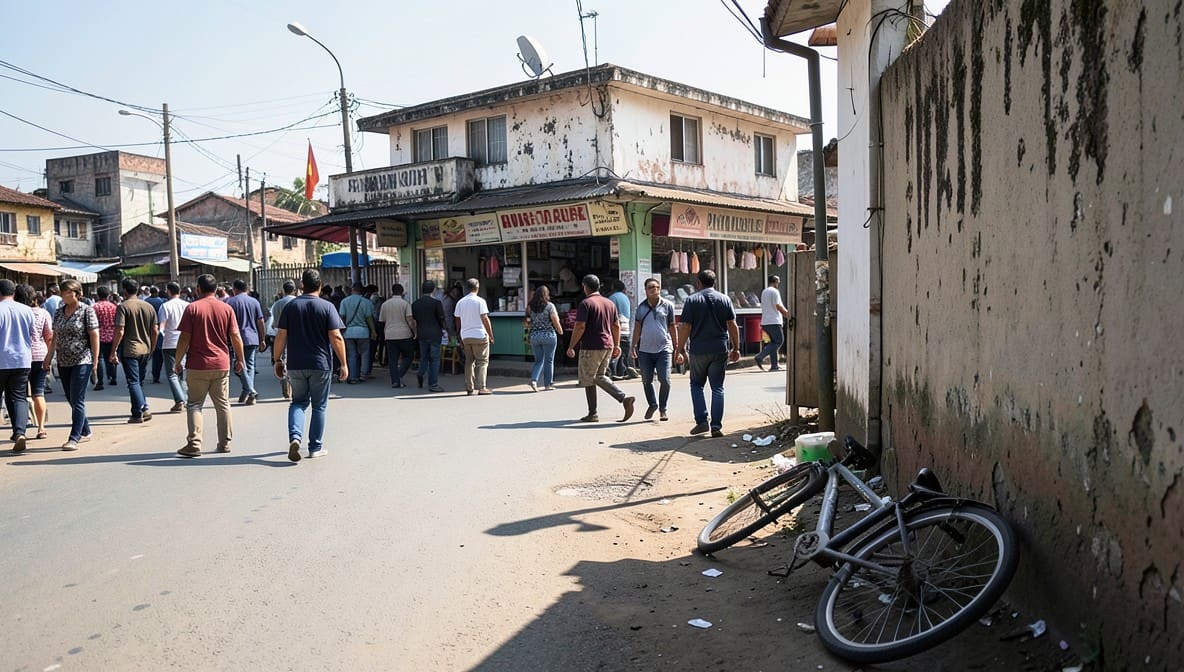
On 12.06.2016, a violent altercation erupted in Samta Nagar, Nagpur, between two families residing in close proximity. The dispute originated over the cleaning of a rivulet near the residence of the deceased, Imrat Rana. Accused no.1, Prashant Chamke, demanded that Imrat clean the drainage immediately, leading to a verbal confrontation. This escalated into a physical assault involving multiple family members from both sides.
Key Facts
- The deceased, Imrat Rana, and his brother, Puranlal, were attacked by a group of six individuals: Prashant (accused no.1), Ankush (accused no.2), Zanak (accused no.3), Shivmohan (accused no.4), Mina (accused no.5), and Vandana (accused no.6).
- The attack occurred around 9:00 a.m. in broad daylight.
- Prashant, Ankush, and Shivmohan used knives to inflict fatal stab wounds on Imrat and Puranlal.
- Zanak assaulted both victims with stones and brickbats.
- Mina and Vandana, sisters of Prashant and wife of Zanak respectively, held the hair of the informant, Sunita (Imrat’s wife), and assaulted her.
- The informant lodged FIR at Jaripatka Police Station on the same day at approximately 7:00 - 8:00 p.m., after the victims were admitted to hospital.
- Imrat died at the hospital; Puranlal succumbed to injuries on 14.06.2016.
- Three knives (Articles 6, 9, and 12) were recovered from the accused’s residences, with forensic evidence confirming blood groups matching the victims.
- The postmortem of Imrat revealed two stab wounds and two abrasions; Puranlal had 14 injuries, including three stab wounds.
Procedural History
- 12.06.2016: Incident occurred.
- 12.06.2016 (evening): FIR (Exh. 44) lodged at Jaripatka Police Station.
- 15.06.2016: Investigation initiated by PW15 Ishwar.
- 28.09.2016: Chargesheet filed under Sections 302, 307, 147, 148, 324, 323 read with Section 149 IPC against six accused.
- 25.02.2020: Trial Court (Sessions Trial No. 425/2016) convicted accused nos. 1 - 4 under Sections 302, 304 Part II, 143, 148 read with Section 149 IPC; convicted accused nos. 5 - 6 under Section 323 read with Section 34 IPC.
- 25.02.2020: Sentences imposed: life imprisonment and Rs. 2,000 fine for Section 302 read with 149 IPC; five years rigorous imprisonment and Rs. 1,000 fine for Section 304 Part II read with 149 IPC; three months simple imprisonment and Rs. 500 fine for Section 143 IPC; one year rigorous imprisonment and Rs. 100 fine for Section 148 IPC.
- 16.03.2026: Bombay High Court delivered judgment on Criminal Appeals Nos. 268, 466, and 227 of 2020.
The Parties' Positions
For the Appellants (accused nos. 1 - 4):
- Argued that the prosecution failed to prove the existence of an unlawful assembly of five or more persons, as accused nos. 5 and 6 were acquitted of Section 149 IPC.
- Contended that the conviction under Sections 143 and 148 IPC, which are offences of rioting, was unsustainable without a valid unlawful assembly.
- Highlighted discrepancies in witness testimonies and alleged delay in FIR and witness statements.
- Relied on Mohan Singh v. State of Punjab to assert that once the assembly falls below five, Section 149 cannot apply.
For the Respondent (State):
- Argued that even if two accused were acquitted under Section 149 IPC, the remaining four could still be convicted under Section 149 if the assembly was initially unlawful.
- Relied on Surendra Singh v. State of Rajasthan, Khem Karan v. State of U.P., and Masalti v. State of U.P. to support the theory that the presence of unidentified persons could maintain the statutory number.
- Asserted that the common intention and violent conduct of the accused clearly established guilt.
Relief Sought
The appellants sought:
- Quashing of convictions under Sections 143 and 148 IPC.
- Setting aside of convictions under Sections 302 and 304 Part II read with Section 149 IPC.
- Substitution of Section 149 IPC with Section 34 IPC for the offences of murder and culpable homicide.
- Acquittal from charges under Sections 143 and 148 IPC.
- Cancellation of bail bonds for accused nos. 2 and 3, with direction to surrender.
The Legal Issue
Can the conviction of four accused persons under Section 149 IPC be sustained when two co-accused, originally part of a six-member group, have been acquitted of participation in the unlawful assembly, thereby reducing the number of members below the statutory threshold of five?
Arguments Presented
For the Appellant
The appellants relied on the Constitution Bench decision in Mohan Singh v. State of Punjab, which held that Section 149 IPC requires the existence of an unlawful assembly of five or more persons at the time of the offence. Once two of the six accused were acquitted under Section 149 IPC, the assembly was reduced to four persons, which cannot legally constitute an unlawful assembly under Section 141 IPC. The prosecution did not allege or prove the presence of any unidentified persons who could have completed the statutory number. The trial court erred in ignoring this fundamental requirement. The appellants further argued that while their conduct demonstrated common intention under Section 34 IPC, it did not justify vicarious liability under Section 149 IPC.
For the Respondent
The State contended that the acquittal of two accused under Section 149 IPC should not invalidate the conviction of the remaining four, as the original assembly was clearly unlawful. It cited Surendra Singh and Khem Karan to argue that courts may infer the presence of other unidentified persons who participated in the unlawful assembly, thereby preserving the statutory number. The State emphasized that the violent, coordinated nature of the attack, with multiple weapons and coordinated assault, proved a common object of causing death or grievous hurt, which should be sufficient to sustain convictions under Section 149 IPC.
The Court's Analysis
The Court undertook a meticulous analysis of the statutory framework under Sections 141 and 149 IPC. It emphasized that Section 141 defines an unlawful assembly as an assembly of five or more persons with a common unlawful object. Section 149 imposes vicarious liability on every member of such an assembly for any offence committed in prosecution of the common object. The Court held that the existence of five or more persons is not merely procedural but a substantive condition precedent.
"It is an essential condition of an unlawful assembly that its membership must be five or more. In other words, it is only where five or more persons constituted an assembly that an unlawful assembly is born..."
The Court rejected the State’s reliance on Surendra Singh and Khem Karan, distinguishing them on the ground that in those cases, the prosecution had adduced evidence of unidentified persons who were part of the assembly. In the present case, the chargesheet named only six persons, and the prosecution did not allege or prove the presence of any other participants. The acquittal of accused nos. 5 and 6 under Section 149 IPC was final and binding. Their conviction under Section 323 read with Section 34 IPC did not imply their participation in the unlawful assembly with a common object of murder.
The Court further noted that the trial court’s failure to appreciate this distinction was a material error. The conviction under Sections 143 and 148 IPC, which are offences of rioting and require an unlawful assembly, was therefore unsustainable. However, the Court affirmed that the conduct of accused nos. 1 to 4 demonstrated a clear common intention to cause death or grievous hurt, as evidenced by their coordinated attack with deadly weapons.
The Court applied the principle from Sohrab v. State of Madhya Pradesh, holding that minor inconsistencies in witness testimony do not invalidate the core narrative, especially when corroborated by forensic evidence and cross-examination admissions. The defence’s own cross-examination of PW1 confirmed that accused nos. 1, 2, and 4 were armed with knives used in the attack. The blood group evidence on the recovered weapons further corroborated the prosecution’s version.
The Court concluded that while the appellants could not be held liable under Section 149 IPC due to the absence of a lawful unlawful assembly, they were fully liable under Section 34 IPC for the offences of murder and culpable homicide.
The Verdict
The appeals were partly allowed. The convictions of accused nos. 1 to 4 under Sections 143 and 148 IPC were quashed and set aside, and they were acquitted of those charges. Their convictions under Sections 302 and 304 Part II IPC were upheld, but the reference to Section 149 IPC was replaced with Section 34 IPC. The sentences of life imprisonment and five years rigorous imprisonment remained unchanged. The bail bonds of accused nos. 2 and 3 were cancelled, and they were directed to surrender before the trial court within two weeks from the date of judgment. Failure to surrender would result in immediate arrest and commitment to prison to serve the remaining sentence.
What This Means For Similar Cases
Unlawful Assembly Must Have Five Members at All Times
- Practitioners must now rigorously verify the composition of the alleged unlawful assembly at the time of the offence.
- If any accused originally charged under Section 149 IPC is acquitted, the prosecution must prove the presence of at least five persons who shared the unlawful object - including unidentified persons - to sustain convictions.
- Acquittal of even one member under Section 149 IPC, if it reduces the number below five, renders the entire Section 149 conviction unsustainable.
Section 34 IPC Is the Proper Alternative When Section 149 Fails
- Where common intention is established but the statutory number for unlawful assembly is not met, Section 34 IPC remains a viable and legally sound basis for conviction.
- Prosecutors should plead Section 34 IPC as an alternative count in all collective violence cases to avoid collapse of the case due to technical defects in proving unlawful assembly.
- Courts must not conflate common intention under Section 34 with common object under Section 149 - they are distinct legal doctrines.
Prosecution Must Clearly Plead and Prove Unidentified Accused
- If the prosecution alleges the presence of unidentified persons in an unlawful assembly, it must specifically name them in the charge sheet or provide credible evidence of their participation.
- Vague assertions that "other persons" were present will not suffice.
- Forensic evidence, CCTV footage, or independent witness testimony identifying additional participants is essential to maintain the statutory threshold.