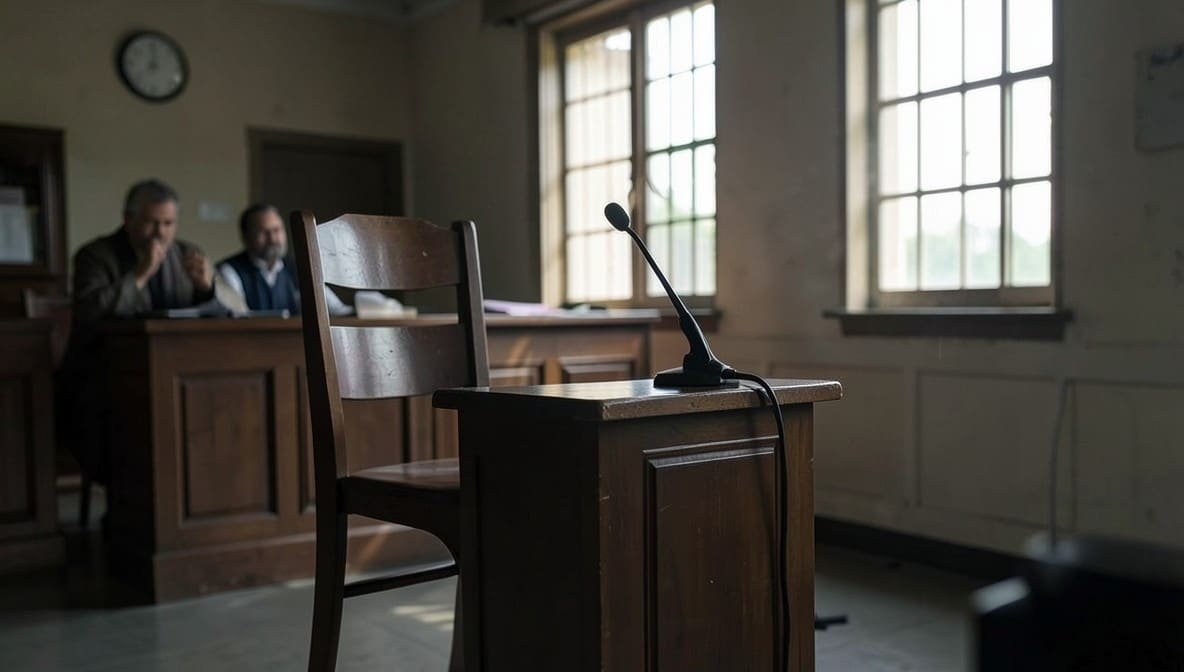
The Jharkhand High Court has clarified that passive presence at the scene of a fatal assault, without any overt act or shared intent to kill, cannot sustain a conviction under Section 34 of the Indian Penal Code. This judgment reinforces the doctrinal boundary between mere association and active participation in a criminal enterprise.
Background & Facts
The Dispute
On 27.05.1995 at approximately 8:00 P.M., a fatal altercation occurred near the residence of the deceased, Ramayan Ram, in Sabar, P.S. Karamchat, District Kaimur (then part of Bihar, now in Jharkhand). The deceased was assaulted by multiple individuals, resulting in his death on 31.05.1995 after being admitted to Central Hospital, Jagjivan Nagar, Dhanbad. The prosecution alleged that the appellants - Kedar Ram, Hridya Ram, and Bijay Ram - along with their co-accused Kishun Ram, attacked the deceased with lathis and an iron rod (sabbal), with Kishun Ram delivering the fatal head injury.
Key Facts
- The deceased, Ramayan Ram, was a resident of Sabar and employed at Bagdigi Colliery.
- Kishun Ram, the main assailant, was the maternal uncle of the deceased and resided adjacent to the deceased’s home.
- The appellants (Kedar Ram, Hridya Ram, Bijay Ram) were brothers and sons of Late Bihari Ram, also residents of Sabar.
- The informant, Rama Kant Ram (P.W.-2), was the deceased’s brother.
- Bindhyachali Devi (P.W.-3), the deceased’s wife, was the only other eyewitness.
- The alleged weapons: Kishun Ram used a sabbal (iron rod); the appellants allegedly held lathis but did not strike the deceased.
- The post-mortem report (Exhibit-1) recorded nine injuries: one fatal head wound (1/2" stitched wound on forehead with fractured frontal bone), multiple abrasions and bruises on limbs and chest, fractured ribs (2-6 right, 2-4 left), lacerated lungs, subdural haematoma, and internal bleeding.
- Cause of death: blunt force trauma to the head causing brain and lung injuries.
- The appellants did not call any witnesses in their defence.
Procedural History
- 27.05.1995: Occurrence at approximately 8:00 P.M.
- 31.05.1995: Deceased died at Central Hospital, Dhanbad.
- 31.05.1995: Fardbeyan recorded by police at the hospital.
- 01.06.1995: FIR registered under Section 302/34 IPC.
- 1995: Investigation completed; charge-sheet filed.
- 1995: Case committed to Sessions Court; S.T. No. 575 of 1995 registered.
- 27.05.2003: Trial Court convicted appellants under Section 302 read with Section 34 IPC.
- 28.05.2003: Sentenced to life imprisonment.
- 2003: Criminal Appeal (D.B.) No. 787 of 2003 filed before the High Court of Jharkhand.
- 12.01.2026: Hearing concluded.
- 24.03.2026: Judgment pronounced.
The Parties' Positions
For the Appellants
- Argued that no overt act was attributed to them; only Kishun Ram inflicted the fatal blow.
- Contended that their presence with lathis did not establish common intention to kill.
- Highlighted contradictions between P.W.-2 and P.W.-3 regarding presence at the scene.
- Emphasized that post-mortem injuries (abrasions and bruises) were consistent with falls, not lathi blows.
- Invoked the principle that common intention requires prior concert, not mere association.
For the State
- Maintained that the appellants were part of a concerted attack.
- Relied on the testimony of P.W.-2, P.W.-3, and P.W.-4 to establish joint participation.
- Argued that presence with weapons and surrounding the deceased amounted to common intention.
- Asserted that the Trial Court correctly appreciated the evidence.
Relief Sought
The appellants sought acquittal from the conviction under Section 302 read with Section 34 IPC, setting aside the life sentence, discharge from bail bonds, and release from all liabilities.
The Legal Issue
Can mere presence with weapons, without any overt act or prior concert, attract liability under Section 34 of the Indian Penal Code when the fatal injury is inflicted solely by a co-accused?
Arguments Presented
For the Appellant
Learned counsel for the appellants relied on the principle that Section 34 IPC requires proof of a common intention to commit the offence, not merely similar or concurrent acts. He cited Barendra Kumar Ghosh v. Emperor to argue that common intention must be formed prior to the act and must be shared by all accused. He emphasized that the prosecution failed to prove that the appellants intended to cause death or even grievous hurt. The post-mortem injuries were minor abrasions, inconsistent with lathi blows, suggesting the deceased fell after the sabbal strike. The testimony of P.W.-2 and P.W.-3 was mutually inconsistent on key details, including who arrived first and whether the appellants struck the deceased. The absence of any independent corroboration, coupled with the hostile testimony of other witnesses, rendered the conviction unsustainable.
For the Respondent
The Additional Public Prosecutor contended that the appellants’ presence with lathis, surrounding the deceased, and their participation in the scuffle established a common intention to assault. He argued that the Trial Court rightly inferred that the appellants acted in concert with Kishun Ram, even if the fatal blow was delivered by one. He relied on State of U.P. v. Krishna Gopal to assert that common intention may be inferred from conduct and circumstances. He maintained that the inconsistencies in witness testimony were minor and did not vitiate the overall reliability of the prosecution case.
The Court's Analysis
The Court undertook a meticulous review of the ocular testimony and the post-mortem findings. It noted that both P.W.-2 and P.W.-3 consistently stated that Kishun Ram alone brought the sabbal from his house and delivered the fatal blow to the head. Neither witness attributed any lathi blow to the appellants. The Court observed: > "No specific overt act has been attributed against them by the ocular witnesses rather P.W.-2 & P.W.-3 simply state that Kedar Ram, Hridya Ram & Bijay Ram assaulted by lathi to the deceased when he fell down after receiving the iron rod injury which does not inspire confidence."
The Court further noted that the post-mortem injuries other than the head wound were abrasions and bruises, which the medical officer admitted could result from a fall. The Court held that if the appellants had shared a common intention to kill, they would have used their lathis before or simultaneously with Kishun Ram’s attack, not after the fatal blow had already been delivered.
The Court distinguished between "common intention" and "similar intention," citing Keshav Rao v. State of Maharashtra, and held that Section 34 IPC cannot be invoked merely because several persons are present at the scene. The absence of prior concert, the lack of corroboration, and the implausibility of the prosecution’s version rendered the conviction speculative.
The Court also noted the unreliability of P.W.-4, whose testimony was contradicted by his own admission of leaving work without permission and arriving at the scene without explanation. The hostile testimony of P.W.-6, P.W.-7, and P.W.-8 further weakened the prosecution’s case.
The Court concluded that the Trial Court erred in ignoring the evidentiary gaps and in stretching the doctrine of common intention beyond its doctrinal limits. The benefit of reasonable doubt must accrue to the appellants.
The Verdict
The appellants succeeded. The Jharkhand High Court set aside the conviction and sentence dated 27.05.2003 and 28.05.2003. The appellants are acquitted of all charges under Section 302 read with Section 34 IPC. They are discharged from their bail bonds, and sureties are released. The trial court record is to be sent back for information.
What This Means For Similar Cases
Common Intention Requires Active Concert, Not Passive Presence
- Practitioners must now demonstrate prior concert or active participation to invoke Section 34 IPC; mere presence with weapons is insufficient.
- Prosecutions relying on circumstantial inference of common intention must provide corroborative evidence linking each accused to the fatal act.
- Courts must scrutinize whether the role of each accused is distinct from the principal offender.
Post-Mortem Evidence Must Align With Witness Testimony
- Injuries inconsistent with alleged weapons (e.g., abrasions from lathis) must be reconciled with witness accounts.
- Where medical evidence suggests injuries resulted from falls rather than blows, reliance on eyewitnesses for non-fatal acts becomes suspect.
- Defence counsel should prioritize cross-examining medical experts on injury causation.
Eyewitness Contradictions Can Be Fatal to Prosecution
- In cases resting on eyewitness testimony, material contradictions between key witnesses (e.g., who arrived first, who struck whom) must be resolved in favour of the accused.
- Courts must not ignore inconsistencies under the guise of "minor discrepancies."
- The doctrine of "last seen" or "surrounding" is not a substitute for proof of participation.