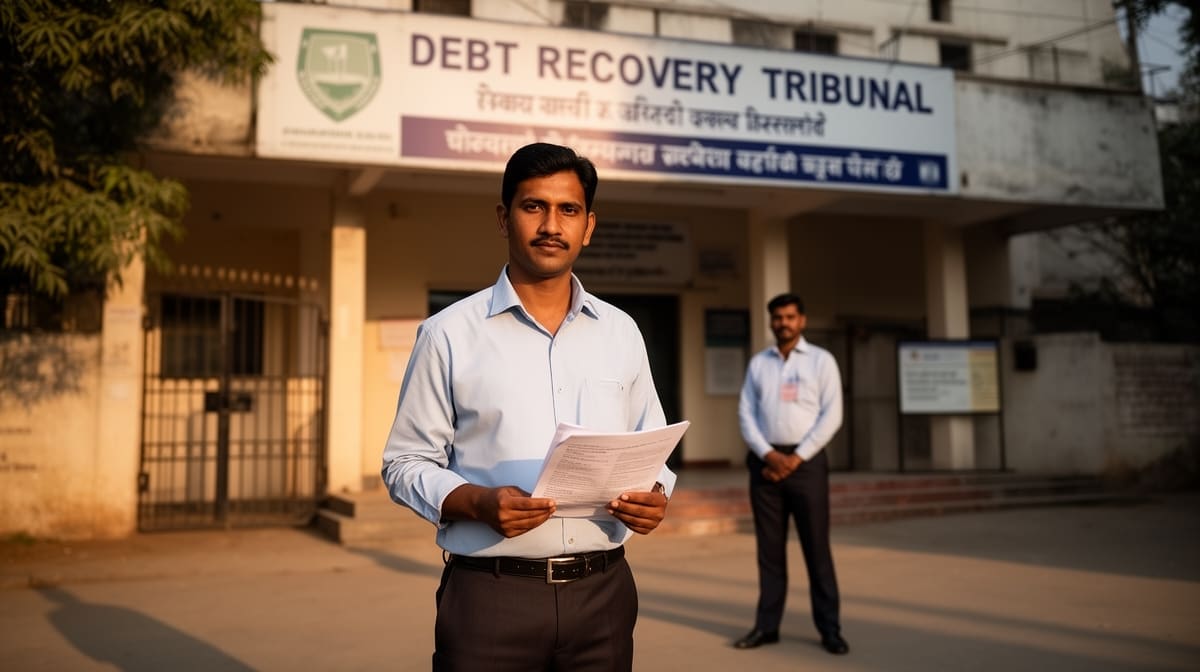
The Allahabad High Court has reaffirmed that borrowers aggrieved by possession orders under Section 14 of the SARFAESI Act cannot bypass the statutory remedy available under Section 17. This ruling reinforces the legislative intent to channel all disputes concerning secured asset enforcement exclusively through the Debt Recovery Tribunal, barring direct constitutional challenges via writ petitions.
Background & Facts
The Dispute
The petitioners, Smt. Shilpi Rai and another, were borrowers who had taken a loan from a financial institution. Upon default, the bank classified the loan as a non-performing asset and initiated proceedings under the Securitisation and Reconstruction of Financial Assets and Enforcement of Security Interest Act, 2002 (SARFAESI Act). The secured asset in question was residential property pledged as collateral.
Key Facts
- The loan agreement was executed on 12.04.2018 with a principal amount of Rs. 45,00,000
- Default occurred on 18.07.2022 after multiple notices and demands went unmet
- The bank issued a demand notice under Section 13(2) on 05.08.2022
- The petitioners failed to repay or raise a valid objection within the 60-day period
- The bank issued a possession notice under Section 13(4) on 15.11.2023
- On 30.10.2025, the Additional District Magistrate (Administration), Lucknow, passed an order under Section 14 of the SARFAESI Act authorizing the bank to take possession of the property
- The petitioners filed the present writ petition on 14.01.2026, challenging the Section 14 order
Procedural History
- 12.04.2018: Loan agreement executed
- 18.07.2022: Loan declared NPA
- 05.08.2022: Section 13(2) notice issued
- 15.11.2023: Section 13(4) possession notice issued
- 30.10.2025: Section 14 order passed by Additional District Magistrate (Administration)
- 14.01.2026: Writ Petition (WP(C) No. 4763 of 2026) filed before Allahabad High Court, Lucknow Bench
- 15.05.2026: Hearing concluded; judgment delivered
Relief Sought
The petitioners sought quashing of the Section 14 order dated 30.10.2025, restraint on the bank from taking possession, and a direction to restore possession to the petitioners pending adjudication of their dispute.
The Legal Issue
The central question was whether a writ petition under Article 227 of the Constitution of India is a maintainable remedy to challenge an order passed under Section 14 of the SARFAESI Act, or whether the exclusive remedy lies before the Debt Recovery Tribunal under Section 17.
Arguments Presented
For the Petitioner
Learned counsel for the petitioners contended that the Section 14 order was passed without affording a fair hearing, and that the magistrate had failed to independently verify the bank’s compliance with procedural requirements under Sections 13 and 14. He argued that the order was mala fide and violative of natural justice, and that the writ jurisdiction under Article 227 should be invoked to prevent irreparable harm to the petitioners’ right to residence.
For the Respondent
The Standing Counsel for the respondent, the Additional District Magistrate, submitted that the petitioners had not approached the Debt Recovery Tribunal under Section 17 despite having the statutory right to do so. He relied on settled precedent that Section 17 provides a comprehensive, self-contained remedy for all grievances arising from SARFAESI proceedings, and that writ jurisdiction under Article 227 is not available where an effective alternate remedy exists.
The Court's Analysis
The Court examined the legislative framework of the SARFAESI Act and the nature of remedies provided therein. It observed that Section 17 was specifically enacted to provide a dedicated forum for borrowers to challenge the validity of actions taken by secured creditors under Sections 13 and 14. The Court emphasized that the Act was designed to ensure expeditious enforcement of security interests while preserving borrower rights through a specialized tribunal.
"The legislature has deliberately created a statutory mechanism under Section 17 to adjudicate all disputes arising out of enforcement proceedings under the SARFAESI Act. To permit direct challenges via writ petitions under Article 227 would undermine this carefully structured scheme."
The Court distinguished Mardia Chemicals Ltd. v. Union of India and Saraswati Industrial Syndicate Ltd. v. C.I.T., noting that while those cases dealt with procedural fairness in general, they did not override the exclusivity of Section 17. The Court held that the Debt Recovery Tribunal is fully empowered to examine all grounds - including lack of notice, procedural irregularities, validity of the security interest, and even allegations of mala fides - and that the petitioners’ failure to avail this remedy could not be remedied by invoking constitutional jurisdiction.
The Court further noted that the writ jurisdiction under Article 227 is not a substitute for statutory remedies, particularly when the alternative forum is efficacious, speedy, and capable of granting complete relief.
The Verdict
The writ petition was dismissed. The Court held that the petitioners must approach the Debt Recovery Tribunal under Section 17 of the SARFAESI Act to challenge the possession order dated 30.10.2025. The petitioners are directed to file their application before the DRT within 30 days from the date of this judgment. No costs are awarded.
What This Means For Similar Cases
Alternate Remedy Under Section 17 Is Exclusive
- Practitioners must advise borrowers to file applications under Section 17 within 45 days of the Section 14 order - failure to do so may result in loss of remedy
- Writ petitions under Article 227 challenging SARFAESI possession orders will be summarily dismissed unless exceptional circumstances (e.g., fraud, lack of jurisdiction) are pleaded and substantiated
Procedural Defects Must Be Raised Before DRT
- Allegations of non-compliance with Sections 13(2), 13(4), or 14 must be raised before the DRT, not in writ proceedings
- Courts will not entertain challenges to the magistrate’s role under Section 14 unless the DRT has been bypassed without justification
Strategic Implication for Banks
- Banks may now proceed with possession with greater confidence, knowing that constitutional challenges are unlikely to succeed absent prior DRT recourse
- Legal notices to borrowers should clearly state that Section 17 is the sole remedy, to pre-empt frivolous writ petitions