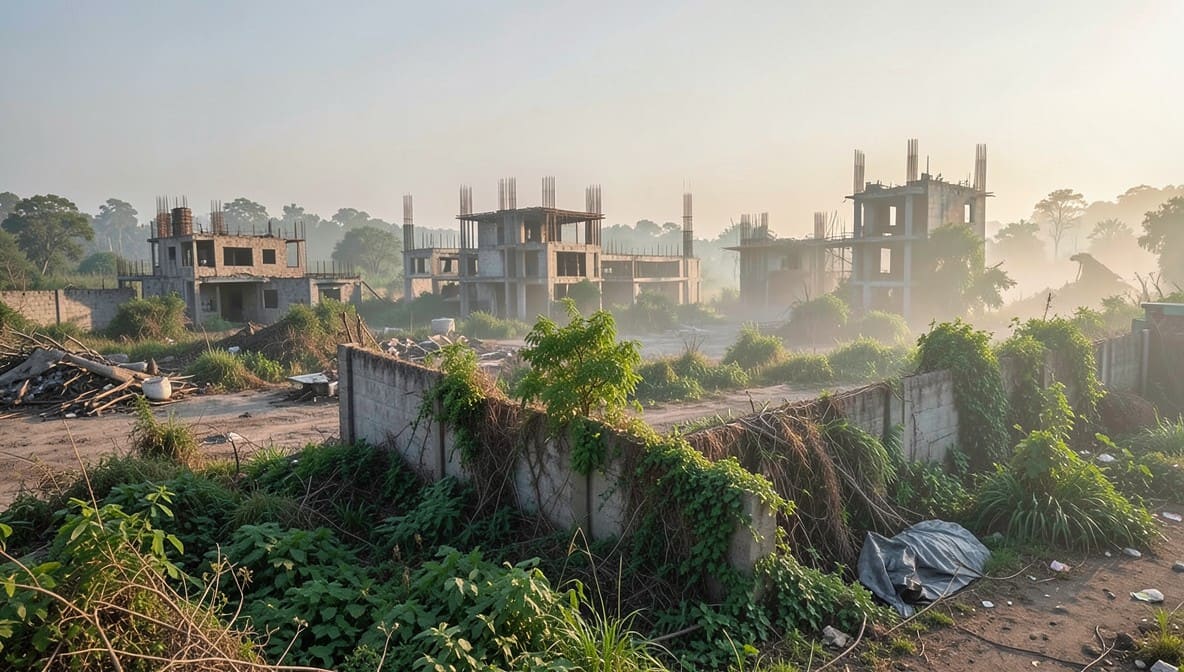
The Chhattisgarh High Court has reaffirmed the constitutional obligation of administrative authorities to act expeditiously on pending applications for transfer of government land, particularly where petitioners face acute financial distress. In the absence of any adjudicated order, the Court issued a mandatory direction to decide a stalled application within a fixed timeframe, reinforcing the principle that delay in administrative action can amount to denial of justice.
Background & Facts
The Dispute
The petitioner, Smt. Kiran Manikpuri, is the recorded pattadar of Government land bearing Khasra No. 161, admeasuring 0.6100 hectare, situated at Village Jevra, District Bemetara, Chhattisgarh. She has been in peaceful possession and enjoyment of this land for over 21 years, and it constitutes the sole source of livelihood for her extended family, which includes her two unmarried sons, a married daughter, and the widow and minor children of her deceased son, Yogesh Manikpuri, who passed away after prolonged illness.
Key Facts
- The petitioner incurred substantial medical expenses during her son’s treatment, leading to significant borrowing from relatives.
- She currently faces mounting liabilities and has no other source of income.
- To repay debts and secure family sustenance, she applied on 09.03.2026 under Section 165(6)(a), 165(6)(b), and 165(6)(c) of the Chhattisgarh Land Revenue Code, 1959, seeking permission to sell the land.
- The application remains pending before respondent No. 2, the Collector, Bemetara, despite earlier directions from this Court in WPC No. 1592/2024 to decide the matter expeditiously.
- The petitioner has no alternative means of financial relief and relies entirely on the sale of this land for survival.
Procedural History
- 09.03.2026: Petitioner submitted application for sale permission under Section 165(6) of the Chhattisgarh Land Revenue Code, 1959.
- Prior to 09.03.2026: WPC No. 1592/2024 was decided by this Court, directing the Collector to decide pending applications expeditiously.
- 27.04.2026: Present writ petition (WPC No. 1978 of 2026) filed seeking direction to decide the pending application.
- 27.04.2026: Order passed by the Court disposing of the petition with directions.
Relief Sought
The petitioner sought:
- A direction to respondent No. 2 to decide the pending application dated 09.03.2026 under Section 165(6)(a), (b), and (c) of the Chhattisgarh Land Revenue Code, 1959.
- A direction to call for the entire records pertaining to her application.
- Any other relief deemed fit in the interest of justice.
The Legal Issue
The central question was whether the failure of the Collector to decide a pending application for sale of government land, despite prolonged inaction and demonstrated hardship, constitutes a violation of the petitioner’s right to effective remedy under Article 226 of the Constitution, and whether the Court may issue a mandatory direction to conclude the matter within a fixed timeframe.
Arguments Presented
For the Petitioner
Learned counsel submitted that the petitioner’s application has remained pending without any decision, despite the Court’s prior directive in WPC No. 1592/2024. The petitioner’s financial distress, arising from medical debt and lack of alternative income, renders the delay not merely procedural but life-altering. The application is not frivolous and falls squarely within the scope of Section 165(6), which permits sale of leased land under specified conditions. The inaction violates the principles of natural justice and the right to livelihood under Article 21.
For the Respondent
The State counsel conceded that the application is pending and acknowledged its administrative nature. However, he submitted that the matter requires due consideration under the law and assured the Court that the application would be decided expeditiously without unnecessary delay, without committing to a specific timeline.
The Court's Analysis
The Court declined to adjudicate the merits of the petitioner’s claim for sale permission, noting that such determination rests solely with the competent authority under the Chhattisgarh Land Revenue Code, 1959. However, it emphasized that administrative delay, particularly when it causes demonstrable hardship, cannot be countenanced.
"It is deemed appropriate to dispose of the present writ petition with a direction to the concerned authority to consider and decide the petitioner’s application strictly in accordance with law. The petitioner shall be afforded due and proper opportunity of hearing, and all relevant documents and submissions placed by the petitioner shall be taken into consideration before passing a reasoned and speaking order."
The Court observed that the petitioner’s reliance on the land for survival, coupled with the absence of any alternative income, elevates the matter beyond routine administrative delay. The prior direction in WPC No. 1592/2024 had already placed the authority on notice. Continued inaction, therefore, amounts to a failure in public duty.
The Court further held that while it cannot substitute its judgment for that of the Collector, it has the power under Article 226 to compel performance of a statutory duty where delay has become arbitrary and oppressive. The direction to decide within 60 days is not an interference but a necessary corrective to ensure the rule of law prevails over bureaucratic inertia.
The Verdict
The petitioner succeeded. The Court directed the Collector, Bemetara, to decide the petitioner’s application dated 09.03.2026 under Section 165(6)(a), (b), and (c) of the Chhattisgarh Land Revenue Code, 1959, within 60 days from the date of receipt of a certified copy of this order. The decision must be based on a reasoned and speaking order, after affording the petitioner a fair opportunity of hearing and considering all submitted documents. There shall be no order as to costs.
What This Means For Similar Cases
Administrative Delay Is Not Permissible in Matters of Livelihood
- Practitioners must now argue that prolonged inaction on applications under land revenue laws, especially where petitioners face financial distress or loss of livelihood, constitutes a violation of Article 21.
- Writ petitions seeking direction to decide pending applications are maintainable even without a final order, if delay is unreasonable and causes demonstrable hardship.
- Courts may impose fixed timelines (e.g., 30-60 days) for decision-making in such cases, even absent statutory mandates.
Reasoned Orders Are Mandatory, Not Optional
- Authorities cannot dispose of applications with generic or non-speaking orders.
- The judgment reinforces that every decision under Section 165(6) must be accompanied by reasons addressing the petitioner’s submissions, evidence, and legal provisions.
- Failure to issue a reasoned order within the stipulated time may invite contempt proceedings or further judicial intervention.
Precedent from Prior Directions Carries Weight
- When a court has previously directed expeditious disposal of similar applications, subsequent delay is viewed with greater scrutiny.
- Petitioners may cite prior judicial directions as evidence of notice and bad faith incontinuance.
- Authorities must maintain internal tracking systems for pending applications flagged by courts to avoid recurrence.