The Madhya Pradesh High Court has reinforced the constitutional obligation of revenue authorities to decide mutation petitions expeditiously and with reasoned orders. In a clear directive under Article 226, the Court has mandated a 30-day timeline for the Tehsildar to dispose of pending mutation proceedings, emphasizing that administrative inaction cannot override statutory duties.
Background & Facts
The Dispute
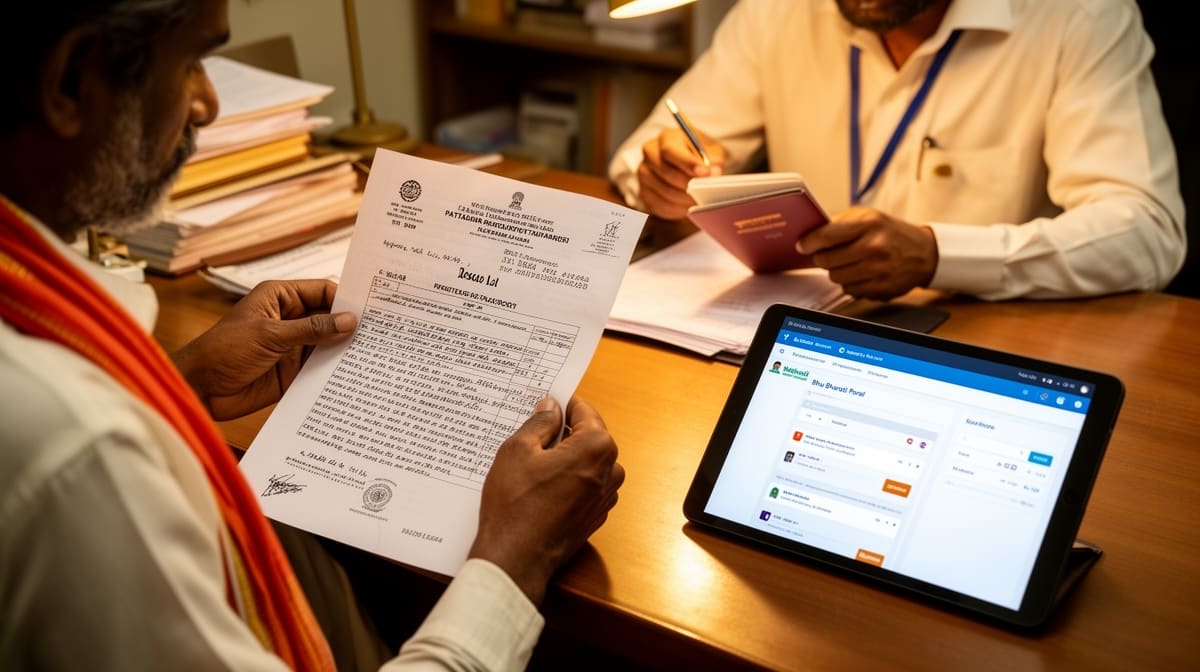
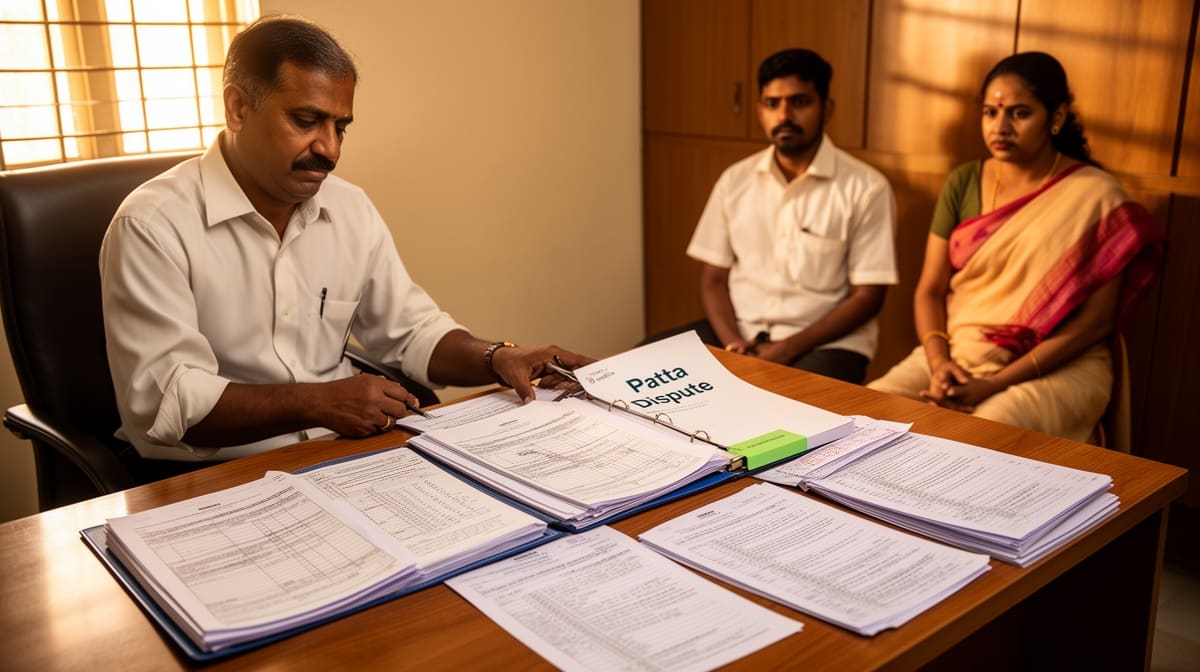
The petitioner, M/s A.R.A. Polytrade Pvt. Ltd., through its authorized representative Dinesh Kumar Dhanotiya, sought mutation of land records in its name for property situated in Tehsil Bicholi Hapsi, District Indore. The mutation application was filed under Case No. 2745/A-6/2022. Despite submission of all requisite documents - including sale deed, possession proof, tax receipts, and identity verification - the Tehsildar (Respondent No. 4) failed to pass any order for over two years.
Key Facts
- The petitioner submitted all documents required under the Madhya Pradesh Land Revenue Code, 1959, to establish lawful ownership and entitlement to mutation
- The documents included: Sale Deed dated 12.08.2020, Receipt of Property Tax Payment up to 31.03.2022, Affidavit of Possession dated 05.09.2020, and No Objection Certificate from the Gram Panchayat dated 18.11.2020
- Respondent No. 2 (Principal Secretary, Department of Revenue) was alleged to have indirectly obstructed the process by demanding an unwarranted NOC not mandated by law
- The petitioner made multiple representations to the Tehsildar on 15.03.2023, 10.07.2023, and 22.11.2023, all of which remained unacknowledged
- No hearing was conducted, no notice was issued, and no reasons were provided for the delay
Procedural History
- 12.08.2020: Sale deed executed and possession transferred
- 05.09.2020: Affidavit of possession filed with Tehsildar
- 18.11.2020: Gram Panchayat NOC submitted
- 01.12.2020: Mutation application formally filed (Case No. 2745/A-6/2022)
- 15.03.2023: First written representation to Tehsildar
- 10.07.2023: Second representation, with copies to District Collector
- 22.11.2023: Third representation, citing undue delay
- 15.01.2024: Petition filed before the High Court under Article 226
- 02.04.2026: Hearing before Justice Jai Kumar Pillai
The Parties' Positions
The petitioner contended that the Tehsildar’s inaction amounted to a violation of the right to property under Article 300A and the principle of reasonable administrative action under Article 14. The petitioner argued that no statutory provision required an NOC from Respondent No. 2 for mutation, and that such demand was arbitrary and beyond jurisdiction.
The State, through Respondent No. 2 and 4, did not file a detailed counter-affidavit. The counsel for the State conceded that the matter had remained pending for an unreasonably long time but did not contest the petitioner’s claim regarding the sufficiency of documents.
Relief Sought
The petitioner sought a writ of mandamus directing the Tehsildar to decide the mutation application within 30 days, without insisting on an unlawful NOC from Respondent No. 2, and to pass a reasoned order.
The Legal Issue
The central question was whether a Tehsildar, having received all legally required documents for mutation, can lawfully withhold a decision indefinitely without assigning reasons, and whether the High Court can intervene under Article 226 to enforce timely adjudication.
Arguments Presented
For the Petitioner
The petitioner relied on State of U.P. v. Raj Narain and K.S. Puttaswamy v. Union of India to argue that administrative silence in the face of complete documentation violates the principles of natural justice and reasonable time under Article 14. It was submitted that the demand for an NOC from the Department of Revenue was not mandated by any rule under the Madhya Pradesh Land Revenue Code, and thus constituted an ultra vires condition. The petitioner further cited S.P. Gupta v. Union of India to assert that the right to property, though no longer a fundamental right, remains a constitutional right protected under Article 300A, and that delay in mutation directly affects marketability and legal title.
For the Respondent/State
The counsel for the State did not dispute the factual matrix or the sufficiency of documents. He acknowledged the delay but offered no legal justification for the non-decision. He conceded that the NOC sought from Respondent No. 2 was not statutorily required and that the Tehsildar had a mandatory duty to decide the application.
The Court's Analysis
The Court observed that the Tehsildar, as a statutory officer under the Madhya Pradesh Land Revenue Code, is under a non-discretionary duty to decide mutation applications upon receipt of complete documents. The Court emphasized that administrative delay, especially when no statutory bar exists, amounts to a failure of public duty.
"The petitioner has placed all documents required by law. The absence of a decision for over four years, without any explanation, is not merely inaction - it is a denial of justice."
The Court rejected the notion that the matter was "seized" and therefore beyond judicial review. It clarified that judicial intervention under Article 226 is not barred merely because an authority is seized of a matter; rather, it is precisely when such authority fails to act that the Court must step in to enforce constitutional obligations.
The Court further held that the demand for an NOC from the Principal Secretary, Department of Revenue, was not only unsupported by any rule or notification but also served no legitimate purpose under the Land Revenue Code. Such a condition, imposed without legal basis, was declared arbitrary and violative of Article 14.
The Verdict
The petition was allowed. The Court directed Respondent No. 4, the Tehsildar, Tehsil Bicholi Hapsi, District Indore, to pass a reasoned and speaking order on the mutation application bearing Case No. 2745/A-6/2022 within 30 days from the date of receipt of the certified copy of this order. The Tehsildar shall not insist upon any NOC from Respondent No. 2, as it is not mandated by law. The order shall specify reasons for satisfaction or dissatisfaction based solely on the documents submitted and applicable provisions of the Madhya Pradesh Land Revenue Code, 1959.
What This Means For Similar Cases
Administrative Silence Is Not an Option
- Practitioners must now cite this judgment when challenging prolonged inaction in mutation, land record correction, or revenue certification matters
- Delay exceeding six months without reason may now be treated as a prima facie violation of Article 14
- Courts will treat non-decision as a justiciable grievance under Article 226, even if no formal complaint was filed
Statutory Requirements Trump Extra-Legal Demands
- Any additional condition imposed by revenue officers - such as NOCs, affidavits from third parties, or clearance certificates - must be traceable to a statutory provision
- If no rule mandates a document, its demand is ultra vires and can be challenged summarily
- This judgment reinforces that revenue authorities cannot create procedural hurdles beyond the Code
Reasoned Orders Are Mandatory
- The Court’s emphasis on a "speaking order" means that generic responses like "application pending" or "under scrutiny" are legally insufficient
- Every order must articulate: (a) which documents were considered, (b) which provisions were applied, and (c) why the claim was accepted or rejected
- Failure to do so invites immediate judicial intervention