The Gujarat High Court dismissed the Railway Administration's appeal against a Railway Claims Tribunal award of Rs. 8 lakhs compensation to the parents of a deceased passenger, affirming that a passenger's death while alighting from a running train constitutes an 'untoward incident' under the Railway Act and that a Divisional Railway Manager's report filed beyond the statutory 60-day period carries no evidentiary weight.
Background & Facts
The Dispute
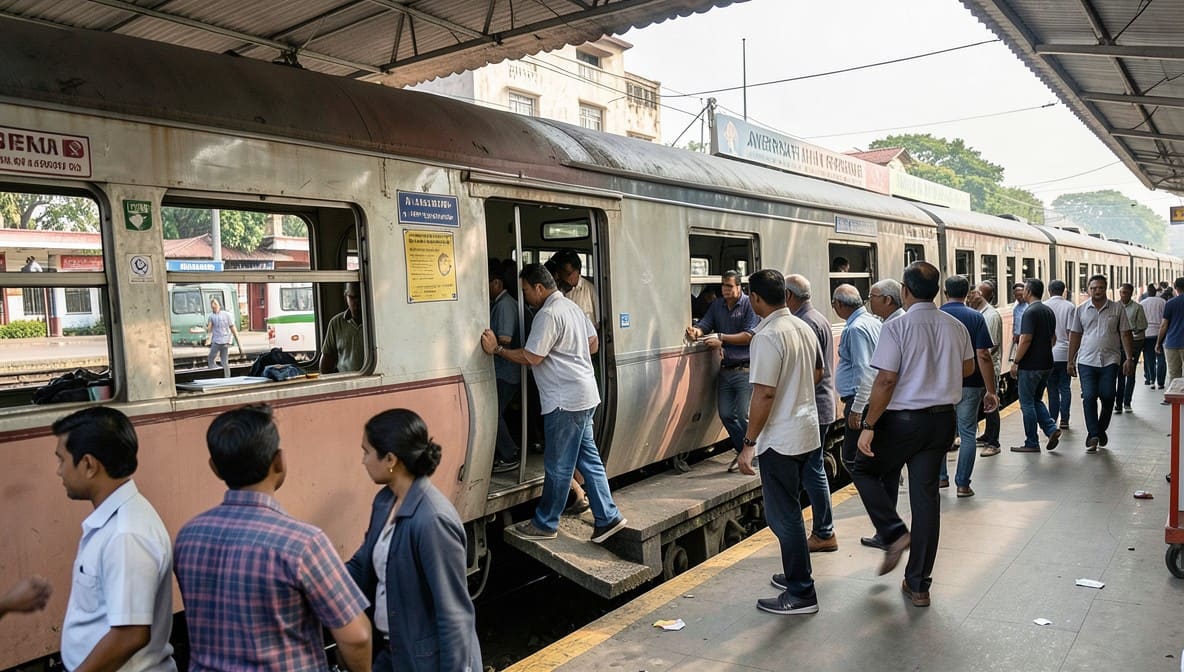
The respondents, parents of the deceased Sachidanand Dube, filed a claim petition before the Railway Claims Tribunal, Ahmedabad, seeking compensation of Rs. 8 lakhs under the Railway Act for the death of their son in a railway accident. The deceased was travelling from Nar Town to Sayma Station with a valid ticket in a passenger train when he fell from the train near Tarapur Station, resulting in his death on the spot.
Key Facts
- The deceased, Sachidanand Dube, was travelling from Nar Town to Sayma Station with a ticket in a passenger train
- He fell from the train near Tarapur Station and died on the spot
- The incident occurred on 20.11.2015
- The claimants (parents) filed the claim petition on 06.02.2017 (Case No. OA-2017/0222)
- The Railway Administration filed a written statement along with a DRM report contending the deceased tried to alight from the running train to catch a mobile phone which had fallen down, and during that attempt fell between the railway tracks
- The DRM report was filed on 25.08.2017
- The Railway Claims Tribunal allowed the claim petition by judgment and decree dated 06.04.2023, directing the Railway Administration to pay compensation of Rs. 8 lakhs within 30 days with 9% interest
Procedural History
- 20.11.2015: Date of incident resulting in death of Sachidanand Dube
- 06.02.2017: Claim petition filed before Railway Claims Tribunal, Ahmedabad (OA-2017/0222)
- 25.08.2017: DRM report filed by Railway Administration
- 06.04.2023: Railway Claims Tribunal allowed claim petition, awarded Rs. 8 lakhs with 9% interest payable within 30 days
- 2023: Railway Administration filed First Appeal No. 2408 of 2023 before Gujarat High Court
- 10.08.2026: Gujarat High Court dismissed the appeal
The Parties' Positions
Appellant (Railway Administration): Contended the deceased died due to his own negligence by attempting to alight from a running train to retrieve a fallen mobile phone; relied on the DRM report to establish self-negligence; argued this fell within the proviso to Section 124A of the Railway Act absolving railways of liability.
Respondents (Claimants): Asserted the deceased was a bona fide passenger travelling with a valid ticket; filed affidavit stating the deceased was travelling with valid ticket; contended the DRM report was filed beyond the statutory 60-day period and had no evidentiary value; relied on Supreme Court precedents establishing burden-shifting framework.
Relief Sought
The appellant sought setting aside of the Tribunal's judgment and decree dated 06.04.2023 and dismissal of the claim petition. The respondents sought confirmation of the Tribunal's award of Rs. 8 lakhs compensation with 9% interest.
The Legal Issue
The central questions were: (1) Whether a passenger's death resulting from alighting from a running train constitutes an 'untoward incident' under the Railway Act, or whether self-negligence absolves the railway administration of liability; (2) Whether a DRM report filed beyond the statutory 60-day period from the date of incident has any evidentiary value; (3) What is the burden of proof regarding the status of a deceased as a bona fide passenger when the claimant has filed an affidavit asserting valid ticket possession.
Arguments Presented
For the Appellant
The Railway Administration, through Ms. Archana Amin, contended that the deceased had attempted to alight from a running train to catch a mobile phone that had fallen, and this act of self-negligence caused his death. The appellant relied on the DRM report to substantiate this version and argued that Clause (b) of the proviso to Section 124A of the Railway Act would absolve the railways from indemnifying the claim since the death was caused due to self-negligence. The appellant submitted that the deceased's act of neglect was attributable to himself and the railway authorities could not be held liable.
For the Respondent
Mr. Rathin Raval for the respondents submitted that the claimants had filed an affidavit asserting the deceased was travelling with a valid ticket. Once this initial burden was discharged, the burden shifted to the Railway Administration to disprove the facts. The respondents highlighted that no railway official entered the witness box to challenge the affidavit. They further contended that the DRM report, filed on 25.08.2017 for an incident occurring on 20.11.2015, was filed well beyond the statutory 60-day period and therefore had no evidentiary value. The respondents relied on Union of India v. Rina Devi [2018 AIR (SC) 2362] and Dolly Rani Saha v. Union of India [(2024) 9 SCC 656] for the proposition that mere absence of a ticket does not negate bona fide passenger status.
The Court's Analysis
The Court examined the Supreme Court's decision in Shrikumar Gupta v. Union of India [2025 Live Law (SC) 1115], which addressed materially similar facts. In that case, the deceased had boarded a wrong train and attempted to deboard, sustaining injuries. The Supreme Court rejected the railway's contention of self-negligence, observing:
"No sane person could have attempted to deboard or alight from a running train that too an express train. The railway authorities have taken a plea in the written statement in paragraph 3 that the deceased had jumped off the train, namely, had alighted at the station where he intended to alight, is a plea without proof. Having raised such a plea, it was incumbent upon the railway authorities to prove the same. However, the DRM Report is also silent on this aspect."
The Court found the facts of the present case analogous to Shrikumar Gupta and held that even if the deceased had alighted from the running train, such an act falls within the definition of 'untoward incident' under the Railway Act.
On the issue of the DRM report, the Court noted the statutory requirement for filing the DRM report is 60 days from the date of incident. The incident occurred on 20.11.2015, the claim petition was filed on 06.02.2017, and the DRM report was filed on 25.08.2017 - nearly two years after the incident and well after the claim petition. The Court held:
"Therefore, DRM has prepared and filed report after filing of the claim petition. Statutory requirement for filing DRM report is 60 days from the date of incident, therefore, DRM report has no value in the eye of law and cannot be relied upon."
Regarding the burden of proof on bona fide passenger status, the Court relied on Union of India v. Rina Devi and Dolly Rani Saha v. Union of India, which established that the initial burden lies on the claimant to file an affidavit of relevant facts, after which the burden shifts to the Railways. The mere absence of a ticket does not negate the claim that the deceased was a bona fide passenger. In this case, the claimant had filed an affidavit stating his son was travelling with a valid ticket, and no railway official entered the witness box to disprove this.
The Verdict
The appellant's First Appeal No. 2408 of 2023 was dismissed. The Gujarat High Court upheld the Railway Claims Tribunal's judgment and decree dated 06.04.2023 awarding compensation of Rs. 8 lakhs to the respondents with 9% interest payable within 30 days from the date of the Tribunal's order. The interim relief granted earlier, if any, stands discontinued. The Tribunal was directed to disburse the compensation amount to the respondent-claimants along with interest, after due verification and identification. The connected Civil Application No. 1 of 2026 for withdrawal/disbursement of amount was disposed of.
What This Means For Similar Cases
Alighting From Running Train Constitutes Untoward Incident
The judgment reinforces that a passenger's death or injury resulting from alighting from a running train - even if arguably due to the passenger's own action - falls within the statutory definition of 'untoward incident' under the Railway Act. The Supreme Court's reasoning in Shrikumar Gupta that "no sane person could have attempted to deboard or alight from a running train" establishes a strong presumption against treating such acts as voluntary self-negligence that would absolve the railways. Practitioners should:
- Argue that the very act of alighting from a moving train indicates an emergency or mistake, not voluntary assumption of risk
- Emphasize that the railway's plea of self-negligence requires strict proof, not mere assertion in a written statement
- Note that the DRM report's silence on the specific circumstances of alighting weakens the railway's defence
DRM Reports Filed Beyond 60 Days Are Inadmissible
The Court's categorical holding that a DRM report filed beyond the statutory 60-day period "has no value in the eye of law and cannot be relied upon" provides a clear procedural weapon for claimants. Key takeaways:
- Always check the date of the DRM report against the date of incident; if filed beyond 60 days, object to its admissibility
- The report loses evidentiary value even if filed before the Tribunal's decision but after the statutory period
- Railways cannot cure this defect by filing the report belatedly during litigation
- This rule applies regardless of the report's content or apparent credibility
Burden-Shifting Framework for Bona Fide Passenger Status
The judgment applies the burden-shifting framework from Rina Devi and Dolly Rani Saha with practical effect:
- Claimants should file a detailed affidavit at the earliest stage asserting the deceased was a bona fide passenger with a valid ticket
- Once the affidavit is filed, the burden shifts squarely to the Railway Administration to lead evidence disproving the claim
- The mere absence of a physical ticket (lost in the accident, for instance) is not fatal to the claim
- Railways must enter the witness box and produce evidence; mere written statement denials are insufficient
- Case-specific facts and attending circumstances will determine the outcome, but the initial evidentiary burden is low for claimants