The Income Tax Appellate Tribunal, Ahmedabad, has reaffirmed that the presence of religious elements in a trust’s activities does not automatically disqualify it from claiming exemption under Sections 11 and 12 of the Income-tax Act, provided the dominant purpose remains charitable and the benefits are accessible to the general public. This ruling clarifies the boundary between permissible religious expression and impermissible sectarianism in charitable trusts.
Background & Facts
The Dispute
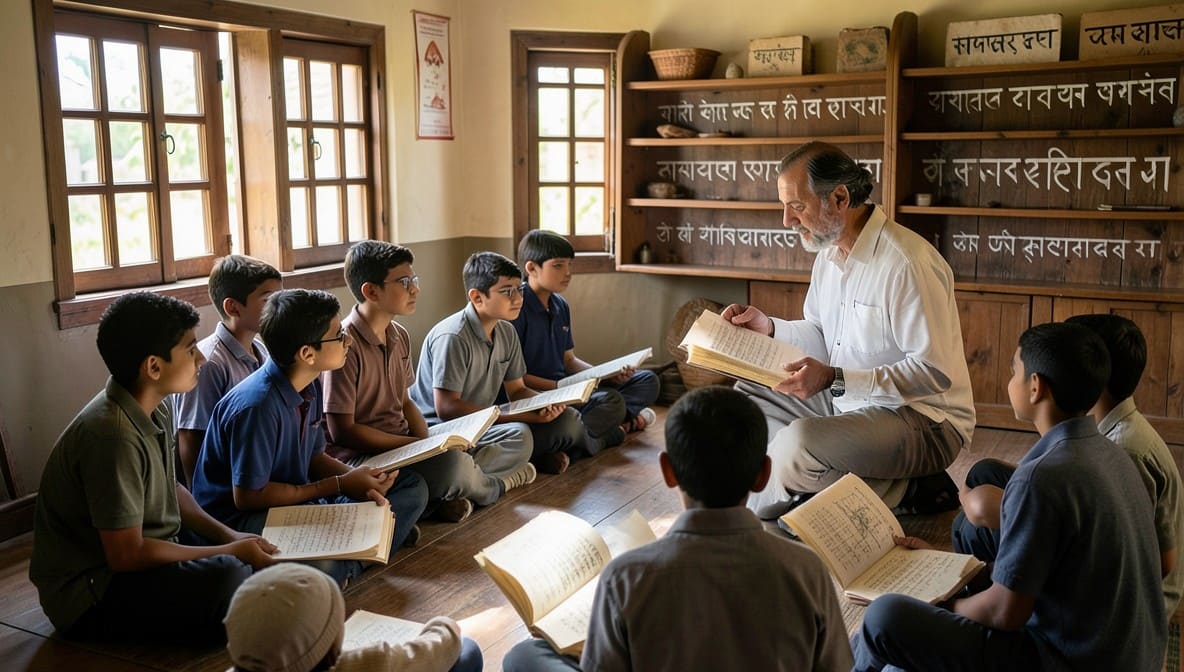
The dispute centers on whether Shri Khodal Dham Trust, a public charitable trust registered under the Bombay Public Trust Act, 1950, and approved under Section 12A and 80G of the Income-tax Act, 1961, is entitled to exemption from tax on its income and corpus donations for Assessment Year 2017-18. The Assessing Officer denied the exemption, characterizing the trust’s activities as predominantly religious, particularly due to the construction of a "prayer hall" and the performance of rituals such as "Pran Pratistha" and "Havan".
Key Facts
- The trust was registered under the Bombay Public Trust Act, 1950, and holds valid registration under Section 12A of the Income-tax Act, which remained uncancelled.
- The trust’s stated objects include education, medical relief, financial assistance, and general public utility.
- For A.Y. 2017-18, the trust filed a return declaring Nil income, claiming exemption under Sections 11 and 12.
- The trust received corpus donations amounting to Rs. 29,31,60,032/-, which it claimed as exempt under Section 11(1)(d).
- The trust constructed a prayer hall and conducted religious ceremonies, including Pran Pratistha and Havan, which the Assessing Officer interpreted as evidence of a temple.
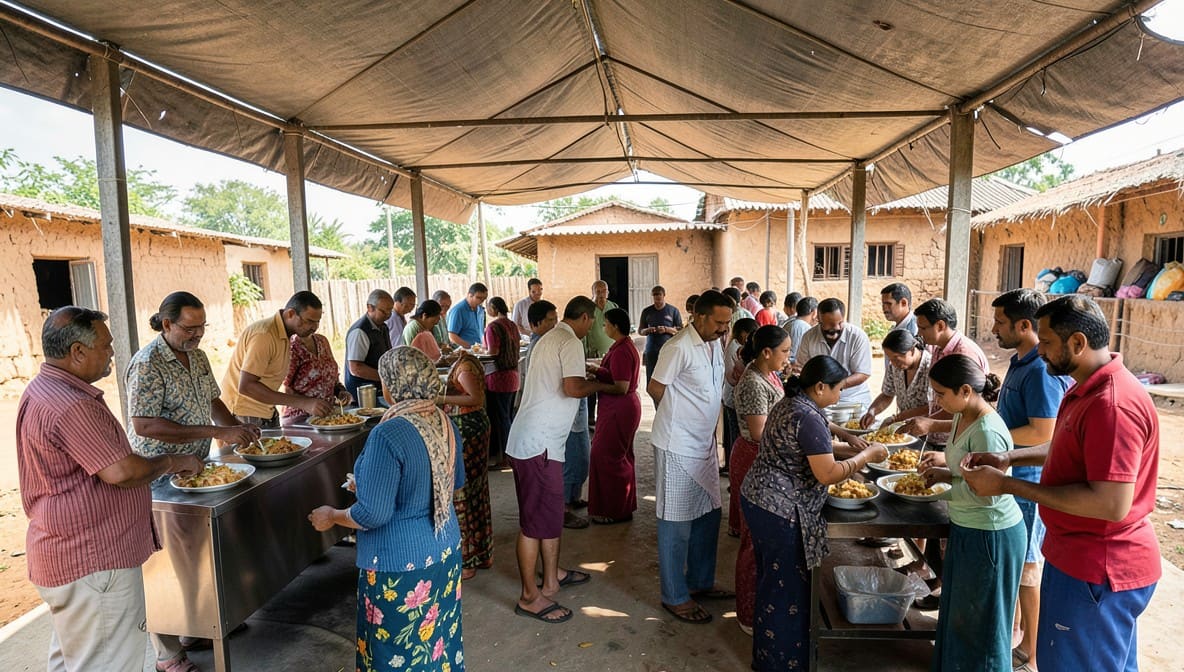
- The trust also operated "Ann Kshetralay" (free food distribution) and provided medical and educational services open to the public.
- The trust had previously been granted exemption for A.Y. 2014-15 by a Coordinate Bench of the Tribunal on identical facts.
Procedural History
- 01.04.2017: Assessment Year 2017-18 commenced.
- 31.07.2018: Trust filed return declaring Nil income.
- 15.12.2018: Assessing Officer issued notice under Section 143(2) for scrutiny.
- 28.02.2019: Assessing Officer passed order under Section 143(3), denying exemption and assessing income at Rs. 31,26,13,761/-.
- 15.04.2019: Appeal filed before CIT(Appeals), National Faceless Appeal Centre, Delhi.
- 11.09.2025: CIT(Appeals) allowed the appeal, deleting all additions and upholding exemption.
- 25.03.2026: Department filed appeal before ITAT Ahmedabad.
- 23.04.2026: ITAT dismissed the appeal, upholding CIT(Appeals) order.
The Parties' Positions
For the Appellant (Department)
- Argued that the construction of a prayer hall and performance of rituals like Pran Pratistha and Havan indicated the trust was operating a temple.
- Contended that such activities were religious and not charitable under Section 2(15) of the Act.
- Asserted that the trust’s activities were confined to a particular religious community, thereby attracting disallowance under Section 13.
- Claimed that corpus donations were not exempt as the trust was not engaged in charitable activities.
For the Respondent (Trust)
- Maintained that its activities were open to the general public without discrimination.
- Argued that religious rituals were ancillary to its broader charitable objectives of welfare and public service.
- Highlighted that food distribution, medical aid, and education were the dominant activities.
- Pointed to the prior favorable order for A.Y. 2014-15 by a Coordinate Bench of the Tribunal.
- Stated that Section 13 was not attracted as there was no evidence of exclusivity to any caste or community.
Relief Sought
The Department sought to set aside the CIT(Appeals) order and restore the Assessing Officer’s order, which had:
- Disallowed exemption under Sections 11 and 12.
- Taxed corpus donations of Rs. 29,31,60,032/-.
- Disallowed revenue expenditure of Rs. 3,40,68,567/- on religious activities.
The Legal Issue
The central question was whether the existence of religious rituals and a prayer hall in the activities of a registered charitable trust automatically negates its eligibility for exemption under Sections 11 and 12 of the Income-tax Act, or whether the dominant purpose and public accessibility of its activities must be the determining factors.
Arguments Presented
For the Appellant
The Department relied on the literal interpretation of Section 13, arguing that any activity with a religious character, especially when centered around a specific deity (Khodal Maa), falls outside the scope of "charitable purpose" under Section 2(15). It cited past cases where religious structures were held to be non-charitable when used exclusively for worship. The Department contended that the trust’s activities were not open to all sections of society and that the prayer hall functioned as a temple, thereby attracting disallowance.
For the Respondent
The Trust emphasized that its activities - food distribution, medical aid, education - were demonstrably charitable and open to all. It argued that the presence of religious rituals did not override the primary charitable intent, citing CIT v. Shri Ramkrishna Mission and CIT v. Sri Sathya Sai Seva Organisation. It highlighted that the same facts had been previously accepted by a Coordinate Bench of the Tribunal for A.Y. 2014-15, and no new evidence had been presented to justify a different outcome.
The Court's Analysis
The Tribunal emphasized that the charitable character of a trust must be assessed holistically, not by isolating individual activities. It noted that the Assessing Officer had made no finding that the trust’s services were restricted to a particular community, caste, or religion, which is a mandatory precondition for invoking Section 13.
"The mere existence of a prayer hall or performance of certain rituals cannot lead to the conclusion that the trust is not carrying on charitable activities, particularly when the predominant activities such as education, medical relief and food distribution are not disputed."
The Tribunal further held that Section 11(1)(d) protects corpus donations received with specific directions from taxation, provided the trust qualifies for exemption under Section 11. The denial of this exemption was therefore consequential and unsustainable.
Crucially, the Tribunal invoked the principle of consistency and judicial discipline, observing:
"When an issue has been decided by the Coordinate Bench on identical facts in the assessee's own case, the same view should be followed in subsequent years unless there is a material change in facts or law, which is not the case here."
It rejected the Department’s reliance on presumptions, noting that the Assessing Officer had failed to produce any evidence of exclusivity, sectarianism, or deviation from the trust deed. The Tribunal concluded that the CIT(Appeals) had correctly applied the law and that the additions were not justified.
The Verdict
The Department’s appeal was dismissed. The ITAT upheld the CIT(Appeals) order dated 11.09.2025, confirming that the trust is entitled to:
- Full exemption under Sections 11 and 12 for A.Y. 2017-18.
- Exemption of corpus donations of Rs. 29,31,60,032/- under Section 11(1)(d).
- Allowance of revenue expenditure of Rs. 3,40,68,567/- disallowed by the Assessing Officer. No further directions were issued as the order was fully restored.
What This Means For Similar Cases
Religious Rituals Are Not Disqualifying by Themselves
- Practitioners must argue that the presence of religious elements (e.g., prayer halls, rituals, idols) does not automatically render a trust non-charitable.
- Focus on the dominant purpose and public accessibility of activities, not isolated religious features.
Section 13 Requires Proof of Exclusivity
- To invoke Section 13, the Revenue must prove that benefits are restricted to a particular community, caste, or religion.
- Absent such evidence, exemption under Sections 11 and 12 must be granted.
Consistency in Adjudication Is Binding
-
Coordinate Bench decisions in the assessee’s own case on identical facts must be followed unless there is a material change in law or facts.
-
Revenue cannot revisit and reverse prior favorable orders without fresh, compelling evidence.
-
Always document public access to services (e.g., open registration, no caste/religion-based restrictions).
-
Maintain records of food distribution, medical camps, and educational outreach to substantiate charitable intent.
-
Cite prior favorable tribunal orders in appeals to invoke the doctrine of consistency.