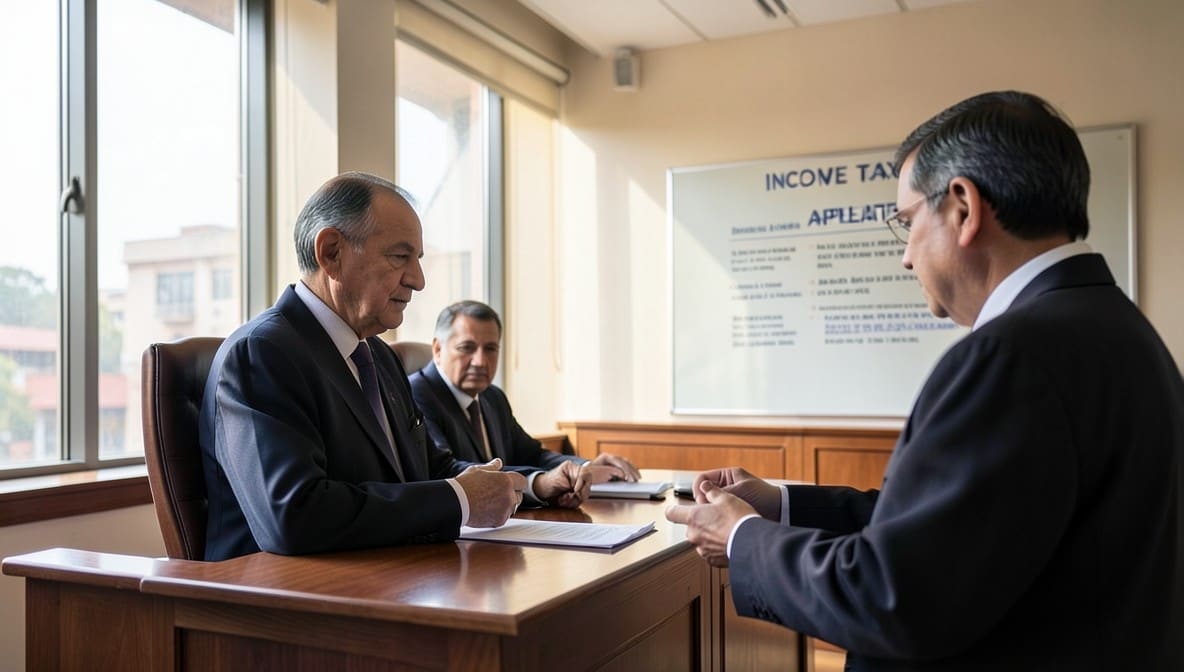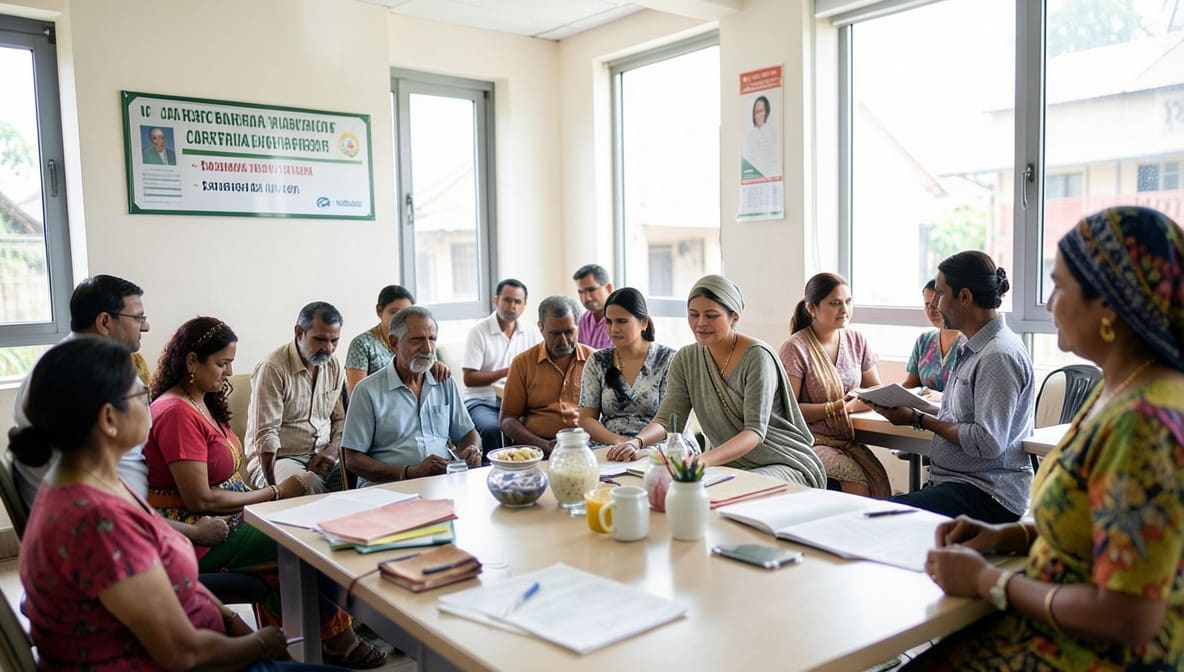
The Income Tax Appellate Tribunal, Delhi, has clarified that a charitable hospital’s receipt of payments from insurance companies or third-party administrators does not automatically convert its activities into commercial business, provided the primary object remains medical relief. This ruling reinforces the principle that the mode of payment is distinct from the nature of the activity, and upholds the exemption entitlement under Section 11 of the Income Tax Act where the trust’s core purpose aligns with charitable intent.
Background & Facts
The Dispute
The assessee, Smt. Vimal Chawla Charitable Trust, operates the National Institute of Medical Sciences (NIMS Hospital) in Faridabad, Haryana. Registered under Section 12AA of the Income Tax Act, 1961 since 14.07.1998, the Trust’s primary object, as per its trust deed, is to establish and maintain hospitals and medical institutions for the benefit of the general public, with a specific focus on medical relief. The dispute arose over the denial of exemption under Section 11 for Assessment Years (A.Y.) 2017-18 and 2018-19, based on the assertion that the Trust’s activities fell under the first proviso to Section 2(15) of the Act, thereby disqualifying it from charitable status.
Key Facts
- The Trust’s registration under Section 12AA was granted on 14.07.1998.
- The Trust’s hospital serves patients from diverse economic backgrounds, including those covered under ESIC and Third-Party Administrators (TPAs).
- For A.Y. 2017-18, total hospital receipts amounted to Rs. 2,03,93,377, of which Rs. 2,02,03,016 (99.06%) were received from insurance companies and TPAs.
- For A.Y. 2018-19, gross receipts were Rs. 2,30,03,929, with Rs. 2,02,03,016 from insurance-based payments.
- The Trust maintained audited books of accounts, with no material defects noted by its auditor.
- In A.Y. 2016-17, the Assessing Officer (AO) had similarly denied exemption under Section 11 on identical grounds, but the Commissioner of Income Tax (Appeals) [CIT(A)] allowed the appeal on 28.03.2019, holding that the Trust’s activities constituted medical relief under Section 2(15).
- The AO for A.Y. 2017-18 and 2018-19 ignored the CIT(A)’s earlier favorable order and proceeded to disallow exemption.
- The Trust submitted TDS deduction ledgers, bank statements evidencing deposit of TDS, and quarterly TDS returns for expenses under Section 40(a)(ia), but the AO did not examine these documents.
- The Trust did not submit voluminous vouchers for expenses, citing practical constraints, and offered to provide them upon request.
Procedural History
- 31.10.2017: Return filed for A.Y. 2017-18.
- 14.08.2018: Notice under Section 143(2) issued for complete scrutiny.
- 21.01.2019: Notice under Section 142(1) issued with detailed questionnaire.
- 27.12.2019: Assessment order passed by AO for A.Y. 2017-18, making additions of Rs. 39,30,831 (20% disallowance of expenses), Rs. 5,00,000 (food expenses), Rs. 1,33,91,236 (receipts from debtors), and Rs. 20,00,000 (cash deposits under Section 69A).
- 08.07.2025: CIT(A) dismissed appeal for A.Y. 2017-18, confirming all additions.
- 09.10.2018: Return filed for A.Y. 2018-19 declaring nil income.
- 08.03.2021: Assessment order passed by AO for A.Y. 2018-19, disallowing exemption under Section 11, adding Rs. 42,39,845 under Sections 40(a)(ia) and 11(1)(a), and treating surplus as business income.
- 08.07.2025: CIT(A) dismissed appeal for A.Y. 2018-19.
- 19.03.2026: Hearing before ITAT Delhi.
- 26.05.2026: Judgment pronounced.
The Parties' Positions
For the Assessee
- Argued that receipt of payments from ESIC/TPA is merely a mode of payment, not a change in the nature of activity.
- Relied on the CIT(A)’s 28.03.2019 order in A.Y. 2016-17, which had allowed exemption on identical facts.
- Submitted TDS deduction and payment evidence for expenses under Section 40(a)(ia), which the AO failed to consider.
- Contended that the AO’s reliance on statistical inference and ad hoc disallowances violated principles of natural justice.
- Stated that the Trust’s books were audited and no defects were found, and that voluminous vouchers could not be submitted without undue burden.
For the Revenue
- Contended that the Trust’s receipts from insurance companies indicated commercial activity under the first proviso to Section 2(15).
- Argued that since the majority of patients were covered under insurance, the Trust was not serving the general public as required under Section 2(15).
- Maintained that the Trust failed to substantiate expenses with vouchers, justifying ad hoc disallowances under Section 69A and general expense disallowances.
- Asserted that the CIT(A)’s earlier order was not binding and could be revisited.
Relief Sought
The assessee sought:
- Setting aside of the assessment orders for A.Y. 2017-18 and 2018-19.
- Restoration of exemption under Section 11 for both years.
- Deletion of additions under Sections 40(a)(ia), 69A, and ad hoc disallowances.
- Recognition of the CIT(A)’s 28.03.2019 order as binding precedent on identical facts.
- Opportunity to submit documentary evidence for expenses.
The Legal Issue
The central question was whether the receipt of payments from insurance companies and third-party administrators by a charitable hospital constitutes a commercial activity under the first proviso to Section 2(15) of the Income Tax Act, thereby disqualifying it from exemption under Section 11, or whether such payments merely represent a mode of settlement for services rendered in furtherance of medical relief.
Arguments Presented
For the Appellant
The assessee relied on the CIT(A)’s 28.03.2019 order, which had held that the Trust’s activities fell squarely within the main limb of Section 2(15) as "medical relief," and that the proviso was inapplicable because the Trust was not engaged in "any other object of general public utility" but in direct medical service. It argued that the mode of payment - whether cash, insurance, or government scheme - does not alter the charitable nature of the activity. The Trust submitted audited books, TDS deduction ledgers, bank statements, and TDS challans, demonstrating compliance with statutory obligations. It contended that the AO’s reliance on ad hoc disallowances without examining available evidence violated principles of natural justice and the doctrine of consistency.
For the Respondent
The Revenue contended that the Trust’s reliance on insurance-based payments indicated a shift from serving the economically disadvantaged to catering to a privileged segment, thereby falling under the proviso to Section 2(15). It argued that the Trust’s receipts exceeded 20% of total receipts from insurance sources, triggering disqualification. The Revenue maintained that the absence of vouchers justified disallowance under Section 69A and general expense disallowances, and that the CIT(A)’s earlier order was not binding as it pertained to a different assessment year.
The Court's Analysis
The Tribunal emphasized that the first proviso to Section 2(15) disqualifies only those entities whose primary object is "advancement of any other object of general public utility" if such object involves trade, commerce, or business. The Tribunal held that "medical relief" is a distinct and independent category under Section 2(15), and does not attract the proviso. The Tribunal observed:
"The availing of benefit under ESIC/TPA is only a mode of payment by the patients for the treatment taken from the hospital being run by appellant. There is no material on record to show that the appellant has discriminated in giving admission only to those patients who have been registered under ESIC or other medical insurance schemes."
The Tribunal further noted that the AO had ignored the binding precedent set by the CIT(A) in the same assessee’s case for A.Y. 2016-17, where the identical facts had led to the allowance of exemption. The Tribunal held that such inconsistency violated the principle of consistency in tax administration and amounted to arbitrary treatment.
Regarding the disallowances under Section 40(a)(ia), the Tribunal found that the assessee had submitted comprehensive evidence of TDS deduction and payment, including challans and bank statements, which the AO had not examined. The Tribunal directed the AO to re-examine this evidence and decide afresh.
On the ad hoc disallowances of expenses and cash deposits under Section 69A for A.Y. 2017-18, the Tribunal held that while the assessee’s failure to submit voluminous vouchers was not ideal, the AO’s resort to arbitrary percentages without specific evidence was legally unsustainable. The Tribunal set aside those additions and restored the matter to the AO for fresh adjudication with proper opportunity.
The Verdict
The appeal in ITA No. 5153/Del/2025 (A.Y. 2017-18) is allowed for statistical purposes. The appeal in ITA No. 5154/Del/2025 (A.Y. 2018-19) is partly allowed. The addition of Rs. 20,63,609/- under Section 11(1)(a) and the denial of exemption under Section 11 are set aside. The disallowances of Rs. 5,48,836/- and Rs. 16,27,400/- under Section 40(a)(ia) are set aside, and the matter is remanded to the AO to examine the TDS evidence submitted by the assessee and decide afresh. The ad hoc additions of Rs. 39,30,831/-, Rs. 5,00,000/-, Rs. 1,33,91,236/-, and Rs. 20,00,000/- for A.Y. 2017-18 are set aside and the case is restored to the AO for fresh assessment with opportunity to the assessee to submit vouchers and evidence.
What This Means For Similar Cases
Medical Relief Trumps Payment Source
- Charitable hospitals receiving payments via insurance, ESIC, or TPAs are not automatically disqualified from Section 11 exemption if their primary activity is medical relief.
- Practitioners must argue that the mode of payment is irrelevant to the nature of the charitable purpose under Section 2(15).
- The burden is on the Revenue to prove that the trust’s activities are commercial, not merely that payments come from institutional sources.
Precedent Binding on Identical Facts
- An order by CIT(A) allowing exemption on specific facts binds subsequent assessments unless there is a material change in circumstances.
- Assessing Officers cannot ignore favorable appellate orders on identical issues without assigning cogent reasons.
- Practitioners should cite prior CIT(A) orders as binding precedent in similar cases.
Evidence Must Be Examined, Not Ignored
- Submission of TDS challans, bank statements, and ledgers constitutes prima facie compliance under Section 40(a)(ia).
- AO cannot disallow expenses under Section 40(a)(ia) merely because TDS returns were not attached; the onus is on the AO to verify submitted evidence.
- Ad hoc disallowances based on statistical inference or absence of voluminous vouchers are legally unsustainable without specific evidence of fraud or misrepresentation.