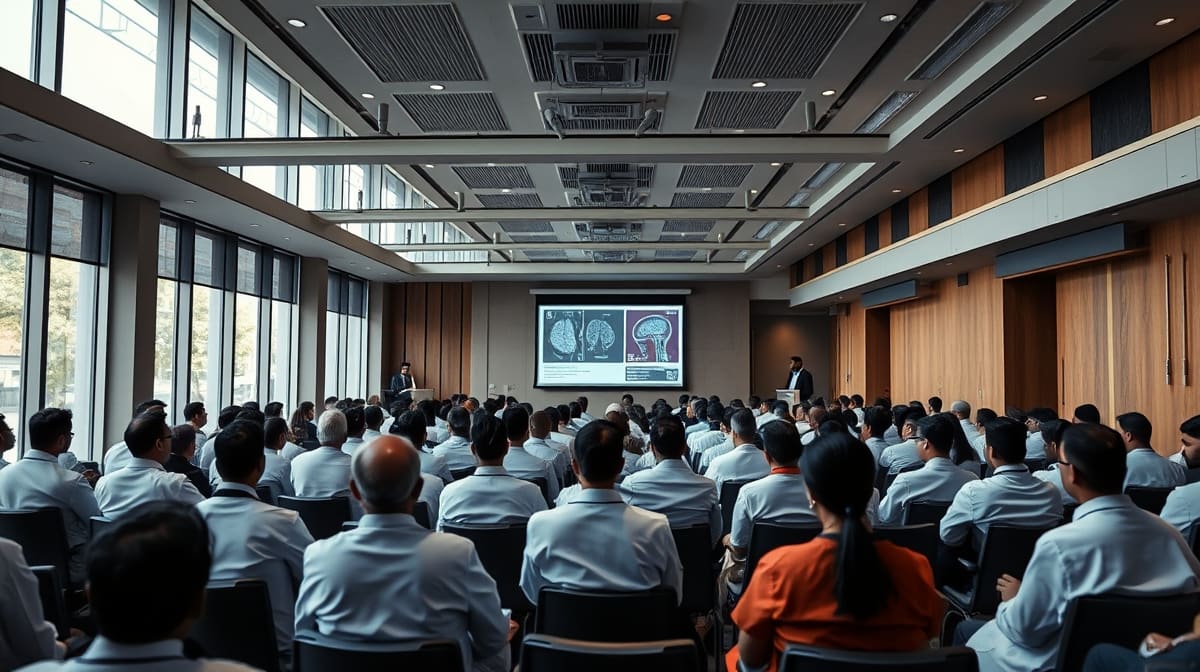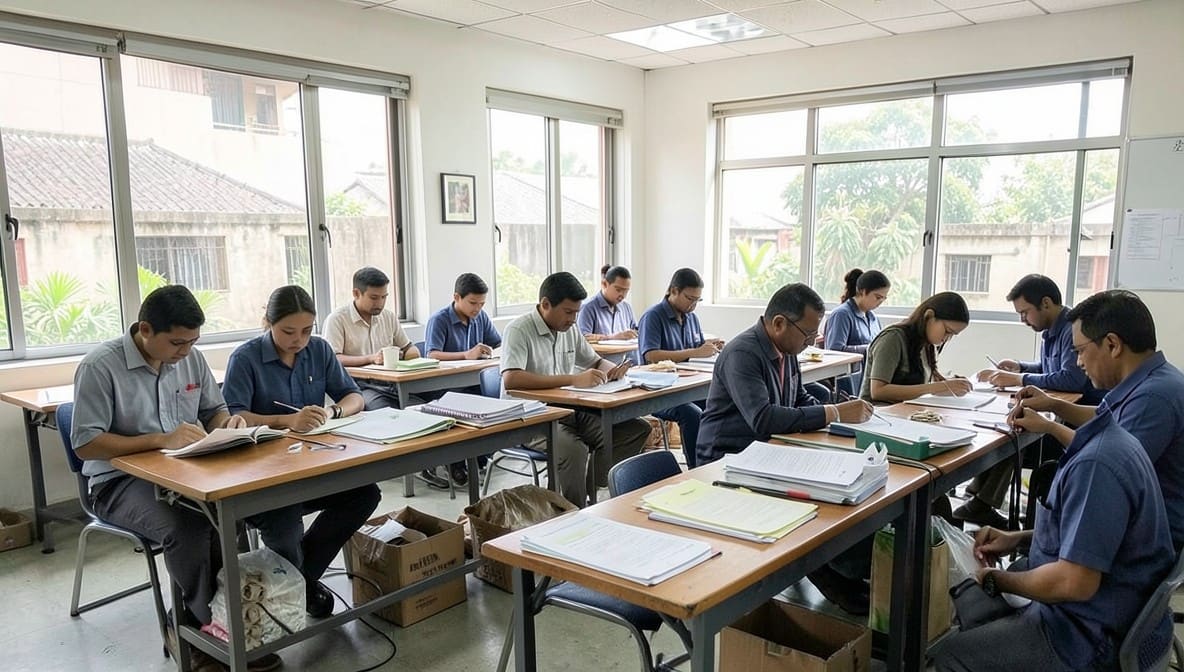
The Income Tax Appellate Tribunal, Bangalore, has clarified that vocational and skill development training conducted by charitable trusts constitutes 'education' under Section 2(15) of the Income Tax Act, 1961, thereby qualifying for exemption under Section 11. This ruling resolves a long-standing ambiguity regarding the scope of charitable activities eligible for tax benefits and affirms the judicial trend toward recognizing non-traditional educational models.
Background & Facts
The Dispute
The appellant, M/s. Deshpande Educational Trust, is a public charitable trust registered under Section 12AA of the Income Tax Act, 1961, established in 2010 with the primary objective of promoting education in rural and semi-urban areas. The Trust offers vocational training, skill development programs, and academic courses aimed at enhancing employability among underprivileged youth. The Revenue authorities denied the Trust’s claim for exemption under Section 11 for Assessment Years 2015-16, 2016-17, and 2017-18, on the ground that its activities constituted 'advancement of any other object of general public utility' rather than 'education', thereby disqualifying it from exemption.
Key Facts
- The Trust’s Memorandum of Association outlines 19 objects, including establishment of schools, colleges, training institutes, research in education, scholarships, and provision of educational infrastructure.
- The Trust conducts formal academic programs, including a Master of Social Entrepreneurship (MSE) course affiliated with Karnataka University.
- It runs residential vocational training programs in science, arts, business, and commerce for rural youth.
- For AY 2015-16, the Trust reported total receipts of Rs. 1,64,36,313, comprising Rs. 1,14,89,020 as fees and Rs. 37,08,000 as voluntary contributions.
- The Trust consistently reported deficits in its Income & Expenditure Accounts across the impugned years, indicating no profit motive.
- The Trust paid service tax of Rs. 12,39,293 during AY 2015-16, which the Assessing Officer cited as evidence of commercial activity.
- The Trust’s registration under Section 12AA was cancelled on 09.05.2012, but the cancellation was set aside by the ITAT Bangalore in ITA No. 857/Bang/2012 dated 28.03.2013.
- The Trust entered into a Memorandum of Agreement with the National Skill Development Corporation dated 07.09.2015 to deliver skill development programs.
Procedural History
- 28.10.2017: Assessee filed return for AY 2015-16 claiming total income of Rs. Nil and exemption under Section 11 amounting to Rs. 1,53,20,787.
- 31.03.2021: Notice under Section 148 issued for reopening of AY 2015-16, citing reason that activities constituted 'advancement of general public utility' and exceeded income limits under Section 2(15).
- 27.04.2021: Assessee reiterated its original return.
- 29.03.2022: Assessing Officer passed assessment order under Section 147 r.w.s. 144B, disallowing exemption and computing total income at Rs. 1,50,60,860.
- 15.10.2025: Commissioner of Income Tax (Appeals) dismissed the appeal, upholding the assessment order.
- 16.03.2026: Hearing before ITAT Bangalore.
- 15.04.2026: Judgment pronounced.
The Parties' Positions
For the Appellant
- Argued that vocational training and skill development are integral to modern education and fall squarely within the definition of 'education' under Section 2(15).
- Cited the Trust’s formal affiliation with Karnataka University for the MSE program as proof of structured academic activity.
- Emphasized the absence of profit motive, with consistent deficits in financial statements.
- Relied on the Karnataka High Court’s decision in Deshpande Educational Trust v. Assistant Commissioner of Income-tax [2025] 181 taxmann.com 796, which had already held in its favor.
- Contended that payment of service tax does not equate to commercial activity, as service tax is levied on a wide range of service providers, including educational institutions.
For the Respondent
- Argued that the Trust’s activities were commercial in nature due to fee collection and payment of service tax.
- Relied on Lok Shikshana Trust (101 ITR 234) to assert that only formal education qualifies under Section 2(15), excluding skill development.
- Maintained that the Trust’s activities fell under 'advancement of any other object of general public utility', which is excluded from exemption if carried out for profit.
Relief Sought
The Appellant sought:
- Reversal of the assessment orders for AY 2015-16, 2016-17, and 2017-18.
- Grant of exemption under Section 11 for the claimed amount of Rs. 1,50,60,860 for AY 2015-16 (and corresponding amounts for other years).
- Cancellation of interest levied under Sections 234B and 234D.
- Recognition of its activities as educational under Section 2(15).
The Legal Issue
The central question was whether activities involving vocational training and skill development, conducted by a charitable trust with no profit motive and formal academic affiliations, constitute 'education' under Section 2(15) of the Income Tax Act, 1961, thereby qualifying for exemption under Section 11.
Arguments Presented
For the Appellant
The Appellant relied on the Karnataka High Court’s recent decision in Deshpande Educational Trust v. Assistant Commissioner of Income-tax [2025] 181 taxmann.com 796, which held that systematic instruction and training in vocational skills, even without traditional degrees, qualify as education under Section 2(15). The Appellant emphasized that the Trust’s activities were aligned with its charitable objects, involved teaching and learning processes, and were conducted without profit motive, as evidenced by consistent financial deficits. It further argued that service tax liability is a statutory obligation unrelated to commercial intent and does not negate charitable character.
For the Respondent
The Revenue contended that the Trust’s activities were commercial due to fee collection and service tax payment, and that only formal education leading to recognized degrees qualifies under Section 2(15). It relied on Lok Shikshana Trust (101 ITR 234) to argue that skill development programs are not education but 'general public utility' activities, which are excluded from exemption if undertaken for profit. The Revenue maintained that the Trust’s income exceeded the threshold under Section 2(15) and thus lost its charitable status.
The Court's Analysis
The Tribunal undertook a detailed review of the Trust’s objectives, activities, and financial records. It noted that the Trust’s programs were not ad hoc or informal but included structured courses such as the Master of Social Entrepreneurship, affiliated with Karnataka University, and residential training programs with curriculum-based instruction. The Tribunal emphasized that the Supreme Court in Lok Shikshana Trust did not hold that only degree-granting institutions qualify as educational; rather, it recognized that education includes systematic instruction and training.
"The activity that the assessee was indulged in included systematic instructions or training which involved process of teaching and learning, it could not be stated that activities offered by assessee were not 'education' under section 2(15)."
The Tribunal held that the Karnataka High Court’s decision in the Assessee’s own case was binding and squarely applicable. It further observed that the Trust’s consistent financial deficits over multiple years negated any claim of profit motive. The payment of service tax was held to be a statutory compliance requirement and not indicative of commercial intent, as many educational institutions are liable for service tax on ancillary services.
The Tribunal rejected the Revenue’s reliance on Lok Shikshana Trust as outdated in the context of evolving educational paradigms and the explicit recognition of vocational training in national policy frameworks. It concluded that the Trust’s activities were charitable and educational under Section 2(15), and therefore entitled to exemption under Section 11.
The Verdict
The Appellant succeeded on all counts. The Tribunal allowed the appeals for Assessment Years 2015-16, 2016-17, and 2017-18. It directed the Assessing Officer to grant exemption under Section 11 for the claimed amounts, including Rs. 1,50,60,860 for AY 2015-16, and to delete interest levied under Sections 234B and 234D. The Tribunal held that the Trust’s vocational and skill development activities constitute 'education' under Section 2(15), and its registration under Section 12AA remains valid.
What This Means For Similar Cases
Vocational Training Is Education Under Section 2(15)
- Charitable trusts offering skill development, vocational training, or employability programs are now explicitly protected under Section 2(15), provided they demonstrate systematic instruction and lack of profit motive.
- Practitioners may now cite Deshpande Educational Trust as binding precedent in jurisdictions where the Karnataka HC’s decision is recognized.
Financial Deficit Is a Critical Indicator of Charitable Intent
- Consistent deficits in Income & Expenditure Accounts across multiple years are strong evidence against profit motive and should be prominently documented in exemption claims.
- Surplus is not dispositive; the nature of activities and intent matter more.
Service Tax Liability Does Not Imply Commercial Activity
- Payment of service tax, GST, or other statutory levies cannot be used to infer commercial intent or disqualify charitable status.
- Practitioners must argue that statutory compliance is separate from profit motive and is mandated by law for service providers, including educational institutions.
Jurisdictional Precedent Is Binding
- Where a jurisdictional High Court has ruled on identical facts, the ITAT is bound to follow it under the doctrine of stare decisis.
- Practitioners should always check for prior favorable rulings by the jurisdictional High Court before proceeding with appeals.
Documentation of Academic Affiliations Is Essential
- Formal affiliations with universities or recognized bodies (e.g., NSDC, UGC) strengthen the claim of educational character.
- Memoranda of Agreement, curriculum documents, and faculty qualifications should be submitted as evidence.