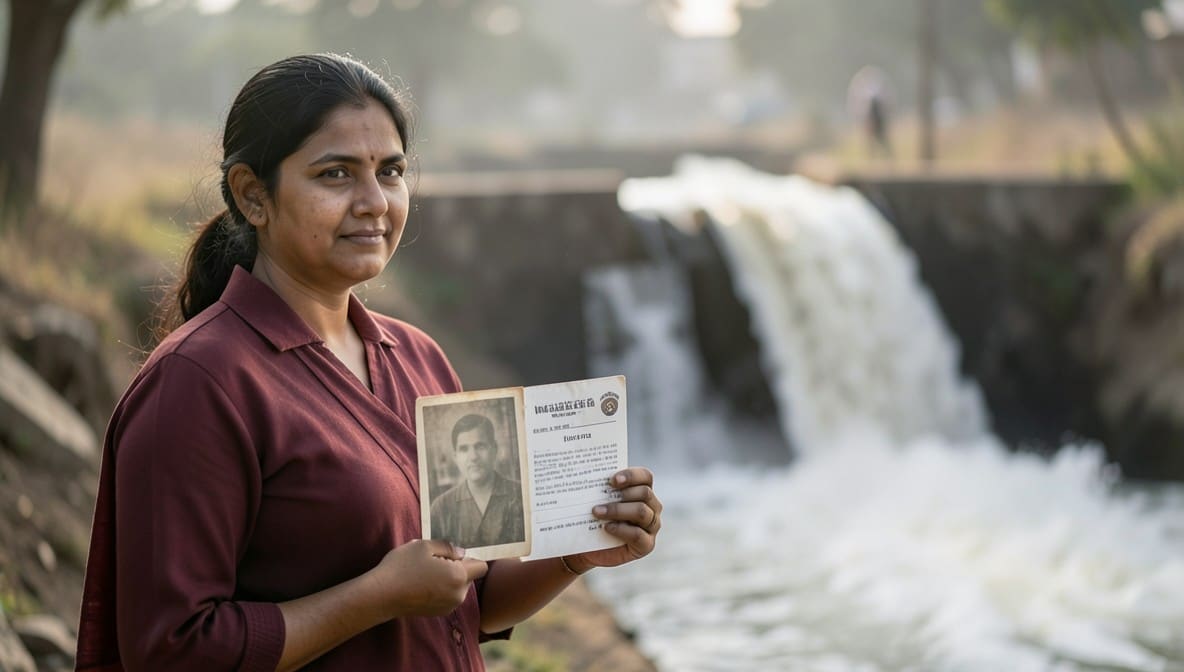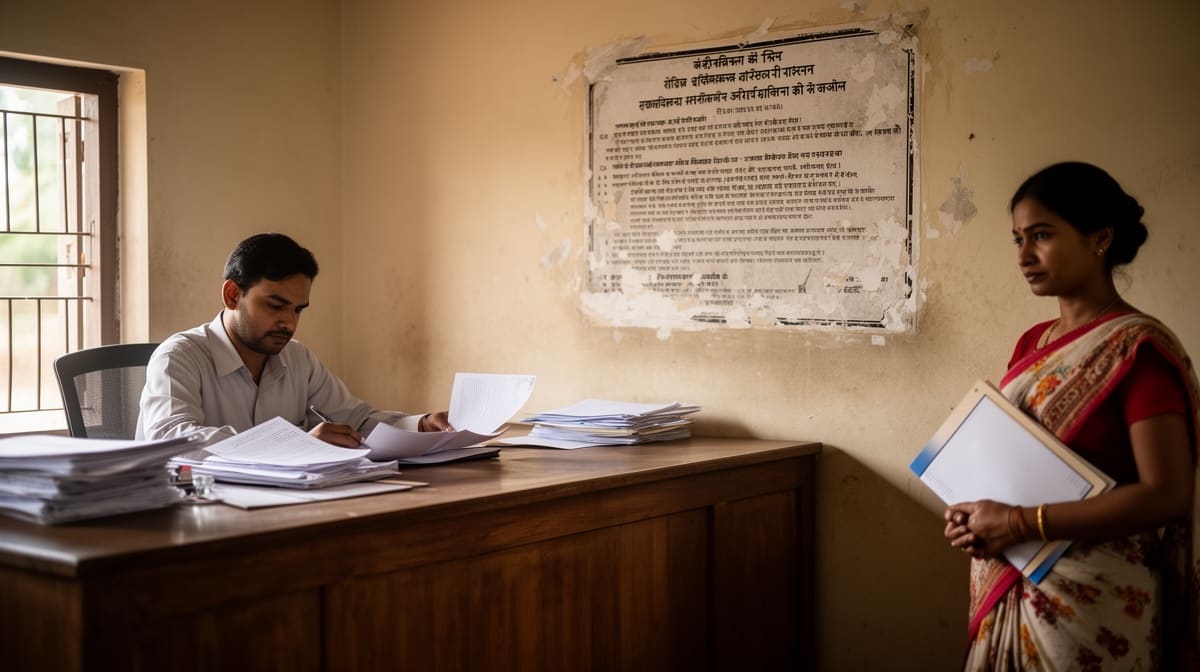
The Madras High Court has definitively held that Revenue authorities cannot issue legal heir certificates based solely on the presumption of death under the Bharatiya Sakshya Adhiniyam, 2023. The judgment reinforces that only a declaratory decree from a competent Civil Court can establish civil death for the purpose of succession benefits, closing a long-standing administrative ambiguity.
Background & Facts
The Dispute
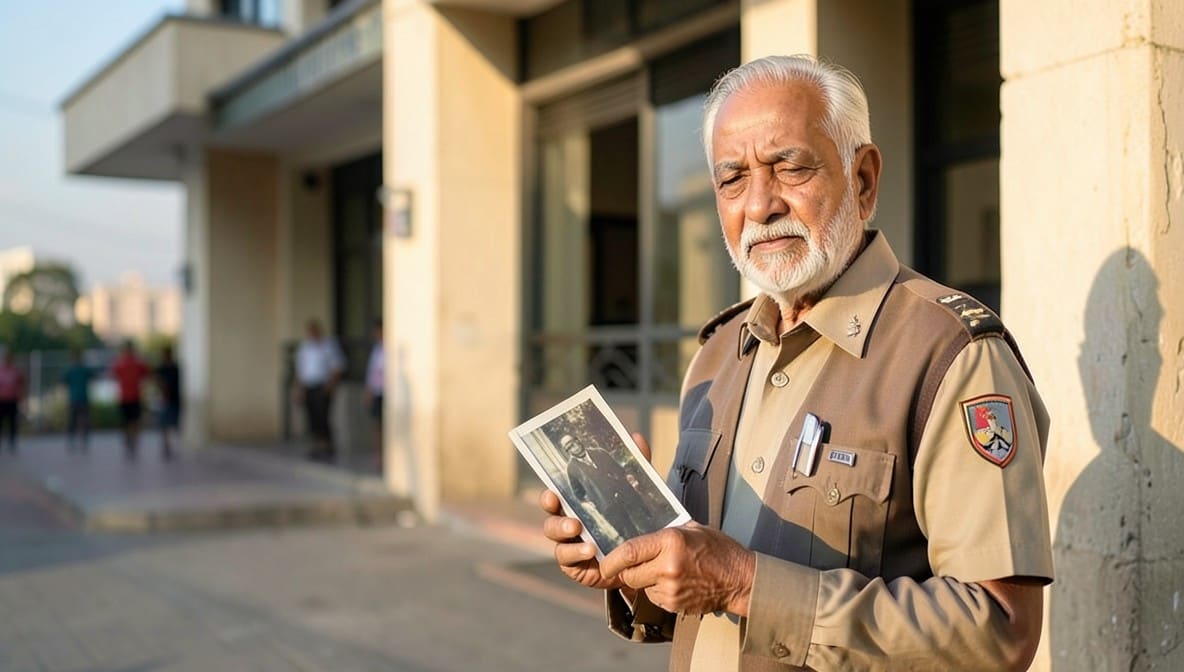
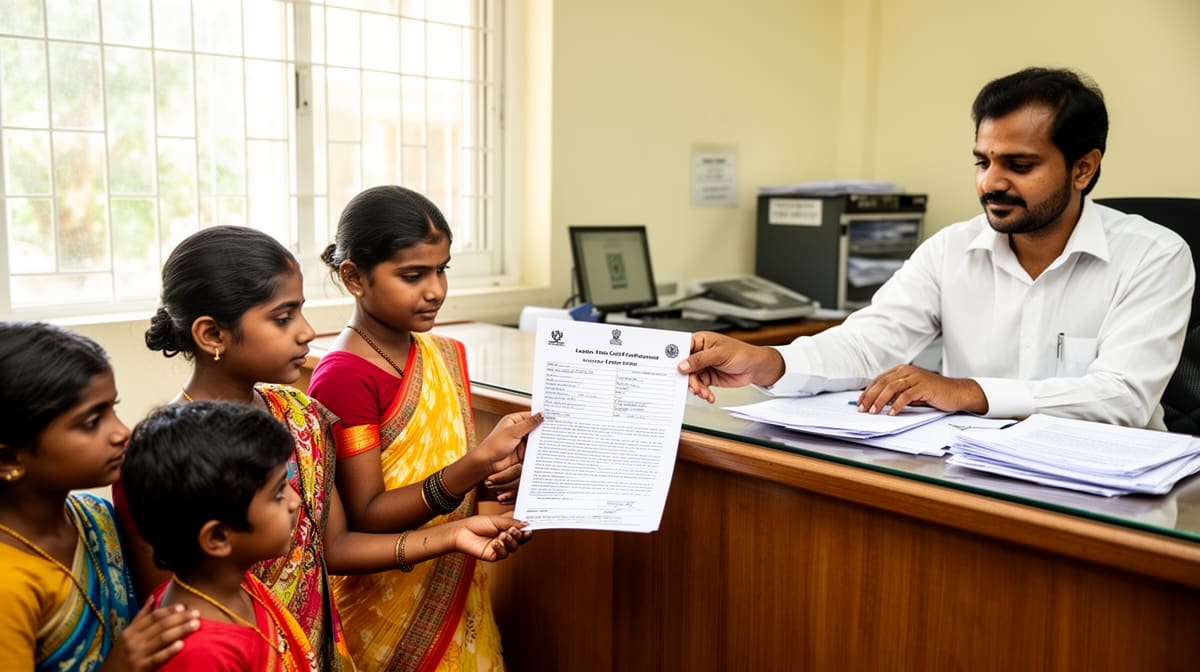
The petitioner, Neelaveni, sought a Legal Heir Certificate for her husband, Manivasagam, son of Palanisamy, who went missing on 14.02.2006. After more than seven years of absence, she applied to the Revenue Authorities for issuance of a death certificate and subsequent legal heir certificate. The respondents, including the Tahsildar and District Revenue Officer, rejected her application by order dated 27.05.2025, directing her to obtain a declaration of civil death from a Civil Court under Sections 107 and 108 of the Bharatiya Sakshya Adhiniyam (BSA), 2023, which replaced the Indian Evidence Act, 1872.
Key Facts
- The petitioner’s husband, Manivasagam, was last seen on 14.02.2006 and has remained untraceable since
- The petitioner applied for a death certificate and legal heir certificate on or before 2024
- Revenue Authorities relied on G.O.Ms.No.324 dated 28.06.2023, which mandates civil court declaration for presumption of death cases
- The petitioner filed a Civil Suit before the Principal District Munsif Court, Tiruppur, which was returned on the ground that Revenue Authorities are the competent forum - a position later found legally untenable
- The suit was not re-filed
- The Government of Tamil Nadu issued G.O.Ms.No.478 dated 29.09.2022, Paragraph 3(2), which explicitly requires a court decree for persons missing for seven years
- Administrative circulars dated 28.11.1991 and 09.08.2017 prohibit Tahsildars from issuing legal heir certificates in cases of presumed death
Procedural History
- 14.02.2006: Husband went missing
- 2024: Petitioner submitted application for legal heir certificate to Revenue Authorities
- 27.05.2025: Impugned order passed by 2nd Respondent directing petitioner to approach Civil Court
- Before 27.05.2025: Civil Suit filed before Principal District Munsif Court, Tiruppur, and returned
- 16.03.2026: Writ Petition No.33914 of 2025 filed before Madras High Court
The Parties' Positions
Relief Sought
The petitioner sought quashing of the order dated 27.05.2025 and a direction to the respondents to issue the Legal Heir Certificate based on the presumption of death under Section 107 of BSA.
The Legal Issue
Can Revenue Authorities issue a Legal Heir Certificate based on the presumption of death under Section 107 of the Bharatiya Sakshya Adhiniyam, 2023, without a prior declaratory decree from a competent Civil Court?
Arguments Presented
For the Petitioner
The petitioner’s counsel argued that the seven-year absence of the husband triggered the presumption of death under Section 107 of BSA, which is a statutory presumption available to administrative authorities. He contended that the Revenue Authorities, being statutorily empowered to issue legal heir certificates under G.O.Ms.No.581 dated 03.04.1987, are equally competent to apply this presumption without requiring a civil court decree. He relied on administrative convenience and the spirit of the 2022 Guidelines, which he claimed did not explicitly bar executive determination.
For the Respondent
The Additional Advocate General contended that Section 107 of BSA is a provision on burden of proof, not a substantive rule for administrative decision-making. He cited the Division Bench judgment in S.Panjavarnam v. Tahsildar (W.P.(MD) No.18886 of 2024) and the Full Bench decision in P.Venkatachalam v. Tahsildar (W.P.(MD) No.25247 of 2021), which held that civil death is a legal status requiring judicial determination. He emphasized that Revenue Officers lack the procedural machinery to evaluate evidence, hear witnesses, or adjudicate competing claims - functions reserved for Civil Courts.
The Court's Analysis
The Court undertook a detailed examination of Section 107 of the Bharatiya Sakshya Adhiniyam, 2023, which corresponds to Section 107 of the Indian Evidence Act. It held that this provision governs the burden of proof - not the substantive power to declare civil death. The Court observed:
"The expression burden of proof is explained in Section 101 of the Act and it commenced as below: ‘whoever desires any Court to give judgment as to any legal right or liability dependent on the existence of facts which he asserts, must prove that those facts exist.’"
The Court clarified that while the petitioner may rely on the presumption to discharge her burden in a Civil Suit, the presumption itself cannot be invoked by an executive officer to determine legal status. The Full Bench in P.Venkatachalam had already held that a Legal Heir Certificate issued by a Tahsildar is merely a relationship certificate reflecting administrative opinion - it does not confer legal heir status under personal law.
The Court further noted that the 2022 Guidelines and 2017 Circular explicitly require a civil court decree for persons missing for seven years. The Court rejected the petitioner’s argument that administrative convenience overrides legal procedure, stating:
"The declaration of the civil death of a person is a very serious matter, which cannot be done by a statutory authority empowered to issue a death certificate or by any court casually and in haste."
The Court also distinguished between the power to issue a certificate and the power to determine legal status. It held that mandamus under Article 226 cannot be used to compel an executive to issue a certificate where the underlying legal status has not been judicially established.
The Verdict
The writ petition was dismissed. The Court upheld the order dated 27.05.2025, holding that the petitioner must obtain a declaratory decree from a competent Civil Court under Section 107 of the Bharatiya Sakshya Adhiniyam, 2023, before the Revenue Authorities can issue a Legal Heir Certificate. The petitioner is at liberty to re-file the suit in the Principal District Munsif Court, Tiruppur. No costs were awarded.
What This Means For Similar Cases
Civil Court Declaration Is Mandatory for Presumed Death Claims
- Practitioners must advise clients to file a declaratory suit under Section 107 of BSA before approaching Revenue Authorities for legal heir certificates in cases of seven-year absence
- Applications to Tahsildars based solely on absence will be rejected without a court decree
- Administrative circulars (e.g., 2017, 2022) are binding on officials and cannot be bypassed by invoking presumption
Revenue Authorities Lack Adjudicatory Powers
- Tahsildars are not empowered to evaluate evidence, hear witnesses, or resolve disputes over succession
- Any attempt to issue a legal heir certificate without a court decree exposes the authority to judicial review
- Legal heirs must be prepared to litigate in Civil Courts even if the deceased has been missing for over seven years
Administrative Circulars Are Binding Unless Arbitrary
- Circulars issued under G.O.Ms.No.581 dated 03.04.1987 are binding on Revenue Officers
- Courts will not interfere unless the circular is arbitrary, perverse, or contrary to law
- Practitioners should challenge circulars only on grounds of illegality, not inconvenience