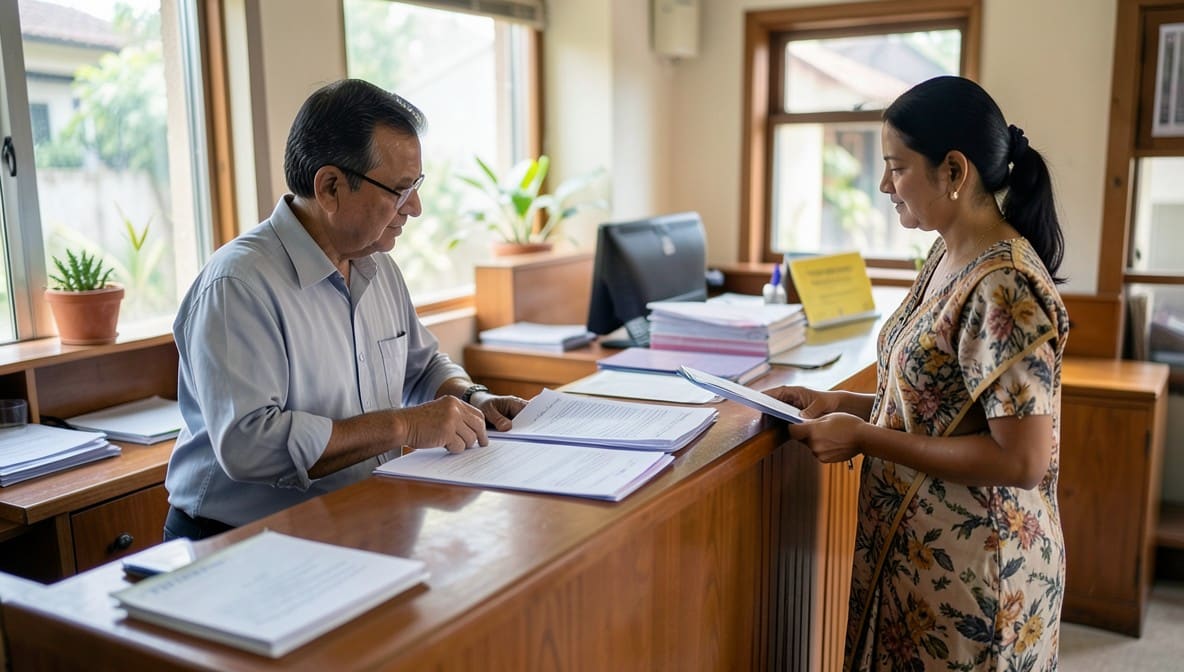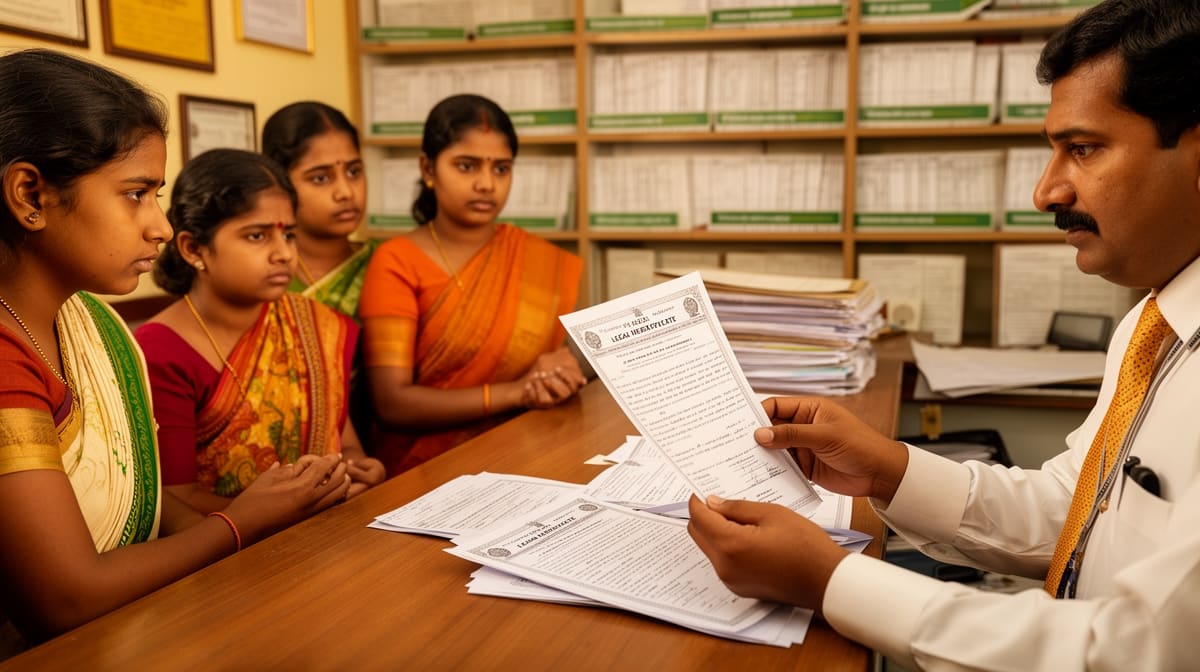
The Madras High Court has affirmed that the sole legal heir of a deceased person cannot be denied a legal heir certificate merely due to non-residence with the deceased or objections raised by other family members. This ruling clarifies the procedural and substantive rights of heirs under administrative law and reinforces the primacy of documented lineage over speculative claims.
Background & Facts
The Dispute
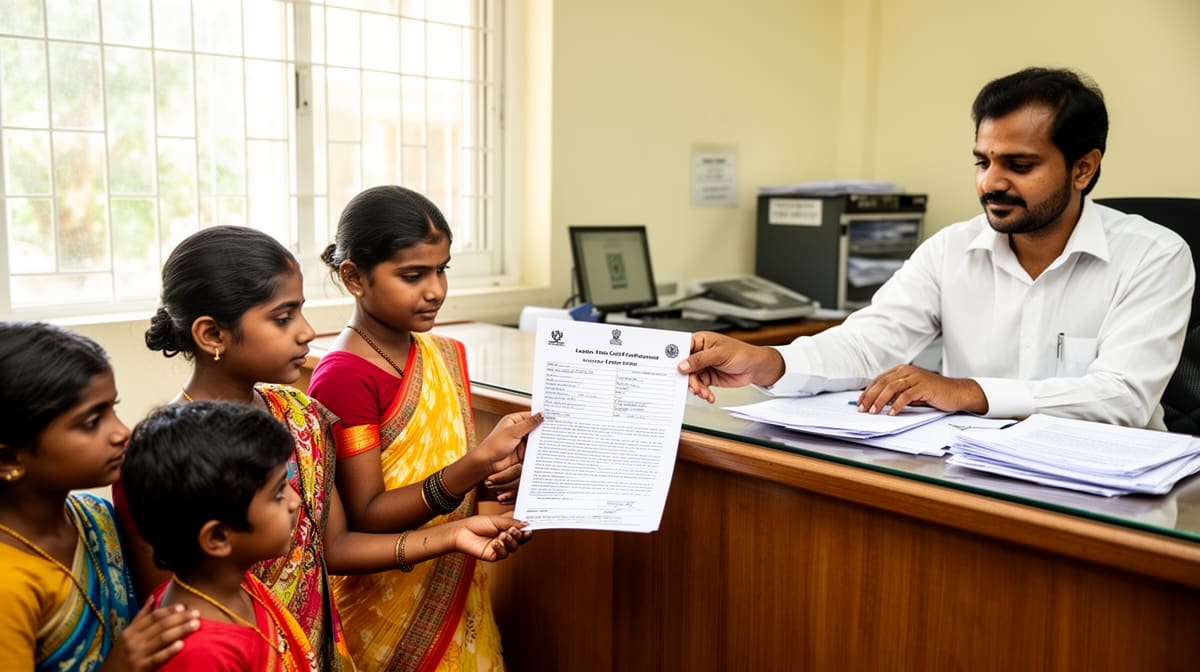
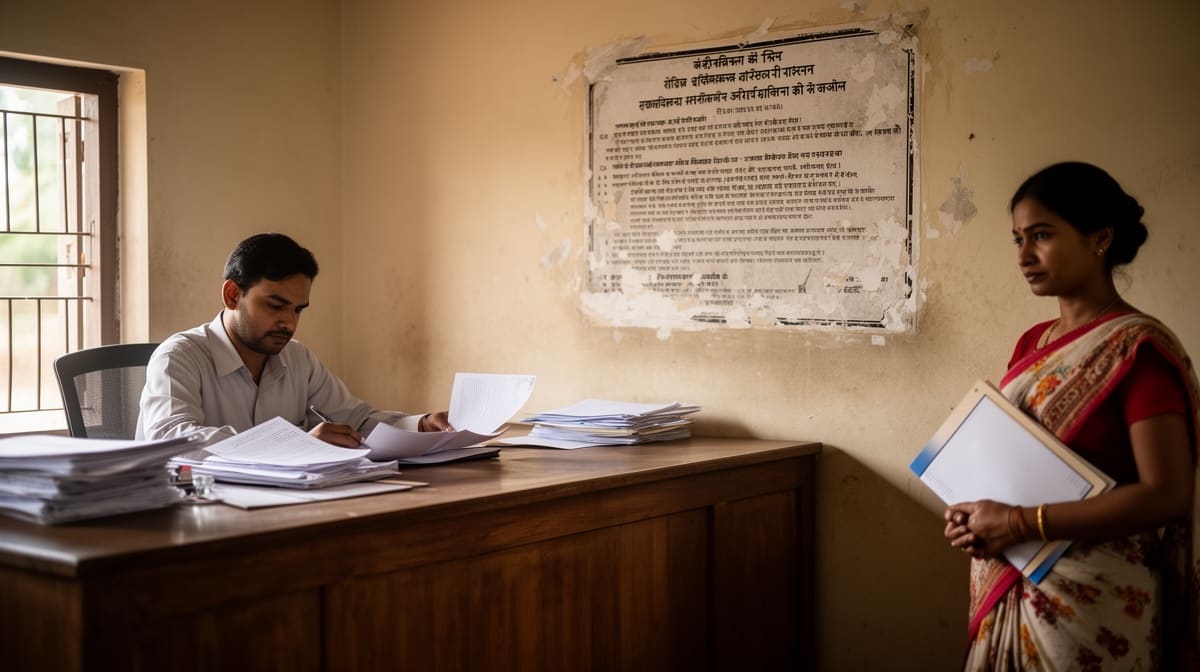
The petitioner, J. Abishek, sought a Legal Heir Certificate for his deceased father, Jayakumar, who died on 19.05.2025 while in service as Senior Assistant with New India Assurance Company Limited, Tiruvannamalai. The petitioner applied online on 14.06.2025 under Reference No. TNTACCBE002000056126. The third respondent, the Tahsildar of Thirupathur District, rejected the application without conducting a proper inquiry, citing objections from Jayakumar’s other children - siblings of the petitioner - who claimed the petitioner did not reside with his father and that a will existed in their favour.
Key Facts
- The petitioner’s mother, Revathi, died on 02.03.2012.
- Jayakumar, the petitioner’s father, died on 19.05.2025.
- Jayakumar’s paternal grandparents had predeceased him.
- The petitioner is the only son of Jayakumar and Revathi.
- The petitioner submitted the following documents to the Tahsildar: Transfer Certificate, Birth Certificate, and Legal Heir Certificate of his deceased mother, Revathi.
- No other legal heirs were identified or produced by the objecting siblings.
- The Tahsildar rejected the application on 14.06.2025 without recording evidence or providing an opportunity of hearing to the petitioner.
- The objecting siblings did not produce any will or testamentary document to substantiate their claim.
Procedural History
- 19.05.2025: Death of Jayakumar, Senior Assistant, New India Assurance Company Limited.
- 02.03.2012: Death of Revathi, mother of the petitioner.
- 14.06.2025: Petitioner filed online application for Legal Heir Certificate (Ref. No. TNTACCBE002000056126).
- 14.06.2025: Tahsildar rejected the application without inquiry or notice to the petitioner.
- 01.04.2026: Writ Petition No. 12187 of 2026 filed before the Madras High Court under Article 226 of the Constitution.
- 01.04.2026: Petition taken up for final disposal at admission stage by consent of parties.
The Parties' Positions
Petitioner’s Position: The petitioner is the sole surviving legal heir of Jayakumar and Revathi. Non-residence with the deceased father does not extinguish inheritance rights. The objections raised by siblings are unsubstantiated and cannot override documentary proof of parentage. The rejection was arbitrary and violated principles of natural justice.
Respondents’ Position: The Government Advocate conceded that if the petitioner submitted a death certificate and other relevant documents, the Tahsildar would consider the application after providing an opportunity of hearing to interested parties, and issue an order within a reasonable time.
Relief Sought
The petitioner sought:
- Quashing of the rejection order dated 14.06.2025.
- A direction to the Tahsildar to issue the Legal Heir Certificate declaring the petitioner as the sole legal heir of Jayakumar.
The Legal Issue
The central question was whether the rejection of an application for a Legal Heir Certificate on the grounds of non-residence with the deceased and unsubstantiated objections from other family members violates the legal rights of the sole documented heir under Indian succession law and administrative procedure.
Arguments Presented
For the Petitioner
The petitioner’s counsel argued that under the Tamil Nadu Legal Heir Certificate Rules and general principles of inheritance, the sole son of a deceased person, supported by birth and parentage documents, is entitled to a Legal Heir Certificate. Non-residence is not a legal ground to deny inheritance rights. The objections raised by siblings were speculative, unsupported by any document, and amounted to an attempt to circumvent statutory procedure. The Tahsildar’s refusal without inquiry violated the principles of natural justice and Article 14 of the Constitution.
For the Respondent
The Government Advocate for the State respondents conceded that the Tahsildar had acted prematurely by rejecting the application without due process. The Advocate stated that upon submission of requisite documents - including a death certificate - the Tahsildar would conduct a limited inquiry, hear all interested parties, and issue an order within a reasonable time, as directed by the Court.
The Court's Analysis
The Court examined the nature of a Legal Heir Certificate under the Tamil Nadu Revenue Administration Rules and observed that it is a quasi-judicial administrative function designed to establish lineage for purposes of claiming benefits, pensions, or property. The Tahsildar, as a revenue officer, is obligated to act impartially and on the basis of evidence, not suspicion.
"Merely because the petitioner was not residing with the petitioner's father, deceased Jayakumar, that will not curtail the right of the petitioner in claiming the legal heir certificate of his deceased father and further, it is also to be noted that merely, because the other siblings of the deceased has raised objection in grant of legal heir certificate, that cannot be a ground to reject the petitioner's legal right being the son of the deceased, from claiming the legal heir certificate in his favour."
The Court emphasized that the petitioner had produced prima facie documentary evidence - birth certificate, transfer certificate, and legal heir certificate of the mother - which established his status as the sole surviving child. The burden then shifted to the objecting siblings to produce credible evidence, such as a valid will or proof of adoption or disinheritance, none of which were submitted. The Tahsildar’s refusal without inquiry was arbitrary and procedurally flawed.
The Court further held that administrative authorities cannot act as arbiters of family disputes without due process. The issuance of a Legal Heir Certificate is not a determination of title or ownership, but a recognition of lineage for administrative purposes. The Tahsildar’s role is to verify documents and record facts, not to adjudicate contested claims without a hearing.
The Verdict
The writ petition was allowed. The Court set aside the rejection order dated 14.06.2025 and remanded the matter to the Tahsildar for fresh consideration. The Tahsildar was directed to conduct a limited inquiry, examine the documents submitted by the petitioner, and issue the Legal Heir Certificate in favour of the petitioner on or before 16.04.2026. No costs were awarded.
What This Means For Similar Cases
Non-Residence Cannot Be a Ground for Denial
- Practitioners must argue that absence from the deceased’s household does not affect legal heir status under Indian succession law.
- Administrative officers cannot use residency as a proxy for legitimacy of inheritance claims.
- Birth certificates, parentage records, and death certificates are sufficient prima facie evidence for issuance of a Legal Heir Certificate.
Objections Require Documentary Substantiation
- Sibling objections without supporting documents (e.g., will, adoption deed, court decree) are legally insufficient to block issuance.
- The Tahsildar must record objections but cannot deny the certificate unless credible evidence is produced.
- The burden of proof lies with the objecting party, not the applicant.
Procedural Fairness Is Mandatory
- Denial of a Legal Heir Certificate without notice or hearing violates natural justice.
- All such applications must be processed with a reasonable opportunity for the applicant to respond to objections.
- Courts will intervene under Article 226 where administrative inaction or arbitrary refusal deprives a rightful heir of statutory benefits.