The Bombay High Court has clarified a critical ambiguity in driver licensing under the Motor Vehicles Act, holding that a Light Motor Vehicle (LMV) licence suffices to operate a transport vehicle under 7,500 kg, thereby upholding liability on insurers even when the driver lacks a separate transport vehicle endorsement. This ruling resolves a recurring defence raised by insurers in accident claims and reinforces the principle that statutory compliance must be interpreted in light of legislative intent and evolving regulatory frameworks.
Background & Facts
The Dispute
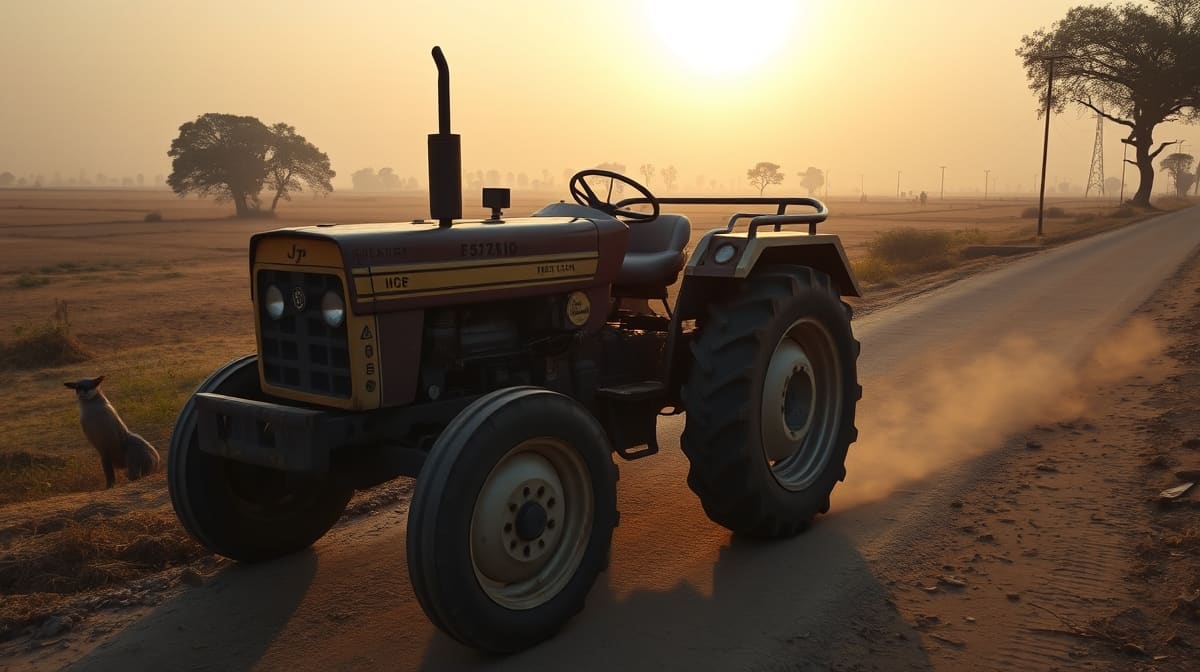
The dispute arose from a fatal motor accident on 31.10.2007, in which Gangadhar Narwade, the deceased, was riding his Hero Honda motorcycle (MH-20 AH-3587) when he was struck by a tractor (MH-20 AB-1691) driven by Respondent No. 8, Dnyaneshwar s/o Hema Rathod. The collision resulted in Gangadhar’s immediate death. His legal heirs - Respondents Nos. 1 to 6 - filed a death claim petition under Section 166 of the Motor Vehicles Act before the Motor Accident Claims Tribunal, Aurangabad, seeking compensation for loss of dependency, funeral expenses, and other damages.
Key Facts
- The tractor involved had a gross vehicle weight below 7,500 kg and was classified as a transport vehicle under the Motor Vehicles Act
- The driver, Dnyaneshwar, held a valid LMV licence issued under Section 10(2)(d) of the Motor Vehicles Act
- The tractor was not endorsed with a separate transport vehicle authorisation in the licence
- The appellant, United India Insurance Co. Ltd., was the insurer of the tractor
- The claimants sought compensation of Rs. 12,98,500/-, including interest at 9% per annum
- The insurer contended that the driver’s lack of a transport vehicle endorsement rendered the policy void and exempted it from liability
Procedural History
- 31.10.2007: Fatal accident occurred
- 2007: Claim petition (MACP No. 866 of 2007) filed before Motor Accident Claims Tribunal, Aurangabad
- 18.09.2012: Tribunal awarded Rs. 12,98,500/- jointly and severally against the driver, owner, and insurer, rejecting insurer’s defence of invalid licence
- 2013: First Appeal No. 2142 of 2013 filed by United India Insurance Co. Ltd. before the Bombay High Court
- 2015: Civil Application No. 12839 of 2015 filed seeking withdrawal of deposited amount
- 11.03.2026: Judgment reserved
- 18.03.2026: Judgment pronounced
The Parties' Positions
For the Appellant (Insurance Company)
The insurer argued that the driver of the tractor held only an LMV licence and not a separate transport vehicle licence under Section 10(2)(e). It contended that operating a transport vehicle without such endorsement constituted a breach of policy conditions under the Motor Vehicles Act and the insurance contract, thereby absolving it of liability under Section 149(2)(a)(ii). It relied on pre-2024 precedents that treated LMV and transport vehicle licences as distinct.
For the Respondents (Claimants)
The claimants relied on the recent Supreme Court judgment in M/s. Bajaj Alliance General Insurance Co. Ltd. v. Rambha Devi, AIROnline 2024 SC 864, which held that an LMV licence permits operation of transport vehicles under 7,500 kg without requiring a separate endorsement. They argued that the Tribunal correctly applied the law and that the insurer’s defence was legally untenable.
Relief Sought
The appellant sought to set aside the Tribunal’s award and declare it not liable for compensation. The respondents sought dismissal of the appeal and confirmation of the award, including interest and withdrawal of the deposited amount.
The Legal Issue
Whether a driver holding a valid Light Motor Vehicle (LMV) licence under Section 10(2)(d) of the Motor Vehicles Act is legally permitted to operate a transport vehicle with a gross vehicle weight under 7,500 kg, and whether the absence of a separate transport vehicle endorsement invalidates the insurance policy or absolves the insurer of liability under Section 149.
Arguments Presented
For the Appellant
The appellant contended that the driver’s LMV licence did not authorise operation of a transport vehicle, citing Section 10(2)(e) and the Insurance Policy’s condition requiring a valid licence for the vehicle class operated. It argued that the Tribunal erred in ignoring this breach, which rendered the insurance contract void ab initio under Section 149(2)(a)(ii). It relied on older judgments distinguishing LMV and transport vehicle categories.
For the Respondent
The respondents relied on the Supreme Court’s authoritative interpretation in Bajaj Alliance v. Rambha Devi, which held that for licensing purposes, LMVs and transport vehicles under 7,500 kg are not entirely separate classes. The respondents submitted that the insurer’s defence was rendered obsolete by this ruling and that the Tribunal correctly applied the law.
The Court's Analysis
The Court undertook a detailed examination of the statutory framework under the Motor Vehicles Act, particularly Sections 10(2)(d) and 10(2)(e), and the Supreme Court’s judgment in Bajaj Alliance v. Rambha Devi. It noted that the insurer’s argument rested on a pre-2024 interpretation that had been expressly overruled by the Apex Court.
"A driver holding a licence for Light Motor Vehicle (LMV) class, under Section 10(2)(d) for vehicles with a gross vehicle weight under 7,500 kg, is permitted to operate a 'Transport Vehicle' without needing additional authorization under Section 10(2)(e) of the MV Act specifically for the 'Transport Vehicle' class. For licensing purposes, LMVs and Transport Vehicles are not entirely separate classes."
The Court held that the Supreme Court’s observation in paragraph 131 of Bajaj Alliance was binding and dispositive. It emphasized that the legislative intent behind the 2019 amendments and subsequent judicial interpretations was to simplify licensing and reduce technicalities that prejudice victims. The Court found no merit in the insurer’s contention that the absence of a transport vehicle endorsement constituted a policy breach, as the driver was lawfully licensed under the current statutory regime.
The Court further observed that the insurer’s failure to raise this issue before the Tribunal with sufficient evidence, and its reliance on now-obsolete legal positions, rendered its appeal untenable. The Tribunal’s finding that the insurer was liable was therefore legally sound.
The Verdict
The First Appeal was dismissed. The Court upheld the Tribunal’s award of Rs. 12,98,500/- jointly and severally against the driver, owner, and insurer, with interest at 9% per annum from the date of the claim petition. Respondents were permitted to withdraw the amount deposited in court, along with accrued interest. Civil Application No. 12839 of 2015 was disposed of.
What This Means For Similar Cases
LMV Licence Now Covers All Transport Vehicles Under 7,500 kg
- Practitioners must no longer argue that an LMV licence is insufficient for tractors, tempos, or light goods vehicles under 7,500 kg
- Insurers can no longer deny claims on the ground of missing transport vehicle endorsement for such vehicles
- Claimants in similar cases may now rely directly on Bajaj Alliance v. Rambha Devi to defeat insurer defences
Insurer’s Burden to Prove Actual Policy Breach Is Higher
- Insurers must now prove a genuine breach of policy terms - not merely technical non-compliance with outdated licensing categories
- Policy conditions requiring "valid licence for the vehicle class" must be interpreted in light of the Motor Vehicles Act’s current licensing structure
- Failure to challenge licence validity at the Tribunal stage may result in waiver of the defence
Accelerated Settlement in Motor Accident Claims
- Tribunals and High Courts will now uniformly apply Bajaj Alliance to dismiss technical appeals
- This reduces litigation delays and ensures faster compensation to victims
- Legal aid societies and claimant advocates should proactively cite this judgment in all pending cases involving LMV-licensed drivers operating light transport vehicles