A landmark ruling by the Rajasthan High Court has clarified that insurance companies cannot evade liability for accidents involving tractors with trailers weighing under 7,500 kg, provided the driver holds a valid Light Motor Vehicle (LMV) license. The judgment overturns a tribunal’s erroneous imposition of liability on the vehicle owner and driver, reinforcing the Supreme Court’s recent interpretation of the Motor Vehicles Act, 1988.
Background & Facts
The Dispute
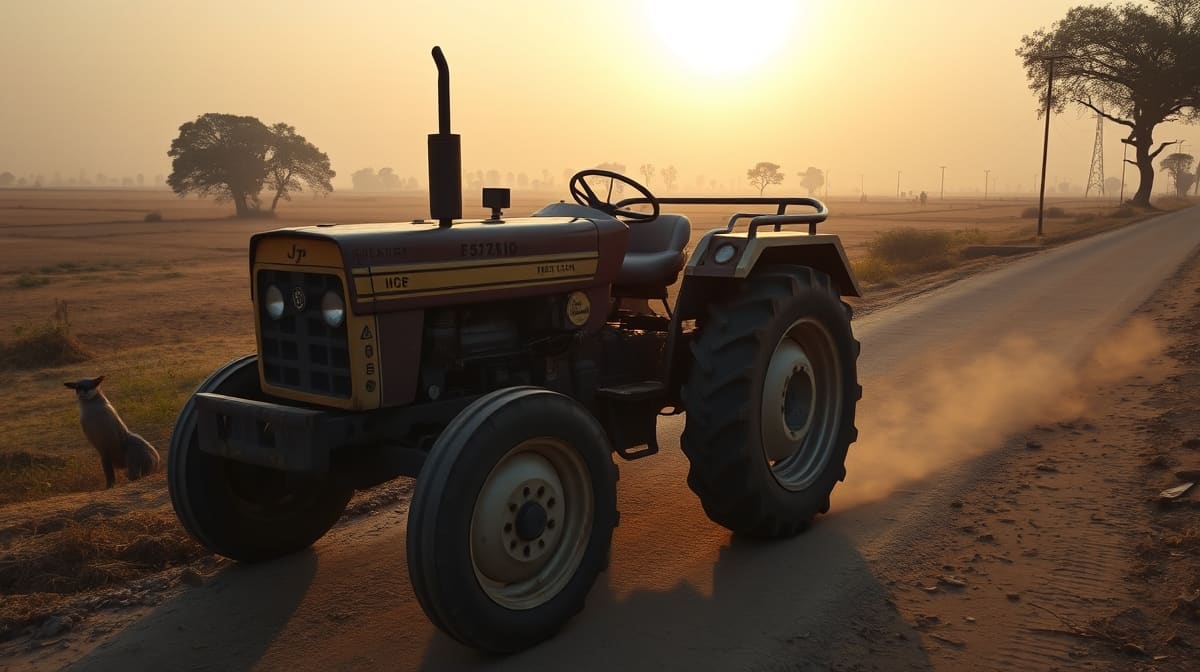
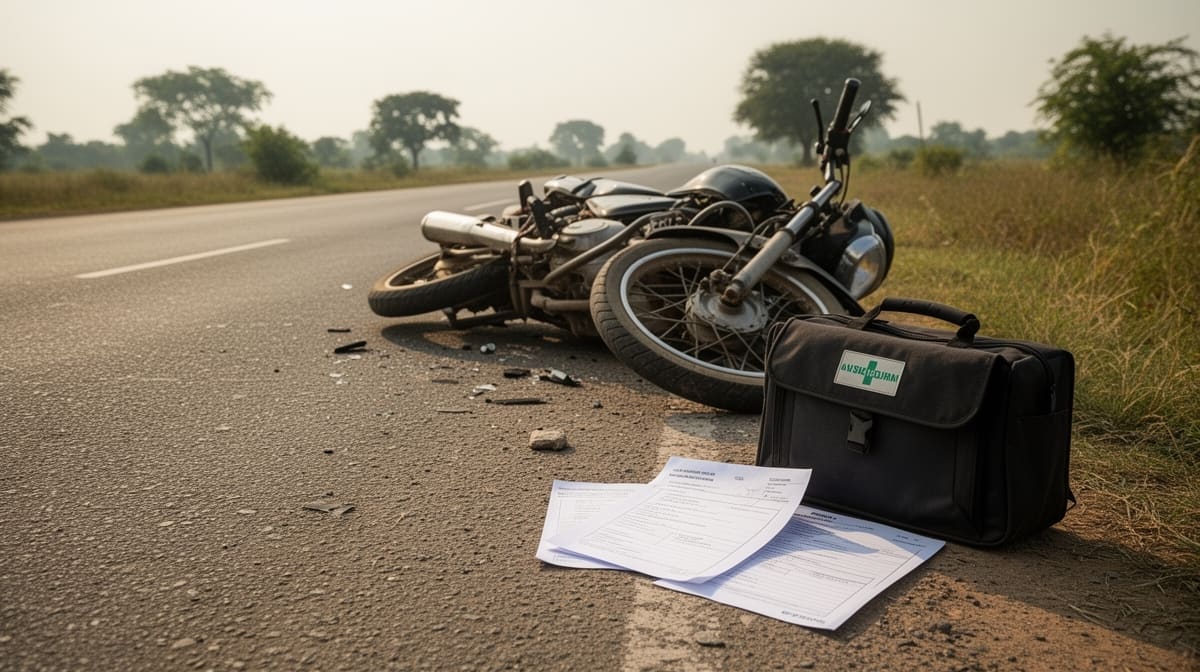
The appellants, Bharat Singh and Jaiprakash, are the owner and driver of Tractor No. RJ18 R 5004, which was towing a trolley used for agricultural purposes. On 27 October 2005, the tractor collided with a scooter carrying two minors - Bhavesh, who died, and Vinay Kumar, who was injured. The claimants, Bhavesh’s parents and sister, filed a compensation petition before the Motor Accident Claims Tribunal, Jhunjhunu.
Procedural History
- 27 October 2005: Accident occurred on a public road in Jhunjhunu.
- 2007: Motor Accident Claims Tribunal awarded Rs. 2,36,000 to claimants, holding appellants liable and allowing the insurer to recover the amount from them.
- 2008: Appellants filed Civil Miscellaneous Appeal No. 3537/2008 before the Rajasthan High Court, challenging the liability allocation.
- 2026: Judgment delivered by Justice Ravi Chirania after detailed analysis of Supreme Court precedents.
Relief Sought
The appellants sought to set aside the tribunal’s finding that they were personally liable for compensation. They argued that the insurance company, which had issued a policy covering both the tractor and the attached trolley, was solely liable under the policy terms and statutory provisions.
The Legal Issue
The central question was whether Section 2(21) and Section 3(1) of the Motor Vehicles Act, 1988, require a separate transport vehicle license for driving a tractor with a trolley under 7,500 kg, and whether an insurer can deny liability on the technical ground that the vehicle was being used for transport.
Arguments Presented
For the Appellant
The appellants relied on two landmark Supreme Court judgments: M/s. Bajaj Alliance General Insurance Co. Ltd. v. Rambha Devi (2025) 3 SCC 95 and Nagashetty v. United India Insurance Co. Ltd. (2001) 8 SCC 56. They argued:
- A tractor with a trolley weighing under 7,500 kg qualifies as a Light Motor Vehicle under Section 2(21).
- A driver holding an LMV license is legally permitted to operate such a vehicle without a separate transport endorsement under Section 10(2)(e).
- The insurance policy explicitly covered trailers, as evidenced by the additional premium of Rs. 12/- for the trolley.
- Denying liability based on the attachment of a trailer would lead to absurd results, as held in Nagashetty.
For the Respondent
The insurance company contended that:
- The tractor, when towing a trolley carrying goods, became a ‘transport vehicle’ under the Act.
- The driver lacked a specific transport vehicle license, rendering the insurance policy void for the purpose of this accident.
- The tribunal’s finding that the driver was negligent and the insurer was not liable was legally sound, citing Natwar Singh v. State of Karnataka (2006 SC 9).
The Court's Analysis
The Court undertook a meticulous statutory interpretation of Section 2(21), Section 3(1), and Section 10(2) of the Motor Vehicles Act, 1988, in light of the Supreme Court’s recent ruling in Bajaj Alliance. The tribunal had relied on Natwar Singh, which was rendered obsolete by the 2025 judgment.
"The licensing regime under the MV Act and the MV Rules, when read as a whole, does not provide for a separate endorsement for operating a ‘Transport Vehicle’, if a driver already holds a LMV license."
The Court emphasized that Section 2(21) explicitly defines a Light Motor Vehicle as one not exceeding 7,500 kg gross weight, regardless of whether a trailer is attached. The Supreme Court in Bajaj Alliance had clarified that the term ‘Transport Vehicle’ in Section 3(1) applies only to medium and heavy vehicles, not those under the 7,500 kg threshold.
The Court further held that the insurance policy’s inclusion of an additional premium for the trolley demonstrated the insurer’s acceptance of the vehicle’s dual use. As per Nagashetty, attaching a trailer does not transform a tractor into a different class of vehicle for licensing or insurance purposes.
The tribunal’s finding that the insurer could recover compensation from the appellants was therefore perverse, as it contradicted both statutory text and binding precedent. The Court rejected the insurer’s technical plea as contrary to the Act’s twin objectives: road safety and victim compensation.
The Verdict
The appellants succeeded in part. The Rajasthan High Court held that the insurance company is solely liable to pay the compensation award of Rs. 2,36,000, as the driver held a valid LMV license and the vehicle’s gross weight was under 7,500 kg. The tribunal’s order imposing personal liability on the owner and driver was quashed.
What This Means For Similar Cases
Insurance Cannot Evade Liability on Technical Grounds
- Practitioners must now argue that insurers cannot deny claims based on the attachment of trailers or temporary transport use if the vehicle’s gross weight is under 7,500 kg.
- Policies covering tractors with trailer endorsements must be honored for all accidents, even when goods are carried.
- Insurers must be held to the terms of their own policies, especially when additional premiums are collected for trailer coverage.
LMV License Covers Agricultural and Light Transport Use
- Drivers holding LMV licenses can legally operate tractors with trailers under 7,500 kg without additional endorsements.
- This applies to farmers, small traders, and rural transport operators who rely on such vehicles for livelihood.
- Enforcement agencies and tribunals must cease issuing notices or imposing penalties on LMV license holders for operating tractors with trailers.
Statutory Interpretation Must Be Harmonious
-
Courts must interpret Section 2(21) and Section 3(1) together to avoid rendering either provision redundant.
-
The 1994 amendment to Section 10(2) was intended to simplify licensing, not create artificial distinctions.
-
Any future litigation must cite Bajaj Alliance as controlling authority on LMV-transport vehicle overlap.
-
Practitioners should immediately review pending claims involving tractors with trailers under 7,500 kg and file appeals or applications for modification.
-
Insurance companies must update their underwriting guidelines to reflect that LMV license holders are covered for tractor-trailer combinations under the weight limit.
-
Legal aid clinics and rural litigants can now confidently pursue claims without fear of being held personally liable due to technical licensing errors.