The National Consumer Disputes Redressal Commission has clarified a critical distinction in motor vehicle licensing under the Motor Vehicles Act, 1988, rejecting the notion that a Light Motor Vehicle licence permits operation of a motorcycle. This ruling reinforces statutory compliance as a non-negotiable condition for insurance claims, particularly in personal accident coverage.
Background & Facts
The Dispute
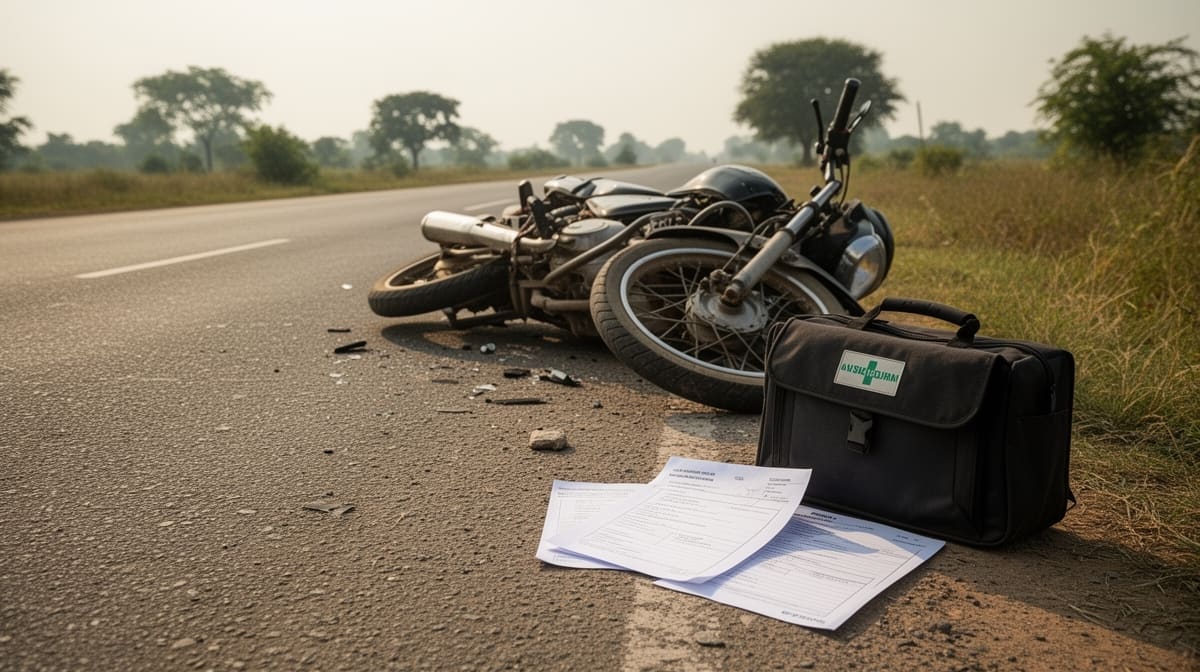
The dispute arose from the repudiation of a personal accident insurance claim following the fatal accident of Ajit Singh, the registered owner and driver of motorcycle HR-14H-6894. The deceased was covered under a comprehensive insurance policy issued by United India Insurance Co. Ltd. for the period 08.11.2013 to 07.11.2014, which included an additional personal accident cover of Rs. 1,00,000 for the owner-driver, subject to policy terms. The policy required the driver to hold a valid and effective driving licence for the class of vehicle being operated.
Key Facts
- The insured motorcycle was involved in an accident on 01.04.2014 at Village Badli, District Jhajjar, Haryana.
- Ajit Singh sustained fatal injuries and died on 03.04.2014.
- FIR No. 140 was registered at PS Sadar Bahadurgarh on 02.04.2014.
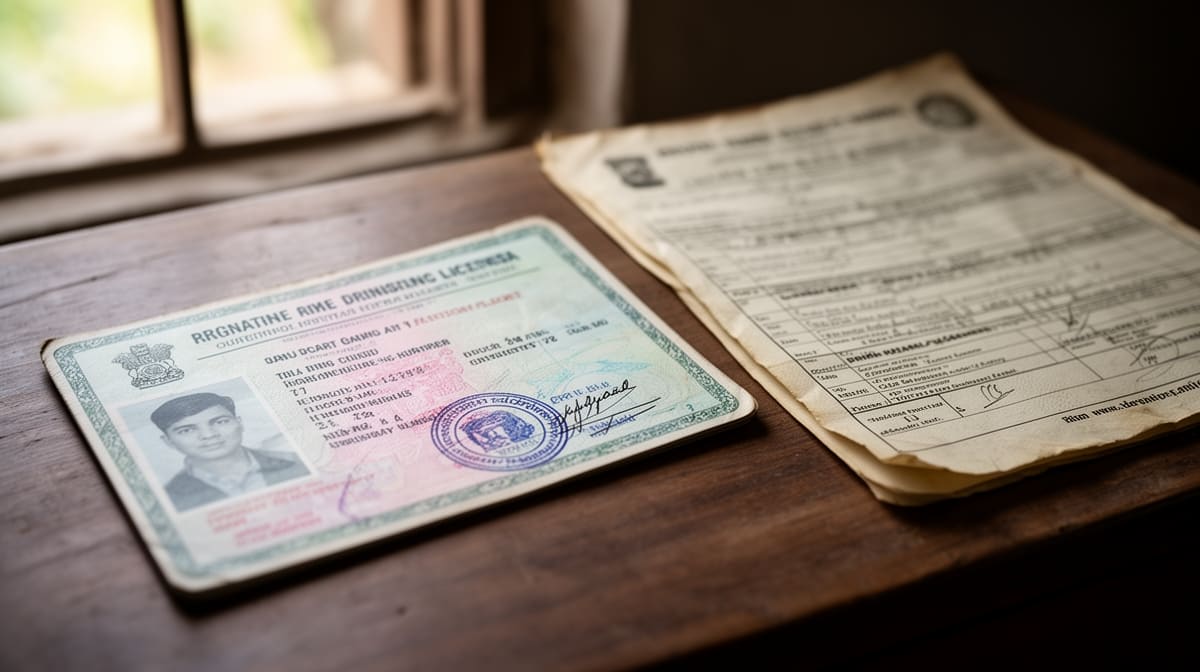
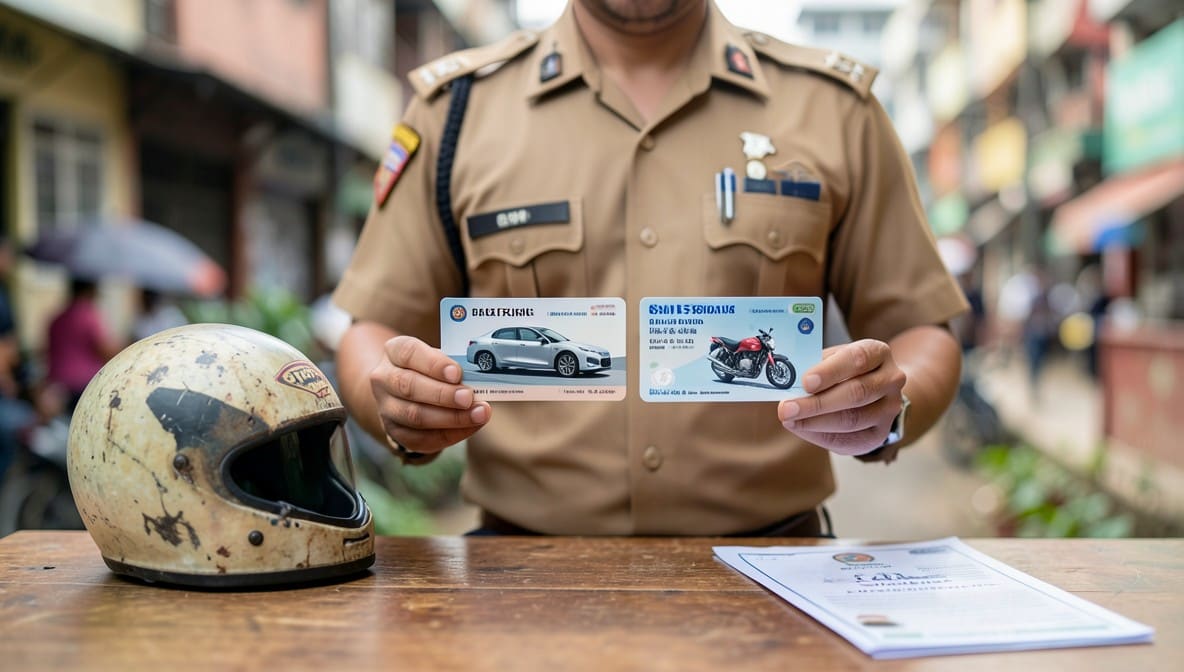
- The deceased held a driving licence issued by the Transport Department, Government of NCT of Delhi, valid from 13.06.2013 to 12.06.2016, authorizing him to drive Light Motor Vehicle (LMV) commercial vehicles only.
- The licence did not carry any endorsement for driving motorcycles.
- The insurer appointed a surveyor on 09.05.2014 and issued a repudiation letter on 12.06.2015, citing lack of valid motorcycle licence as the ground.
- The complainants, parents and nominees of the deceased, filed a complaint before the District Consumer Forum on 15.07.2015 seeking Rs. 1,00,000 for personal accident, Rs. 50,000 for mental agony, and Rs. 5,500 as litigation expenses.
Procedural History
- 15.07.2015: Complaint filed before District Consumer Disputes Redressal Forum, Jhajjar (C.C. No. 178/2015)
- 26.08.2016: District Forum allowed the claim, directing payment of Rs. 1,00,000 with 9% interest from 03.04.2014 and Rs. 5,500 as litigation costs
- 27.09.2017: Haryana State Consumer Commission dismissed the insurer’s appeal, affirming the District Forum’s order, relying on Mukand Dewangan v. Oriental Insurance Co. Ltd.
- 02.03.2026: Revision Petition heard ex parte before NCDRC, New Delhi
- 18.03.2026: NCDRC delivered judgment allowing the revision petition
Relief Sought
The petitioner sought setting aside of the orders dated 26.08.2016 and 27.09.2017, dismissal of the consumer complaint, and a declaration that the claim was invalid due to statutory non-compliance with driving licence requirements.
The Legal Issue
The central question was whether a person holding a driving licence for Light Motor Vehicle (LMV) commercial vehicles is legally authorized to drive a motorcycle under Section 10(2) of the Motor Vehicles Act, 1988, and whether repudiation of a personal accident claim on this ground is valid under the policy terms.
Arguments Presented
For the Appellant/Petitioner
The insurer contended that motorcycles and LMVs are distinct vehicle classes under Section 10(2) of the Motor Vehicles Act, 1988. A licence for LMV does not, by default, authorize operation of a motorcycle unless a specific endorsement is granted. The insurer relied on Bajaj Allianz General Insurance Co. Ltd. v. Akram Hussain & Ors. and M/s. Bajaj Allianz Insurance Co. Ltd. v. Rambha Devi & Anr., both affirming strict adherence to statutory classifications. The State Commission’s reliance on Mukand Dewangan was misplaced, as that case dealt only with the overlap between LMV and transport vehicles, not motorcycles.
For the Respondent/State
No appearance was made on behalf of the respondents. The claimants’ arguments, as reflected in the lower orders, were that an LMV licence holder could drive a motorcycle due to similar mechanical operation, and that the Supreme Court’s decision in Mukand Dewangan supported this view. They also argued that delay in intimation was immaterial since the police were promptly informed.
The Court's Analysis
The Commission undertook a detailed statutory interpretation of Section 10(2) and Section 2(21) of the Motor Vehicles Act, 1988. It observed that the Act categorizes vehicles into distinct classes: motorcycle without gear, motorcycle with gear, Light Motor Vehicle, and transport vehicle. The definition of "Light Motor Vehicle" explicitly excludes motorcycles, which are separately enumerated.
"A motorcycle constitutes a separate and distinct class of vehicle from an LMV. The definition of 'Light Motor Vehicle' under Section 2(21) of the Act refers to a transport vehicle or omnibus whose gross vehicle weight does not exceed 7500 kg... A motorcycle does not fall within this definition."
The Court distinguished Mukand Dewangan v. Oriental Insurance Co. Ltd., noting that the Supreme Court therein addressed only whether an LMV licence holder could drive a transport vehicle under 7500 kg, not a motorcycle. The NCDRC emphasized that Mukand Dewangan did not create a blanket equivalence between all vehicle classes.
Further, the Court cited M/s. Bajaj Allianz Insurance Co. Ltd. v. Rambha Devi & Anr. (decided 06.11.2024), where the Supreme Court reaffirmed that licensing must be interpreted strictly in accordance with the classification under Section 10(2). The Court held that the absence of a motorcycle endorsement rendered the deceased’s licence invalid for the purpose of operating the insured vehicle.
The policy condition requiring a valid licence for the class of vehicle driven was unambiguous. The insurer’s repudiation was not arbitrary but grounded in statutory non-compliance. The Court rejected the argument that delay in intimation could override the fundamental requirement of a valid licence, noting that the policy’s validity hinges on compliance with legal mandates, not procedural leniency.
The Verdict
The Revision Petition was allowed. The orders dated 26.08.2016 of the District Forum and 27.09.2017 of the Haryana State Commission were set aside. The consumer complaint was dismissed in its entirety. The insurer’s repudiation of the personal accident claim was upheld as lawful. There shall be no order as to costs.
What This Means For Similar Cases
Valid Driving Licence Is a Condition Precedent for Insurance Claims
- Practitioners must verify the exact class of vehicle and corresponding licence endorsement before filing or defending insurance claims
- Claims based on personal accident coverage for owner-drivers will fail if the licence does not match the vehicle class as per Section 10(2)
- Insurers may now confidently repudiate claims where the licence is mismatched, even if the driver is otherwise competent
Statutory Classification Trumps Judicial Assumptions
- Courts cannot substitute statutory definitions with practical assumptions (e.g., "if you can drive a car, you can drive a bike")
- Lower forums must distinguish between cases involving LMV-transport vehicle overlap and LMV-motorcycle distinctions
- Reliance on Mukand Dewangan is now limited to transport vehicles under 7500 kg and cannot be extended to motorcycles
Policy Terms Must Be Interpreted in Light of Statutory Framework
- Insurance policies cannot override statutory licensing requirements
- Any clause requiring a "valid licence" must be read in conjunction with the Motor Vehicles Act
- Delay in intimation or police reporting cannot cure a fundamental breach of statutory compliance