The Punjab and Haryana High Court has delivered a pivotal clarification on the commencement of limitation under Section 56 of the Electricity Act, 2003, affirming that the two-year limitation period for recovery of electricity dues begins only upon issuance of a formal demand notice - not from the date of erroneous billing. This ruling resolves a recurring ambiguity in utility recovery proceedings and reinforces procedural fairness for both licensees and consumers.
Background & Facts
The Dispute
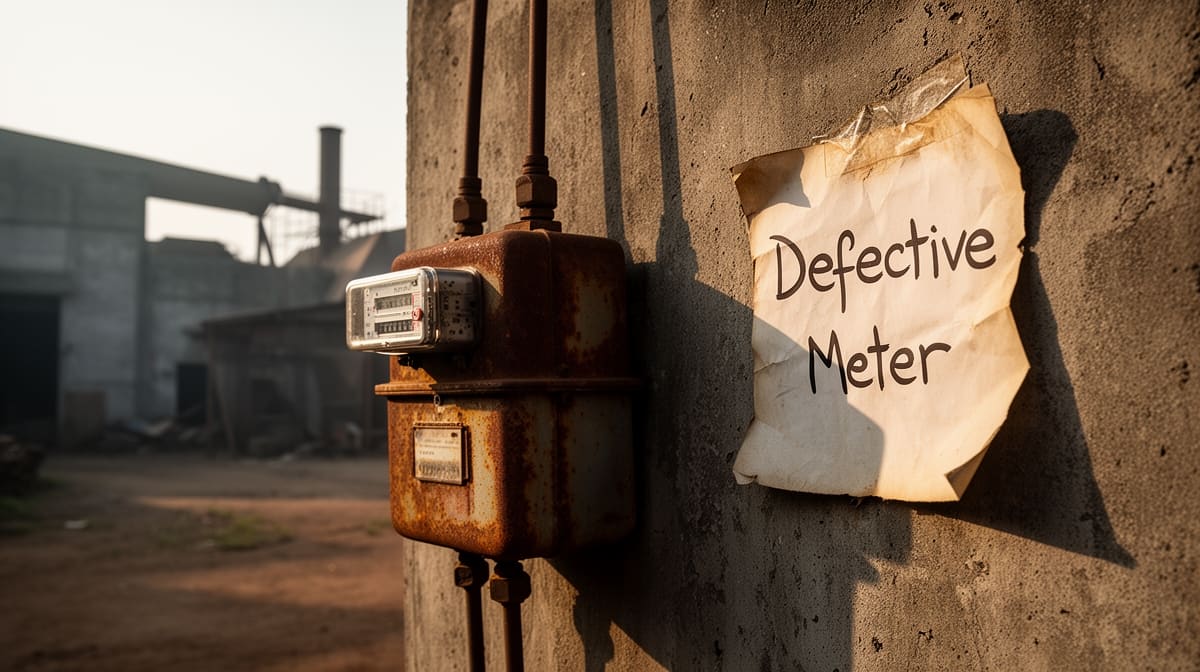
The petitioner, Uttar Haryana Bijli Vitran Nigam Ltd., discovered a clerical error in the billing of respondent M/s J.B. Stone Crusher, a non-domestic consumer. Between May 2017 and March 2018, the respondent’s electricity consumption was billed using a multiplying factor of 0.15 instead of the correct factor of 3. This resulted in significant under-billing. An internal audit detected the error on 2 May 2019, and a demand notice for the differential amount was issued on 28 December 2019. The respondent challenged the notice before the Permanent Lok Adalat (PLA), which set it aside on grounds of limitation under Section 56(2) of the Electricity Act, 2003.
Procedural History
- May 2017 - March 2018: Period of erroneous billing due to incorrect multiplying factor
- 2 May 2019: Internal audit report submitted identifying the billing error
- 28 December 2019: Petitioner issued formal demand notice for differential dues
- 2 December 2020: PLA held demand time-barred under Section 56(2)
- 2021: Petitioner filed Writ Petition under Articles 226 and 227 before the High Court
Relief Sought
The petitioner sought quashing of the PLA’s order and a direction to the PLA to adjudicate the matter on merits, arguing that limitation under Section 56(2) had not commenced until the demand notice was issued.
The Legal Issue
The central question was whether the two-year limitation period under Section 56(2) of the Electricity Act, 2003 begins from the date of the erroneous billing period or only upon issuance of a formal demand notice by the licensee.
Arguments Presented
For the Petitioner
The petitioner relied on the Supreme Court’s judgment in M/s Prem Cottex v. Uttar Haryana Bijli Vitran Nigam Ltd., 2021(20) SCC 200, to argue that Section 56(2) applies only to cases where the consumer neglects to pay a charge after a demand has been raised. The petitioner emphasized that the error was internal and not due to consumer negligence, and that limitation cannot commence without a demand. The Court in Prem Cottex had explicitly held that the bar under Section 56(2) is inapplicable where the licensee’s own mistake necessitates rectification.
For the Respondent
The respondent contended that the limitation period should be calculated from the end of the billing period (March 2018), citing Assistant Engineer v. Rahmatullah Khan, 2020(4) SCC 650, which they argued supported a broader interpretation of limitation starting from the due date of the bill. They asserted that the licensee’s internal audit delay should not extend the limitation period.
The Court's Analysis
The Court undertook a detailed statutory interpretation of Section 56 of the Electricity Act, 2003, distinguishing between Sub-section (1), which addresses consumer default after demand, and Sub-section (2), which imposes a limitation bar on recovery. The Court held that Section 56(2) operates as a statutory bar only when a sum is "due" under Section 56(1), which itself requires a prior demand.
"Sub-section (1) starts with the words 'where any person neglects to pay any charge for electricity or any sum other than a charge for electricity due from him'. Sub-section (2) uses the words 'no sum due from any consumer under this Section'. Therefore, the bar under Sub-section (2) is relatable to the sum due under Section 56. This naturally takes us to Sub-section (1)..."
The Court emphasized that without a demand, there can be no "neglect" by the consumer, and therefore no "sum due" under Section 56(1). Consequently, the limitation clock under Section 56(2) cannot begin to run. The Court explicitly overruled the PLA’s reliance on Rahmatullah Khan, noting that Prem Cottex had already clarified and distinguished that precedent. The PLA’s error lay in treating the billing error as a "sum due" without a demand, which the Supreme Court had categorically rejected.
The Court further noted that the licensee’s internal audit and subsequent correction did not constitute a failure to bill, but a rectification of its own error - a scenario squarely within the scope of Prem Cottex.
The Verdict
The petitioner succeeded. The Court held that the two-year limitation period under Section 56(2) of the Electricity Act, 2003 begins only upon issuance of a formal demand notice, not from the end of the billing period. The PLA’s order was set aside, and the matter was remanded for fresh adjudication on merits, with directions to consider Sections 126 and 127 of the Act.
What This Means For Similar Cases
Limitation Begins Only After Demand Notice
- Practitioners must now argue that Section 56(2) cannot be invoked unless a demand notice has been issued
- Any attempt to bar recovery based on the end of the billing period is legally untenable
- Licensees should ensure demand notices are issued promptly after audit findings to preserve recovery rights
Internal Errors Do Not Trigger Limitation from Billing Date
- When a utility makes a clerical or calculation error, the limitation period does not start from the date of the erroneous bill
- The burden shifts to the licensee to prove the demand was raised within two years of issuance, not from the billing period
- Consumers cannot rely on the passage of time from the billing period to escape liability for rectified under-billing
PLA Must Apply Correct Legal Standard
- Permanent Lok Adalats are bound by binding Supreme Court precedents on statutory interpretation
- PLA orders based on misapplication of Rahmatullah Khan or misunderstanding of Prem Cottex are liable to be set aside
- Advocates should cite Prem Cottex as controlling authority in all Section 56 limitation disputes