The Gauhati High Court has clarified that ex-gratia compensation under the State Disaster Response Fund is strictly limited to deaths caused by enumerated natural calamities, rejecting claims based on accidental drowning unrelated to such events.
Background & Facts
The Dispute
The petitioner, Safiya Khatun, sought ex-gratia compensation of Rs. 4,00,000 under the Government of Assam’s notification dated 27.07.2011, issued by the Revenue and Disaster Management Department, following the death of her three-year-old granddaughter, Late Afrina Begum. The petitioner contended that the child’s death by drowning during a thunderstorm and flood qualified her for relief under the State Disaster Response Fund (SDRF) guidelines.
Key Facts
- The deceased, Late Afrina Begum, aged approximately three years, died on 03.09.2024 at around 3:00 PM in village Owana, Rupahihat, District Nagaon
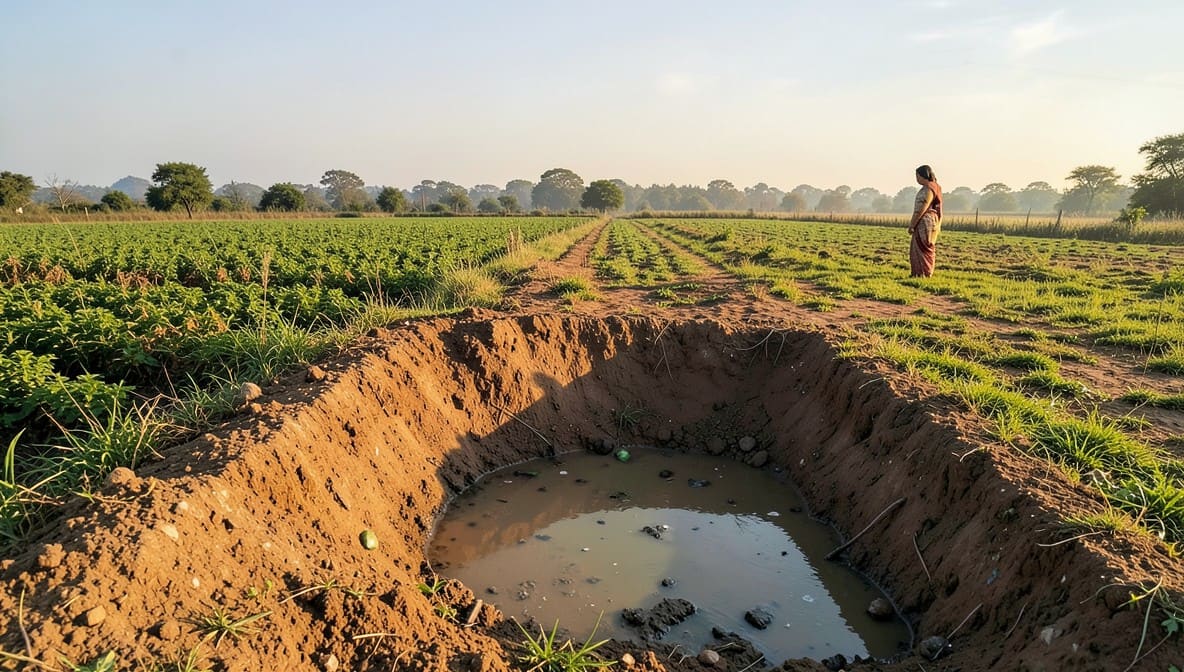
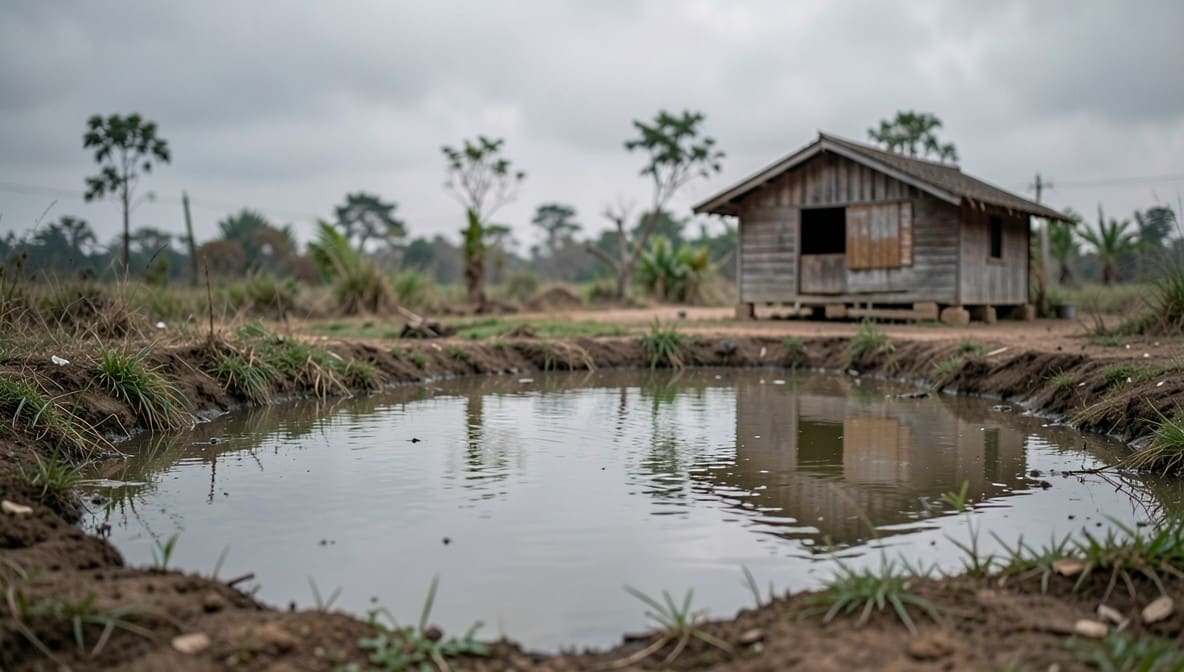
- She fell into a roadside pond while playing and drowned
- The cause of death, as per post-mortem report, was asphyxia due to drowning
- The Rupahihat Police Station recorded the incident on 03.09.2024 at 6:00 PM
- A post-mortem examination was conducted on 04.09.2024, confirming drowning as the cause of death
- The petitioner submitted a representation on 18.12.2024 to the Deputy Commissioner, Nagaon, seeking financial assistance
- The Circle Officer, Samaguri Revenue Circle, submitted a report dated 11.09.2025 stating that there was no flood in the area on 03.09.2024
- The Local Revenue Authority (LRA) and Government Village Headman confirmed no flood or natural calamity occurred in the locality at the time
- The pond where the incident occurred was a small, localized water body near the child’s residence, not a river or flood-affected water body
Procedural History
- 03.09.2024: Death of Afrina Begum due to accidental drowning
- 04.09.2024: Post-mortem examination conducted
- 11.09.2025: Circle Officer’s report submitted to authorities, denying flood conditions
- 18.12.2024: Petitioner’s representation filed before Deputy Commissioner, Nagaon
- No formal response received from any respondent authority
- 2025: Writ Petition (WP(C)/4479/2025) filed before the Gauhati High Court
- 05.05.2026: Judgment pronounced by Hon’ble Mr. Justice Kardak Ete
Relief Sought
The petitioner sought a direction to the respondents to pay ex-gratia compensation of Rs. 4,00,000 (Rupees Four Lakhs only) under the notification dated 27.07.2011, along with costs and any other relief deemed fit.
The Legal Issue
The central question was whether ex-gratia payment of Rs. 4,00,000 under the State Disaster Response Fund (SDRF) notification dated 27.07.2011 is payable when a person dies due to accidental drowning in a pond, without any connection to a notified natural calamity such as flood.
Arguments Presented
For the Petitioner
Mr. G. U. Ahmed, learned counsel, relied on the notification dated 27.07.2011, which lists flood among the calamities triggering ex-gratia relief. He argued that the child’s death occurred during a thunderstorm, which he contended constituted a flood event. He cited the police certificate and post-mortem report to establish the cause of death and emphasized the petitioner’s destitute condition as grounds for compassionate relief.
For the Respondent
Mr. N. Goswami and Ms. G. Hazarika submitted that the SDRF guidelines are strictly limited to deaths caused by the enumerated natural calamities. They presented the Circle Officer’s report dated 11.09.2025, supported by the LRA and Village Headman, proving no flood occurred in the area on 03.09.2024. They argued that accidental drowning, however tragic, does not qualify as a natural calamity under the notification unless it is a direct consequence of a notified event like flood, cyclone, or cloudburst.
The Court's Analysis
The Court undertook a textual and contextual analysis of the notification dated 27.07.2011 and subsequent circulars issued by the Central and State Governments. The Court noted that the SDRF is a statutory fund designed to provide immediate relief only for losses arising from specific, large-scale natural disasters. The list of calamities - cyclone, drought, earthquake, fire, flood, tsunami, hailstorm, landslide, avalanche, cloudburst, and pest attack - is exhaustive and not open to expansive interpretation.
"It is evident that the SDRF framework is intended to provide relief only in cases arising out of specified natural calamities, namely cyclone, drought, earthquake, fire, flood, tsunami, hailstorm, landslide, avalanche, cloudburst and pest attack."
The Court emphasized that the payment of Rs. 4,00,000 is contingent upon certification by the competent authority that the death was directly attributable to one of these events. In this case, the investigation reports conclusively established that the drowning occurred during a routine, non-calamitous incident: a child falling into a pond while playing. The absence of any flood, rainfall anomaly, or water body overflow in the area negated any nexus with the notified calamity of flood.
The Court further held that while the tragedy is deeply regrettable, the law cannot be stretched to cover accidents that fall outside the statutory scheme. Compassion, however warranted, cannot override the express conditions of a policy framed under statutory authority.
The Verdict
The writ petition was dismissed. The Court held that the petitioner is not entitled to ex-gratia compensation of Rs. 4,00,000 under the notification dated 27.07.2011, as the death of her granddaughter was not caused by a notified natural calamity. The dismissal does not bar the petitioner from seeking relief under any other applicable scheme or policy, provided the conditions thereof are satisfied.
What This Means For Similar Cases
Ex-Gratia Relief Is Not a General Welfare Scheme
- Practitioners must verify that the cause of death is directly and demonstrably linked to one of the enumerated calamities in the SDRF notification
- Accidental deaths, even during adverse weather, do not qualify unless the weather event meets the legal definition of a notified calamity
- Mere presence of rain or a storm is insufficient; there must be evidence of flooding, cloudburst, or similar event as defined by government circulars
Documentation Is Critical for Claim Validation
- Claims must be supported by official certification from the Revenue Department, LRA, or District Administration confirming the occurrence of a notified calamity
- Police reports and post-mortems alone are inadequate without corroborating disaster-specific evidence
- Petitioners should immediately seek and preserve meteorological data, satellite imagery, or district-level disaster declarations to substantiate claims
Judicial Restraint in Policy Interpretation
- Courts will not expand the scope of ex-gratia schemes beyond their express terms, even for sympathetic cases
- Relief under SDRF is not discretionary; it is conditional on strict compliance with the policy framework
- Advocates should advise clients to explore alternative relief mechanisms such as state welfare funds, NGO assistance, or the Prime Minister’s National Relief Fund, rather than relying on SDRF for non-calamitous deaths