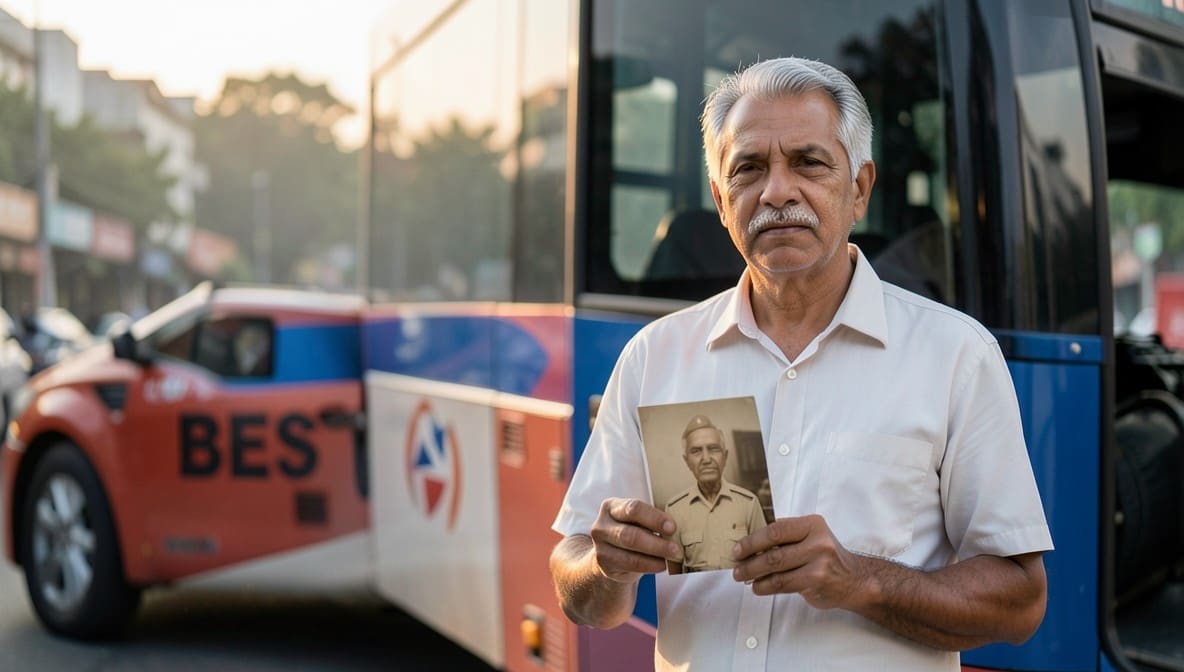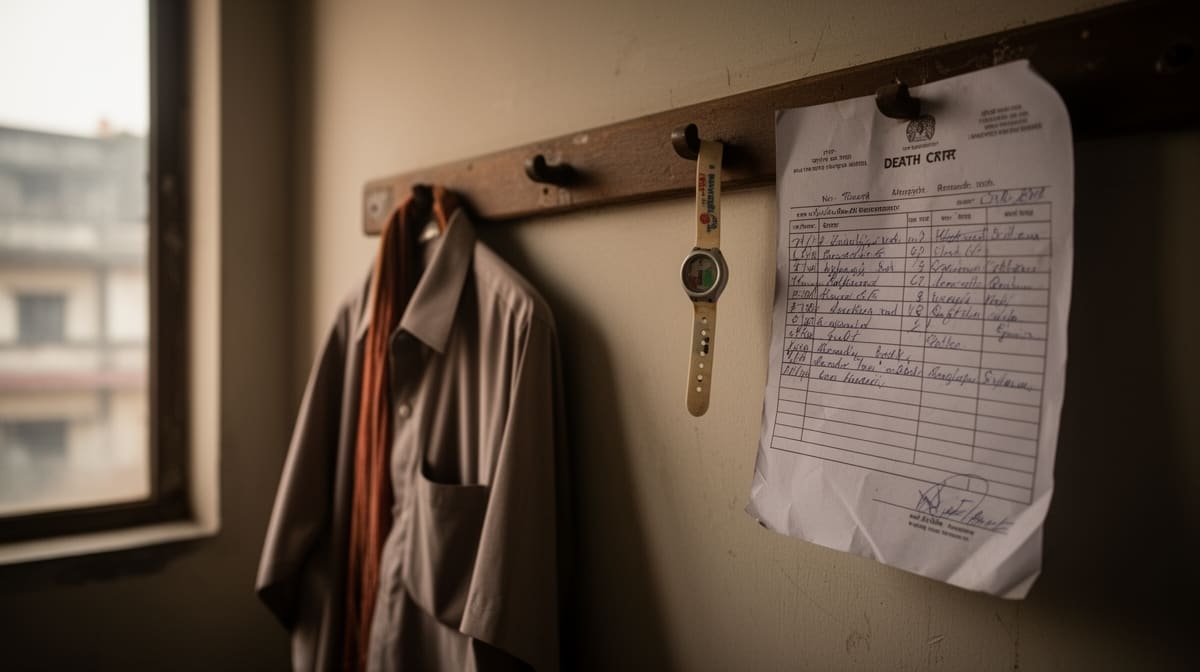
The Bombay High Court has clarified that employees who died due to COVID-19 while performing duties involving public interaction - such as bus conductors - are entitled to ex-gratia compensation of Rs. 50 lakh under the Maharashtra Government Resolution dated 15.09.2020. The Court also directed reconsideration of compassionate appointment for the deceased employee’s son, holding that an uncommunicated order placing the employee on a supernumerary post cannot disentitle his family from service benefits.
Background & Facts
The Dispute
The petitioners, Devendra Sonawane (son) and Sangita Sonawane (mother), sought ex-gratia compensation of Rs. 50 lakh and compassionate appointment for Devendra under the Maharashtra State Road Transport Corporation (MSRTC) policy. Their father, Balu Eknath Sonawane, a conductor with MSRTC, died on 24.03.2021 while performing his duties during the COVID-19 pandemic. The respondents, including the State of Maharashtra and MSRTC authorities, rejected both claims, citing that the deceased was not engaged in duties involving direct public interaction and that his services had been placed on a supernumerary post prior to his death.
Key Facts
- Balu Eknath Sonawane was appointed as a conductor with MSRTC on 15.06.1995 under the Scheduled Tribe category
- He died on 24.03.2021 while on duty during the COVID-19 pandemic
- The petitioners applied for ex-gratia compensation of Rs. 50 lakh under Government Resolution (GR) dated 15.09.2020 and compassionate appointment for Devendra
- The respondents rejected both claims via orders dated 24.06.2021 (ex-gratia compensation) and 22.07.2021 (compassionate appointment)
- The rejection for ex-gratia compensation was based on Circular No. 13 of 2020, which limited compensation to employees with direct public interaction
- The rejection for compassionate appointment was based on an order dated 13.03.2021, placing the deceased’s services on a supernumerary post, which was allegedly not communicated to him
Procedural History
- 05.04.2021: Petitioners submitted requisite documents to MSRTC for ex-gratia compensation
- 27.04.2021: Petitioner No. 1 applied for compassionate appointment
- 24.06.2021: Respondents rejected the ex-gratia compensation claim
- 22.07.2021: Respondents rejected the compassionate appointment application
- 2022: Petitioners filed Writ Petition No. 2100 of 2022 before the Bombay High Court, Aurangabad Bench
- 16.06.2026: The matter was reserved for judgment
- 06.07.2026: The High Court pronounced its order
Relief Sought
The petitioners sought the following reliefs:
- Quashing of the orders dated 24.06.2021 and 22.07.2021
- Direction to respondents to pay Rs. 50 lakh as ex-gratia compensation under the GR dated 15.09.2020
- Consideration of Petitioner No. 1’s application for compassionate appointment in accordance with prevailing policies
The Legal Issue
The central questions before the Court were:
- Whether the deceased employee, a bus conductor, fell within the category of employees eligible for ex-gratia compensation under the GR dated 15.09.2020, despite not having direct public interaction as contemplated by Circular No. 13 of 2020.
- Whether the rejection of compassionate appointment on the ground of an uncommunicated order placing the deceased’s services on a supernumerary post was legally sustainable.
Arguments Presented
For the Petitioners
- The deceased, as a conductor, regularly interacted with the public, exposing him to the same risk as employees with direct public interaction
- The order dated 13.03.2021, placing the deceased’s services on a supernumerary post, was never communicated to him during his lifetime, rendering the rejection of compassionate appointment unsustainable
- The respondents’ narrow interpretation of Circular No. 13 of 2020 ignored the precarious situation during the COVID-19 pandemic, where all frontline employees were at risk
For the Respondents
- The deceased did not fall within the category of employees eligible for ex-gratia compensation under Circular No. 13 of 2020, as his duties did not involve direct public interaction
- The order dated 13.03.2021, placing the deceased’s services on a supernumerary post, disentitled him from service benefits, including compassionate appointment for his son
- The respondents relied on the technicality that the order was communicated to the Depot Manager, even if not to the deceased
The Court's Analysis
The Court relied on the precedent set in Sangita Suryakant Rautrao v. State of Maharashtra (Writ Petition No. 9389 of 2022, dated 02.04.2026), which in turn cited Smt. Sunita Bapu Jagtap v. The Chairman, Maharashtra State Road Transport Corporation Ltd. (Writ Petition No. 5699/2024, dated 24.02.2026). The Court emphasized the following key points:
"There is no dispute that the deceased died due to COVID. We are inclined to take a view that the husband of the petitioner was involved in supervising the traffic at Wadala depot and as such, will fall within the parameters of the Circular dated 1st June 2020 and as extended vide Circular dated 30th September 2021. Even if the deceased was deputed to control the traffic, it does not mean that he was supposed to do the work by sitting in the Office. In discharge of his duty, the deceased was supposed to interact and came in contact with the drivers and conductors who were actually involved in driving the buses thereby exposing him to the same risk as the drivers and conductors."
The Court observed that the respondents had taken a narrow view of Circular No. 13 of 2020, ignoring the reality of the COVID-19 pandemic, where employees like conductors were exposed to significant risk:
"The respondent Nos. 1 to 3 have forgotten the precarious situation prevailing during COVID period when no one was ready to go out of house for discharging their duties. The Court can take a judicial notice that the life of general public came to a standstill and the public services including transport were kept open for limited services. It was part of duty of the husband of the petitioner to attend the job which he has done at the risk of his life."
Regarding the compassionate appointment, the Court held that the order dated 13.03.2021, placing the deceased’s services on a supernumerary post, was never communicated to him during his lifetime. The respondents’ argument that the order was communicated to the Depot Manager was rejected as unsustainable, as the deceased was not made aware of the order, and thus, the ground for rejecting compassionate appointment could not stand.
The Verdict
The Bombay High Court allowed the writ petition and issued the following directions:
- The impugned orders dated 24.06.2021 and 22.07.2021 were quashed and set aside
- Respondents were directed to pay Rs. 50,00,000 as ex-gratia compensation to the petitioners within eight weeks from the date of communication of the order
- For failure to pay the amount within the stipulated period, respondents were directed to pay interest at 6% per annum till realization
- Respondents were directed to reconsider Petitioner No. 1’s application for compassionate appointment on its own merits within twelve weeks from the date of uploading the order
- The rule was made absolute in the above terms
What This Means For Similar Cases
Broad Interpretation of Compensation Eligibility
- Employees whose duties involve indirect public interaction (e.g., conductors, supervisors, or support staff) are now eligible for ex-gratia compensation under the GR dated 15.09.2020, even if their roles were not explicitly covered by Circular No. 13 of 2020
- Practitioners should argue that the precarious circumstances of the COVID-19 pandemic necessitate a liberal interpretation of compensation policies, focusing on the risk of exposure rather than rigid job descriptions
Communication of Orders Is Non-Negotiable
- An order placing an employee on a supernumerary post or disentitling them to benefits must be communicated to the employee during their lifetime to be legally effective
- Employers cannot rely on internal communications (e.g., to a Depot Manager) to deny benefits like compassionate appointment if the employee was unaware of the order
- This principle extends to all service-related orders, including disciplinary actions, promotions, or demotions
Compassionate Appointment: Procedural Fairness Matters
- The rejection of compassionate appointment on technical grounds (e.g., uncommunicated orders) will not stand if the employee was not given an opportunity to contest or comply
- Practitioners should ensure that all procedural steps, including communication of orders, are strictly followed before denying compassionate appointment
- Where an order is not communicated, remedies like writ petitions can be pursued to challenge the rejection