The Allahabad High Court has reaffirmed that strict compliance with procedural requirements for Public Interest Litigation is non-negotiable. A petition filed to address alleged encroachment of a revenue pond was dismissed not on substantive grounds, but for failure to disclose the petitioner’s credentials as mandated by court rules - a procedural failure that undermines the integrity of PIL jurisprudence.
Background & Facts
The Dispute
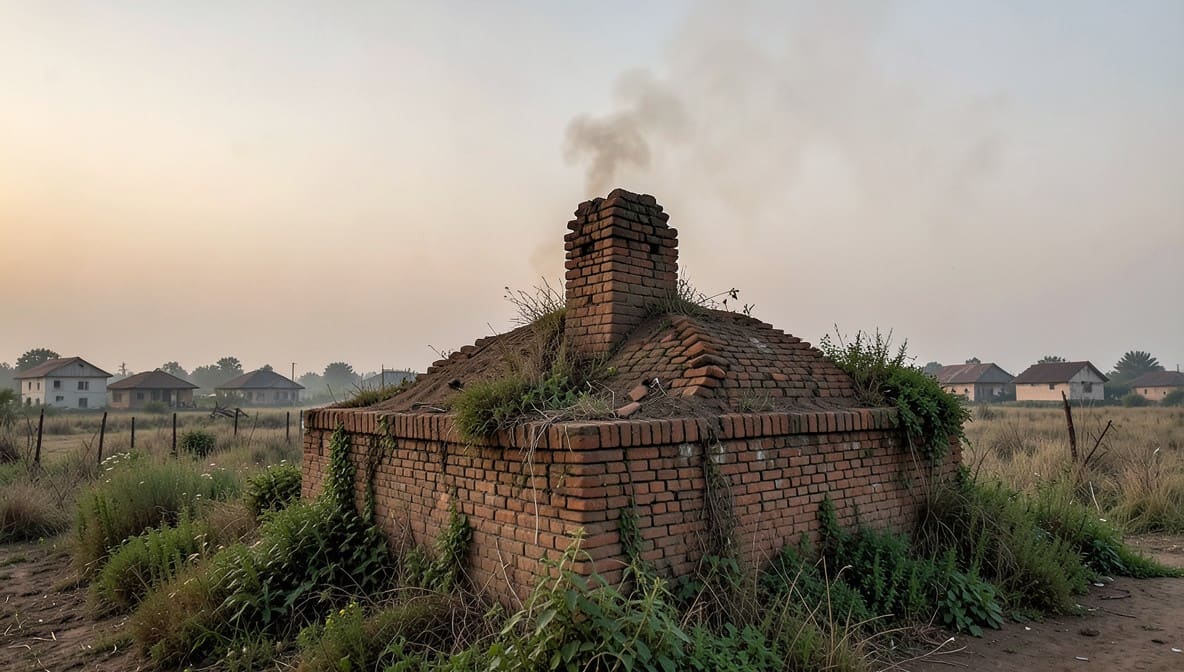
The petitioner, identified only as Lalji, filed a Public Interest Litigation seeking removal of illegal encroachment over land bearing Gata No. 571/0.0470 hectare in Village Tai Khurd, Tehsil Nawabganj, District Barabanki. The land is recorded in Revenue Records as a pond (Talab). The petitioner alleged that private respondents had unlawfully occupied this public water body, depriving villagers of access and violating land use norms.
Key Facts
- The petition sought two specific reliefs: (i) a writ of mandamus directing removal of encroachment, and (ii) a direction to the authorities to take cognizance of villagers’ complaints and act against the encroachers
- The petition was supported by Annexure No. 1, which contained the prayer but no affidavit or supporting documentation detailing the petitioner’s identity or connection to the issue
- No evidence was submitted showing the petitioner’s residence in the village, involvement in prior complaints, or any direct stake in the pond’s preservation
- The petition did not include any records of prior representations made to revenue authorities, panchayat, or district administration
Procedural History
- 05.04.2026: Public Interest Litigation No. 622 of 2026 filed before the Allahabad High Court, Lucknow Bench
- 13.07.2026: Hearing conducted before Justice Syed Qamar Hasan Rizvi
- 13.07.2026: Court raised preliminary objection regarding non-compliance with Rule 1(3-A) of Chapter XXII of the Allahabad High Court Rules, 1952
- 13.07.2026: Petitioner’s counsel, Sri Vivek Kumar Pandey, failed to produce the mandatory affidavit disclosing credentials
- 13.07.2026: Court dismissed the petition on procedural grounds
The Parties' Positions
Petitioner: Alleged that the encroachment of a revenue pond constituted a public wrong affecting villagers’ rights to water and land use. Claimed the petition was filed in public interest to restore a community resource.
Respondents: The State of Uttar Pradesh and other authorities contended that the petition was defective on its face for failing to comply with mandatory procedural requirements under the High Court Rules. No substantive defense of the encroachment was offered, as the court did not reach merits.
Relief Sought
The petitioner sought:
- A writ of mandamus directing removal of illegal encroachment over Gata No. 571/0.0470 hectare
- A direction to the revenue authorities to act on complaints from villagers and initiate removal proceedings
The Legal Issue
The central question was whether a Public Interest Litigation can be entertained by the High Court when the petitioner fails to file the mandatory affidavit disclosing credentials as required under Sub-rule (3-A) of Rule 1 of Chapter XXII of the Allahabad High Court Rules, 1952.
Arguments Presented
For the Petitioner
The petitioner’s counsel, Sri Vivek Kumar Pandey, did not submit any affidavit or documentation addressing the requirements of Rule 1(3-A). No oral submissions were made to cure the defect. The counsel did not argue that the rule was inapplicable, nor did he seek leave to file a supplementary affidavit.
For the Respondent
Sri Abhishek Srivastava, learned Additional Chief Standing Counsel for the State, raised a preliminary objection that the petition was non-maintainable due to non-compliance with Rule 1(3-A). He relied on Pankaj Srivastava v. High Court of Judicature at Allahabad (2014) and Ashok Kumar Pandey v. State of West Bengal (AIR 2004 SC 280) to argue that the rule is a valid procedural safeguard to prevent abuse of PIL jurisdiction. He emphasized that the absence of credentials renders the petitioner’s locus standi and bona fides unverifiable.
The Court's Analysis
The Court undertook a detailed examination of the procedural framework governing PILs under the Allahabad High Court Rules. It noted that Rule 1(3-A), introduced effective 01.05.2010, is not a mere formality but a substantive requirement designed to filter out frivolous or self-serving petitions masquerading as public interest matters.
"The requirement of disclosure of credentials from the petitioner is indeed necessary to bring on record the complete background of the person who is coming before the Court. This information helps to establish the petitioner's credibility, locus standi, and his genuineness."
The Court cited Ashok Kumar Pandey v. State of West Bengal to underscore that courts must satisfy themselves on three critical points: (a) the credentials of the applicant, (b) the prima facie correctness of the information, and (c) the absence of vagueness or personal motive. The Court further referenced State of Uttaranchal v. Balwant Singh Chaufal to highlight the growing concern over misuse of PILs for oblique purposes.
The Court observed that the petitioner’s affidavit was entirely absent. No details were provided regarding the petitioner’s residence, connection to the village, prior attempts to resolve the issue administratively, or any evidence of public grievance beyond the petition itself. The Court held that without this foundational disclosure, the petition could not be treated as a genuine public interest matter.
The Court emphasized that while PILs are a vital tool for enforcing public rights, their misuse undermines judicial credibility and diverts scarce resources from legitimate causes. The rule is not an obstacle to justice but a gatekeeper ensuring that only those with genuine public concern approach the Court.
The Verdict
The petition was dismissed. The Court held that the failure to file the mandatory affidavit under Rule 1(3-A) of the Allahabad High Court Rules renders the PIL non-maintainable. No order as to costs was made. The Court explicitly clarified that this dismissal was on procedural grounds only and that no opinion was expressed on the merits of the alleged encroachment.
What This Means For Similar Cases
Credentials Are Non-Negotiable in PILs
- Practitioners must file a sworn affidavit under Rule 1(3-A) before filing any PIL in the Allahabad High Court
- The affidavit must explicitly state: (i) the public cause being espoused, (ii) absence of personal interest, (iii) no prior authoritative pronouncement on the issue, and (iv) no undue gain or loss resulting from litigation
- Vague or generic statements like "I am a concerned citizen" are insufficient
Procedural Defects Cannot Be Curied Post-Filing Without Leave
- Failure to comply at the time of filing cannot be remedied by oral submissions or subsequent affidavits unless specifically permitted by the Court
- Courts are under no obligation to grant leave to cure defects in PILs, especially where abuse is suspected
- Always file the Rule 1(3-A) affidavit with the petition - do not assume it can be added later
The Court Will Not Delve Into Merits Without Procedural Compliance
- Even in cases involving clear public harm (e.g., encroachment of water bodies), courts will not examine facts if the petitioner fails to establish standing
- This reinforces that PILs are not substitutes for writ petitions filed by aggrieved parties
- Practitioners should consider filing a regular writ petition under Article 226 if the petitioner has direct standing