The Allahabad High Court has reaffirmed the principle that public interest litigation cannot be weaponized by individuals with no demonstrable connection to the issue. Dismissing a PIL seeking enforcement of a pollution control order, the Court emphasized that mere claims of acting in public interest, without personal stake or verifiable grievance, are insufficient to invoke judicial intervention.
Background & Facts
The Dispute
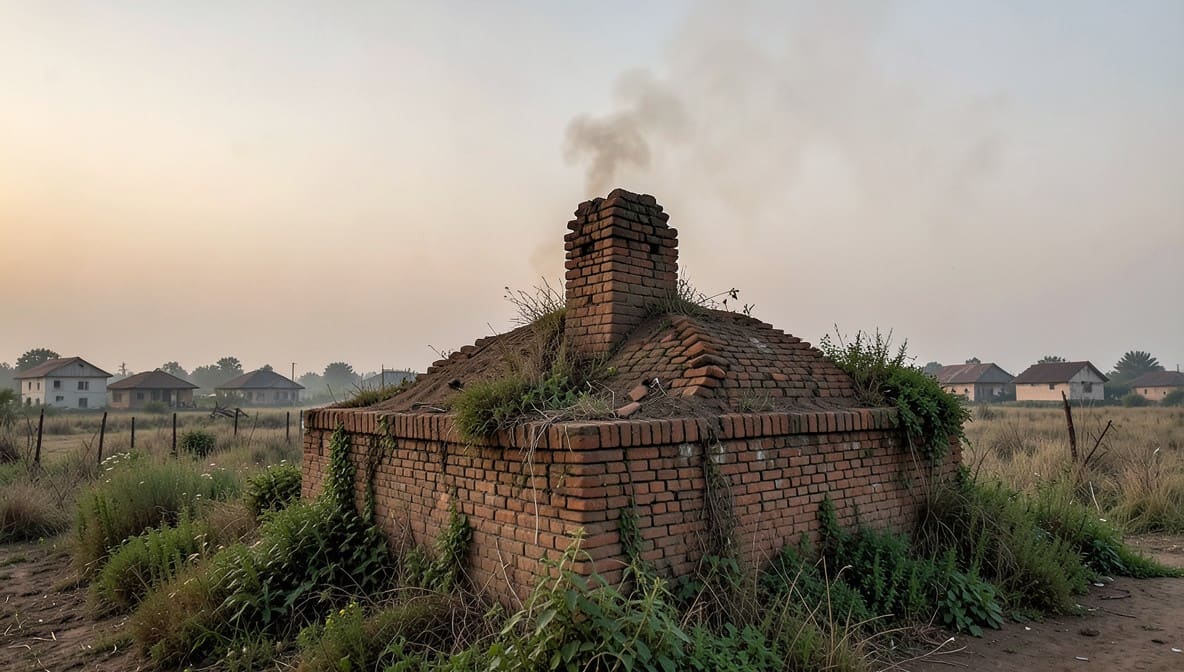
The petitioner, Pradeep Kumar Tiwari, filed a Public Interest Litigation seeking enforcement of an order dated 12.09.2023 issued by the Uttar Pradesh Pollution Control Board (Board) directing the closure of a brick-kiln located at Village Narhani Turkwalia, Post Jumai, Tehsil Sikandarpur, District Ballia. The Board had directed the Sub-Divisional Magistrate (Respondent No. 4) to close the brick-kiln for non-compliance with environmental norms, but no action had been taken as of the filing of the petition.
Key Facts
- The brick-kiln in question is situated in Village Narhani Turkwalia, District Ballia
- The petitioner resides in Village & Post Ekil, P.S. Pakdi, Tehsil Sikandarpur, District Ballia - a different village
- No evidence was provided to establish that the petitioner or his residence was directly affected by emissions, noise, or pollution from the brick-kiln
- The petitioner claimed to be acting on behalf of "several persons of the village" who had brought their grievances to him
- The petitioner’s affidavit stated his occupation as "social worker"
- The petitioner did not disclose any prior correspondence with the Board, local authorities, or affected residents
- No documentary evidence, such as complaints, photographs, or health reports, was annexed to substantiate environmental harm
Procedural History
- 12.09.2023: Uttar Pradesh Pollution Control Board issued order directing closure of brick-kiln
- 12.09.2023: Order communicated to Sub-Divisional Magistrate (Respondent No. 4)
- No action taken by authorities between 12.09.2023 and filing of petition
- 2026: Petition filed before the Allahabad High Court as PIL No. 1155 of 2026
- 05.05.2026: Hearing conducted before the Division Bench
The Parties' Positions
Petitioner: Claimed to be acting in public interest as a social worker, asserting that the unauthorized operation of the brick-kiln was causing environmental harm to the community. Alleged that local residents had approached him to file the petition.
Respondents: Did not contest the merits of the pollution order but challenged the petitioner’s locus standi, arguing that he had no personal connection to the affected area and was using PIL as a tool for personal gain.
Relief Sought
The petitioner sought a direction to the State and its authorities to immediately close down the brick-kiln in accordance with the Board’s order dated 12.09.2023 and to ensure compliance.
The Legal Issue
Can a petitioner claim standing in a public interest litigation solely on the basis of self-declared social work and alleged representation of aggrieved villagers, without demonstrating personal injury, direct impact, or verifiable public grievance?
Arguments Presented
For the Petitioner
The petitioner’s counsel argued that the petitioner, as a social worker, had a legitimate role in representing the collective grievances of villagers affected by illegal industrial activity. He relied on the broad interpretation of locus standi in public interest litigation, citing S.P. Gupta v. Union of India, to assert that any public-spirited individual may file a PIL to enforce environmental rights.
For the Respondent
The State’s counsel contended that the petitioner had failed to establish any nexus between his residence and the brick-kiln’s location. He emphasized that the petitioner’s claim of acting on behalf of others was unsubstantiated, with no names, affidavits, or complaints from affected residents provided. The counsel argued that allowing such petitions would open the floodgates to opportunistic litigation disguised as public interest.
The Court's Analysis
The Court undertook a rigorous examination of the petitioner’s standing under the doctrine of locus standi in PIL jurisprudence. It noted that while S.P. Gupta expanded access to justice for marginalized groups, it did not permit any individual to file a PIL without a reasonable connection to the subject matter.
"The petitioner has not indicated how he is affected by the operations of the brick-kiln situated in a different village. His claim of being a social worker, without any corroborative evidence of prior engagement with the community or documentation of grievances, is insufficient to confer locus standi."
The Court observed that the petitioner’s age (34 years) and profession (social worker) raised concerns about the motive behind the petition. It noted that repeated filing of PILs under the guise of social work, without substantiation, could amount to abuse of process.
The Court distinguished this case from genuine PILs where petitioners were either directly affected or represented a clearly identifiable class of disadvantaged persons. Here, the petitioner offered no proof of community support, no evidence of environmental harm, and no attempt to exhaust alternative remedies.
The Court further held that the absence of any specific allegations regarding pollution levels, health impacts, or violation of statutory norms rendered the petition speculative and not maintainable.
The Verdict
The petition was dismissed. The Court held that the petitioner lacked locus standi to file the PIL and found no merit in the claim of public interest without substantiation. No directions were issued regarding the brick-kiln’s closure, as the matter remained subject to enforcement by the Pollution Control Board through its own statutory mechanisms.
What This Means For Similar Cases
Locus Standi in PILs Is Not a Formality - It Is a Threshold
- Practitioners must now demonstrate a direct or substantial connection between the petitioner and the issue - mere altruism or vague claims of public concern are insufficient
- Affidavits must include verifiable details: names of affected persons, dates of complaints, evidence of harm, and prior attempts to resolve the issue administratively
- Self-declared "social worker" status without institutional affiliation or documented activity will not suffice to establish standing
Courts Will Scrutinize Motive in Repeated PIL Filings
- Courts are increasingly alert to PILs filed by individuals with no prior record of public engagement
- Repeated filings under similar circumstances may invite adverse costs or sanctions for abuse of process
- Petitioners must be prepared to substantiate their claims with documentary evidence, not assertions
Environmental Enforcement Remains with Statutory Authorities
- PILs cannot substitute the statutory enforcement powers of the Pollution Control Board
- Courts will not intervene in enforcement matters unless there is clear inaction despite a valid order and demonstrable public harm
- The Board retains primary responsibility for monitoring and closing non-compliant units - PILs are not a substitute for regulatory diligence