The Jharkhand High Court recently disposed of a Public Interest Litigation (PIL) concerning traffic rule enforcement, while explicitly reserving judgment on the petitioner's credibility. The Court accepted governmental assurances on regulatory compliance but noted the petitioner's history of judicial process abuse, including unpaid costs and dismissed petitions, underscoring the need for bona fide public interest litigation.
Background & Facts
The Incident
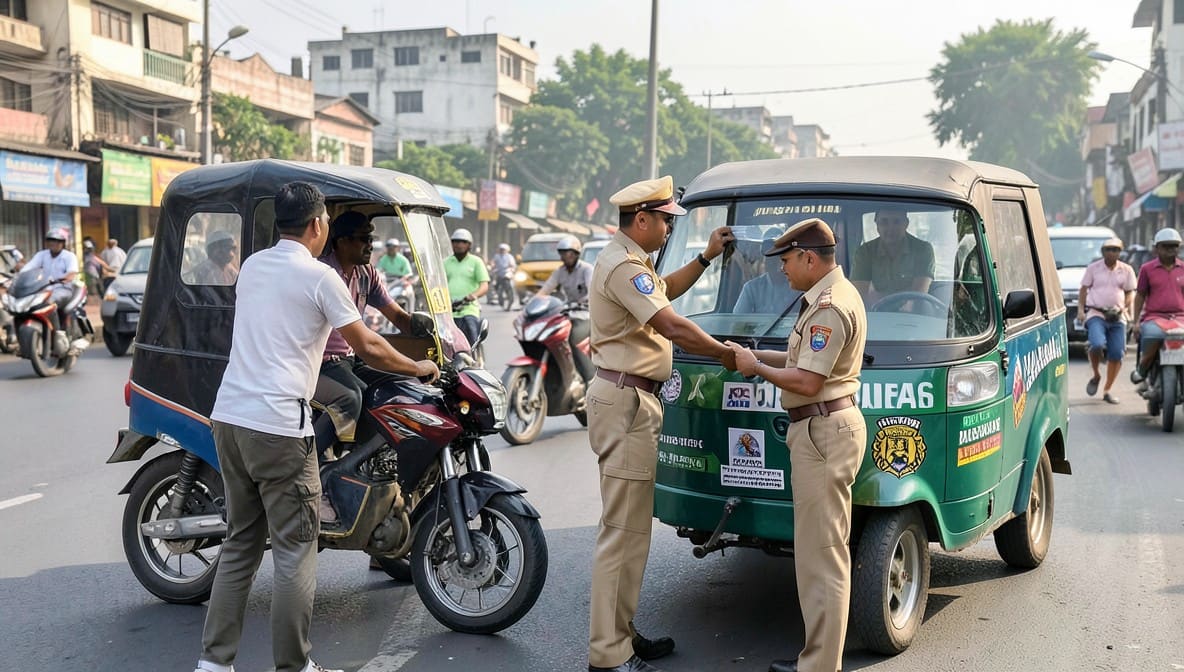
The PIL arose from a tragic accident on 7 January 2022, where an auto driver caused the death of a lady teacher. The petitioner, Shiv Shankar Sharma, filed this PIL alleging systemic deficiencies in traffic law enforcement, including:
- Lack of checks on fitness certificates for vehicles
- Non-verification of pollution certificates
- Failure to ensure auto drivers possess valid licences
- Non-compliance with traffic rules by drivers
Procedural History
- 7 January 2022: Accident occurs, resulting in the death of a lady teacher
- 2022: Petitioner files WP (PIL) No. 110 of 2022 before Jharkhand High Court
- Prior to 2022: Petitioner had filed WP (PIL) No. 689 of 2021, which was dismissed with costs of Rs. 50,000 imposed for abuse of process. The petitioner has not paid these costs, citing pendency of a review petition
- 2022: The Supreme Court, in State of Jharkhand v. Shiv Shankar Sharma (2022 SCC OnLine 1541), dismissed another PIL filed by the petitioner, holding that he had abused the process of the Court and his locus was questionable
- 25 June 2026: Present judgment delivered by the Jharkhand High Court
Relief Sought
The petitioner sought directions to the respondents, including:
- The State of Jharkhand
- The Senior Superintendent of Police, Ranchi
- The Superintendent of Police (Traffic), Ranchi
- The Chairman, Jharkhand Pollution Control Board
- The Secretary, Transport Department, Government of Jharkhand
- The Municipal Commissioner, Ranchi
to enforce traffic laws, ensure compliance with fitness and pollution certificates, and verify licences of auto drivers.
The Legal Issue
The primary legal question was whether the Court should entertain a PIL filed by a petitioner with a questionable track record of judicial process abuse, particularly when the State had already taken steps to address the incident through criminal proceedings.
Arguments Presented
For the Petitioner
The petitioner, represented by Mr Rajeev Kumar and Ms Niteshwari Kumari, argued:
- The accident highlighted systemic failures in traffic rule enforcement
- The respondents had failed to ensure compliance with statutory requirements under the Motor Vehicles Act, 1988 and Environment Protection Act, 1986
- The PIL was filed in public interest to prevent future accidents
For the Respondents
The respondents, represented by Mr Indranil Bhaduri (for Respondents 1, 2, 3, and 5) and Ms Richa Sanchita (for Respondent 4), contended:
- An FIR had been filed and a charge-sheet submitted against the auto driver, Golu Kumar, making judicial intervention unnecessary
- The affidavits filed by the respondents provided sufficient assurances of compliance with traffic laws
- The petitioner had a history of abusing judicial process, including unpaid costs and dismissed petitions, which undermined his credibility
The Court's Analysis
The Court examined the dual objectives of the PIL: addressing the specific accident and the broader issue of traffic rule enforcement.
"Insofar as the accident of 7th January 2022 is concerned, Mr Bhaduri, based on the affidavits filed on record, submitted that an FIR has already been filed and, after investigation, a charge-sheet has also been filed against the Auto Driver, namely Golu Kumar. Since the charge sheet has been filed, it would be improper for this Court to issue any further orders regarding the unfortunate incident."
The Court accepted the assurances provided in the affidavits by the respondents, acknowledging the difficulties in monitoring compliance but emphasizing the obligation of authorities to enforce existing rules.
However, the Court took serious note of the petitioner's history, citing:
- The imposition of costs of Rs. 50,000 in WP (PIL) No. 689 of 2021, which remain unpaid
- The Supreme Court's dismissal of another PIL filed by the petitioner, holding that he had abused the process of the Court and his locus was questionable
"Therefore, we clarify that this issue of the bona fides of the petitioner remains open, and this order must not be used by the petitioner to claim credibility. This petition was entertained, and some orders were made therein without going into the issue of bona fides."
The Court thus disposed of the PIL while reserving the question of the petitioner's bona fides, ensuring that the order could not be misused to bolster his credibility.
The Verdict
The Court disposed of the PIL with the following directions:
- No further orders were issued regarding the accident of 7 January 2022, as a charge-sheet had already been filed against the auto driver
- The assurances provided in the affidavits by the respondents were accepted, and no additional directions were issued
- The question of the petitioner's bona fides was left open, and the petitioner was barred from using this order to claim credibility
- No costs were awarded
What This Means For Similar Cases
PILs Must Be Filed in Good Faith
- Courts are increasingly scrutinizing the bona fides of PIL petitioners, particularly those with a history of judicial process abuse
- Petitioners cannot rely on past orders to establish credibility if their locus standi has been questioned or rejected in earlier proceedings
- Unpaid costs or dismissed petitions can severely undermine a petitioner's standing in future litigation
Judicial Restraint in Criminal Matters
- Where criminal proceedings (FIR, charge-sheet) are already underway, courts are reluctant to intervene through PILs
- The preferred forum for addressing individual grievances remains the trial court, not public interest litigation
- PILs should focus on systemic issues rather than isolated incidents already under investigation
Enforcement of Existing Laws
- Authorities are legally bound to enforce existing rules on fitness certificates, pollution certificates, and licencing
- While monitoring compliance is challenging, non-enforcement can lead to judicial intervention
- Affidavits by government respondents carry significant weight, but follow-up mechanisms may be necessary to ensure compliance