
The Central Information Commission has reaffirmed that the RTI Act’s statutory appeal mechanism under Section 19 is the exclusive remedy for denial of information, and Section 18 complaints cannot be used as a procedural shortcut. This ruling reinforces the legislative intent behind structured grievance redressal and imposes strict accountability on public authorities for non-compliance.
Background & Facts
The Dispute
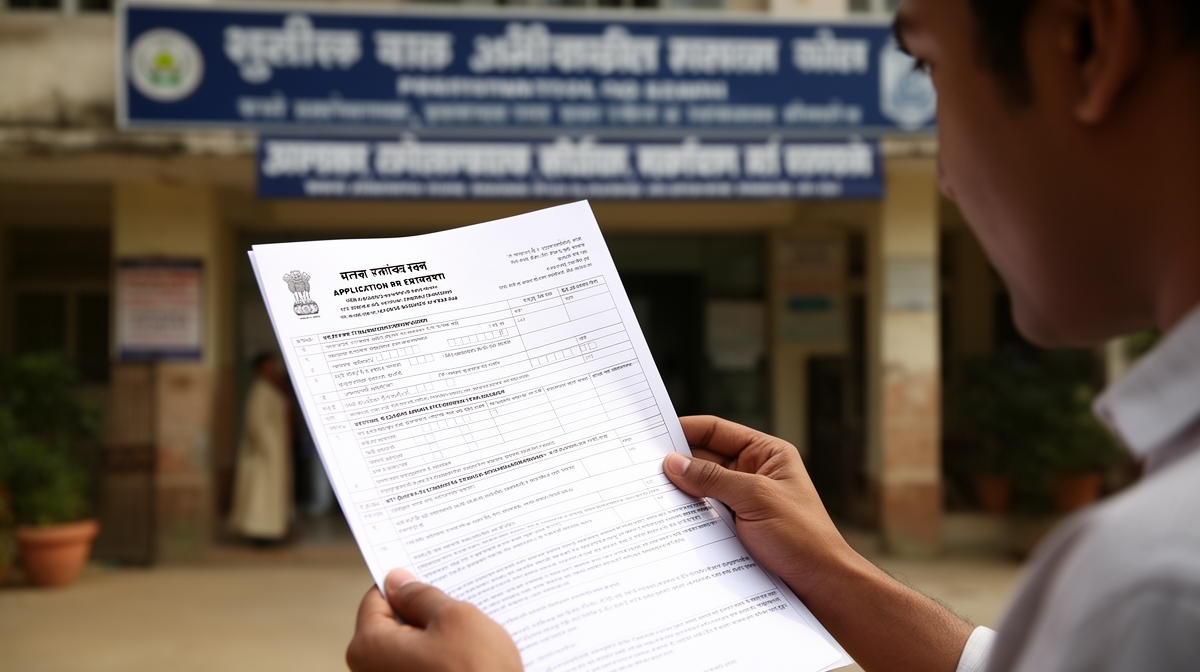
The complainant, Deepak Kumar, filed an RTI application on 25 July 2024 seeking detailed information on how the National Highways Infrastructure Development Corporation Ltd (NHIDCL) determines market rates for non-scheduled items in civil construction estimates. The query specifically asked whether the department mandates obtaining quotations from at least three vendors, whether such orders are in writing, and whether there is a general practice of attaching such quotations to estimates.
Procedural History
- 25 July 2024: RTI application submitted online by the complainant.
- No reply was received from the CPIO, and no record of response exists.
- No first appeal was filed before the First Appellate Authority (FAA), and no order from the FAA is on record.
- 2 September 2024: Complainant filed a complaint under Section 18 of the RTI Act directly with the Central Information Commission.
- 28 January 2026: Hearing conducted; both complainant and respondent absent.
Relief Sought
The complainant sought direction for the CPIO to provide the requested information and to take action against the official for non-response.
The Legal Issue
The central question was whether a complainant may invoke Section 18 of the RTI Act, 2005 to seek redress for non-response to an RTI application, bypassing the mandatory appellate process under Section 19, or whether such recourse is legally impermissible.
Arguments Presented
For the Petitioner
The complainant did not appear or submit written arguments. However, the nature of the complaint implied an assertion that Section 18 provides an independent remedy for non-response, irrespective of whether Section 19 procedures were exhausted.
For the Respondent
The CPIO did not appear or file any response. No counter-arguments were presented before the Commission.
The Court's Analysis
The Commission examined the statutory architecture of the RTI Act and relied on the binding precedent in Chief Information Commissioner & Anr. v. State of Manipur & Anr. (2011). The Supreme Court had held that Section 18 is supervisory in nature and intended for cases involving malafide denial or obstruction, not for routine non-response. In contrast, Section 19 establishes a complete, sequential appellate mechanism that must be exhausted before approaching the Commission.
"The procedure contemplated under Section 18 and Section 19 of the said Act is substantially different. The nature of the power under Section 18 is supervisory in character whereas the procedure under Section 19 is an appellate procedure... Such person has to get the information by following the aforesaid statutory provisions."
The Commission emphasized that allowing Section 18 complaints to circumvent Section 19 would undermine the legislative scheme and create procedural chaos. The absence of a reply from the CPIO, while serious, does not alter the statutory hierarchy. The complainant’s failure to file a first appeal meant the statutory remedy under Section 19 remained unexhausted.
Nonetheless, the Commission found the CPIO’s complete inaction - failure to respond to the RTI application and failure to appear before the Commission - to be a grave dereliction of duty under the Act. This inaction, coupled with disregard for the Commission’s proceedings, constituted prima facie violation of the duty to provide information and to cooperate with statutory authorities.
The Verdict
The Commission dismissed the complaint on procedural grounds but imposed a show-cause notice on the CPIO for potential penalty under Section 20(1) and (2) of the RTI Act. The core holding is that Section 19 is the exclusive remedy for non-response, and Section 18 cannot be invoked as a substitute.
What This Means For Similar Cases
Section 19 Is Mandatory Before Section 18
- Practitioners must file a first appeal under Section 19 before approaching the Commission under Section 18.
- Complaints filed directly under Section 18 for non-response will be dismissed unless malafide intent or gross negligence is independently established.
- Legal advisors should advise clients to exhaust Section 19 remedies before initiating Section 18 proceedings.
CPIO Non-Compliance Triggers Penalty Proceedings
- Failure to respond to RTI applications, even without a formal appeal, exposes CPIOs to penalties under Section 20.
- Absence from Commission hearings will be treated as contempt of statutory authority and may result in ex-parte penalty imposition.
- FAA must proactively identify erring CPIOs and ensure their appearance and submission of explanations.
Judicial Deference to Statutory Procedure
- Courts and commissions will not create alternative remedies where a clear statutory path exists.
- The principle from Taylor v. Taylor - that statutory procedures must be followed exclusively - remains binding in administrative law.
- Any attempt to expand Section 18 beyond its supervisory scope will be rejected as judicial overreach.