The Central Information Commission has reaffirmed that the duty of a Public Information Officer under the Right to Information Act, 2005, is non-negotiable and cannot be discharged by deferring to the unwillingness of a third-party institution. In this case, the Commission imposed show-cause proceedings against the PIO for failing to comply with a clear directive from the First Appellate Authority and for providing an evasive, non-compliant response to an RTI request seeking service records of a deceased teacher.
The Verdict
The appellant prevailed. The Central Information Commission held that the Public Information Officer (PIO) is statutorily obligated to obtain and provide information even if the custodian of records (a private recognized school) refuses to cooperate. The Commission directed the PIO to furnish the requested service details within three weeks and initiated show-cause proceedings under Section 20(1) of the RTI Act for willful non-compliance with the First Appellate Authority’s order.
Background & Facts
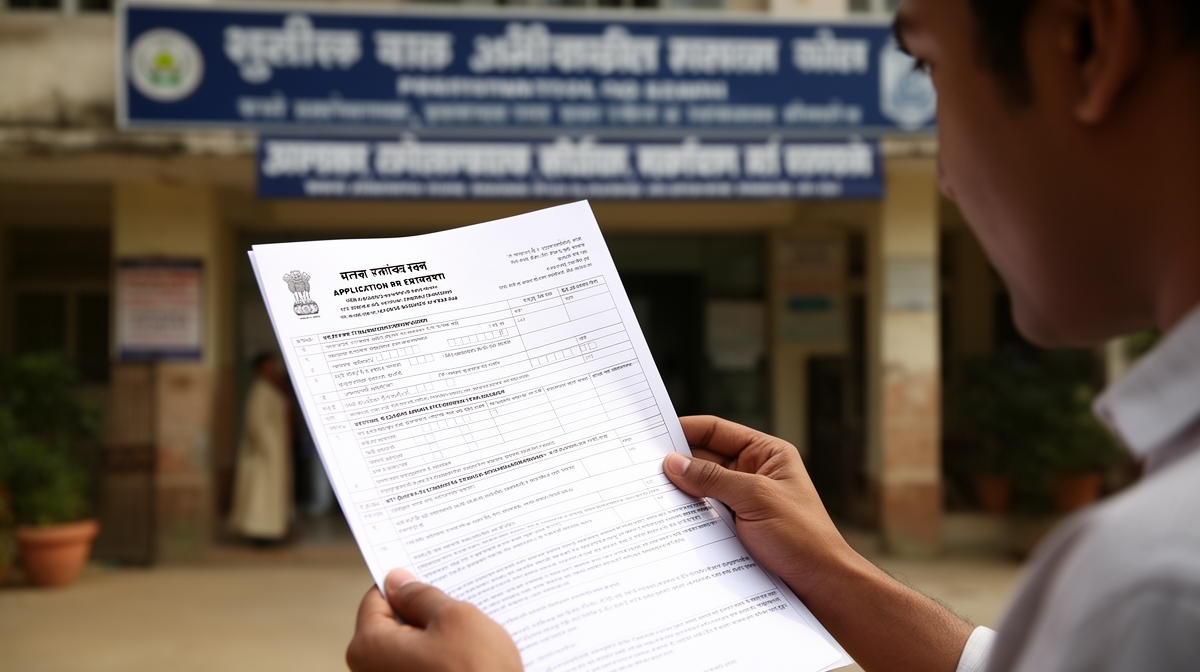
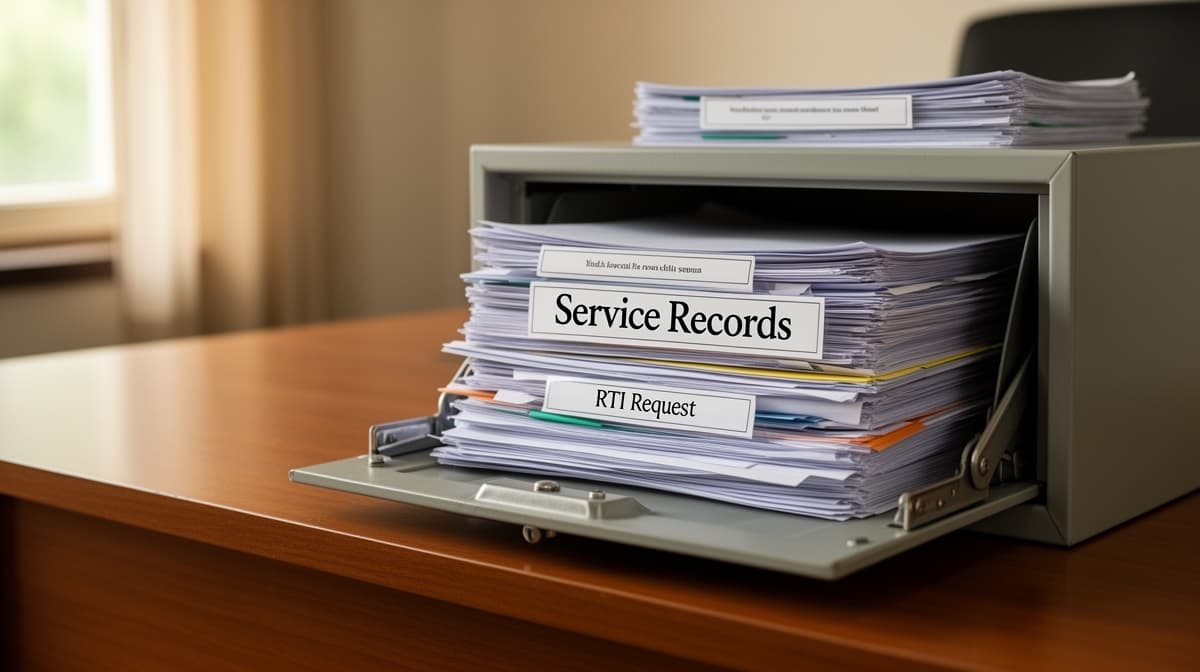
The appellant, Yogesh Kumar Mittal, filed an RTI application on 14 March 2024 seeking the year-wise class assignments of his deceased wife, Smt. Anita Mittal, who served as a teacher at Children Welfare Public School, a recognized private institution in Shahdara, Delhi, from 1994 to 1999. The school’s ID was listed as 1051361. The request was specific, limited to service-related academic records.
The Public Information Officer (PIO) of the Municipal Corporation of Delhi’s Education Department, Shahdara South Zone, responded on 20 May 2024 by citing a letter from the school’s manager, which claimed the information could not be disclosed as it did not meet public interest. The PIO offered no independent assessment and merely forwarded the school’s refusal.
The appellant filed a first appeal on 24 May 2024. The First Appellate Authority (FAA), on 7 June 2024, rejected the PIO’s reasoning. It held that as the legal spouse and first-class heir of the deceased teacher, the appellant had a legitimate right to access service records. The FAA directed the PIO to obtain the information from the school and provide it within 15 working days.
Despite this clear direction, the PIO failed to act. No information was furnished. The appellant then filed a second appeal with the Central Information Commission on 1 July 2024.
During the hearing, the Respondent’s representatives appeared without proper authorization and demonstrated no familiarity with the case or the FAA’s order. No documentation was produced to explain the delay or non-compliance.
The Legal Issue
The central legal question was whether a Public Information Officer can refuse to provide information under the RTI Act merely because the record-holding entity - a private recognized school in this case - declines to cooperate. Further, does failure to implement a lawful order of the First Appellate Authority constitute a violation attracting penalty under Section 20(1) of the RTI Act?
Arguments Presented
For the Petitioner
The appellant argued that the information sought pertained to the service history of a deceased public servant, which is inherently a matter of public interest under Section 4 of the RTI Act. He emphasized that as the legal heir, he had a right to access service records, akin to the rights recognized in other CIC rulings concerning family members of deceased employees. He cited the FAA’s binding order as proof that the request was legally valid and that the PIO’s inaction was arbitrary and in bad faith.
For the Respondent
The Respondent reiterated the school’s refusal to provide the records, claiming the information was not in the public interest and that the PIO had no authority to compel the private school to disclose internal records. No statutory or procedural basis was offered to justify non-compliance with the FAA’s directive. The representatives failed to substantiate their claims with evidence or legal reasoning.
The Court's Analysis
The Commission found the PIO’s response to be not merely inadequate but deliberately evasive. The reliance on the school’s refusal was held to be an abdication of statutory duty. Under Section 6(1) of the RTI Act, the PIO is the designated officer responsible for receiving and processing requests, and Section 7(1) mandates that information be provided unless exempted under Section 8 or 9. The fact that the records are held by a private institution does not absolve the PIO of responsibility.
"The PIO cannot abdicate his statutory responsibility under the RTI Act merely on the ground that the school has expressed unwillingness to provide information."
The Commission emphasized that the First Appellate Authority is a senior officer within the public authority’s hierarchy, and its orders are binding. Non-compliance with such an order is not a mere procedural lapse but a failure to discharge a statutory obligation. The Commission cited its own precedents holding that failure to comply with FAA directions constitutes a prima facie case for penalty under Section 20(1), which permits imposition of a penalty of up to ₹25,000 for refusal, delay, or misleading information.
The Commission further noted that the PIO’s reply lacked essential details - name, designation, contact information - as required by Department of Personnel and Training (DoPT) guidelines and prior CIC rulings. This omission further indicated a pattern of negligence and disregard for procedural compliance.
The appearance of unauthorized and uninformed representatives during the hearing was treated as evidence of institutional indifference. The Commission concluded that the conduct reflected a systemic failure to treat RTI as a right, not a privilege.
What This Means For Similar Cases
This ruling reinforces that Public Information Officers must actively pursue information even when held by third parties, including private institutions performing public functions. The PIO’s duty is not passive receipt and forwarding but active retrieval and verification. Practitioners should now treat any refusal by a school, hospital, or private agency as a trigger for the PIO to escalate internally or invoke Section 11 (third-party consultation) if applicable - not as a ground for denial.
The decision also elevates the enforceability of FAA orders. Lawyers representing RTI applicants should now routinely cite this judgment when opposing delays or non-compliance, particularly where the FAA has already ruled in favor of disclosure. The initiation of show-cause proceedings under Section 20(1) sets a strong precedent for holding individual PIOs accountable, not just their departments.
However, the ruling does not extend to purely personal or confidential records unrelated to public function. The distinction remains: service records of a teacher in a recognized institution are public records under the RTI Act, while private medical or financial data may still be exempt. This case clarifies the boundary.